Table of Contents
ToggleKey Takeaways
- Carpet beetles do not bite humans — they lack the mouthparts needed to pierce skin.
- The itchy red bumps people blame on carpet beetle bites are actually allergic reactions to tiny larval hairs and shed skin.
- Carpet beetle dermatitis can closely mimic bed bug bites, flea bites, and other insect stings.
- Identifying the true source of your skin irritation is essential for choosing the right treatment.
- Eliminating carpet beetle larvae from your home is the only permanent way to stop the allergic reactions.
- Vacuuming, laundering fabrics, and targeted pest control are the most effective steps to get relief.
If you’ve woken up with itchy, red welts on your skin, you might wonder — do carpet beetles bite? It’s one of the most common pest-related questions homeowners ask, and the answer surprises most people. Carpet beetles themselves are not biters. They don’t feed on blood, and they don’t have the mouthparts to break through human skin. However, the larvae of these small household pests cause real skin reactions that look and feel just like bites. Unlike pests such as bed bugs, carpet beetles harm your belongings rather than your body. In this guide, you’ll learn exactly what causes those mysterious bumps, how to distinguish them from actual insect bites, and what steps to take to stop the irritation for good. For a broader look at these insects, explore our ultimate carpet beetle guide.
Why Carpet Beetles Don't Actually Bite Humans
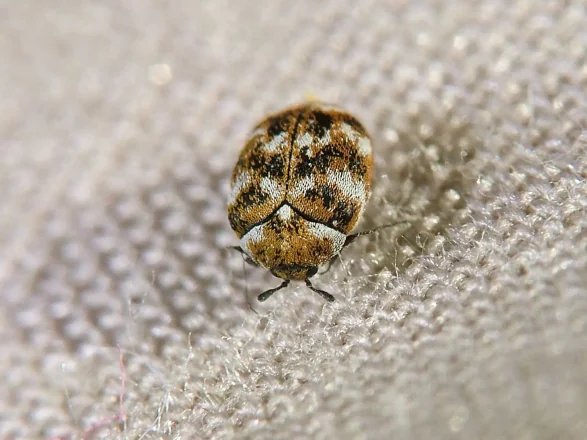
Carpet beetles belong to the family Dermestidae. The most common species found in U.S. homes include the varied carpet beetle (Anthrenus verbasci), the black carpet beetle (Attagenus unicolor), and the furniture carpet beetle (Anthrenus flavipes). None of these species bite, sting, or feed on human blood.
Adult carpet beetles survive on pollen and nectar. They often enter homes through open windows, doors, and gaps around utility lines. Once inside, they lay eggs near animal-based fibers like wool, silk, fur, and feathers. The larvae — not the adults — are the real troublemakers.
Carpet beetle larvae have chewing mouthparts designed to break down keratin, a protein found in natural fibers. Their mandibles are built for fabric, not flesh. So when you see red bumps on your skin after sleeping, the larvae didn’t bite you. Something else is going on.
What Causes the Itchy Rash from Carpet Beetles?
The skin irritation people associate with carpet beetle bites is actually carpet beetle dermatitis. It’s an allergic reaction triggered by direct contact with carpet beetle larvae.
Carpet beetle larvae are covered in tiny, bristle-like hairs called hastisetae. These microscopic barbed hairs break off easily and cling to bedding, clothing, upholstered furniture, and carpets. When they touch your skin, they can trigger an immune response.
The resulting rash typically involves:
- Small, red, itchy bumps — often in clusters or lines
- A rash that appears on exposed skin (arms, neck, face, legs)
- Irritation that intensifies over time with repeated exposure
- Occasional blistering in people with higher sensitivity
In addition to skin contact, some people develop respiratory symptoms like sneezing, watery eyes, and a runny nose when exposed to larval hairs or shed skins. If you’ve noticed carpet beetle larvae in your home, the connection between their presence and your skin irritation is likely no coincidence.
Who Is Most at Risk for Carpet Beetle Dermatitis?
Not everyone reacts to carpet beetle larval hairs. Sensitivity varies from person to person. Children, people with eczema, and those with existing allergies tend to have stronger reactions. Repeated exposure also increases sensitivity over time. A rash that starts mild can worsen significantly if the infestation is left untreated.
Carpet Beetle Rash vs. Bed Bug Bites: How to Tell the Difference
One of the biggest challenges with carpet beetle dermatitis is that it looks remarkably similar to bed bug bites. Misidentifying the source can lead to weeks of frustration and the wrong treatment approach. Here’s a side-by-side comparison to help you identify the true cause.
| Feature | Carpet Beetle Dermatitis | Bed Bug Bites |
|---|---|---|
| Cause | Allergic reaction to larval hairs | Actual insect bite from blood-feeding |
| Bite mark | No central puncture point | Small red dot at center of each welt |
| Pattern | Random clusters on exposed skin | Often in lines or zigzag pattern (“breakfast, lunch, dinner”) |
| Timing | Can appear anytime; worsens with repeated contact | Usually appears after sleeping |
| Evidence | Shed larval skins, tiny hairs on fabrics | Blood spots on sheets, dark fecal smears |
| Location in home | Near closets, carpets, upholstered furniture | Concentrated around mattress seams and bed frame |
If you’re unsure which pest is responsible, examine your surroundings carefully. Signs of a carpet beetle infestation include shed larval skins, tiny fecal pellets, and irregular holes in fabrics. Bed bug infestations leave different physical evidence entirely.
Other Pests That Cause Similar Skin Reactions
Carpet beetles aren’t the only household pests that cause confusing skin irritation. Before you settle on a diagnosis, consider these other possibilities:
- Fleas: Flea bites appear on the ankles and lower legs. They have a central red dot and are intensely itchy.
- Dust mites: Like carpet beetles, dust mites don’t bite. They cause allergic reactions — typically sneezing, congestion, and eczema flare-ups rather than isolated welts.
- Scabies mites: These burrow into the skin and cause intense itching, especially at night. A doctor can diagnose scabies with a skin scraping.
- Mosquitoes: Mosquito bites produce isolated, puffy bumps that usually appear on uncovered skin and resolve within a few days.
Correctly identifying the pest saves you time, money, and unnecessary chemical treatments. If you find small beetles in your home alongside the rash, the larvae are almost certainly the culprit. Knowing how carpet beetles get into your house can also help confirm your suspicion.
How to Treat Carpet Beetle Dermatitis on Your Skin
Treating the skin reaction itself is relatively straightforward. However, the rash will keep returning unless you also eliminate the source — the larvae. Here’s how to address the dermatitis on your body first.
Immediate Relief Steps
Wash the affected skin with warm water and a gentle soap to remove any remaining larval hairs. Apply an over-the-counter hydrocortisone cream (1%) to reduce inflammation and itching. An oral antihistamine like diphenhydramine (Benadryl) or cetirizine (Zyrtec) can help manage the allergic response.
Avoid scratching the bumps, as this can break the skin and lead to secondary bacterial infections. If the rash spreads, blisters significantly, or doesn’t improve within a week, see a dermatologist. Persistent reactions may require a prescription-strength corticosteroid.
When to See a Doctor
Most carpet beetle rashes resolve on their own once exposure stops. However, seek medical attention if you experience difficulty breathing, widespread hives, swelling around the face or throat, or signs of skin infection like pus or increasing redness. These symptoms suggest a more severe allergic response that needs professional care.
How to Stop Carpet Beetle Rashes for Good
Treating the rash is only half the battle. To prevent future reactions, you must eliminate the carpet beetle larvae from your living space. Here’s a step-by-step approach.
Step 1: Find the Source
Carpet beetle larvae hide in dark, undisturbed areas. Check closets, under furniture, along baseboards, inside air vents, and beneath area rugs. Look for shed skins, tiny caterpillar-like larvae, and fabric damage from carpet beetles. The larvae feed on wool, silk, pet hair, feathers, and even dried food products. Identifying where they’re concentrated helps you target your cleaning efforts.
Step 2: Deep Clean Your Home
Vacuum thoroughly — carpets, upholstered furniture, closet floors, and any fabric surfaces. Pay special attention to edges and corners where larvae tend to feed. After vacuuming, immediately dispose of the vacuum bag or empty the canister into an outdoor trash bin.
Launder all bedding, clothing, and fabric items that may have come into contact with larvae. Use the hottest water setting the fabrics can tolerate. For items that can’t be washed, place them in a sealed plastic bag in the freezer for at least 72 hours to kill larvae and eggs.
Step 3: Target the Larvae Directly
For active infestations, cleaning alone may not be enough. Apply a residual insecticide labeled for carpet beetles along baseboards, in closets, and around areas where larvae were found. Boric acid powder is a low-toxicity option that works well in cracks and crevices. For more detailed control strategies, see our guide on how to get rid of carpet beetle larvae.
Step 4: Prevent Reinfestation
Prevention is the long game. Store off-season clothing in airtight containers or garment bags. Regularly vacuum high-risk areas like closets and under beds. Seal gaps around windows and doors where adult beetles enter. If you keep finding beetles in unexpected places — like your vehicle — you may also want to check out tips for removing carpet beetles from your car.
Are Carpet Beetles Dangerous Beyond Skin Irritation?
While carpet beetle dermatitis is the most noticeable health effect, these pests cause other problems too. Larvae destroy natural-fiber clothing, rugs, upholstery, and even taxidermy. An unchecked infestation can lead to hundreds or thousands of dollars in damage to your wardrobe and home furnishings.
The shed skins and larval hairs also degrade indoor air quality. People with asthma or chronic allergies may notice worsening symptoms in a home with a significant infestation. For a deeper look at the health risks these pests pose, read our article on whether carpet beetles are dangerous.
Carpet beetles are not known to transmit diseases. They don’t carry bacteria or parasites the way ticks or mosquitoes do. Still, the combination of property damage, allergic reactions, and respiratory irritation makes them a pest worth taking seriously.
If your DIY efforts haven’t resolved the infestation, or if the rash keeps recurring despite thorough cleaning, professional pest control may be the next step. A trained technician can locate hidden larval populations and apply treatments that reach areas household products often miss.
Frequently Asked Questions
-
Can carpet beetles bite you at night while you sleep?
No. Carpet beetles cannot bite humans at any time of day. They lack piercing or biting mouthparts capable of breaking skin. The itchy bumps you notice in the morning are caused by an allergic reaction to the tiny barbed hairs on carpet beetle larvae that cling to your sheets and pillowcases.
-
How do I know if my rash is from carpet beetles or bed bugs?
Check for physical evidence. Carpet beetle dermatitis leaves no central bite mark, and you'll often find shed larval skins near closets and carpets. Bed bug bites have a visible puncture point and are accompanied by blood spots on sheets and dark fecal stains on mattress seams. Inspect your sleeping area carefully to determine the source.
-
Will carpet beetle rashes go away on their own?
The rash will typically clear within a few days once you remove the source of contact. However, if larvae remain in your home, you'll continue to experience new reactions. Over-the-counter hydrocortisone cream and antihistamines help manage symptoms while you address the underlying infestation.
-
Can carpet beetle larvae live in your bed?
Yes. Carpet beetle larvae can feed on natural-fiber bedding, pet hair, and dead skin cells found in and around your bed. They tend to hide in folds of fabric, under mattresses, and along bed frames. Regularly laundering your bedding on hot settings and vacuuming the mattress helps prevent this.
-
Do carpet beetle bites spread or get worse over time?
Since carpet beetle dermatitis is an allergic reaction rather than a true bite, it doesn't spread from one area to another on its own. However, repeated exposure to larval hairs can sensitize your immune system, making each reaction progressively worse. Eliminating the larvae from your home is the only way to stop the cycle.
-
Should I call a pest control professional for carpet beetle rashes?
If you've cleaned thoroughly, laundered your fabrics, and applied insecticides but the rash keeps returning, a professional inspection is worthwhile. Carpet beetle larvae can hide in wall voids, ductwork, and other areas that are difficult to access. A pest control technician can locate and treat these hidden sources effectively.