



Types of Termites in Florida
Florida has more than 20 termite species, but for homeowners the picture is simpler than that.
Two families cause nearly all the damage: drywood termites and subterranean termites. A third
— the conehead — is a South Florida special that deserves its own mention. Which one you have
determines everything: how you find them, what the treatment looks like, and what it costs.
Drywood Termites
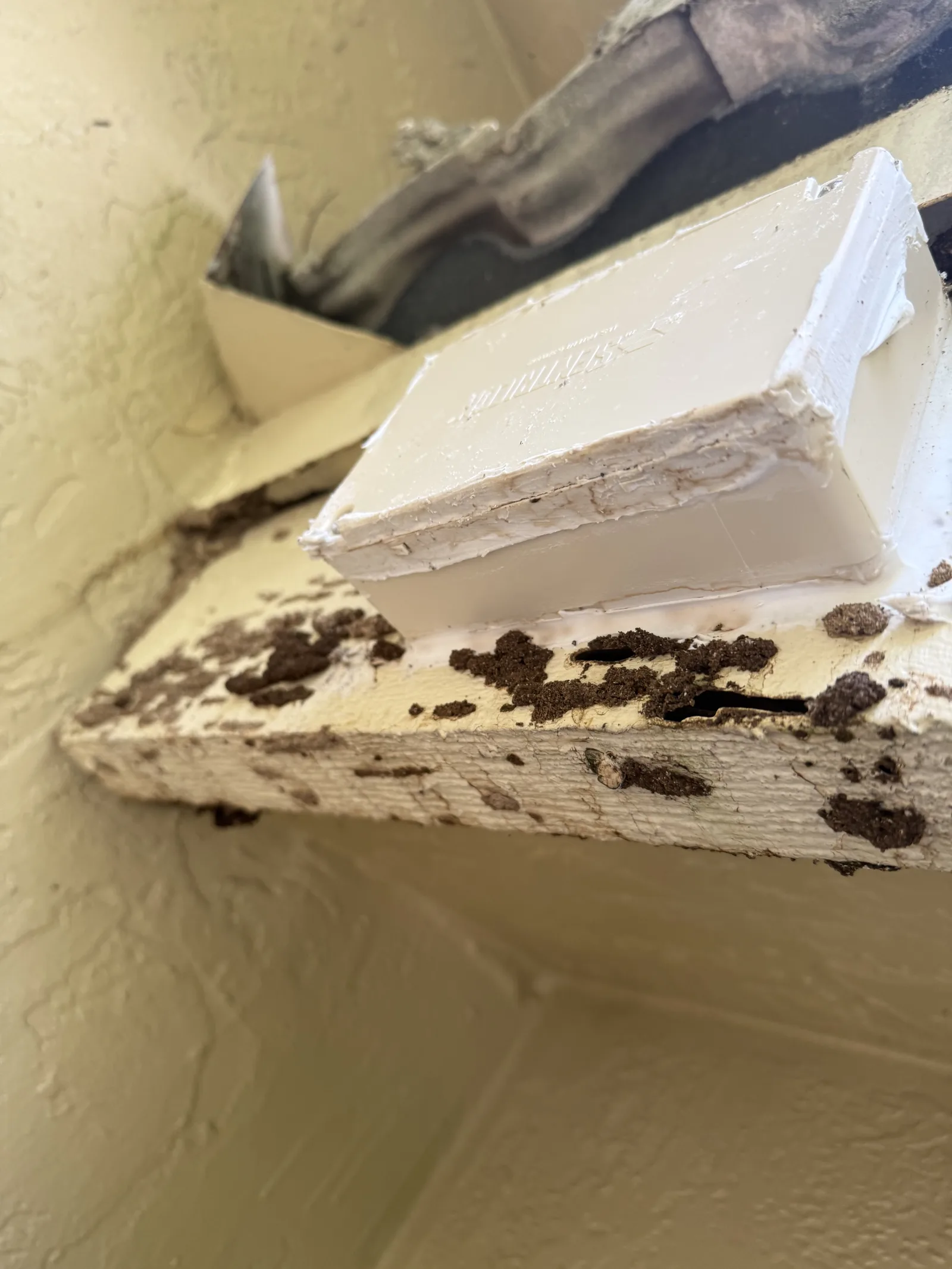
Drywood termites never touch the soil. The colony lives inside the wood it’s eating — roof
rafters, window frames, door casings, fascia boards, even furniture and picture frames. There are
no tunnels to the ground and no mud on your foundation, which is exactly what makes them sneaky:
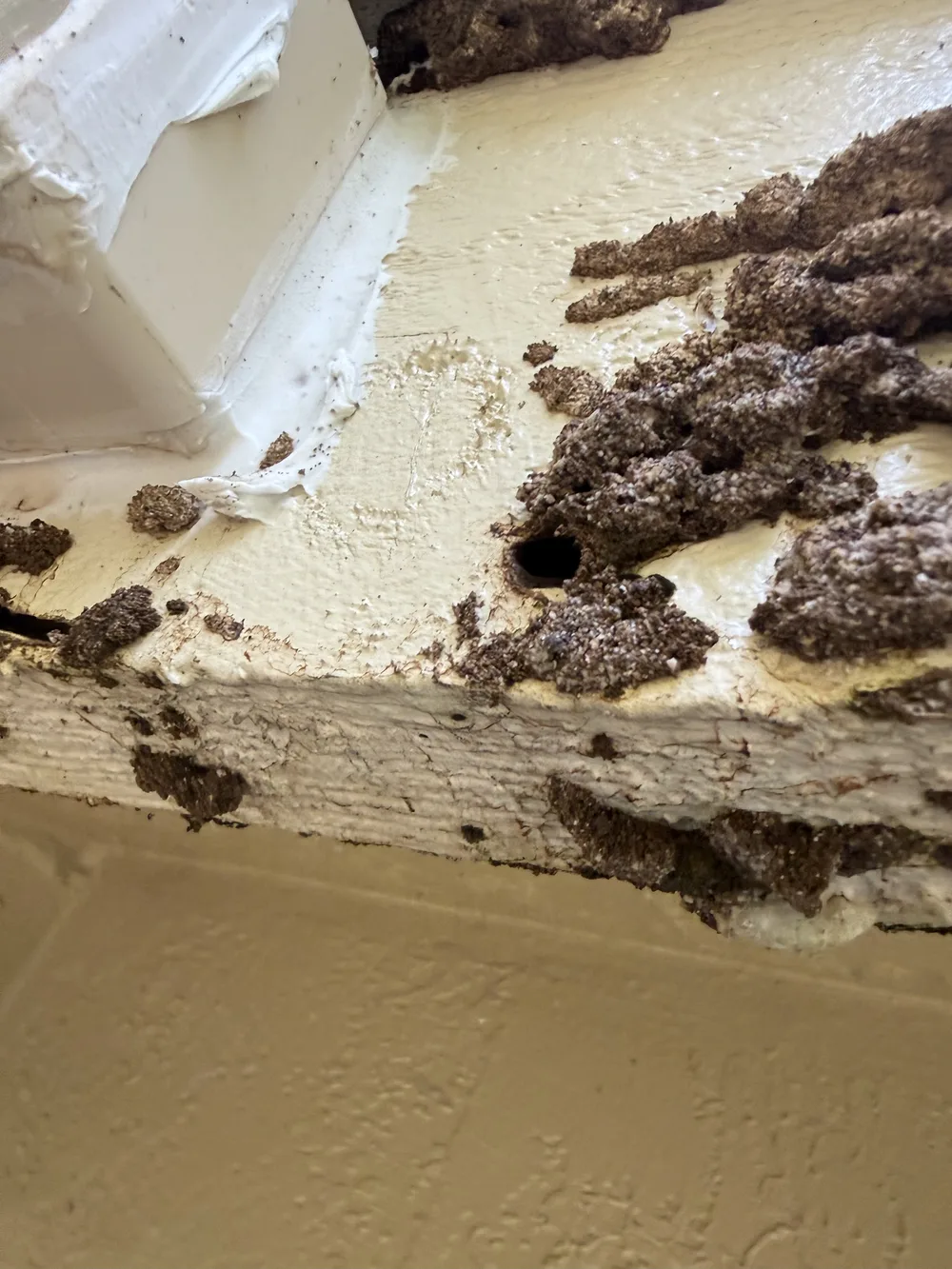
the first sign most homeowners get is a small pile of what looks like coffee grounds or coarse
sand on a windowsill.
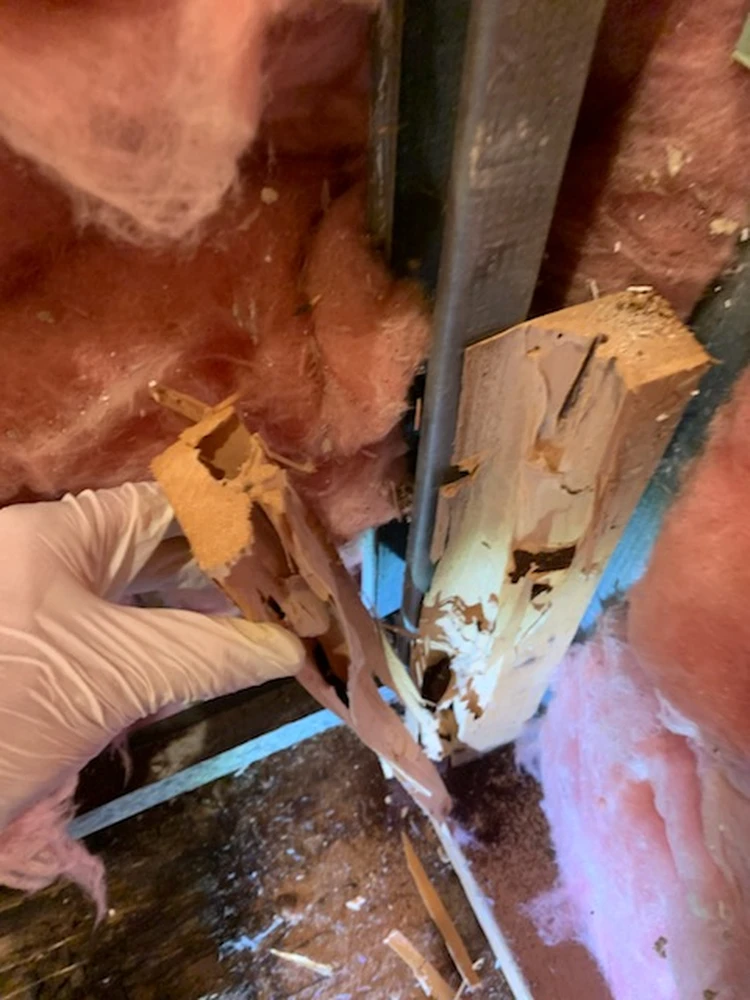
That’s frass — drywood termite droppings. The termites keep their galleries clean by pushing
pellets out through pinhole-sized “kick holes” in the wood surface. Find the pile, look up, and
you’ll usually find the hole.
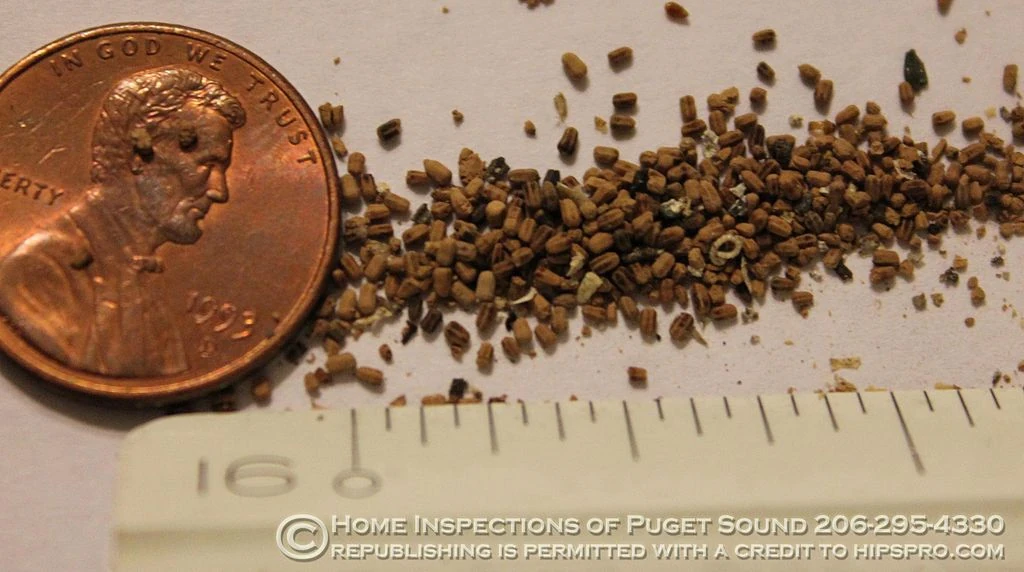
Under the zoom lens: frass pellets aren’t dust — each one is a hard, six-sided granule about
a millimeter long, and the shape is the giveaway. Sawdust from carpenter ants is fibrous and
irregular; drywood frass looks like tiny footballs with facets. If you’re not sure which you
have, our guide to what termite droppings look like
breaks it down photo by photo.
Drywood colonies are small — a few thousand insects versus the millions underground — but a house
can host multiple separate colonies at once, in the attic, the garage header, and the master
bedroom trim all at the same time. That’s why widespread drywood activity usually points toward
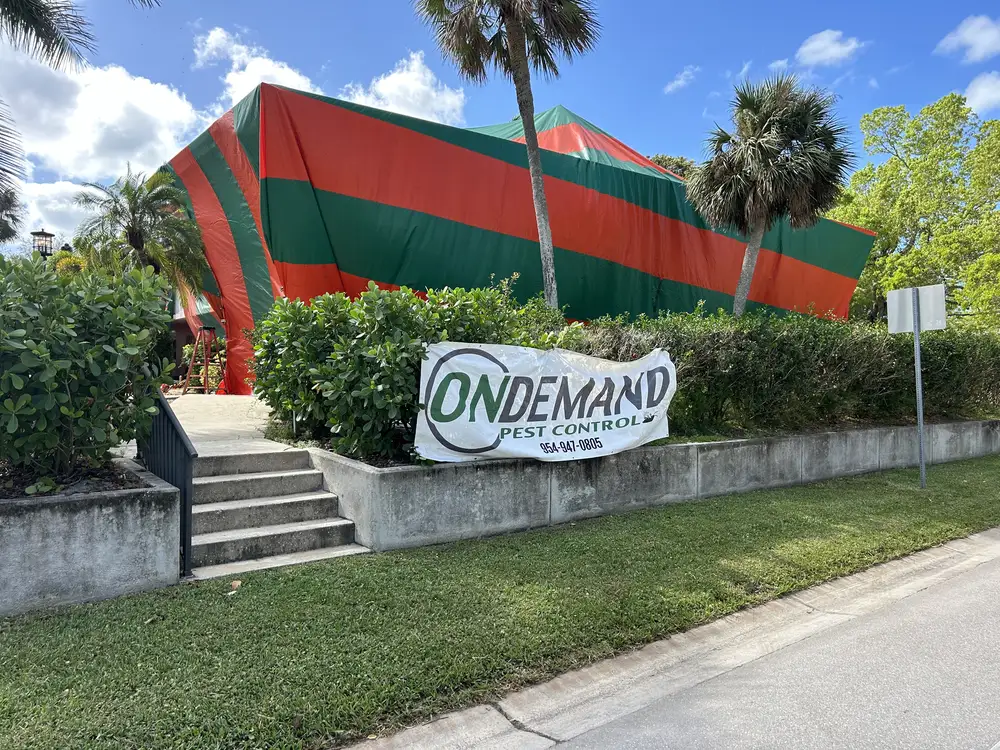
tent fumigation, while a single caught-early colony can often be handled
with localized drywood treatments.
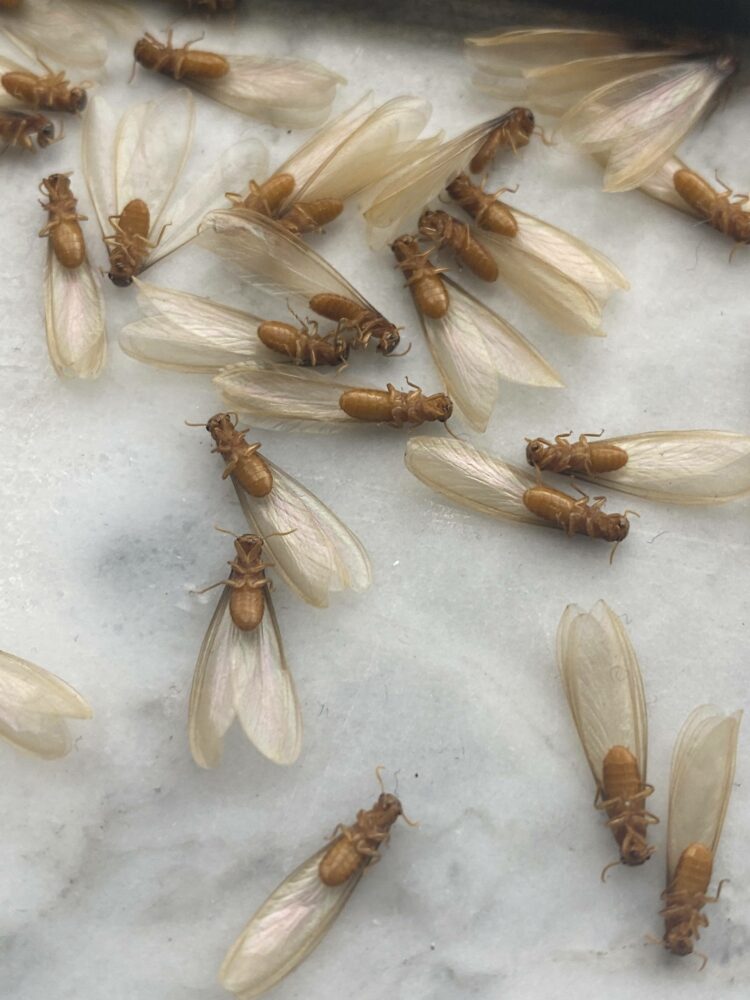
Coastal South Florida sees the heaviest drywood pressure in the continental U.S. They announce
themselves during swarm season — drywood termites swarm in
Florida mainly from spring into fall, often at dusk
around porch lights. Learn to identify drywood termites
before swarm season and you’ll catch them years earlier than your neighbors.
Drywood at a glance:
– Lives in the wood itself — no soil contact, no mud tubes
– Evidence: six-sided frass pellets + kick holes + swarmers
– Small colonies, but often several per house
– Treatment: spot treatment if isolated, tenting if widespread
Subterranean Termites — What Most Homeowners Call “Formosans”
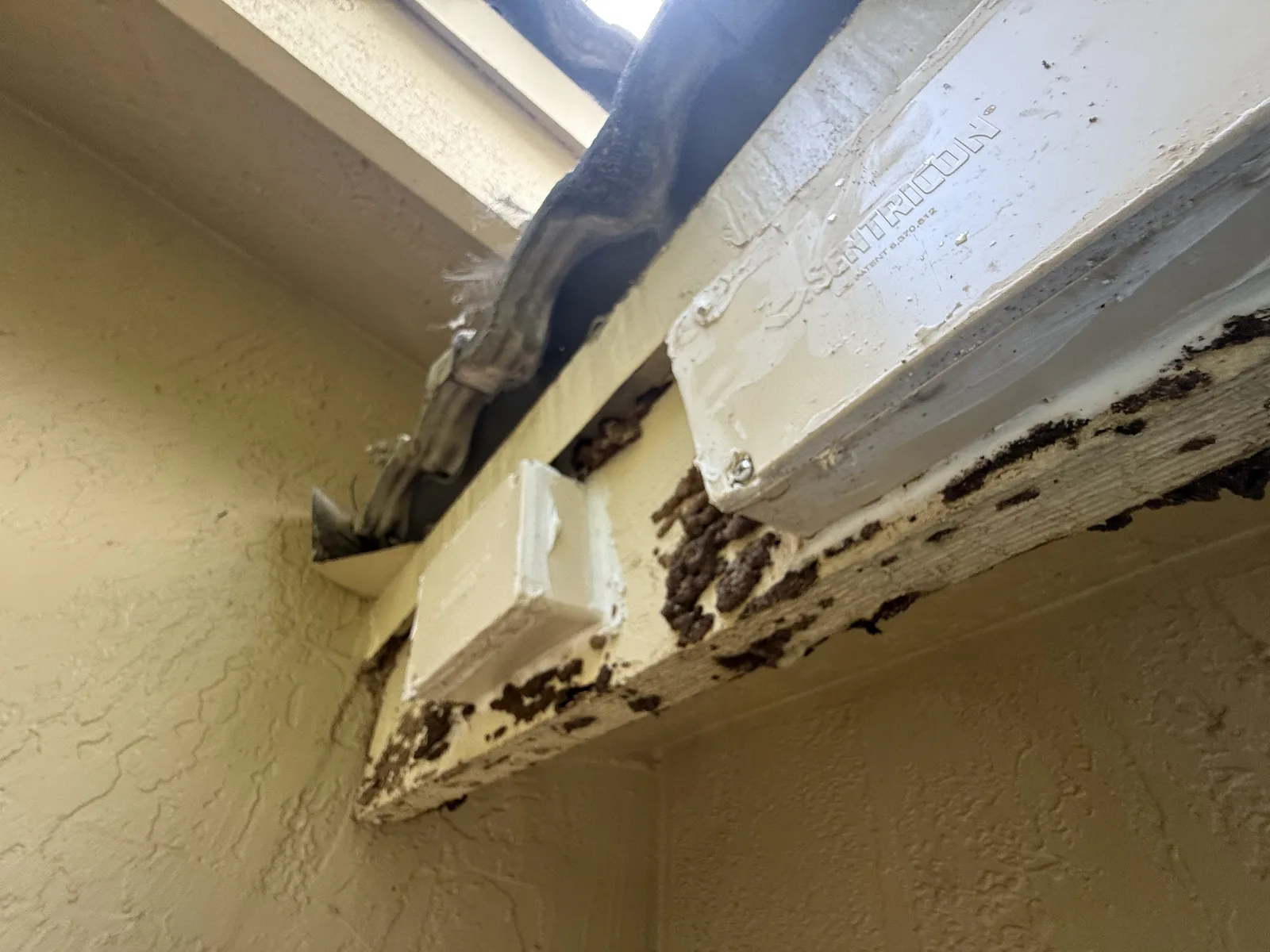
Ask a South Florida homeowner what kind of termites they had, and the answer is usually
“Formosans.” Ask an entomologist and you’ll get three names: native eastern subterranean
termites, Formosan termites, and Asian termites. Here’s the honest version: they’re all
subterranean termites, and from a homeowner’s point of view they behave the same way. They live
in enormous colonies in the soil, they need moisture, and they reach your house by building
mud tubes — pencil-width tunnels of soil and saliva running up foundations, garage walls,
piers, and plumbing penetrations.
If you’re seeing mud tubes, the playbook is the same no matter which name applies — and the
clock is ticking. This is the species group that does the real structural damage in Florida.
Why the “Formosan” name stuck. The Formosan termite (Coptotermes formosanus) is an invasive
subterranean species from East Asia, and it earned its reputation: a single colony can hold
several million termites — roughly ten times the size of a native subterranean colony — and
eats wood at a pace natives can’t match. Formosans can even build carton nests (chewed wood,
soil, and saliva) inside wall voids, letting a colony hold moisture and keep working without
returning to the soil. Because they became the termite horror story in South Florida, the name
spread to cover every termite that comes from the ground.
And the Asian termite? The Asian subterranean termite (Coptotermes gestroi) is the
Formosan’s tropical cousin — just as destructive, and spreading through the same neighborhoods.
South Florida is the only place in the continental U.S. where both are established. They even
swarm on different schedules: Formosans on warm, humid evenings in late spring; Asians earlier in
the year, at night. Homeowners don’t need to tell them apart — but your treatment company should
be able to.
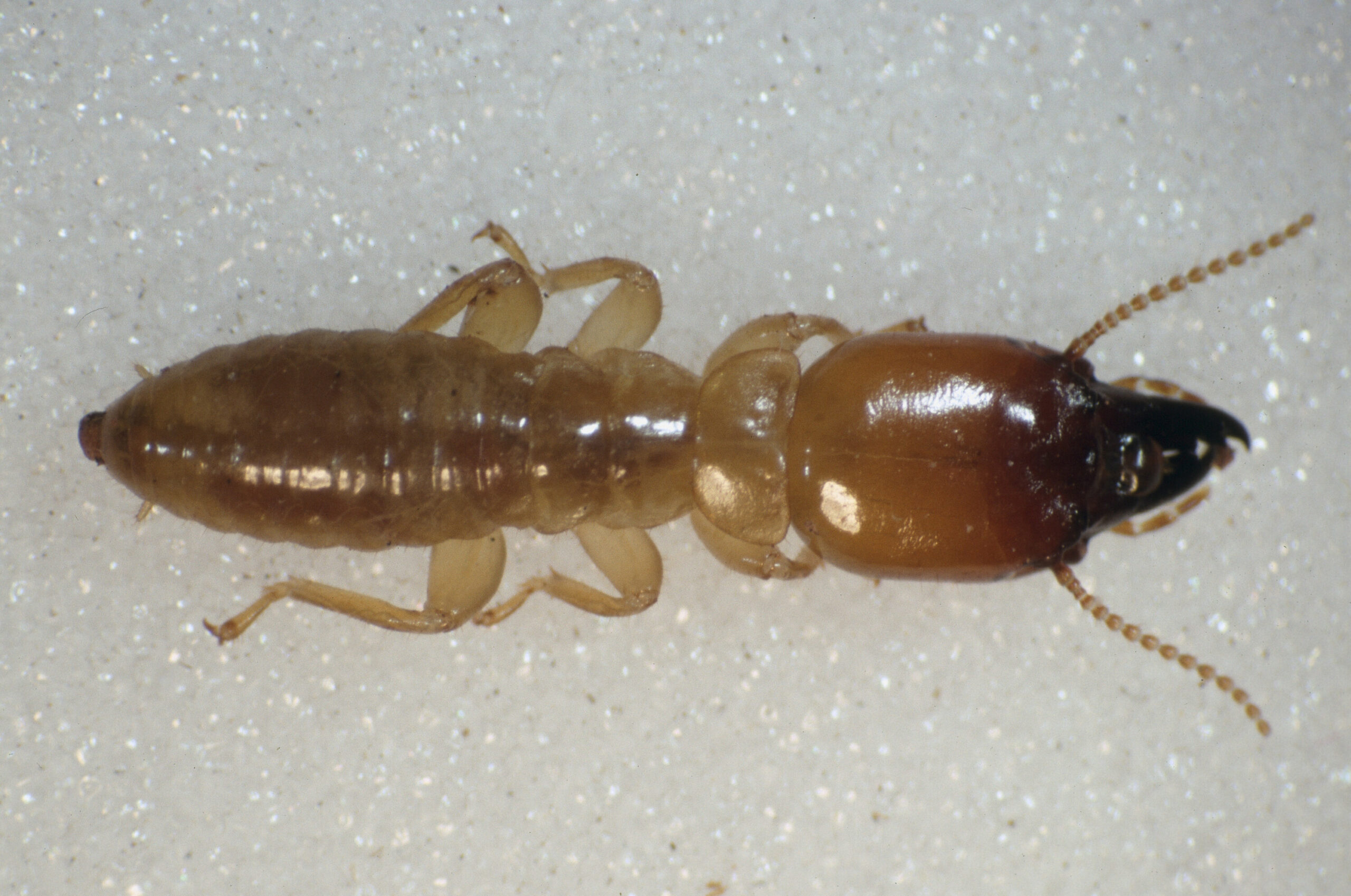
Under the microscope: this is how the pros actually separate Formosan from Asian — the shape
of the soldier’s head and details you can only see with magnification, like the fine hairs on
a swarmer’s wings. We photograph samples from our own jobs under the microscope (that’s what
you’re looking at above) because correct ID confirms the right treatment. It’s a level of
verification most companies skip.
Subterranean/Formosan at a glance:
– Lives in the soil (or carton nests in walls); needs moisture
– Evidence: mud tubes, hollow wood, swarmers with shed wings
– Colonies from hundreds of thousands to several million
– The #1 source of structural damage claims in Florida
– Treatment: liquid soil barrier and/or bait stations — full treatment options here
Conehead Termites — The Broward County Invader
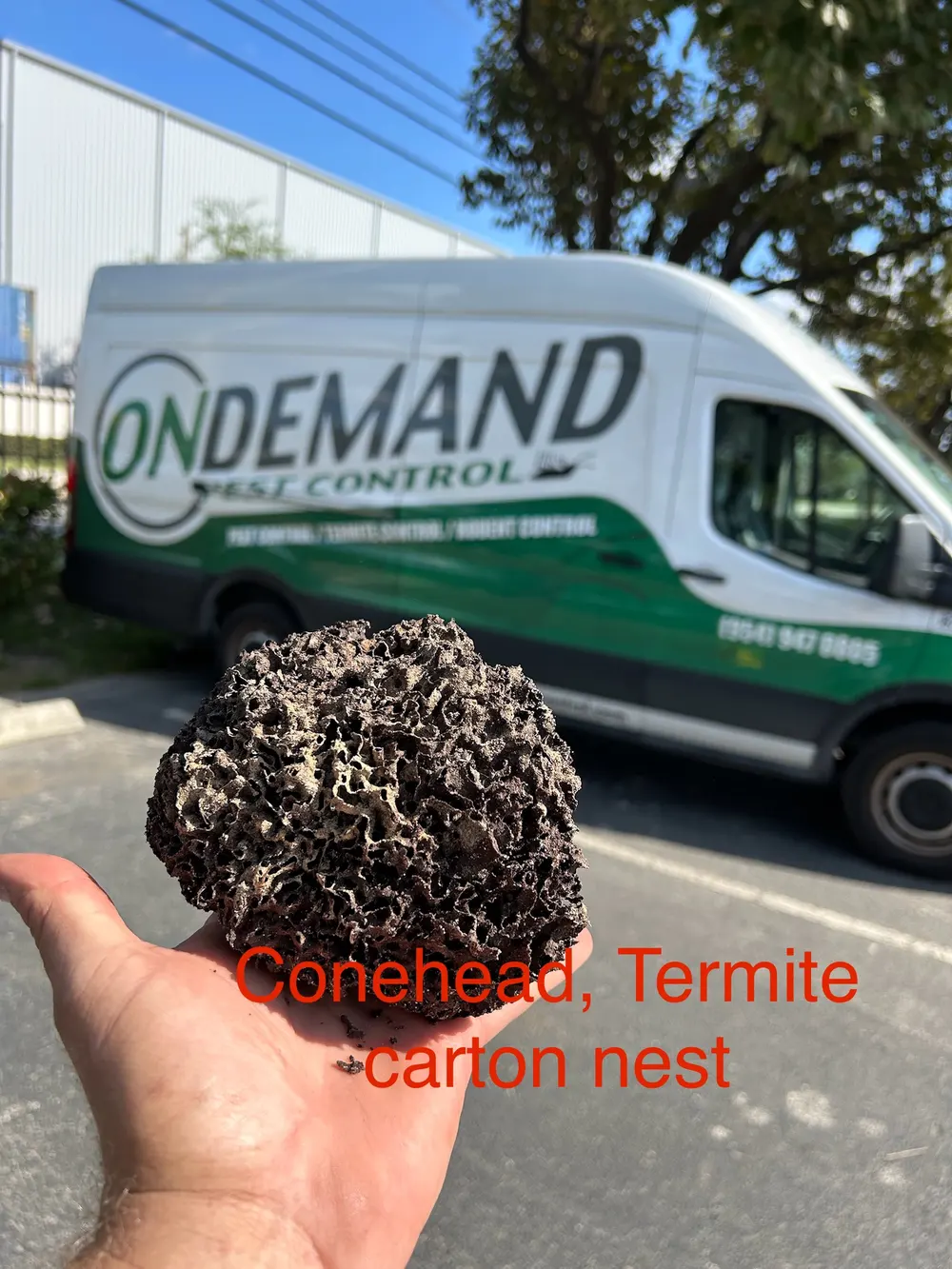
Most termite pages skip this one because most companies have never seen it. We have. The
conehead termite is established in the continental U.S. only in South Florida, with
Broward County as ground zero — and the photo above is a real carton nest from one of our own
local jobs, not a stock image.
Coneheads break the termite rules: they forage in the open, above ground, like ants, building
dark brown tunnels and basketball-sized carton nests in trees, fences, and structures. Soldiers
have distinctive dark, teardrop-shaped heads — the “cone” in conehead. They eat almost anything
with cellulose in it: trees, shrubs, fences, paper, and houses. The state has run an active
containment program for years; if you spot a nest like the one above anywhere in Broward or the
surrounding counties, it’s report-and-treat, not wait-and-see. Call us at (954)
947-0805 — we know exactly who to notify and how to treat it.
Dampwood Termites (a footnote)
Florida also hosts dampwood termites, which only infest wood that’s already saturated — a leaking
roof valley, wood in ground contact, chronically wet fence posts. They’re rarely a whole-house
problem; they’re a moisture-problem symptom. Fix the leak, replace the wet wood, and you’ve
usually fixed the termites. If dampwoods show up in an inspection, the finding that matters is
the water intrusion, not the insect.
Warning Signs of Termites in Your Home
Termites are cryptic — they avoid light and open air, so damage runs silently for months before anything shows. The big four signs:
- Mud tubes along the foundation, in the garage, or around plumbing.
- Frass — pellet piles under kick holes.
- Swarmers and shed wings on sills, near lights, in spider webs.
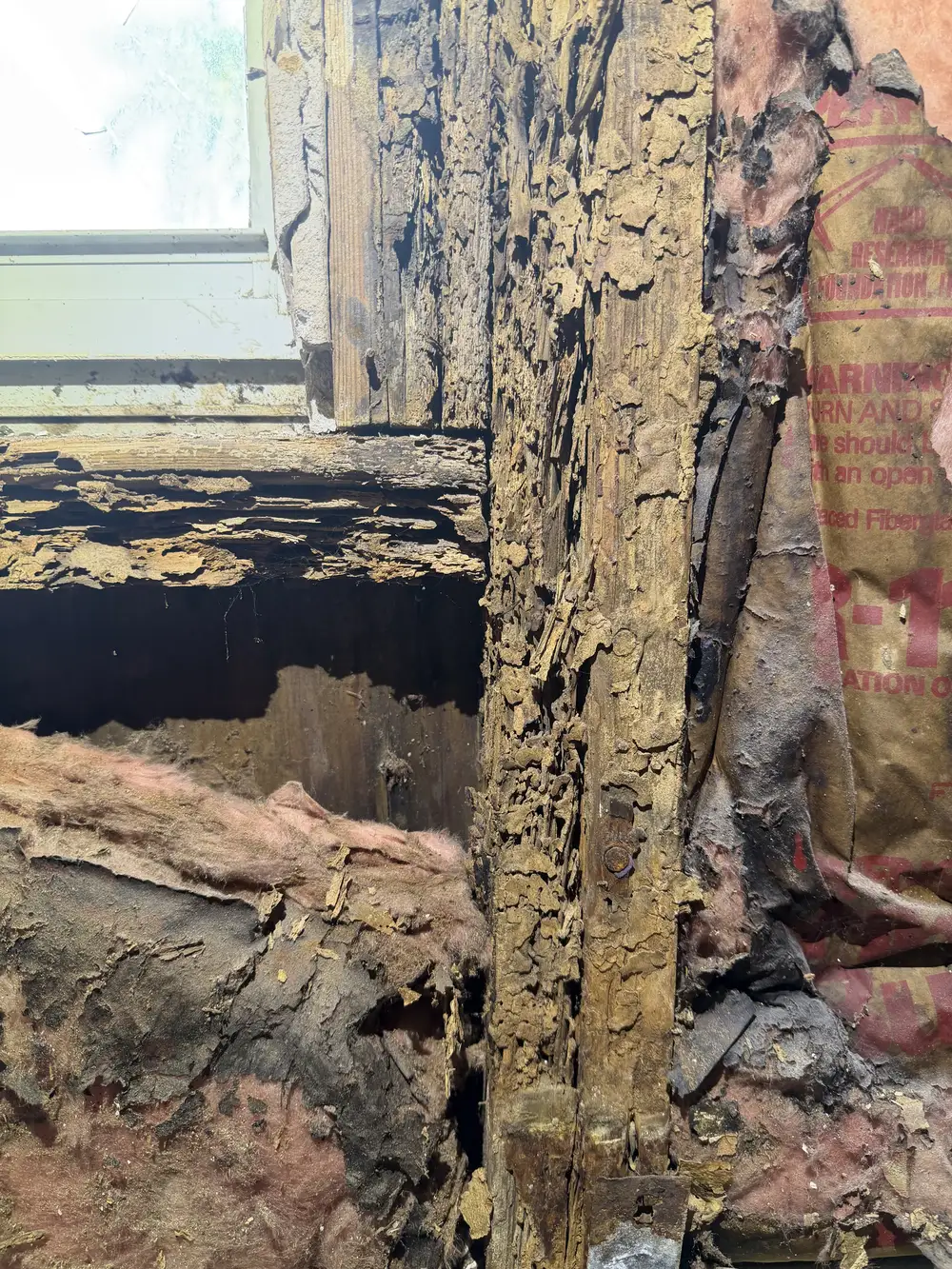
- Hollow-sounding or blistered wood, sticking doors and windows, bubbling paint.
We keep this section short on purpose, because we’ve written the definitive deep dive: Signs of Termites: the complete guide covers every symptom with photos — it’s the most-read termite resource we’ve ever published. If any of the four above rings a bell, start there, or skip straight to booking an inspection.
Termite Treatment Options in Florida
The right treatment follows the species — this is exactly why identification comes first.
For subterranean and Formosan termites (mud-tube species): – Liquid soil treatments — a continuous treated zone around and beneath the foundation. Modern non-repellent termiticides are undetectable to termites: workers pass through, carry the active ingredient home, and the colony collapses. The gold standard for soil-based species, with multi-year protection. – Bait station systems — in-ground stations that intercept foraging workers; slow-acting bait spreads colony-wide through feeding. Excellent for whole-colony elimination and ongoing monitoring — here’s our honest take on whether bait stations are worth it.
For drywood termites (in-the-wood species): – Whole-structure fumigation (tenting) — the only method guaranteed to reach every drywood colony hidden in walls, attic, and voids at once. What tenting actually involves, including the 2–3 days out of the house. – Heat treatment — chemical-free heat that raises infested areas to lethal temperatures in a single day. No residue, no residual protection — best paired with monitoring. – Spot treatments — injectable foams and dusts for infestations caught early and contained.
What about DIY? Orange oil, diatomaceous earth, and hardware-store sprays have real limitations against colonies you can’t see or reach — we lay out the honest comparison in DIY termite treatment vs. professional and cover the natural-control options too. The short version: DIY can’t confirm what species you have, can’t reach a colony under the slab, and comes with no warranty when it fails.
For the full picture — methods, timelines, and what’s right for your construction type — see our termite treatment service page or just talk to us directly.
Termite Inspections — Annual, and Especially When Buying or Selling
A licensed inspection is the foundation of everything above: it confirms the species, maps the activity, and catches the next infestation while it’s still cheap. In Florida’s pressure zone, annual inspections are the minimum; coastal South Florida homes and older wood-frame houses do better on six-month cycles. Curious what happens during one? Here’s how long a termite inspection takes and what the inspector is actually looking for.
Buying or selling a home? Termites get contractual: – Is a termite inspection required? — depends on your financing, and – VA loans require a clear termite inspection in Florida — active infestations must be resolved to close. – A termite bond — an ongoing protection agreement — is often required in transactions, and in a state where a colony can do five figures of uninsured damage, it’s one of the few no-brainer contracts in homeownership.