Table of Contents
ToggleKey Takeaways
- Paper wasps in Florida are semi-aggressive and will sting repeatedly if they feel their nest is threatened.
- Florida is home to several paper wasp species, including Polistes exclamans and Polistes carolina, which remain active nearly year-round.
- Paper wasp nests are open-celled, umbrella-shaped structures commonly found under eaves, soffits, porch ceilings, and mailboxes.
- While paper wasps are beneficial predators that control caterpillars and other garden pests, their proximity to homes poses a real sting hazard.
- Professional pest control is the safest option for removing paper wasp nests near doorways, play areas, and high-traffic zones.
Paper wasps in Florida are one of the most commonly encountered stinging insects around homes, patios, and outdoor structures. Their distinctive open-comb nests show up seemingly overnight beneath eaves, inside grills, and even tucked behind shutters. Because Florida’s warm, humid climate lets these wasps remain active for most of the year, understanding their behavior is essential for every homeowner. Unlike the solitary honey bees you might spot on flowers, paper wasps are social insects with a protective colony mentality that can lead to painful stings. In this guide, you will learn how to identify paper wasps, understand their nesting habits, assess the risks they pose, and decide when professional removal is the smartest choice.
What Are Paper Wasps and Why Are They Common in Florida?
Paper wasps belong to the genus Polistes, a group of social wasps named for the papery material they use to construct their nests. They chew wood fibers and mix them with saliva to produce a thin, gray or brown paper-like substance. Florida’s subtropical climate provides the perfect conditions for paper wasps to thrive. Warm temperatures, abundant moisture, and a long growing season mean that colonies can start earlier in the spring and persist well into late fall — or even year-round in South Florida.
Several species of paper wasps call Florida home. The most frequently seen include:
- Polistes exclamans — a brownish-yellow species commonly found on residential structures
- Polistes carolina — a reddish-brown wasp often confused with red wasps
- Polistes dorsalis — a smaller, darker species that favors garden areas
- Polistes metricus — a dark brown wasp sometimes found in shaded, wooded areas
All of these species share similar nesting and behavioral traits. They are an important part of Florida’s broader wasp population, which includes dozens of social and solitary species across the state.
How to Identify Paper Wasps in Florida
Proper identification helps you respond to paper wasps safely. Confusing them with other stinging insects can lead to the wrong approach — and the wrong outcome. Here is how to tell paper wasps apart from lookalikes.
Physical Appearance
Paper wasps are slender insects, typically measuring between ¾ inch and 1 inch in length. They have a narrow, pinched waist that separates the thorax from the abdomen. Their long legs dangle visibly in flight, which is one of the easiest ways to recognize them from a distance. Coloring varies by species — ranging from reddish-brown to dark brown with yellow banding.
Their wings are smoky or dark and fold lengthwise along their bodies when at rest. Unlike yellowjackets, paper wasps have a noticeably more elongated and less stocky build.
Paper Wasps vs. Yellowjackets vs. Mud Daubers
Homeowners often mix up paper wasps with yellowjackets and mud daubers. Knowing the difference between wasps and bees — and between different wasp types — matters for safety and treatment. The table below highlights the key differences.
| Feature | Paper Wasp | Yellowjacket | Mud Dauber |
|---|---|---|---|
| Body Shape | Slender, long legs | Stocky, compact | Very thin, thread-like waist |
| Nest Style | Open-comb, umbrella-shaped | Enclosed, papery sphere | Tube-shaped mud cells |
| Nest Location | Under eaves, soffits, ceilings | Underground or inside walls | Walls, ceilings, attics |
| Temperament | Semi-aggressive near nest | Highly aggressive | Rarely stings |
| Colony Size | 12–100 adults | 1,000–5,000 adults | Solitary |
If you find tube-shaped mud structures instead of papery combs, you may be dealing with a completely different species. Learn more about mud dauber wasps in Florida and how they differ from paper wasps.
Where Do Paper Wasps Build Nests Around Your Home?
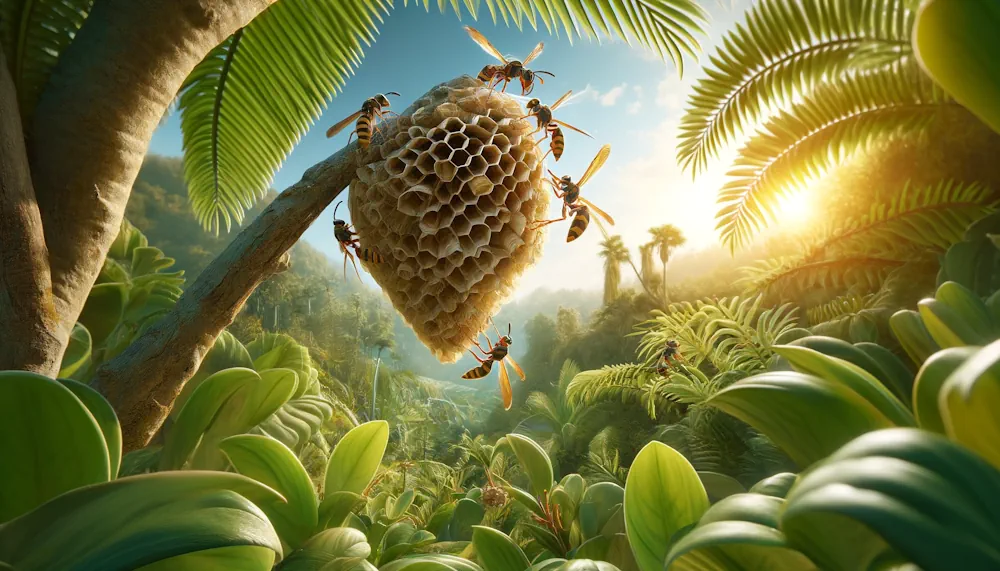
Paper wasp nests are unmistakable once you know what to look for. They consist of a single layer of hexagonal cells arranged in an open, downward-facing comb. The nest hangs from a thin stalk, or pedicel, attached to a solid surface. Fresh nests start small — about the size of a quarter — and can grow to the diameter of a grapefruit as the colony expands through summer.
Common nesting sites around Florida homes include:
- Under the eaves and soffits of your roof
- Inside porch ceilings and covered patios
- Behind window shutters and door frames
- Inside mailboxes, grills, and outdoor storage boxes
- On playground equipment and fence posts
- Under deck rails and outdoor furniture
Paper wasps prefer sheltered spots that are protected from direct rain and strong wind. Because Florida homes often feature wide overhangs, screened lanais, and outdoor kitchens, there is no shortage of ideal real estate for these wasps. Learning how to prevent wasp nests around your home is one of the best proactive steps you can take each season.
Paper Wasp Behavior and Life Cycle in Florida
Understanding the paper wasp life cycle helps you anticipate when they pose the greatest risk. In most of the United States, paper wasp colonies follow a single-season cycle. In Florida, however, the timeline is stretched — and in the southernmost regions, colonies may persist through winter.
Colony Founding in Spring
Fertilized queens emerge from overwintering sites as early as February in Central and South Florida. Each queen selects a nesting site, builds a small comb, and lays the first batch of eggs. She raises this initial generation of workers on her own, hunting caterpillars and other soft-bodied insects to feed the larvae.
Colony Growth Through Summer
Once the first workers mature, they take over foraging, nest construction, and defense duties. The queen focuses entirely on egg laying. By mid-summer, a healthy paper wasp colony may contain 20 to 100 adult workers. This is the period of peak activity — and peak defensiveness. Disturbing a nest during this stage almost guarantees a sting response.
Knowing when wasps are most active helps you plan outdoor work and recreation around the highest-risk windows.
Reproductive Phase and Decline
In late summer and early fall, the colony shifts from worker production to producing new queens and males. After mating, the new queens seek sheltered spots to overwinter — behind bark, inside attics, or within wall voids. The founding queen and her workers eventually die as temperatures cool. However, in South Florida’s mild winters, some colonies never fully die off, leading to unusually large nests by the following summer.
Are Paper Wasps in Florida Dangerous?
Paper wasps are generally less aggressive than yellowjackets or hornets. They typically sting only when they perceive a direct threat to their nest. However, “less aggressive” does not mean harmless. A paper wasp can sting multiple times because, unlike honey bees, its stinger is smooth and does not detach.
The real dangers of wasps in Florida include:
- Painful stings — Paper wasp venom causes immediate, sharp pain, followed by redness and swelling that can last several days.
- Allergic reactions — Approximately 5–8% of the population may experience a severe allergic reaction (anaphylaxis) to wasp stings, which requires immediate medical attention.
- Multiple stings — When a paper wasp stings, it releases an alarm pheromone that signals other colony members to attack. This can result in multiple stings in seconds.
- Secondary injuries — Surprise encounters on ladders, roofs, or near pools can cause falls and other accidents.
Children, elderly individuals, and anyone with known insect-sting allergies face the highest risk. If a nest is near a frequently used doorway, pool area, or play zone, removal should be a priority.
Benefits of Paper Wasps: Pest Control in Your Garden
Before rushing to destroy every paper wasp nest you find, consider their ecological role. Paper wasps are voracious predators of caterpillars, beetle larvae, flies, and other soft-bodied garden pests. A single colony can remove hundreds of pest insects from your yard every week during peak season.
For gardeners, this natural pest control is incredibly valuable. Paper wasps target tomato hornworms, cabbage loopers, and armyworms — all common Florida garden pests. They also help pollinate flowers as they visit blooms for nectar.
The broader impact of wasps in Florida extends beyond individual yards. Wasps are a key part of the food web, serving as both predators and prey. If a nest is located away from high-traffic areas — for example, on a fence post at the far edge of your property — leaving it alone may benefit your landscape more than removing it.
How to Safely Deal With Paper Wasp Nests
If a paper wasp nest is positioned where it threatens your family’s safety, removal is the right call. The approach you take depends on the nest size, location, and your comfort level.
DIY Removal Tips
Small, newly formed nests with fewer than a dozen cells can sometimes be handled by homeowners. Follow these precautions:
- Wait until dusk or early dawn when wasps are least active and clustered on the nest.
- Wear long sleeves, pants, gloves, and a hat. Cover as much skin as possible.
- Use a wasp-specific aerosol spray rated for jet-distance application (15–20 feet).
- Spray the nest thoroughly, saturating every cell and visible wasp.
- Do not stand directly beneath the nest — stand to the side and slightly back.
- Wait 24 hours, then knock the nest down with a long stick and dispose of it in a sealed bag.
Never attempt DIY removal on nests larger than a tennis ball, nests inside wall cavities, or nests in spots where a sting could cause you to fall.
When to Call a Professional
Professional pest control is recommended when:
- The nest is large (more than 30–50 cells) with many active adults.
- The nest is located in a hard-to-reach area — inside an attic, wall void, or high soffit.
- Anyone in your household has a known insect-sting allergy.
- Multiple nests are present on your property, suggesting an established population.
- You have already been stung while attempting removal.
A licensed technician has the protective equipment, professional-grade products, and experience to remove nests safely and treat surrounding areas to discourage rebuilding. This is especially relevant when dealing with other wood-damaging or stinging insects as well. If you notice round, perfectly drilled holes in wooden trim alongside wasp nests, you may also want to learn how to get rid of carpenter bees that could be causing structural damage at the same time.
Preventing Paper Wasp Nests on Your Florida Property
Prevention is always easier — and cheaper — than removal. These strategies reduce the chances of paper wasps choosing your home as their nesting site.
- Seal entry points. Caulk gaps around window frames, door casings, soffits, and utility penetrations. Paper wasps can slip through surprisingly small openings.
- Remove food attractants. Keep outdoor trash cans tightly sealed. Clean up fallen fruit, sugary spills, and pet food promptly.
- Inspect early and often. Walk around your home every two to three weeks from February through October. Look for small, quarter-sized starter nests and knock them down before workers emerge.
- Use decoy nests. Paper wasps are territorial. Hanging a decoy paper wasp nest near eaves can discourage new queens from building nearby.
- Treat eaves and overhangs preventively. A residual insecticide applied to common nesting surfaces in early spring creates a barrier that deters nest construction.
Combining regular inspections with targeted prevention keeps paper wasp populations manageable. For homeowners already managing stinging insects near pools, patios, and outdoor living areas, these strategies work alongside other precautions like keeping bees away from your pool to create a safer outdoor environment overall.
Frequently Asked Questions
-
Are paper wasps in Florida active year-round?
In Central and South Florida, paper wasps can remain active nearly year-round due to mild winters. In North Florida, colonies typically die off in late fall, and new queens emerge to start fresh colonies in early spring. Mild winters may allow some colonies to persist longer than expected.
-
Do paper wasps return to the same nest each year?
Paper wasps do not reuse old nests. However, the sheltered spot where an old nest existed is attractive to new queens the following season. Removing old nests and treating the area with a residual repellent helps prevent a new colony from setting up in the same location.
-
What should I do if a paper wasp stings me?
Wash the sting area with soap and water immediately. Apply a cold compress to reduce swelling and take an over-the-counter antihistamine for itching. If you experience difficulty breathing, swelling of the face or throat, dizziness, or a rapid heartbeat, call 911 immediately — these are signs of a severe allergic reaction.
-
Can paper wasps sting through clothing?
Paper wasps can sting through thin, tight-fitting clothing. Loose-fitting, thick layers provide much better protection. When working near a known nest, wear long sleeves, heavy-duty gloves, and closed-toe shoes to reduce your risk.
-
How many times can a single paper wasp sting?
A single paper wasp can sting multiple times. Unlike honey bees, paper wasps have a smooth stinger that does not break off after a sting. This means one wasp can deliver several painful stings in rapid succession during a defensive encounter.
-
Is it safe to remove a small paper wasp nest myself?
Very small nests — those with fewer than a dozen cells and just a few wasps — can be removed by a confident homeowner using a wasp-specific aerosol spray at dusk. However, if the nest is larger, in a hard-to-reach spot, or if anyone in your household has an allergy to insect stings, calling a professional is the safest option.