

Cockroach nymphs resemble smaller wingless adults. Identification, location and repeated captures are more informative than assuming one small insect proves a large infestation.
Short answer
Cockroach nymphs resemble smaller wingless adults. Identification, location and repeated captures are more informative than assuming one small insect proves a large infestation.
Start with anatomy, not a pale color
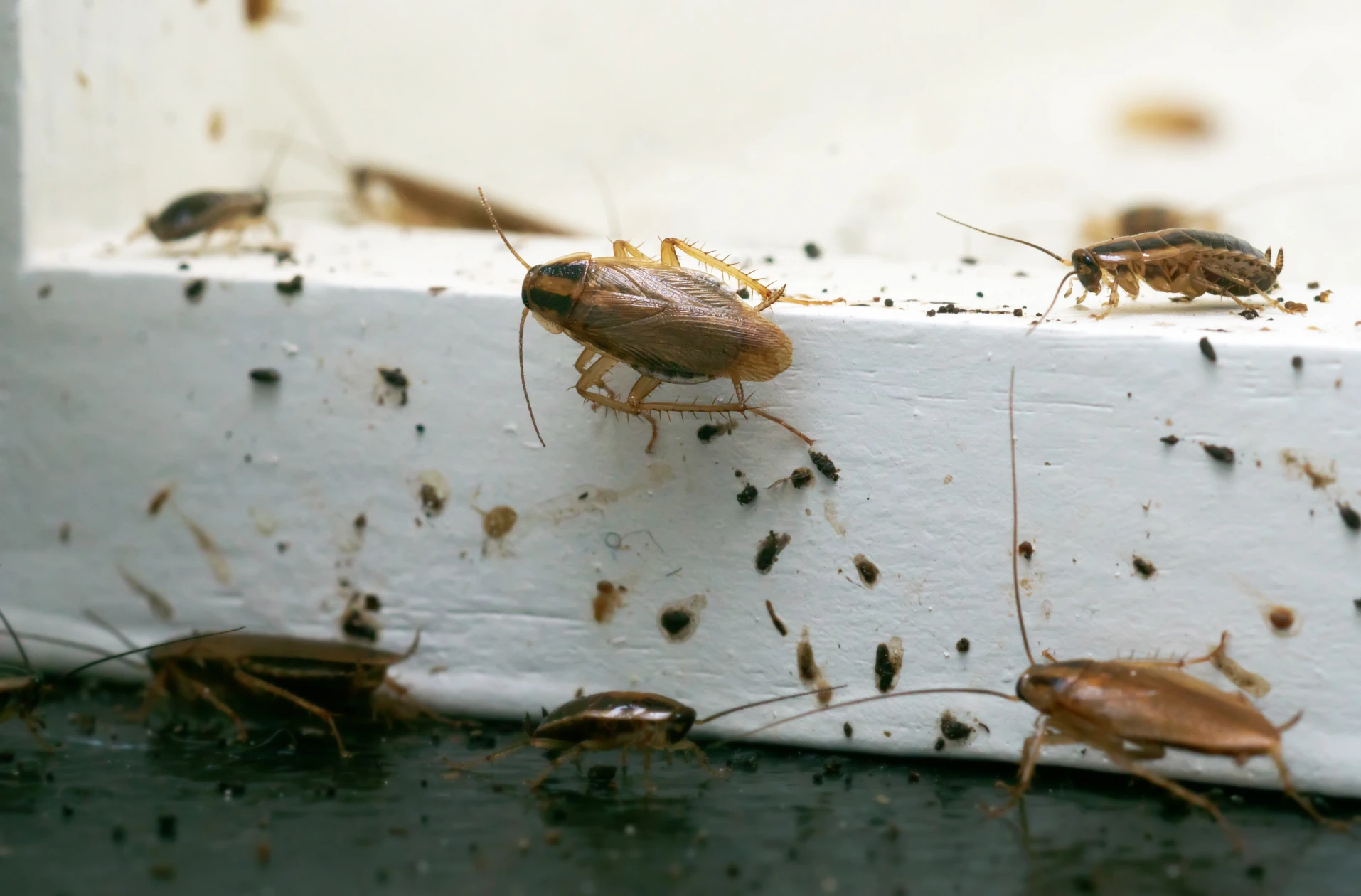
Cockroach nymphs are immature stages. They generally have long antennae, a flattened body and no fully developed adult wings. Their coloring varies by species and stage; an individual that has just molted may be pale before its covering darkens. Not every tiny white or brown insect is a baby roach. Take a clear image beside a scale or retain a specimen for identification. Record the place where it was found, because a kitchen appliance crevice and an outdoor planter can support different species and therefore different responses.
Species clues have limits
German cockroach nymphs and brown-banded cockroach nymphs have different markings, but a blurred image can conceal those distinctions. Some outdoor species also resemble familiar indoor roaches at immature stages. A homeowner should not infer the exact species from body size alone. German and brown-banded cockroaches can breed indoors, while other species more often enter from outdoor habitats. Ask the identifier to explain which physical features support the diagnosis. A wingless nymph cannot be classified by an adult flight behavior that it has not yet developed. For confirmed German cockroaches, review German cockroach control and prevention as an indoor-population problem rather than a generic outdoor-entry response.
A nymph is evidence to investigate, not a population count
Nymphs can indicate nearby reproduction, especially when several sizes, egg cases or repeated captures occur around indoor harborages. One specimen does not quantify a hidden population or establish that every room is affected. Inspect accessible appliance edges, cabinet joints, pipe penetrations and stored cardboard. Do not open an energized appliance or electrical outlet to chase insects. Sticky monitoring traps at appropriate edges can show where activity concentrates; record the location and check them consistently. Compare new captures rather than guessing from one night’s encounter. Questions about cockroach reproduction should be tied to species and conditions, not a fixed population estimate from one sighting.
Reduce food, moisture and inaccessible clutter
Clean crumbs and spills, store food in closed containers and empty refuse. Repair leaks and remove standing water where practical. Cardboard and accumulated papers can provide concealment, so reduce unnecessary stacks without spreading insects to other rooms. Where belongings are being moved, inspect and contain them. Seal building gaps with suitable materials after considering access for inspection and repairs. These actions make monitoring and any bait plan more effective. They are supportive measures, not proof that an indoor-breeding species will disappear after a single cleanup. Review German cockroach health concerns without inferring illness from a sighting; identification and exposure are separate questions.
Choose a targeted plan rather than a fogger
UC IPM recommends sanitation, exclusion and monitoring and warns against foggers and aerosol approaches that can disperse cockroaches. If bait is selected, the product must list the pest and placement site, and be kept from children and pets. Do not spray over or near bait in a way that conflicts with its directions. There is no universal immediate result: insect location, competing food and the product all matter. For persistent or extensive indoor activity, a professional can identify harborages and design a plan. Keep any previous treatment details available. The overview of cockroach control in Florida can help organize species-specific sanitation, exclusion and monitoring questions. Review responding to a cockroach infestation when repeat findings require an inspection-based plan rather than more indiscriminate spraying. The guide to alternatives to cockroach fogging frames targeted-control questions; no alternative is automatically suitable for every use site.
Verify progress where the insects were found
A useful follow-up asks whether captures are declining in the same monitored locations and whether fresh nymphs or egg cases continue to appear. Cleaning a visible surface while ignoring a damp appliance recess may miss the central harborage. In multi-unit housing, tell management about confirmed recurring evidence; insects and conditions may involve adjoining units. Cockroach allergens and contamination are reasons to act, but a nymph sighting is not proof that a particular resident has contracted an illness. Seek medical advice for health symptoms rather than attributing them to the insect alone.
Compare look-alikes before selecting bait
Bed bug immatures, small beetles and other household insects can be mistaken for a roach nymph in a blurred image. Legs, antennae, body shape and a clear scale matter more than the fact that an insect was tiny and moved fast. A carpet beetle larva, for example, has a different appearance and feeding issue from an indoor-breeding cockroach. Ask the identifier to explain the diagnostic features rather than selecting a remedy from a photo collage alone. The wrong bait may not fit the insect, and a general aerosol can obscure evidence without resolving the actual source.
Egg cases and molts add context
A cockroach egg case is a distinct structure, not simply a group of loose white eggs found on a counter. Different species place or carry cases differently, so avoid assuming any brown capsule establishes German cockroach activity. Similarly, a pale insect may have molted recently rather than be a new species. Preserve a specimen or a clear image, note nearby adults and review captures over time. This helps distinguish a single introduced item from repeated development around an indoor harborage. It still does not produce a reliable population estimate or prove how long activity has been present.
Inspect introduced belongings carefully
A box, appliance or other item moved into the home can provide concealed shelter. If activity began after a delivery or used-item purchase, include that item in the inspection without deciding it must be the cause. Keep suspect belongings from spreading into multiple rooms and make the relevant edges accessible. Do not disassemble energized equipment or place pesticides in an appliance without the product and equipment requirements permitting it. A provider may need to coordinate safe access with a technician. The useful objective is confirming the harborage and species rather than blaming a particular delivery without evidence. Use the guide to conditions associated with cockroach activity to examine food, water, shelter and introduction routes instead of assigning a single cause.
Use species comparisons as questions, not a photo shortcut
A cockroach nymph is an immature cockroach. It generally resembles the adult body form but lacks fully developed adult wings and is not reproductively mature. Size, pigmentation and markings change with stage, so a pale or tiny insect should not be named from those two features alone. UC IPM describes why identification matters for management. Include an image of the back, a scale reference and the location where it was collected; a blurred close-up without scale often cannot support a species-level answer.
For German cockroaches, ask whether the specimen and other evidence fit an indoor food-and-water environment such as a kitchen or bathroom. German adults have two dark stripes on the shield behind the head, while nymphs have different patterning; do not demand adult marks on an immature insect. Brownbanded cockroaches have banding and may use furniture, wall decorations and other warmer, relatively dry indoor hiding places. A kitchen-only search can therefore miss relevant locations. UC IPM describes smokybrown nymphs as dark brown with white segments at the ends of their antennae and across their backs. Treat those markings as clues to document in a clear photo or specimen, with the location recorded, rather than a diagnosis from size alone. Large American cockroaches and their young raise a different investigation of damp service areas and outdoor connections. Habitat is supporting context, not a replacement for anatomy.
Species beyond those examples can occur, and related species may look similar. This comparison deliberately does not claim that every Florida nymph can be assigned to one of three names from a household photograph. An identified adult found at the same site may help an expert, but it is not proof that every small insect nearby is its young. Keep samples from different locations labeled separately and avoid merging observations until the identifier has considered them. Compare American cockroach identification before treating a large or young roach as an indoor-breeding species solely from size.
Asian cockroaches are another German-roach look-alike. UF/IFAS describes outdoor Asian adults that fly toward lights, but nymphs lack developed wings, so that adult behavior cannot identify a young specimen. Keep Asian versus German identification open for expert examination rather than assigning every similar nymph to an indoor-breeding population.
Compare small household look-alikes
A bed bug is a different flattened insect, and bites or a mattress location do not turn a cockroach into one. A hairy, wormlike carpet-beetle larva is also different from a six-legged roach nymph. A small adult beetle has a hard-covered body rather than the developing wing form of a young cockroach. These broad differences help decide what photographs or samples to collect; they are not a substitute for a full identification. If the visible animal has many apparent hairs, an elongated larval shape or thick wing covers, show those features rather than describing it only as a baby roach.
The treatment consequence is important. Cockroach bait is not a general remedy for every small indoor insect. Fabric pests call for examination of susceptible materials; bed bugs call for a resting-area investigation; pantry beetles call for a food-source search. An incorrect label can send the household toward the wrong rooms and products while the real source remains untouched. Obtain identification before using a chemical response, especially when the only observation is a single pale specimen.
Read stages and locations together
Several nymphs and egg-case evidence near a particular hiding area justify a closer inspection there, but do not provide a reliable household population calculation. Newly molted roaches can be pale before their outer covering darkens; color alone does not identify a rare species. Record the actual combination observed: live adults, different nymph sizes, egg cases or old remains. Keep fresh activity separate from material that may have remained after previous control. A provider can use those details to refine the search without claiming a fixed number of hidden roaches per visible one.
For a kitchen finding, prioritize accessible cabinet edges, plumbing leaks, crumbs and protected gaps near appliances without dismantling electrical equipment. For a furniture or high-wall finding, tell the inspector so the investigation is not limited to a sink cabinet. Inspect introduced boxes and used items before assuming the building itself is the source. Monitoring should use labeled locations and dates, with treatment decisions tied to the identified species and actual activity rather than a universal spraying schedule. Investigate plumbing-related cockroach entry where evidence points to plumbing, without blocking designed drainage or ventilation. Review Florida cockroach seasonality without assuming an indoor population disappears in a particular month.

Use a small-insect comparison checklist
Start by checking whether the image shows six legs, the antennae, body outline and developing wing area. A young cockroach’s flattened body and long antennae should be considered together. A hairy larval form points to a different identification question; a hard-covered adult beetle is different again. Include scale and the room, and avoid diagnosing from a pale color after a molt. The checklist is a way to improve the evidence supplied to an identifier, not permission to select a pesticide from a blurred photograph.
Next ask whether the location matches the identified biology. A specimen from a kitchen cabinet, one from a stored textile and one inside dry food should remain separately labeled. Even if all were found in the same home, they may not be the same pest. A useful report says which specimen was identified and what further search follows from that identification. It should not turn one confirmed roach nymph into a claim that every small brown organism in the home belongs to its colony.
Finally, use the finding to prioritize access and monitoring. If the species is associated with indoor food areas, show the provider recurring leaks, protected gaps and food residues actually found there. If the specimen remains unidentified, keep the question open instead of applying roach bait to every location. Species, life stage and place work together; none provides a reliable household population estimate alone. This distinction prevents unnecessary treatment while keeping a genuine developing infestation from being dismissed simply because the insects are small. Compare small and large cockroaches while retaining the specimen; size alone does not establish species or infestation severity.
Sources and further guidance
Frequently Asked Questions
-
Are baby cockroaches a sign of infestation?
They can indicate nearby reproduction, particularly when repeated or accompanied by egg cases. One suspected nymph still needs identification and context.
-
What color are baby cockroaches when they first hatch?
A newly molted roach can be pale and later darken. Color alone does not distinguish a newly hatched insect from another small pest.
-
Can baby cockroaches fly?
Nymphs do not have fully developed adult wings and cannot fly. Adults of some species can fly or glide.
-
How big are baby cockroaches compared to adults?
Size varies by species and stage; a nymph is smaller than its own adult form. A scale photograph helps identification.
-
Where do baby cockroaches come from inside the house?
They hatch from egg cases, which may be introduced with belongings or laid by a nearby population. Inspect the harborage and identify the species.
-
Should I call a professional if I find baby cockroaches?
Seek help for repeated indoor evidence, uncertain identification or a problem you cannot locate. An isolated outdoor invader calls for a different response.
Get help with your pest concern.
Tell us what you are seeing. Our team can discuss the concern and the next step.
- Share your concern and contact details.
- Our team contacts you to discuss available service.
- Ask for a written scope and quote before work.
Where can we reach you?
Our team will call to confirm the next step.
By submitting, you’re asking On Demand Pest Control to contact you about this request.
↗ Prefer to call? (954) 947-0805