
Table of Contents
ToggleKey Takeaways
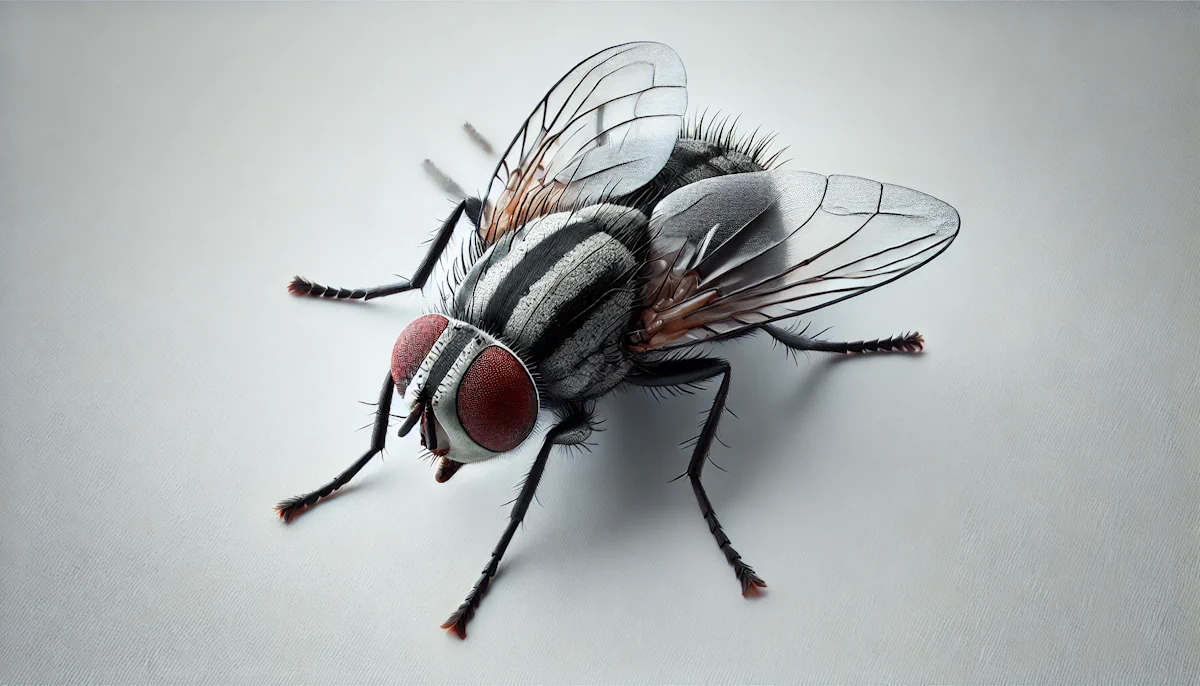
- Flesh flies are medium-to-large gray flies with distinctive black stripes on their thorax and red eyes, commonly found near decaying organic matter.
- Unlike most flies, flesh flies give birth to live larvae instead of laying eggs, which accelerates their ability to infest rotting material.
- Flesh flies can spread bacteria and pathogens that cause food contamination, making them a genuine health concern for homeowners.
- Removing decaying organic material, sealing trash bins, and keeping doors and windows screened are the most effective prevention strategies.
- Flesh flies are frequently confused with house flies, but they are larger and have unique markings that help with accurate identification.
Flesh flies are one of the most unsettling pests you can encounter around your home, and their name alone is enough to make most people uncomfortable. These grayish flies are drawn to decaying animal matter, garbage, and even open wounds on animals — and they reproduce at an alarming rate. If you’ve spotted large, striped flies buzzing around your trash cans, pet waste, or outdoor cooking areas, there’s a good chance you’re dealing with flesh flies. Understanding what they are, how they behave, and what draws them to your property is the first step toward keeping them out. In this guide, you’ll learn how to identify flesh flies, what makes them different from common house flies, the health risks they pose, and proven strategies for preventing infestations before they take hold.
What Are Flesh Flies and How Do You Identify Them?
Flesh flies belong to the family Sarcophagidae, a group of insects found worldwide with over 2,500 known species. In the United States, several species are commonly encountered around homes, particularly in warm and humid climates like Florida. Their name comes from their habit of breeding in decaying flesh, though they also reproduce in garbage, animal feces, and rotting food.
Identifying flesh flies is relatively straightforward once you know what to look for. They share some similarities with other common fly species, but a few features set them apart clearly.
Physical Characteristics of Flesh Flies
Adult flesh flies are medium to large, typically measuring between 6 and 14 millimeters in length. Their most recognizable feature is a gray or light-gray thorax marked with three dark longitudinal stripes. Their abdomen often displays a light-and-dark checkerboard pattern, and they have large, reddish-brown compound eyes.
Other identifying traits include:
- Grayish body with black stripes running lengthwise on the upper back
- Red or reddish-brown eyes
- A slightly bristly or hairy appearance, especially near the abdomen
- Larger size than a typical house fly
These physical markers make flesh flies distinguishable from smaller, darker flies you might see indoors.
Flesh Flies vs. House Flies: Key Differences
Many homeowners mistake flesh flies for house flies because they look vaguely similar at a glance. However, there are important differences. House flies are generally smaller, reaching about 6 to 7 millimeters, and have a more uniform dark gray color with four distinct stripes on the thorax. Flesh flies are noticeably larger and display a lighter gray tone with only three stripes.
| Feature | Flesh Fly | House Fly |
|---|---|---|
| Size | 6–14 mm | 6–7 mm |
| Body Color | Light gray with checkerboard abdomen | Dark gray, uniform |
| Thorax Stripes | 3 dark stripes | 4 dark stripes |
| Eye Color | Reddish-brown | Reddish |
| Reproduction | Gives birth to live larvae | Lays eggs |
The most significant biological difference is that flesh flies are larviparous — they deposit live larvae directly onto a food source rather than laying eggs. This gives their offspring a head start in development.
Life Cycle of Flesh Flies: Why They Spread So Fast
Understanding the flesh fly life cycle helps explain why infestations can escalate quickly. Unlike most fly species that lay eggs, female flesh flies deposit live first-instar larvae onto suitable breeding material. This unique reproductive strategy means the larvae begin feeding immediately without waiting for an egg to hatch.
Stages of Development
The flesh fly life cycle consists of four stages: egg (which hatches internally), larva, pupa, and adult. After the female deposits larvae onto decaying matter, the maggots feed voraciously for several days. They go through three larval instars before crawling away from the food source to pupate in soil or other dry material.
The pupal stage lasts roughly 10 to 14 days, depending on temperature and humidity. In warm Florida conditions, the entire cycle from larva to adult can be completed in as little as two to three weeks. Adults typically live for 15 to 30 days, during which females can produce multiple batches of larvae.
Breeding Sites Around Your Home
Flesh flies breed wherever they find decaying organic material. Common breeding sites around residential properties include:
- Open or improperly sealed garbage cans
- Dead animals (rodents, birds, lizards) in walls, attics, or yards
- Pet waste left in the yard
- Compost bins with meat or animal-based waste
- Rotting food scraps near outdoor grills or dining areas
Because they seek out these materials actively, even a small amount of exposed waste can attract flesh flies to your property. Knowing what attracts flies to your home is essential for preventing repeated encounters with these pests.
Are Flesh Flies Dangerous to Humans?
Flesh flies are more than just a nuisance. Because they feed and breed on decaying animal matter, garbage, and feces, they readily pick up and transport harmful bacteria and pathogens. When they land on food preparation surfaces, utensils, or uncovered meals, they can transfer these contaminants directly.
The primary health risks associated with flesh flies include:
- Bacterial contamination: Flesh flies carry bacteria like Salmonella, E. coli, and other organisms that cause foodborne illness.
- Myiasis: In rare cases, certain flesh fly species can deposit larvae in open wounds on animals or even humans, causing a parasitic condition called myiasis.
- Allergic reactions: Decomposing larvae and fly debris can trigger respiratory irritation in sensitive individuals.
While flesh flies are less likely than some pests to bite, their contamination potential makes them a serious concern. If you’re already dealing with other fly types, you might also want to learn whether drain flies are harmful or dangerous to understand how different species pose different risks in and around your home.
What Attracts Flesh Flies to Your Property?
Flesh flies have an extremely sensitive sense of smell. They can detect decomposing organic matter from considerable distances, which is why they seem to appear out of nowhere when something dies nearby or garbage sits exposed for too long.
Several common conditions around Florida homes make properties especially attractive to these pests:
- Dead animals: A rodent that died inside a wall void or an animal carcass in the yard is one of the strongest attractants for flesh flies.
- Overflowing trash: Garbage cans without tight-fitting lids are an open invitation, especially during hot summer months when decomposition happens rapidly.
- Pet waste: Dog or cat waste left in the yard provides both food and a breeding site for larvae.
- Compost piles: Composting meat, dairy, or animal products can draw flesh flies quickly.
- Outdoor cooking areas: Residual grease, meat drippings, and food scraps around grills attract these flies.
Florida’s warm, humid climate accelerates decomposition, which means organic waste becomes attractive to flesh flies faster than it would in cooler regions. This is also why homeowners in the state often contend with multiple fly species simultaneously. For instance, green bottle flies in your house are drawn to similar conditions and are often found alongside flesh flies near decaying material.
How to Prevent Flesh Flies From Invading Your Home
Prevention is the most effective strategy against flesh flies. Because these pests are attracted to very specific conditions, eliminating those conditions usually resolves the problem. Here are the most impactful steps you can take.
Sanitation and Waste Management
Proper sanitation is the foundation of flesh fly control. Keep all outdoor trash cans tightly sealed with lids that close completely. Bag all garbage before placing it in bins, and schedule regular trash pickup to prevent accumulation. If you compost, avoid adding meat, fish, dairy, or pet waste to your pile — stick to plant-based materials only.
Clean up pet waste from your yard daily, and rinse outdoor trash cans periodically with a disinfectant solution to remove residue that attracts flies. After grilling or outdoor dining, clean cooking surfaces and dispose of food scraps promptly.
Exclusion and Home Sealing
Keeping flesh flies out of your home requires physical barriers. Ensure all windows and doors have intact screens without tears or gaps. Seal cracks around door frames, window frames, and utility entry points. Use door sweeps on exterior doors, especially those leading to garages or patios where garbage is stored.
If you notice flesh flies indoors, it may indicate a dead animal inside your walls or attic. A sudden appearance of large, gray flies in a room that has no obvious food source is a classic sign of a carcass hidden behind walls or above ceilings.
Remove Dead Animal Attractants
One of the most common reasons flesh flies appear around homes is a dead animal on or near the property. If you’ve been dealing with rodents, check your attic, crawl spaces, and wall voids for carcasses. Remove any dead animals found in the yard promptly. In Florida, where lizards, frogs, and small wildlife are abundant, it’s not uncommon for animals to die near or under structures.
If you suspect a dead animal inside a wall but can’t locate it, a pest control professional can help identify and remove the source. Leaving it in place will continue to attract flesh flies and potentially other pests like black flies in your yard and various beetle species.
How to Get Rid of Flesh Flies Already in Your Home
If flesh flies have already found their way inside, a multi-step approach works best. Start by identifying and eliminating the source that attracted them. Without removing the breeding material, any other effort will provide only temporary relief.
Here are practical steps for dealing with an active flesh fly presence:
- Find and remove the source: Check for dead animals, forgotten garbage, or spoiled food. This is the single most important step.
- Use fly traps: Sticky traps and UV light traps can help capture adult flies already indoors.
- Vacuum adults: A quick way to reduce the immediate population is to vacuum up visible flies and dispose of the bag outside.
- Clean thoroughly: Disinfect surfaces where flies have landed, particularly in kitchens and dining areas.
- Monitor for recurrence: If flesh flies return after cleaning, you may have missed a hidden source or have an ongoing attraction nearby.
For persistent infestations that don’t respond to DIY methods, professional pest control can address both the immediate fly population and the underlying conditions attracting them. A trained technician can inspect hard-to-reach areas and apply targeted treatments that are safe for your household.
Flesh Flies in Florida: Why They Thrive Here
Florida’s subtropical climate creates ideal conditions for flesh flies year-round. High temperatures and humidity accelerate the decomposition of organic material, which means breeding sites become available faster and remain productive longer than in cooler states. Flesh flies are most active from late spring through early fall, though in South Florida, they can be encountered during any month.
Urban and suburban areas provide abundant food sources for flesh flies. Restaurant dumpsters, residential garbage, roadkill, and even pet-friendly outdoor spaces all contribute to local flesh fly populations. Homes near wooded areas, wetlands, or farms may see higher activity because of the presence of wildlife carcasses and agricultural waste.
Because Florida homeowners often deal with multiple fly species at once, accurate identification matters. For example, horse flies that bite require very different management strategies than flesh flies. Knowing exactly which species you’re dealing with ensures you take the right approach and don’t waste time on ineffective treatments. If you’re unsure about an infestation, reach out to a local pest control professional who can identify the species and recommend a targeted plan.
Frequently Asked Questions
-
Do flesh flies bite humans?
Flesh flies do not bite humans. They lack the mouthparts needed to pierce skin. However, they pose health risks by spreading bacteria from decaying matter onto food and surfaces in your home.
-
Why are flesh flies in my house when there's no visible food source?
A dead animal inside your walls, attic, or crawl space is the most common hidden attractant. Flesh flies can detect decomposing material behind drywall and will enter through small gaps or cracks to reach it.
-
How long does it take for flesh flies to breed and multiply?
In warm conditions like those in Florida, the flesh fly life cycle from larva to adult takes about two to three weeks. A single female can produce several batches of live larvae during her 15- to 30-day adult lifespan, which allows populations to grow rapidly.
-
Can flesh flies cause myiasis in humans?
While rare, certain flesh fly species can deposit larvae in open wounds, leading to a condition called myiasis. This is more common in animals but can occur in humans with untreated injuries. Seek medical attention immediately if you suspect larval infestation in a wound.
-
What is the best way to prevent flesh flies around my home?
The best prevention strategy involves keeping garbage in sealed containers, cleaning up pet waste daily, removing any dead animals promptly, and ensuring all windows and doors have intact screens. Eliminating organic waste removes the primary reason flesh flies visit your property.
-
Are flesh flies the same as blow flies or bottle flies?
No, they are different families. Flesh flies belong to the family Sarcophagidae and are gray with black stripes. Blow flies and bottle flies belong to the family Calliphoridae and typically have metallic green or blue bodies. Both are attracted to decaying matter but have distinct physical characteristics and behaviors.