
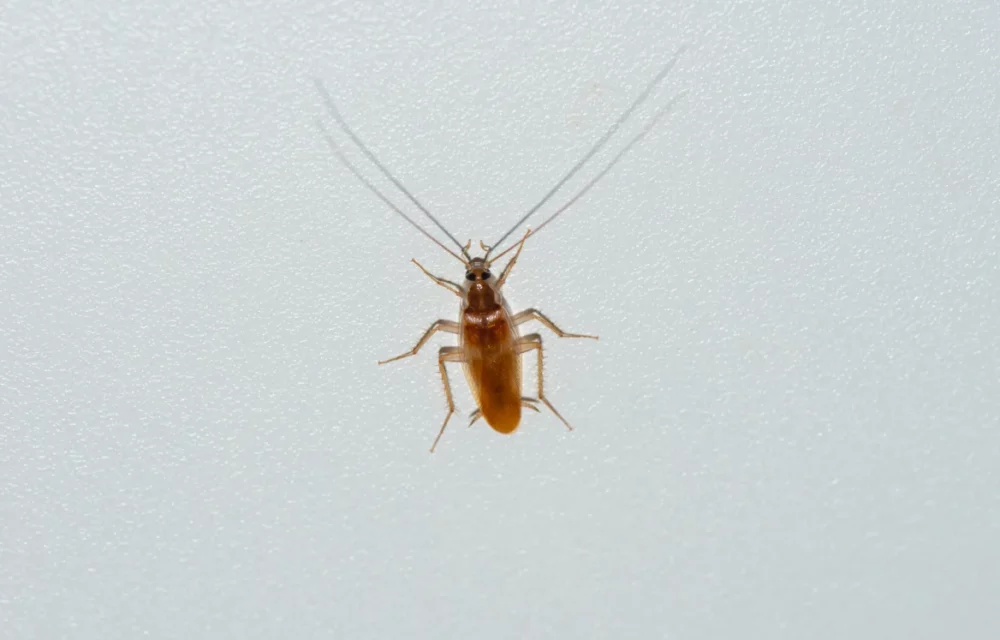
Brownbanded cockroaches need a room-by-room inspection, not just a kitchen spray. The pale bands across their wings or bodies help distinguish them from German cockroaches, which have two dark stripes behind the head. Brownbanded roaches can occupy dry, elevated places such as furniture, wall decorations and upper cabinets.
Brownbanded cockroaches need a room-by-room inspection, not just a kitchen spray. The pale bands across their wings or bodies help distinguish them from German cockroaches, which have two dark stripes behind the head. Brownbanded roaches can occupy dry, elevated places such as furniture, wall decorations and upper cabinets.
The five priorities below are identification, targeted treatment, removal of shelter and food, repairs and follow-up monitoring. They work together: a bait placed far from the insects is unlikely to help, and cleaner counters do not remove egg cases attached to furnishings. Keep children and pets away from pesticides and use only products labeled for the pest, location and application method.
What Are Brownbanded Cockroaches and Why Are They in Miami?
Brownbanded cockroaches (Supella longipalpa) are small indoor roaches that measure roughly half an inch long. They get their name from the two light brown or tan bands that stretch across their wings and abdomen. Adult males can fly when disturbed; females have shorter wings and cannot fly.
Brownbanded cockroaches can use drier, elevated indoor harborages than German cockroaches. German-cockroach management is a comparison, not evidence of your home’s temperature. Inspect furniture, upper cabinets, and wall decorations as well as kitchens.
Include these accessible locations in a brownbanded-cockroach inspection:
- Upper cabinets and shelves
- Behind wall-mounted picture frames and clocks
- Accessible crevices near electronic devices; leave internal electrical inspection to qualified personnel
- Near light fixtures and ceiling fans
- Inside closets and bedroom furniture
Their elevated hiding sites are a reason to extend the inspection beyond wet areas; a sighting does not establish that every room is affected. If you’re unsure which species you’re dealing with, our guide to common types of roaches in Florida and how to get rid of them can help you identify the culprit.
Brownbanded vs. German Cockroaches: Key Differences
Species identification helps choose inspection locations and suitable control.
| Clue | Brownbanded cockroach | German cockroach |
|---|---|---|
| Markings | Pale transverse bands across wings or body | Two dark stripes behind the head |
| Inspection focus | Dry, elevated places, furniture, and wall decorations | Food/moisture-associated harborages, commonly kitchens and bathrooms |
| Follow-up | Inspect sheltered egg-case locations and room-by-room activity | Inspect monitors, protected cracks, and recurring indoor activity |
Understanding these differences matters because treatment strategies vary. For a deeper look at German cockroach behavior and management, read our detailed resource on German cockroach control, prevention, and elimination.
Tip 1: Inspect Every Room for Brownbanded Cockroach Hiding Spots
Start with a room-by-room inspection, including furniture and higher sheltered surfaces. Record where insects and egg cases are actually found instead of assuming that all activity is around food or water.
Grab a flashlight and methodically inspect these areas:
- Bedrooms: Check behind headboards, inside nightstand drawers, and along closet shelves. Brownbanded roaches often hide in warm spots near lights.
- Living rooms: Check accessible edges behind picture frames and wall decorations, and crevices near cable boxes or routers. Do not open electrical equipment to follow an insect.
- Ceilings and upper walls: From a safe position, inspect visible edges of crown molding and tall furniture. Have inaccessible or electrical fixtures assessed by qualified personnel.
- Kitchens: Include upper cabinets, refrigerator surroundings and pantry shelves as well as lower food and plumbing areas. Inspect accessible sites without moving heavy appliances alone.
Females attach egg cases to sheltered surfaces. The actual distribution and continuing nymph activity matter for follow-up; a numeric reproductive forecast is not necessary to explain control.
If you want to understand why cockroaches enter your home and where they come from, that context helps you focus your inspection on likely entry points.
Tip 2: Select Labeled Treatment for the Hiding Sites
Room-wide fogging is not a substitute for identifying sheltered activity. UC IPM notes that brownbanded cockroaches can be particularly difficult to control with baits. A bait is an option to evaluate, not an automatic answer for every brownbanded infestation.
- Placement: Match the selected product’s permitted sites to the locations where inspection or monitors found insects. A formulation labeled for one crack or cabinet location is not permission to put it in every void.
- Acceptance: Check whether insects are feeding and whether monitor activity changes. Lack of feeding calls for reassessment of placement, competing food and product choice.
- Product behavior: Repellency depends on the active ingredient, formulation and use. Do not classify every spray as repellent or every bait as certain to attract returning insects. Follow directions about contamination of bait and nearby treatment.
- Other tools: An insect growth regulator or another targeted product may suit the identified activity when its label permits the site. Do not automatically combine products or promise that a combination controls every life stage.
Accessible upper-cabinet crevices, furniture edges and sheltered wall-decoration sites are places to inspect first. Apply a pesticide there only if the current label permits that placement. Keep it off food-contact surfaces and out of electrical equipment, and prevent access by children or animals. Secondary exposure varies by product and conditions; it is not a guarantee of control beyond the insects feeding.
For a focused discussion of room-wide aerosol limitations, see targeted alternatives to cockroach bombing. Choose methods from identification and the selected product’s label.
Tip 3: Remove Food and Sheltered Clutter
Food and shelter correction supports treatment and makes inspection easier. Check the conditions around confirmed activity rather than treating housekeeping alone as proof that control will succeed or fail.
Temperature Is Not a Stand-Alone Treatment
Maintain comfortable indoor conditions and appropriate equipment care. Do not treat a thermostat setting as pest control; no temperature recommended here guarantees that brownbanded cockroaches leave or stop reproducing.
Eliminate Clutter and Cardboard
Reduce accumulations of papers and clutter around affected furnishings and storage areas. Inspect accessible undersides and joints for attached egg cases before moving items between rooms. Enclosed storage can make contents easier to protect and the surrounding area easier to inspect; changing a box alone does not resolve hidden activity.
Practice Food Sanitation
UC IPM describes a preference for starchy material, including glue on stamps and envelopes. This is a reason to inspect paper-storage clutter as well as food areas, not a reason to leave ordinary food exposed. Store dry goods in closed containers, clean crumbs and spills, and keep food waste in covered bins. Manage animal food and water around the animal’s care needs, clean feeding areas and protect stored feed; do not deprive an animal of necessary water.
Tip 4: Seal Entry Points to Prevent Brownbanded Cockroaches
Check incoming furnishings and storage items as well as unintended building openings and connected interior pathways. Repairs can reduce shelter and movement, but they do not remove egg cases already attached to furniture. Identify the actual pathway before choosing a closure.
Review these repair locations with attention to the building details:
- Baseboard gaps: Repair unintended accessible gaps with materials suitable for the surface and assembly. Inspect the surrounding area first; closing a visible gap does not establish that concealed activity is gone.
- Electrical openings: Ask qualified building or electrical personnel about repairs; do not dismantle energized equipment or improvise closures to chase insects.
- Pipe penetrations: Have gaps around plumbing assessed for a repair compatible with the pipe and wall or floor assembly. Qualified personnel should address utility and fire-rated penetrations. Preserve required fire protection, ventilation and drainage; foam or copper mesh is not a universal repair.
- Windows and doors: Replace worn weatherstripping and repair damaged window screens. Even small gaps along door sweeps allow entry.
- Vents and utility penetrations: Use details designed to preserve required airflow, drainage, and fire protection. Ordinary fine mesh or foam is not a universal repair.
Exclusion works best as part of a comprehensive roach management strategy. Our complete guide to getting rid of a roach infestation in your Florida home walks you through every step of an effective elimination plan.
Tip 5: Call a Professional for Persistent Brownbanded Cockroach Infestations
An overlooked egg case or hiding site can support continued activity. Follow-up monitoring should check more than the places where adults were first seen.
Professional pest control technicians bring several advantages:
- Species identification: Ask how the identification changes inspection locations and product selection; a species name alone does not ensure success.
- Product selection: Ask which current labeled product and placement suit the species and harborages; “professional-grade” is not proof of universal superiority.
- Inspection scope: Ask which elevated, furniture and concealed sites were accessible and which need further assessment.
- Follow-up: Ask how continuing live captures, nymphs and suspected egg cases will be checked and what findings would change the plan.
Ask a licensed provider for identification, a site-specific treatment proposal and a follow-up plan. Do not infer a fixed time saving from professional service alone.
Egg Cases and Repeat Inspection
Female brownbanded cockroaches attach egg cases to sheltered surfaces, including beneath furniture and in closets. UC IPM describes eggs incubating for several weeks, but this does not provide a fixed hatching date in your home or a deadline for treatment.
Photograph and record the location of suspected cases. An old attachment or empty case is not equivalent to a live capture. Have uncertain cases assessed, and compare continuing nymph captures in nearby monitors. This preserves the distinction between old evidence and reproduction that may still require attention.
For a broader comparison, see how quickly cockroaches reproduce in South Florida. Different species and indoor conditions need separate assessment.
Health Considerations Around Indoor Cockroaches
Indoor cockroach infestations can contribute allergens that affect susceptible people. UF/IFAS identifies feces, shed skins and body parts as allergen sources. A roach sighting does not diagnose an individual’s symptoms or establish a disease exposure. Protect food and preparation surfaces, correct the infestation and seek medical advice for health concerns. The related German-cockroach health discussion concerns that species; it does not establish a brownbanded-specific disease ranking or a clinical outcome for your household.
Monitor high and low hiding sites
Number adhesive monitoring traps and record their locations. Include upper cabinets and accessible furniture areas as well as kitchen and bathroom sites. Compare counts over the same observation interval rather than moving every trap at once. Compare live captures and continuing nymph activity. Record attached cases separately so old or empty cases are not counted as proof of current activity.
Do not spray a repellent product beside bait or put gel inside electrical equipment. Ask about label-permitted placements and inaccessible harborages. In an apartment, report sightings to management so adjacent units and common areas can be assessed. Reducing room temperature is not a stand-alone treatment, and there is no indoor thermostat setting that guarantees elimination.
Related guidance for the next assessment
For a related comparison, see American cockroach identification. Larger, outdoor-associated roaches may need a different habitat and entry-point assessment. Identify the insect before treating every roach sighting as the same problem.
Frequently Asked Questions
-
What attracts brownbanded cockroaches to Miami homes?
They use food and sheltered indoor places, including relatively dry, elevated locations. Infested furniture or other items can introduce them. Identification and inspection help locate the conditions supporting activity.
-
Where do brownbanded cockroaches lay their eggs?
Egg cases can be attached to furniture and other sheltered surfaces. Inspect accessible undersides, furnishings and higher hiding sites as well as kitchens. Do not dismantle electrical equipment to look for them.
-
Can brownbanded cockroaches fly?
Adult males can fly when disturbed; females cannot fly. Look for pale transverse bands and obtain a clear photograph or specimen. Flight behavior alone is not enough to identify the species.
-
Are brownbanded cockroaches harder to eliminate than German cockroaches?
There is no universal difficulty ranking for a particular home. UC IPM notes that brownbanded cockroaches can be difficult to control with baits, so check acceptance and response rather than assuming a German-roach bait plan transfers unchanged. Their elevated and furniture hiding sites also need inspection.
-
Do roach foggers work on brownbanded cockroaches?
Room-wide fogging does not establish that hidden brownbanded activity is controlled. Inspect harborages, correct food and shelter conditions and choose targeted labeled tools for the site. Bait acceptance can be difficult with this species; reassess feeding and monitor results instead of automatically repeating a product.
-
How long does it take to get rid of brownbanded cockroaches in Miami?
There is no fixed deadline. The distribution, egg cases, access, product and follow-up affect results. Compare dated monitor counts and sightings, and revisit untreated hiding sites if activity continues.

Vincent founded On Demand Pest Control in 2017 and is a Florida Certified Operator in all four state categories. He treats pest control as a systematic problem to solve, not a symptom to spray. Read Vincent’s full bio →
Get help with your pest concern.
Tell us what you are seeing. Our team can discuss the concern and the next step.
- Share your concern and contact details.
- Our team contacts you to discuss available service.
- Ask for a written scope and quote before work.
Where can we reach you?
Our team will call to confirm the next step.
By submitting, you’re asking On Demand Pest Control to contact you about this request.
↗ Prefer to call? (954) 947-0805