
Remove incidental indoor earwigs and address exterior shelter and building gaps. A permanent once-and-for-all guarantee or blanket monthly spraying is not justified.
Short answer
Remove incidental indoor earwigs and address exterior shelter and building gaps. A permanent once-and-for-all guarantee or blanket monthly spraying is not justified.
Identify the insect and the problem separately
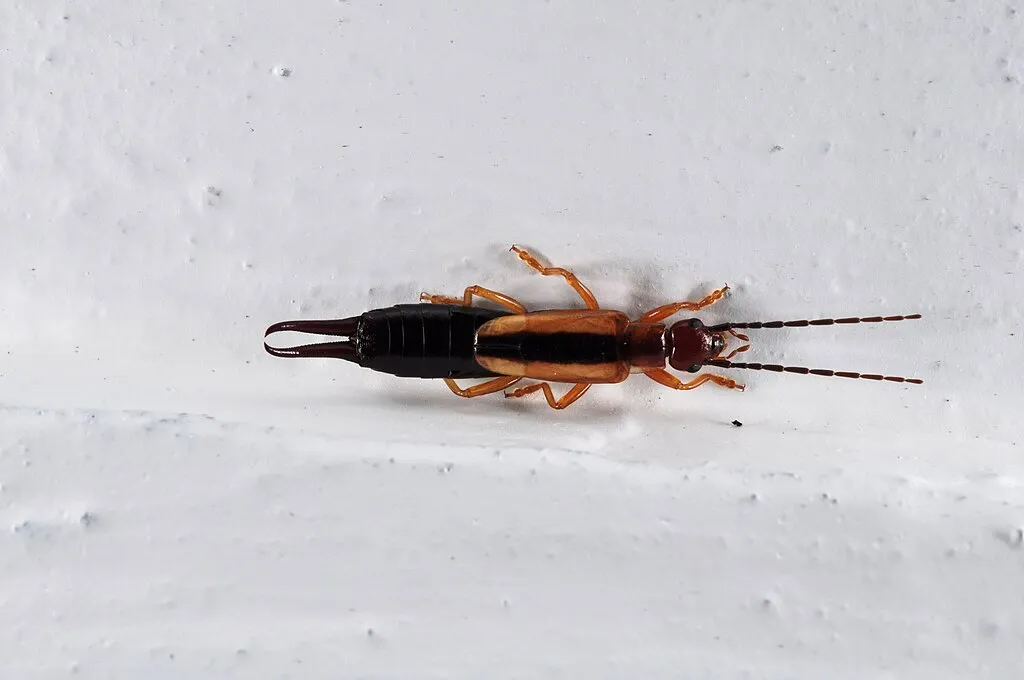
Earwigs have characteristic forceps at the rear. They can be startling but an isolated indoor sighting does not establish a breeding infestation. Some species feed on insects and other material outdoors; some damage susceptible plants. Record whether the concern is repeated indoor entry or actual garden feeding, because the responses differ. Plant holes alone do not prove earwigs caused them. UC IPM recommends nighttime observation to establish feeding when damage is suspected. Avoid handling the insect or treating every outdoor earwig as a harmful pest. Use centipede identification as a comparison before assigning a household arthropod to the wrong group. Compare cricket identification when the insect has a different body form; the inspection and source question depend on identification. For a winged insect that lacks the earwig body form, use moth identification as a separate comparison rather than assuming it is a flying earwig. A tapered insect without earwig pincers calls for a different comparison, such as silverfish identification, before an earwig treatment is proposed.
Most earwig species have folded wings beneath short, hard wing covers, although they seldom fly. Immature earwigs lack wings. Wings therefore do not establish how an individual entered the house.
Remove indoor individuals without creating exposure
Sweep or vacuum visible earwigs and dispose of collected material. Inspect where they appeared, including door thresholds and damp sheltered corners. Correct a leak or persistent moisture condition if found. Indoor spraying does not prevent new insects entering through the same gap, and UC IPM does not recommend indoor pesticides for that purpose. Do not dust open baseboards or living spaces with a product merely called food-grade. A pest-control product’s actual label and exposure restrictions matter, even when its ingredient is described as natural. Review earwig identification to assess the pincers and body form before drawing conclusions about flight or infestation.
Manage shelter at the building edge
Check accumulated leaves, boards, pots and other damp cover near doors or the foundation. Reduce avoidable refuges and address standing water or drainage without sealing necessary ventilation or damaging the structure. Landscaping can remain ecologically useful; the aim is limiting concentrated shelter immediately beside entry routes, not stripping the yard. Repair door sweeps and building gaps with suitable materials. If an inaccessible damp space remains, get an appropriate building assessment. A recurring invasion can be a condition problem, not a reason to keep increasing pesticide applications.
If earwigs gather at outdoor lights, UC IPM identifies yellow bulbs as less attractive than white ones. Use a fixture-compatible option while maintaining necessary lighting, and continue screen, door-seal and shelter checks; a bulb change cannot establish that the entry route is corrected.
Use trapping for an identified outdoor problem
UC IPM describes rolled newspaper or other shelter traps and low-sided oil traps for garden earwigs. Put any trap where it cannot create a spill, attract pets or interfere with children, and check it regularly. A shelter trap can help establish activity near a plant; it does not diagnose all leaf damage or guarantee elimination. Combine monitoring with shelter and moisture correction. Avoid translating a useful trapping technique into a promise of dramatic overnight population reduction or a fixed two-week clearance period for every property.
Avoid universal schedules and price claims
The climate and species at a Florida home do not necessarily follow the California lifecycle examples in extension guidance. This guide does not prescribe monthly spring-through-fall applications or a fixed retreatment interval. If a pesticide is justified, the label governs pest, site and timing. A professional assessment may be useful when entry continues despite condition changes or the source is inaccessible. Ask for a written explanation of findings and follow-up, not a guaranteed permanent pest-free result. The cost and speed depend on actual scope and are not established here.
Check the reason for an apparent infestation
Several insects under a damp pot can represent a concentrated shelter outdoors rather than a colony breeding in the living room. Record whether sightings are inside, at a doorway or around a damaged plant. These observations should guide the scope. For indoor entry, a door gap and nearby shelter may be the priority; for garden damage, confirm feeding and consider targeted monitoring. A provider should not use the same dramatic infestation label to justify all-property treatment without evidence. Clarifying the location and impact can save unnecessary applications while still addressing a persistent nuisance.
A trap result is not a damage verdict
An earwig in a shelter trap confirms its presence at that location. It does not prove it ate a particular plant, quantify the whole property population or establish that a homeowner needs routine sprays. Compare observed feeding and recurrence with the condition changes made. If the trap is used outdoors, check it and prevent exposure to children or pets. Do not leave oily containers where they can spill or create a separate problem. Monitoring works best as part of an explicit decision: determining activity near a plant or evaluating whether reduced shelter altered repeated entry.
Follow-up should include repairs, not only captures
After cleaning debris and improving a route, check the repair and watch the same areas for new activity. A loose door sweep, new irrigation wetting or a moved pile of material can recreate an opportunity. Those are practical maintenance observations, not proof that a pesticide failed. If recurring insects still appear, confirm the species and investigate the route before using another product. Ask a professional what a proposed chemical adds beyond condition correction, and whether the label permits the exact site. No once-and-for-all outcome can be inferred from one quiet evening.
Begin with an indoor-versus-garden decision
First identify the insect and locate the actual problem. An earwig on a bathroom floor, several beneath a damp outdoor board and one observed feeding on a plant are different findings. A few indoor individuals do not establish plant damage, and a garden observation does not prove indoor breeding. Take a clear photograph with scale when possible and record the setting. UC IPM describes both incidental indoor entry and outdoor feeding, so a management plan should not collapse those situations into the promise to get rid of all earwigs everywhere.
For an indoor individual, sweep or vacuum it safely and dispose of it appropriately. Do not apply a household pesticide simply because the animal has forceps-like appendages. Check accessible moisture and entry conditions in the area, including screens, thresholds and confirmed leaks. A recurring finding calls for a closer look at those conditions; it does not automatically establish a large hidden population. Keep vacuuming or collection safe around electrical fittings, unstable storage and inaccessible cavities. The guide to earwig wings and flight addresses anatomy; it does not establish how a particular insect entered the home.
Follow an ordered indoor prevention plan
After removal, inspect the reachable route and correct a confirmed defect with an appropriate repair. Maintain intended ventilation and drainage: sealing a designed opening can create another building problem. Next reduce avoidable damp debris or storage shelter immediately beside the exterior. Look at leaf accumulation, wood piles and other accessible material without reaching blindly beneath objects. Then monitor the same indoor locations so later observations can be compared with the changes made. This sequence ties action to the site rather than prescribing spraying at every stage.
If activity remains after the relevant repairs, seek identification and inspection of the unresolved route. An inaccessible wall or roof area may need qualified assistance, but it should not be opened solely on the assumption that an earwig seen below came from it. A proposal should distinguish removal, moisture repair, exclusion and optional treatment. Each does a different job. No single step certifies permanent absence, especially where insects remain in the outdoor environment or can arrive with newly introduced items.
Treat garden damage as its own evidence question
Before trapping or treating, look for an earwig actually associated with the affected plant. Holes and chewed edges can have other causes. Safe observation when insects are active can help, but do not import California seasonal dates or assume the same feeding pattern on every Florida plant. Earwigs also feed on soft-bodied insects and can be beneficial. A plant with no meaningful damage does not need treatment simply because earwigs use nearby shelter. Focus on the affected crop and observed feeding rather than trying to sterilize the entire garden.
UC IPM describes shelter-based monitoring, including folded newspaper or similar refuges in appropriate outdoor settings. If used, place and check a shelter trap safely and dispose of collected insects appropriately. Keep the device from children and pets and avoid creating a spill or another nuisance. A trap catch measures use of that shelter, not the amount of damage caused to a plant. Compare catches with actual feeding evidence. This guide does not prescribe a universal oil-bait recipe, threshold or pesticide schedule.
Consider chemicals only after the problem is defined
Any proposed product must be labeled for the exact use and site, including a plant if one will be treated. Do not assume a garden label permits treatment of an indoor resting area, or that a product marketed for crawling insects belongs on all building surfaces. A provider should explain why the identified problem needs a chemical step beyond accessible removal, shelter management and repairs. Follow all precautions and avoid repeated applications just because one trap still contains insects.
Replace the permanent guarantee with meaningful follow-up
Record where earwigs were seen, what was changed and whether the same issue continues. A reduction in indoor sightings after repairing a screen is useful evidence of progress, but not proof that no earwig will ever enter again. A later garden sighting may be a different issue and may require no intervention if damage is absent. The aim is manageable indoor entry and a proportionate response to observed outdoor damage, not an unsupported once-and-for-all promise. Reinspect the specific conditions if recurrence warrants it rather than escalating automatically to broader treatment.
Review progress separately indoors and at a plant
If indoor sightings decline after a screen repair, record that change at the affected opening rather than concluding that the whole garden is clear. Earwigs beneath outdoor shelter may remain without creating an indoor nuisance or meaningful plant damage. If chewing on a susceptible plant continues, identify the organism actually feeding and reconsider the garden response. A shelter trap beside that plant can aid observation, but the insects it collects do not automatically establish responsibility for every damaged leaf.
If indoor activity continues, compare the new locations with the repairs and moisture corrections completed. A second route may remain, a newly introduced object may be relevant, or the identification may need confirmation. Ask the provider to explain which possibility is supported instead of applying another product on a fixed schedule. Keep changes small enough to evaluate where feasible: repairing a known access defect supplies a more interpretable result than combining unrelated treatments throughout the property.
A useful follow-up report states what was observed, what was done and what question remains. It should separate incidental individuals, recurring entry and observed plant feeding. That framework supports proportionate action without demanding a permanent outdoor eradication guarantee. The response can be successful in reducing the actual nuisance even though earwigs continue to exist in the surrounding environment.
Sources and further guidance
Frequently Asked Questions
-
Are earwigs dangerous to humans or pets?
They are generally nuisance insects and can pinch when handled or trapped against skin. Do not use a sighting to diagnose a medical problem.
-
What attracts earwigs to my house?
Shelter, moisture and accessible routes can contribute. Inspect actual locations rather than assuming food waste is always the cause.
-
Can earwigs cause damage inside my home?
They are not typical structural wood pests. Some species can damage plants outdoors; identify any actual damage separately.
-
How long does it take to get rid of an earwig infestation?
It depends on entry conditions and source correction. Monitor repeated locations rather than expecting a universal deadline.
-
Does diatomaceous earth really work on earwigs?
An appropriately labeled desiccant product may have a role in certain situations, but do not scatter food-grade dust indoors or assume harmlessness.
-
Should I hire a professional to get rid of earwigs?
Seek identification and help for persistent entry or inaccessible conditions. Incidental individuals often need removal and prevention, not broad treatment.
Get help with your pest concern.
Tell us what you are seeing. Our team can discuss the concern and the next step.
- Share your concern and contact details.
- Our team contacts you to discuss available service.
- Ask for a written scope and quote before work.
Where can we reach you?
Our team will call to confirm the next step.
By submitting, you’re asking On Demand Pest Control to contact you about this request.
↗ Prefer to call? (954) 947-0805