
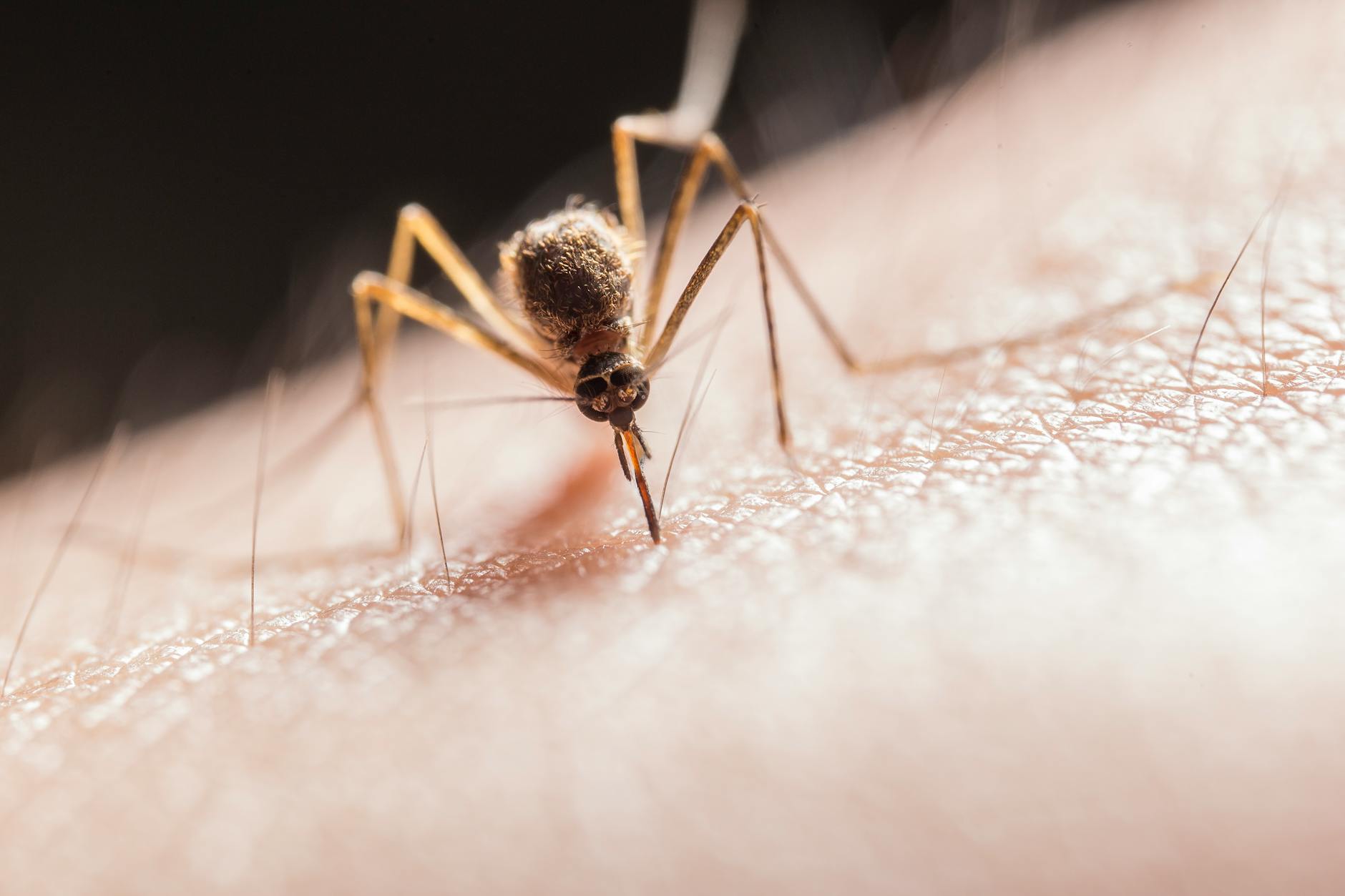
Choose registered repellents, understand plant oil limits, and reduce water-holding habitat around your Davie home.
Start with the mosquitoes and water around your property
A repellent protects the person wearing it; it does not remove the water where mosquitoes develop. In Davie, begin with the places you can inspect: plant saucers, buckets, folded tarps, equipment trays and water storage. A canal nearby does not establish that it is producing the mosquitoes biting on your patio. Different species use different habitats, and some adults arrive from beyond the yard.
Container Aedes mosquitoes lay eggs on surfaces above the waterline. Eggs can remain after a container dries, then hatch when water returns. Larvae and pupae develop in water before adults emerge. That is why a weekly walk should include scrubbing removable containers as well as pouring out water. On equestrian properties, water intended for animals needs a management plan that preserves their drinking supply.
Florida’s summer rainfall is one reason to keep checking water sources. UF/IFAS describes July and August as the state’s rainy-season and mosquito-season peak, when downpours create breeding habitat. Warm, moist conditions and water-holding objects make inspection useful, but they do not establish the mosquito species or production level on a particular Davie property. Recheck containers after rain instead of relying on a fixed citywide calendar.
The Asian tiger mosquito, Aedes albopictus, and southern house mosquito, Culex quinquefasciatus, illustrate different water checks. UF/IFAS lists both in all Florida counties. Asian tiger mosquito larvae use water-holding objects such as tires, toys, plant containers and bromeliads; southern house mosquito larvae use varied aquatic habitats, especially organically rich water, including catch basins, ditches and containers. Those distinctions help guide inspection and explain why removing one patio saucer may leave another source. They are not observations that either species inhabits your pond or property.
Oil of lemon eucalyptus: choose the registered product
Oil of lemon eucalyptus (OLE), PMD and 2-undecanone are among the active ingredients CDC lists for EPA-registered repellents. OLE is therefore one plant-derived option, rather than the only option CDC recognizes. Look for the EPA registration number and the product’s age restrictions, application instructions and protection information.
A bottle of pure lemon eucalyptus essential oil is different from an EPA-registered repellent. Do not replace the labeled formulation with a homemade oil mixture or assume a universal four-to-six-hour protection period. CDC says not to use OLE or PMD products on children younger than three. For other ages and circumstances, follow the specific label; apply sunscreen first when both are needed.
Citronella candles and topical citronella
Citronella appears in both outdoor candles and topical products, but those uses do not establish the same protection. A candle does not substitute for repellent on exposed skin, and multiple torches do not create a dependable mosquito-free perimeter. The cited UF/IFAS plant discussion provides only anecdotal candle-benefit context; it does not establish a distance or wind rule for protection. For a topical repellent, use the actual formulation’s label and instructions.
For skin protection, choose a registered repellent with directions for your use rather than judging it by scent. CDC does not know the effectiveness of nonregistered repellents. If mosquitoes are still biting, move to a screened area and follow the product’s permitted reapplication instructions. Do not increase the dose or apply a landscape pesticide to yourself.
Neem, lavender and peppermint: keep the uses separate
Neem sold for plants is not automatically a skin repellent, a pond treatment or an animal-water additive. Its label must allow the intended pest and site. Lavender and peppermint fragrances likewise do not establish a tested protection period. Mixing drops into a carrier oil leaves the effectiveness and application limits uncertain.
Bite care is a separate issue from bite prevention. Do not assume an essential oil is suitable for skin; avoid applying undiluted oils or treating broken skin with pesticide products. A discussion of oils for mosquito bites should not be read as medical proof that a homemade mixture treats inflammation or prevents infection. Ask a clinician about concerning symptoms, and use registered repellent to prevent further bites.
A peppermint diffuser is a separate proposed use from applying a registered skin repellent. The primary guidance cited here does not establish that diffusing peppermint oil prevents mosquito bites at a Davie property, a reliable protection duration or safe exposure for every pet and household. Check the actual device and product instructions and their permitted purpose rather than treating a fragrance as proof of pest control. Keep screens, registered personal protection and water-source management as the supported tasks; do not substitute a fixed diffuser schedule for them.
Compare ingredients by their labeled use
For OLE or PMD, the useful comparison is the registered formulation, permitted age group and stated application directions. For citronella, check whether the product is intended for skin or for an outdoor device. For neem, verify the actual labeled site instead of transferring a garden use to skin or water. For lavender and peppermint, an appealing smell alone does not establish bite prevention.
DEET, picaridin and IR3535 are also CDC-listed options in registered products. Plant origin does not mean risk-free, and synthetic origin does not make a correctly used registered repellent ineffective or unsuitable. Pick a product you can use consistently for the activity, then follow its label rather than a generic ingredient-duration table.
What citronella grass, rosemary, basil, marigolds and lavender can do
These plants can be part of a garden, but standing plants do not create a reliable repellent barrier around a patio. UF/IFAS distinguishes a plant containing aromatic compounds from a tested, formulated repellent. Select plants for the light, drainage and space available, with local gardening advice where needed.
Keep pots from becoming water-holding habitat. A fragrant herb in a saucer can support the problem you hoped it would solve. Do not rub crushed leaves on skin or burn rosemary on a grill as a substitute for bite protection. Marigolds also should not be treated as an insecticide application; pyrethrins used in products come from particular chrysanthemums, with labeled formulations and restrictions.
A weekly route for breeding-site prevention
Empty and scrub portable containers at least weekly, turn unused equipment over, and keep rain barrels covered or properly screened. Check gutters from a safe position and arrange maintenance for elevated or inaccessible areas. Inspect beneath stored trailers and around irrigation equipment without disturbing electrical systems or entering drainage structures.
Bromeliad cups and birdbaths need frequent attention; UF/IFAS advises flushing suitable containers every three to four days during Florida summers. For necessary water that cannot be removed, ask about a larvicide labeled for that exact site. Bti targets larvae, not flying adults. Do not assume every dunk is allowed in horse troughs, drinking water, ponds or canals, and ask an arborist before altering a living tree cavity.
When to request mosquito control help in Davie
Record when bites occur and where you found water or larvae. If biting persists after source reduction and screen repairs, a mosquito-control provider can assess habitats, the target species and whether an additional tool is warranted. Local mosquito-control officials are the appropriate contact for public drainage or broader neighborhood problems.
Ask what a proposed adult treatment or trap targets, what maintenance it needs, and how people, animals, pollinators and water will be protected. In2Care is a pesticide-based mosquito station, not an automatic fit for every property. On Demand Pest Control has served customers since 2017; contact the Davie team to discuss the assessment and obtain the current scope and written quote. Yard service does not replace personal bite protection.
Sources
- Life Cycle of Aedes Mosquitoes | Mosquitoes | CDC
- ENY-753/IN1045: Mosquitoes and their Control: Integrated Pest Management for Mosquito Reduction around Homes and Neighborhoods
- CDC: Mosquito Control at Home
- Preventing Mosquito Bites | Mosquitoes | CDC
- Florida experts break down the buzz on the myth of mosquito-repelling plants – News
- Do’s and Don’ts of Pest Control | US EPA
- ENH1365/EP629: A Florida-Friendly Landscaping™ Approach to Pest Management in Your Edible Landscape
- Bti for Mosquito Control | US EPA
- EPA accepted In2Mix label, July 25 2024
- ENY-2043/IN1269: Homeowner’s Guide to Selecting a Pest Control Service
Frequently Asked Questions
-
What is the most effective natural mosquito repellent for Davie, FL?
An EPA-registered OLE product is one plant-derived choice, subject to its label; CDC also identifies 2-undecanone as plant-derived and lists PMD as a registered repellent ingredient. Check the particular product rather than assuming every PMD formulation has the same origin. There is no single best natural ingredient for every person or activity. Do not use OLE or PMD on children under three, and do not substitute pure essential oil.
-
Do citronella candles actually repel mosquitoes outdoors?
Do not rely on citronella candles to prevent bites or mosquito-borne illness. UF/IFAS distinguishes anecdotal candle benefits from dependable protection. Use registered repellent, clothing and screens, and reduce water-holding habitat.
-
Which plants keep mosquitoes away in South Florida yards?
Citronella grass, rosemary, basil, marigolds and lavender do not provide a reliable passive mosquito barrier simply by growing in the yard. Choose plants for gardening purposes and prevent their pots or saucers from holding water.
-
How often should I reapply natural mosquito repellent in Florida's heat?
Follow the specific product label. Heat and activity do not justify a universal one- or two-hour schedule or extra applications beyond the label. If biting continues, move to a protected area and use the permitted reapplication instructions.
-
Can I use natural repellents and professional mosquito treatments together?
Personal protection and property mosquito management can complement each other. Keep each product to its labeled use and ask the provider about preparation, reentry and animal-water restrictions. No combination guarantees a bite-free yard.
-
Why are mosquitoes so bad in Davie, Florida?
Florida summer rains can refill breeding habitat; UF/IFAS describes July and August as a statewide rainy-season and mosquito-season peak. Two species found across Florida illustrate different checks: Asian tiger mosquitoes use water-holding containers and bromeliads, while southern house mosquitoes use varied habitats, especially organically rich water such as catch basins and ditches. Inspect your actual water sources and obtain species identification; this does not establish that every Davie pond or canal produces mosquitoes or that pressure is equal all year.
Get help with your pest concern.
Tell us what you are seeing. Our team can discuss the concern and the next step.
- Share your concern and contact details.
- Our team contacts you to discuss available service.
- Ask for a written scope and quote before work.
Where can we reach you?
Our team will call to confirm the next step.
By submitting, you’re asking On Demand Pest Control to contact you about this request.
↗ Prefer to call? (954) 947-0805