
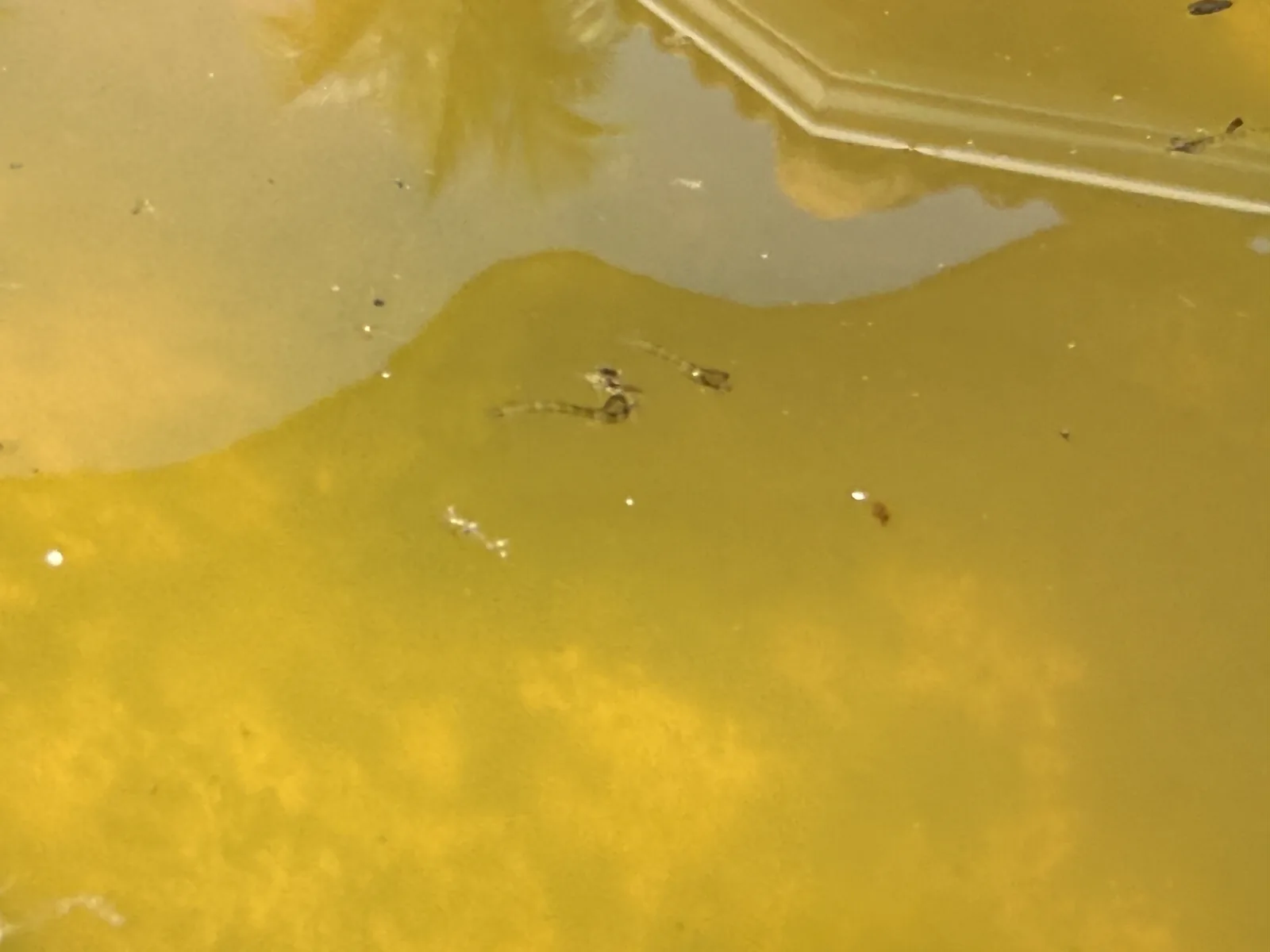
Inspect water-holding sites and maintain removable containers. Mosquito development depends on species and conditions; source reduction does not guarantee freedom from bites or disease.
Key Takeaways
- Many mosquitoes use small water-holding containers, but the volume and egg number differ by species. Inspect water sources rather than relying on a tablespoon threshold.
- Common household items like flower pot saucers, clogged gutters, and pet bowls are frequent mosquito breeding sites.
- Hatching and development depend on species and conditions; some eggs remain on container surfaces through dry periods.
- Empty and scrub water-holding items at least weekly and correct drainage. Adults may also arrive from sources beyond the property.
- Water management, screens and appropriate personal protection address different exposure routes; any professional work should have a site-specific scope and monitoring plan.
Warm-weather mosquitoes can develop in small water-holding containers. Inspect buckets, clogged gutters, sagging tarps and other sites, identify larvae when practical, and maintain removable containers rather than assuming only ponds matter. Related background: Mosquitoes
Why Do Mosquitoes Need Standing Water to Breed?
Mosquitoes are aquatic insects during the earliest stages of their lives. Unlike many other flying pests, they cannot complete their life cycle without access to still or slow-moving water. Female mosquitoes seek out standing water specifically because it provides a safe, nutrient-rich environment for their offspring.
Egg placement varies. Some species lay floating rafts; container Aedes can place individual eggs above the waterline. Scrubbing surfaces matters as well as dumping the water.
Mosquito larvae develop in water and pass through growth stages before pupating. Development speed depends on species and conditions; remove and maintain water-holding containers promptly rather than relying on a fixed development deadline.
Without standing water, this cycle simply cannot happen. That’s why understanding why mosquito control is important starts with understanding the role of water in their reproduction.
How Much Water Do Mosquitoes Actually Need?
Small containers can support mosquitoes when water persists and conditions suit the species. There is no universal minimum tablespoon rule that decides whether a container is safe.
This means that even homes without obvious ponds, streams, or marshes nearby can have serious mosquito problems. The water doesn’t need to be clean, either. In fact, many species prefer water that contains decaying organic matter because it provides food for developing larvae.
Common Sources of Standing Water Around Your Home
One of the biggest challenges in mosquito prevention is identifying all the places where stagnant water collects. Some sources are obvious, but many are easy to overlook. Here are the most common breeding sites found in residential yards:
- Flower pot saucers and planters — Water collects in the trays beneath pots and sits for days.
- Clogged rain gutters — Leaves and debris block drainage and create long pools of standing water along your roofline.
- Bird baths — Decorative and functional, but they’re prime mosquito habitat if the water isn’t changed regularly.
- Old tires — The curved interior of a tire traps rainwater and shields it from evaporation.
- Tarps and pool covers — Even tightly secured covers develop low spots where water pools.
- Children’s toys — Wagons, sand table lids, and playsets with recessed areas collect rainwater.
- Pet water bowls — Outdoor bowls left sitting for several days become attractive to egg-laying females.
- Trash cans and recycling bins — Open containers or those without lids catch rain easily.
If you’re struggling with mosquitoes entering your living spaces from these outdoor breeding sites, you may want to learn how mosquitoes are getting into your house so you can address both indoor and outdoor exposure.
Hidden Standing Water Sources You Might Miss
Beyond the usual suspects, there are sneaky spots where water hides in plain sight. Air conditioning drip pans and condensation lines frequently create small puddles near your home’s foundation. Tree holes, where a branch has broken away, can hold water for weeks. Even corrugated drain pipes that don’t fully empty become prime mosquito nurseries.
Landscape features matter, too. Low spots in your lawn where rainwater pools, over-mulched garden beds that retain moisture, and French drains that back up can all harbor enough water for mosquito breeding. Walk your property after a rainstorm and note every spot that holds water for more than 24 hours.
The Mosquito Life Cycle in Standing Water
Mosquito larvae and pupae develop in water. Egg placement varies by species and can include surfaces above the waterline, while adults live outside the water. This is why both emptying and cleaning containers matter.
Egg Stage
Egg placement differs by species: some deposit eggs above the waterline, while others lay them on water. Dump and scrub removable containers and keep them covered or inverted when not needed.
Larval Stage
Mosquito larvae develop in water, with breathing arrangements that differ among species. A labeled larvicide may address appropriate sites that cannot be emptied; its use and interval come from the actual product instructions. For related background, see controlling mosquitoes at the larval stage.
Pupal Stage
Mosquito pupae remain in water during transformation to adults. The pupal interval varies with conditions and species; it is not a universal one-to-three-day household clock.
Adult Stage
Once the transformation is complete, the adult mosquito splits open the pupal casing and emerges on the water’s surface. It rests briefly to let its wings dry and harden, then takes flight. Males typically emerge first and live only a few days to weeks, while females can survive considerably longer. You can learn more about how long mosquitoes live depending on species and conditions.
How Fast Can Standing Water Produce Mosquitoes?
Development can be rapid in suitable conditions, but a puddle does not produce a predictable adult count or exact weekly timetable. Inspect after rain and maintain containers at least weekly, following local public-health guidance.
Temperature and Breeding Speed
Warmer conditions can speed development, but species and habitat affect the timing. An exact water-temperature table cannot establish when every Florida container becomes dangerous.
| Water site | Practical check |
|---|---|
| Portable container | Empty, scrub, turn over or cover at least weekly. |
| Gutter or drain | Restore drainage with safe access and appropriate help. |
| Rain barrel | Use an intact cover or suitable screen and follow local guidance. |
| Water that cannot be removed | Ask local mosquito control about appropriate labeled management. |
As you can see, warm standing water is an express lane for mosquito production. Even a brief period of neglect during the summer months can result in an explosion of adults on your property.
How to Eliminate Standing Water and Stop Mosquito Breeding
The most effective way to reduce mosquitoes is to remove their breeding habitat. This doesn’t require expensive equipment or chemicals — it requires consistency. Here is a step-by-step approach to water management around your property:
- Do a weekly walk-through. Every seven days, inspect your entire yard for any container or depression holding water. Dump it, drain it, or flip it upside down.
- Clean gutters regularly. Remove leaves and debris at least twice a year, and more often if you have overhanging trees.
- Empty and scrub birdbaths and other water containers at least weekly, or more often when practical. Do not infer a safe waiting interval from a claimed minimum egg-hatching time.
- Fix low spots in your lawn. Fill in areas where water pools after rain using soil or gravel to improve drainage.
- Store outdoor items under cover. Turn over wheelbarrows, buckets, and toys or move them into a shed or garage.
- Maintain swimming pools and hot tubs. Keep them properly chlorinated and filtered. Even an unused pool can become a massive breeding ground.
- A Bti product may be appropriate for labeled water sites that cannot be drained. Follow its site restrictions and directions; do not give an unrestricted no-harm promise for all fish, wildlife or uses.
For a comprehensive approach, combine water management with other protective strategies. Our guide on how to keep mosquitoes out of your yard covers additional tactics, from landscaping choices to repellent methods.
Standing Water You Can't Remove: What Are Your Options?
Not all standing water can be eliminated. Decorative ponds, rain barrels, drainage ditches, and retention areas are permanent or semi-permanent features on many properties. In these cases, you need a management strategy rather than removal.
Biological and Mechanical Controls
Do not introduce fish into a pond, storm drain or natural water body without local guidance and any required permission. Species and ecological impacts matter, and fish are not a universal solution for every container.
For rain barrels, maintain a fitted cover or effective screen and inspect openings. Use only management appropriate to the actual water use; a rain barrel is not interchangeable with every other aquatic site.
Professional Mosquito Traps and Treatments
For persistent activity or inaccessible sources, local mosquito control or a qualified provider can assess suitable management. A trap system has placement and servicing requirements and is not a universal guarantee. For related background, see how the In2Care mosquito trap works.
Barrier applications, where appropriate and labeled, are separate from larval-source management. Ask what sites and stages the plan addresses and what follow-up monitoring is included.
Why Standing Water Creates Health Risks Beyond Itchy Bites
Mosquito breeding in standing water isn’t just a nuisance issue — it’s a public health concern. Mosquitoes are vectors for serious diseases, and the more breeding habitat available, the greater the risk of disease transmission in your community.
Mosquito-borne disease risk varies with location, species and current surveillance. Consult current local public-health notices. Reports elsewhere in Florida must not be presented as evidence of transmission at a particular South Florida property. Related background: malaria cases reported in Florida in 2023
Removing or maintaining larval habitat is useful source reduction, but it does not establish a fixed number of mosquitoes prevented or guarantee freedom from mosquito-borne illness. Adults can arrive from other sites; continue appropriate personal protection.
Your pets are at risk too. Mosquitoes transmit heartworm to dogs through their bites. Understanding why mosquitoes bite dogs and how to protect your pup is an important part of responsible pet ownership in mosquito-prone areas.
Building a Long-Term Mosquito Prevention Plan
Eliminating standing water is the foundation of any mosquito prevention strategy, but the best results come from a layered approach. Combine water management with the following practices for maximum protection:
- Landscape strategically. Choose plants that don’t trap water and grade your yard for proper drainage.
- Use EPA-registered repellents according to their directions and suitable clothing when mosquitoes are active. Some mosquitoes bite during the day, so dawn and dusk are not universal peak hours.
- If professional management is needed, ask for the site-specific scope, products, preparation and monitoring schedule. No universal monthly protective barrier prevents all new mosquito activity.
- Educate your neighbors. Mosquitoes can travel significant distances from their breeding sites. A single neglected property on your block can supply mosquitoes to the entire neighborhood.
For a more detailed action plan, our ultimate guide to getting rid of mosquitoes walks you through every step, from identification to long-term prevention. If you’re ready to take control of your yard, reach out to a local mosquito control professional who can assess your property, identify breeding sources you may have missed, and implement a treatment plan tailored to your situation.
A weekly inspection route is easier to maintain than a memory
Walk a repeatable route around the property: containers and toys first, planters and saucers next, then accessible gutters, rain barrels and covered equipment. Note features that refill after irrigation as well as rain. Assign maintenance for inaccessible drainage rather than attempting hazardous roof work.
Emptying water and cleaning the container are different tasks. Some mosquito eggs adhere to surfaces above the waterline and can remain after dumping. Scrub removable containers and store them upside down or covered when not needed. Inspect the next time they are wetted rather than assuming last week cleaning makes them permanently safe.
When water must remain, identify the owner and use before selecting management. Drinking-water containers, ornamental ponds, stormwater infrastructure and natural habitat are not interchangeable pesticide sites. Local mosquito-control staff can advise on suitable action and any product-site restrictions.
Keep track of larvae separately from adult biting complaints. Adults may arrive from off-site sources even after containers are maintained. Source reduction is valuable without a promise to eliminate every mosquito from the neighborhood; personal protection and screens remain relevant.
Sources and further reading
Frequently Asked Questions
-
How long does standing water need to sit before mosquitoes breed in it?
Development can be rapid under favorable conditions, but species vary. Empty and scrub containers at least weekly rather than treating a claimed minimum day count as a safe delay.
-
Can mosquitoes breed in chlorinated pool water?
A properly maintained pool is less suitable, but neglected water, covers and stagnant pockets can still be sources. Check the entire system and maintain it according to pool guidance.
-
Does moving water prevent mosquito breeding?
Circulation can reduce suitable habitat, but stagnant edges or separate basins may remain. Inspect the actual water pockets rather than assuming a fountain guarantees prevention.
-
What is the smallest amount of water mosquitoes can breed in?
Small containers can be enough for some species. No universal tablespoon or bottle-cap threshold establishes whether a site is safe; remove unnecessary water regardless of its apparent size.
-
Will draining standing water kill mosquito eggs that are already laid?
Dumping removes aquatic stages, but container Aedes eggs can remain attached above the waterline. Scrub and clean the container as well as emptying it.
-
Should I hire a professional to deal with mosquito breeding on my property?
Ask local mosquito control or a qualified provider about persistent activity, inaccessible water or public drainage. Do not alter wetlands, drainage systems or shared sites without appropriate permission.
Get help with your pest concern.
Tell us what you are seeing. Our team can discuss the concern and the next step.
- Share your concern and contact details.
- Our team contacts you to discuss available service.
- Ask for a written scope and quote before work.
Where can we reach you?
Our team will call to confirm the next step.
By submitting, you’re asking On Demand Pest Control to contact you about this request.
↗ Prefer to call? (954) 947-0805