
Trace indoor mosquitoes through doors, screens and accessible gaps, inspect water sources and arrange safe building repairs or targeted management when needed.
Indoor mosquitoes may have flown through an opening, arrived from an attached space or developed in a suitable water source. The practical response is to identify the insect, check accessible entry routes and inspect containers indoors and near the building. One exact gap size or a ranked entry-point table cannot determine the route in your house. Building repairs and mosquito management should fit the observed problem.
Confirm that the indoor fly is a mosquito
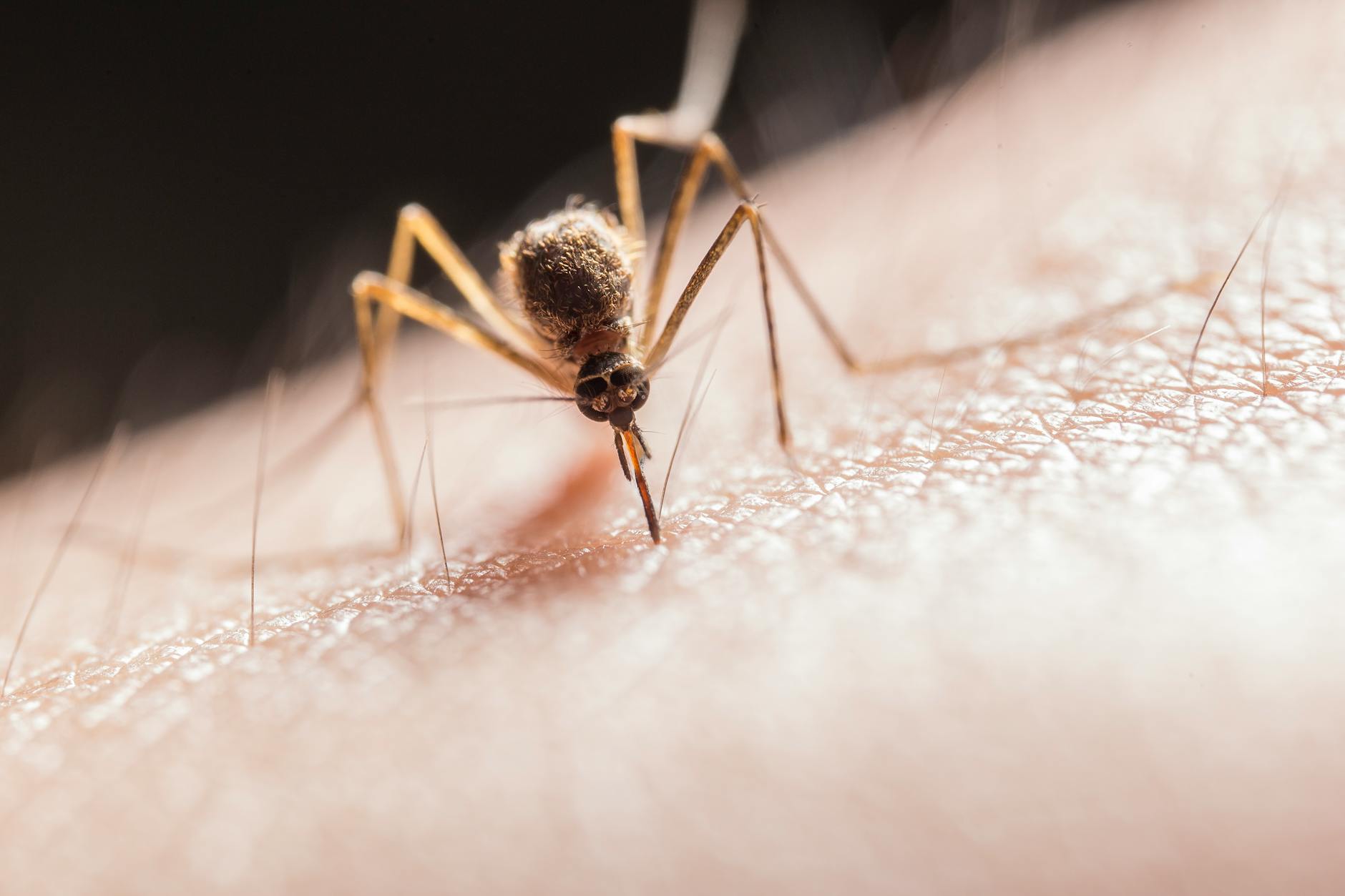
Mosquitoes are slender flies with one pair of wings and a distinct proboscis; females of biting species use it to take blood. Crane flies have a mosquito-like appearance, while drain flies have different anatomy and develop in wet organic film. UMN describes fungus gnats as slender dark flies associated with houseplants and over-watered soil. The mosquito identification guide helps frame the initial comparison. A recurring small fly near a sink calls for inspection of drains; activity beside houseplants warrants checking the potting soil before choosing a mosquito treatment.
Take a clear photograph if possible and note the room, time, frequency and whether bites occur. Those details help prioritize inspection but do not reliably identify a species. Adult mosquitoes can live indoors and outdoors, and some bite during the day while others are most active at night. Seeing them only at bedtime may reflect mosquito behavior and when you notice them. It does not prove that lights attracted every insect through the same opening.
Indoor survival depends on species and conditions
CDC describes adult mosquitoes as living about two to four weeks, depending on species, humidity, temperature and other factors, with females often living longer than males. It also notes that adults can live indoors and outdoors. This is general adult-survival context, not a guaranteed remaining lifespan for a mosquito seen in a room: its age on arrival and the conditions inside are unknown. The mosquito lifespan comparison is a different question from identifying the entry route. Do not wait for an assumed indoor countdown to end before repairing screens or inspecting water.
Start with screens, open windows and exterior doors
Inspect window screens for tears, loose edges and a poor fit in the frame. An intact sheet of mesh does little if mosquitoes can pass around its perimeter. Keep unscreened windows closed when mosquitoes are active, and repair damaged screened patios or doors. Choose replacement screening appropriate to the installation and target insects rather than relying on one universal mesh specification.
Check door sweeps, thresholds and weatherstripping. Look for daylight and obvious gaps around a closed door, while recognizing that this is a practical check rather than a complete mosquito test. Sliding doors need functioning seals and clean tracks. Mosquitoes can also enter while a door is open, so keep openings brief and use a fitted screen door where suitable. No repair can guarantee permanent exclusion if other doors remain open or screening is damaged later.
Check attached garages and shared indoor spaces
An attached garage can provide an intermediate route: insects enter the garage while its door is open and later pass through a connecting doorway. Keep the connecting door closed when practical and inspect its fit. Containers, covers or stored equipment in the garage may also retain water, so check the space for sources rather than treating it only as an entry corridor.
A screen addition must preserve the door’s intended safety and fire-separation function; ask an appropriate building professional about alterations. In shared buildings, insects can move through common spaces or gaps associated with utilities, so coordinate access and repairs with the property manager. Record where insects appear relative to door use. An attached garage is one route to investigate, not a proven “medium-risk” category that always ranks below a particular window defect.
Have vents, roof openings and utility gaps repaired safely
Accessible gaps around pipes, cables and air-conditioning lines can undermine the exterior barrier. Photograph obvious defects and arrange a repair suited to the wall and penetration. Mosquitoes observed near an HVAC component do not establish that intact ductwork is their route. Leaks or retained condensate are a separate source question that may need an HVAC professional.
Roof vents, soffits, chimneys, dryer exhausts and combustion vents require materials and airflow appropriate to their function. Do not fit improvised fine mesh or foam across them. Ask the relevant building, chimney or HVAC professional to assess repairs. If wildlife may occupy an opening, identify it before closure. Florida bats are protected and seasonal restrictions govern exclusion; ask FWC or an experienced specialist about the lawful sequence. Do not seal an occupied roost or attempt wildlife handling or relocation.
Inspect water both indoors and beside entry points
Check flower vases, plant saucers, buckets, covered equipment, birdbaths, gutters and water-storage containers. The standing-water breeding discussion explains why even small retained-water sites deserve inspection. Some Aedes mosquitoes develop in small containers; CDC distinguishes yellow fever mosquitoes that can live indoors and outdoors from Asian tiger mosquitoes associated with outdoor habitats. The Asian tiger mosquito should not be described as preferring indoor containers as a general rule.
The larval-stage control guide addresses developing mosquitoes in water, rather than adults already in a room. Empty and scrub suitable containers once a week and after rain that refills them; cover stored water tightly. Aedes eggs can adhere above the waterline and hatch when water returns, so pouring out a container once is incomplete maintenance. Ask an appropriate professional to assess slow drains or condensate problems. Water near a doorway is a possible source, but a fixed distance or a promise of hundreds of adults per week cannot identify what that specific item is producing.
Address adults already inside without confusing tools
Repairing entry routes and removing water sources will not instantly remove all adults already in a room. For a few visible adults indoors, a flyswatter or vacuum provides a direct mechanical removal option where they can be reached safely. Do not climb or reach into electrical equipment to chase an insect. Removing those adults does not repair a screen or remove a water source, so continue entry and container inspection. CDC describes indoor mosquito products as an option when mosquitoes remain after those measures, with use strictly according to the label. Follow directions for rooms, surfaces, ventilation, people and pets; outdoor pesticides should not be used indoors.
A UV bug zapper is not reliable mosquito control, and a trap intended for one outdoor mosquito behavior is not automatically suitable for a bedroom. Fans may improve comfort, but they do not remove eggs or larvae and should not replace screens or repellents. Use EPA-registered bite repellents as labeled when exposure continues, and keep children’s application restrictions in mind. For repeated sightings, track the room and revisit the source and route instead of repeatedly spraying without identification.
Use attraction clues cautiously and choose follow-up from findings
The comparison of differences in mosquito bite exposure concerns host cues and circumstances, rather than a fixed ranking of who will be bitten. Blood-seeking females use carbon dioxide and other host cues; that does not mean every mosquito followed a 150-foot trail directly to your house. Light response varies among insects and mosquitoes, and changing bulb color is not a guaranteed mosquito barrier. Inspect the water and screen conditions near entry lights rather than treating a warm-colored bulb as the main prevention method.
If mosquitoes persist after accessible repairs and water maintenance, request identification and a source assessment. Sources may lie outside your property or beyond what a home treatment can reach. The published mosquito-service description explains In2Care stations as an outdoor method: a mosquito picks up larvicide that it can carry to small breeding-water sites, alongside a fungal agent directed at the adult. These are distinct larval and adult actions; they are not a bedroom trap prescription. The linked On Demand mosquito service describes exterior premises only. Confirm the actual species, sources and proposed scope, and ask separately about any continuing indoor problem. Ask a licensed provider about scope, costs and follow-up, or contact the local mosquito-control program for community activity. Yard prevention and mosquito management support that plan without guaranteeing zero indoor mosquitoes or protection from every disease.
Frequently Asked Questions
-
Can mosquitoes get in my house through air conditioning vents?
Mosquitoes near an air-conditioning component do not prove that intact ductwork is an entry route. Inspect accessible exterior gaps and retained condensate, and have an HVAC professional assess defects. Do not block vents or improvise a repair that compromises airflow.
-
How small of a gap can a mosquito fit through?
The relevant size depends on the mosquito and opening; a universal one-sixteenth-inch or pencil-sized rule is not dependable. Repair tears and frame gaps, and use screening and seals suitable for the installation rather than testing openings by one number.
-
Why do I only notice mosquitoes inside at night?
Some mosquitoes, including Culex species, are more active from dusk to dawn, while others can bite in daylight. You may also notice them more while resting. Check sources and screens rather than assuming indoor light is the sole cause.
-
Can mosquitoes breed inside my house?
Yes, suitable retained water can support development indoors for some species. Inspect vases, saucers and other containers; empty and scrub appropriate items weekly and cover stored water. Ask a professional about drains or HVAC water problems.
-
Do mosquitoes come in through the chimney?
An unscreened or defective exterior opening is a possible route, but its importance needs inspection. Have a chimney professional select function-appropriate repairs; do not add improvised fine mesh or obstruct exhaust. Identify any occupying wildlife before closure.
-
How do I stop mosquitoes from entering when I open the front door?
Use a fitted screen door where appropriate, maintain seals, keep openings brief and remove avoidable water near the entry. Bulb color is not a dependable substitute for a physical barrier. Persistent activity warrants identification and source assessment.
Sources and further guidance
- About Mosquitoes | Mosquitoes | CDC
- Flies | UMN Extension
- Large Crane Flies | Missouri Department of Conservation
- About Culex Mosquitoes | Mosquitoes | CDC
- Mosquito Control at Home | Mosquitoes | CDC
- Bats in Buildings | FWC
- Life Cycle of Aedes Mosquitoes | Mosquitoes | CDC
- Do’s and Don’ts of Pest Control | US EPA
- ENY-753/IN1045: Mosquitoes and their Control: Integrated Pest Management for Mosquito Reduction around Homes and Neighborhoods
- Fungus-gnat anatomy and potting-soil sources (UMN Extension)
Get help with your pest concern.
Tell us what you are seeing. Our team can discuss the concern and the next step.
- Share your concern and contact details.
- Our team contacts you to discuss available service.
- Ask for a written scope and quote before work.
Where can we reach you?
Our team will call to confirm the next step.
By submitting, you’re asking On Demand Pest Control to contact you about this request.
↗ Prefer to call? (954) 947-0805