
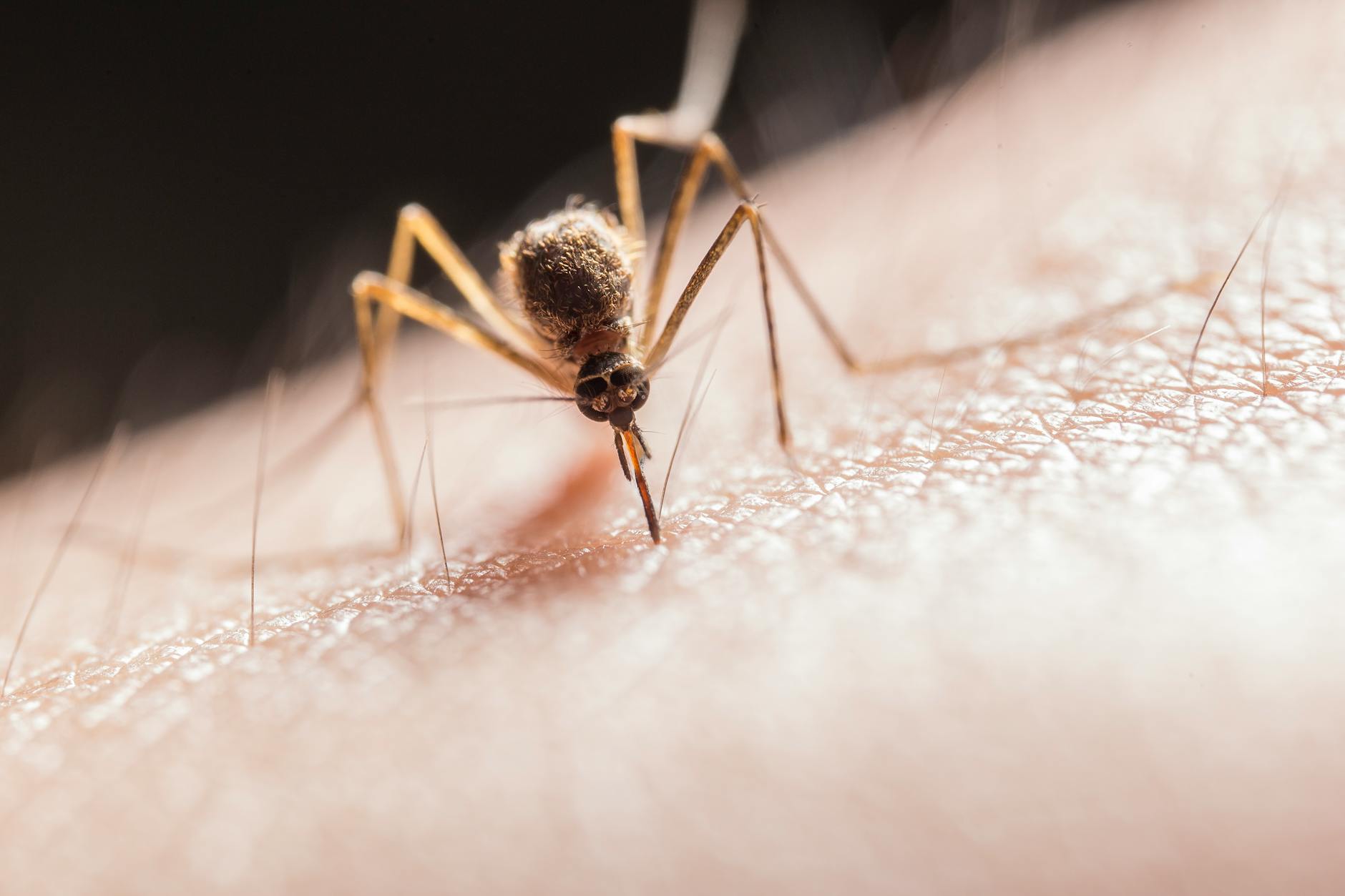
Compare adult mosquito sugar feeding, female blood meals and aquatic larval diets, including important exceptions and practical prevention steps.
Mosquitoes do not live on blood alone. Both sexes use sugary plant fluids for energy, while females of many species take blood to develop eggs. Larvae feed in water, and pupae do not feed. Those differences explain why bite prevention and breeding-site prevention are separate tasks—and why removing flowers or changing your diet is not a dependable mosquito-control plan.
Adult males and females use sugar for energy
The mosquito identification guide helps distinguish the insect and life stage before interpreting feeding behavior. UF/IFAS describes nectar and other sugar sources as fuel for adult mosquito flight. Sources include flowers, injured plants, honeydew from sap-feeding insects and fruit juices. Both male and female mosquitoes use their proboscis to take liquid foods. A male’s mouthparts cannot pierce human skin, so males do not take blood meals from people.
Females can also feed on sugar between blood meals. This does not mean every mosquito near a flower is breeding in the garden or every sweet-smelling plant needs removal. Adults may rest or feed in vegetation while their aquatic habitat is somewhere else. Keep fallen fruit and other garden debris managed for general sanitation, but preserve suitable pollinator habitat. The mosquito lifespan guide concerns survival; sugar feeding alone does not predict how many bites will occur at a home.
Blood meals support reproduction in many female mosquitoes
Females of many species need nutrients from blood to develop eggs. Blood feeding is therefore different from the regular energy supplied by sugars. After feeding, a female finds shelter while digesting and developing eggs, then seeks a suitable egg-laying site. The timing and number of eggs vary with species and conditions; one universal two-day cycle or egg count cannot describe all mosquitoes.
Only females bite, but not every female mosquito species requires blood. UF/IFAS notes that some species can develop the first batch of eggs without a blood meal, and elephant mosquitoes are nonbiting as adults. Human blood is not the only possible source: different species use different vertebrate hosts. “No people in the yard” therefore does not prove mosquitoes cannot reproduce nearby. Bite prevention must be paired with management of suitable water rather than a plan to deprive every female of human blood.
Larvae eat in water and pupae do not feed
Mosquito larvae develop in water and feed on organic material and living organisms, including algae, bacteria, yeast and other microorganisms. Many filter particles through their mouthparts, but feeding habits vary. Predatory species such as Toxorhynchites rutilus and Psorophora ciliata can eat other mosquito larvae. Not every wriggler is doing the same job in its habitat.
The pupal stage is also aquatic, but pupae do not feed; they use reserves from larval growth while developing into adults. Eggs likewise are a developmental stage rather than a feeding animal. Fungal material can form part of an aquatic food community, but visible surface mold does not establish mosquito breeding. Check for retained water and maintain the container. The larval control guide concerns those developing stages, not adult mosquitoes that already emerged.
Compare the life stages without a universal duration table
Egg placement differs by mosquito group. Aedes females can lay eggs attached to container walls above the waterline; the eggs hatch when water covers them and can survive drying. Culex females lay floating egg rafts on water. Both develop through larvae and pupae before the adult emerges, but development speed depends on the mosquito and environment.
CDC describes a roughly seven-to-ten-day egg-to-adult interval for the Aedes species and Culex species covered in its profiles. This is not a deadline for every Florida mosquito. UF/IFAS describes larval periods ranging from days to months across species and water temperatures. An empty container can still carry attached eggs, while a container that refills can provide a new larval habitat. Inspect the water source and container walls rather than assuming a fixed short egg stage makes a dry object harmless.
Host finding and transmission are more than a food preference
Blood-seeking females use cues including carbon dioxide from breath and host odors, with temperature and other conditions also relevant. The guide to differences in mosquito bite exposure concerns host cues and circumstances, rather than a guaranteed preference ranking. Different people and circumstances can result in different bite exposure. A universal blood-type ranking or a precise detection distance does not determine your personal risk. Eating garlic, bananas or vitamin B is not a reliable mosquito repellent; UF/IFAS lists such consumption among ineffective mosquito-control gimmicks.
Pathogen transmission is a separate biological process. An infected, competent mosquito can transmit certain pathogens through its saliva during a bite; it is not simply passing the last host’s blood into the next person. Some mosquitoes are nuisance biters and do not spread disease. Malaria, dengue, Zika, West Nile and dog heartworm have different pathogens, vectors and geographic patterns. Florida’s 2023 malaria report is historical context, not a current yard-risk estimate. For pets, the discussion of mosquitoes biting dogs is separate from veterinarian-directed heartworm prevention; this diet comparison does not select a pet medicine. Seek current public-health or veterinary guidance for the relevant concern.
Use feeding biology to prioritize source reduction
Inspect water-holding containers weekly and after rain, including plant saucers, birdbaths, toys, buckets, covers and gutters. Empty and scrub suitable containers, cover stored water and repair avoidable water accumulation. Aedes eggs on container walls make scrubbing useful. Standing-water management interrupts aquatic development rather than merely removing a larval food ingredient.
For water that cannot be emptied, use only a larvicide labeled for that site and water use, or request professional advice. Bti targets susceptible larvae; it does not kill adult mosquitoes or eliminate every aquatic organism concern by definition. Follow dosage and retreatment instructions. Do not add products to shared waterways or move wildlife into a pond as a control experiment. General property maintenance can help address drains and retained water, but a maintenance checklist does not confirm the insect identity.
Combine personal protection with realistic trap and habitat decisions
Use EPA-registered repellents as directed, wear suitable clothing and maintain door and window screens. Different species can bite during daytime or nighttime, so dawn and dusk are not the only exposure periods. Living citronella, lavender or rosemary plants are not reliable substitutes for bite protection. The garden-plant guide should be read with that limit.
Carbon-dioxide traps use a cue from exhaled breath to attract host-seeking mosquitoes, while sugar-based feeding cues relate to the plant-sugar diet used by both males and females. These are different from stations that draw females to an egg-laying site. The published service description explains In2Care stations as a method in which a mosquito picks up larvicide and transports it to small water sources, alongside a fungal agent directed at the adult. UF/IFAS cautions that carbon-dioxide traps may capture mosquitoes without protecting an entire yard; species, flight range and habitat affect the result. Ask which feeding or egg-laying behavior a device targets, which species it is intended for and how source reduction continues. Do not substitute a generic sugar-recipe trap for labeled product use and a site assessment. No trap guarantees whole-yard control. Mosquitoes also have ecological roles as food and, for some species, larval predators. A PNAS study documented Aedes mosquitoes pollinating the Platanthera obtusata orchid; that specific relationship is not evidence that every mosquito visits or pollinates every Florida garden plant. The biological subjects in the ecosystem guide is separate from a household control prescription. The purpose of mosquito control is to reduce exposure and suitable breeding opportunities while keeping realistic limits. Ask about an inspection when sources or bites persist, and confirm the service’s scope and limits.
Frequently Asked Questions
-
What do mosquitoes eat besides blood?
Adults of both sexes take nectar and other sugary liquids, including honeydew and fruit juices, for energy. Female blood meals serve a different role in egg development. Larvae feed in water, while pupae do not feed.
-
Do all mosquitoes drink blood?
No. Males do not blood-feed, and some female mosquito species are nonbiting. Many biting females need blood for eggs, while some species can produce a first batch without it. Adult elephant mosquitoes are an important nonbiting exception.
-
How often do female mosquitoes need a blood meal?
Timing depends on the species, temperature, host access and reproductive cycle. A female may rest for several days while digesting and developing eggs, then seek an egg-laying site. There is no universal every-two-days schedule.
-
What do baby mosquitoes eat in water?
Many larvae eat microorganisms and organic material such as algae, bacteria and yeast. Some mosquito larvae are predators of other larvae. The next stage, the aquatic pupa, does not eat.
-
Can mosquitoes survive without biting humans?
Yes. Males rely on sugary fluids, nonbiting species reproduce without blood, and many biting females can use animal hosts. Some species also produce a first batch of eggs without blood. Removing human hosts does not remove breeding water.
-
Does what I eat affect whether mosquitoes bite me?
Diet changes are not a dependable prevention method. UF/IFAS identifies garlic, vitamin B and banana consumption as ineffective mosquito-control gimmicks. Use labeled repellents, clothing, screens and water-source management instead.
Sources and further guidance
- ENY-753/IN1045: Mosquitoes and their Control: Integrated Pest Management for Mosquito Reduction around Homes and Neighborhoods
- About Mosquitoes | Mosquitoes | CDC
- Life Cycle of Aedes Mosquitoes | Mosquitoes | CDC
- About Culex Mosquitoes | Mosquitoes | CDC
- About Mosquito Bites | Mosquitoes | CDC
- Mosquito Control at Home | Mosquitoes | CDC
- Bti for Mosquito Control | US EPA
- Preventing Mosquito Bites | Mosquitoes | CDC
- Florida experts break down the buzz on the myth of mosquito-repelling plants – News
- Mosquito–orchid pollination study (PNAS)
- Carbon-dioxide traps and their limits (UF/IFAS)
Get help with your pest concern.
Tell us what you are seeing. Our team can discuss the concern and the next step.
- Share your concern and contact details.
- Our team contacts you to discuss available service.
- Ask for a written scope and quote before work.
Where can we reach you?
Our team will call to confirm the next step.
By submitting, you’re asking On Demand Pest Control to contact you about this request.
↗ Prefer to call? (954) 947-0805