
Many adult earwigs have folded wings but seldom fly. Species and life stage matter; a crawling earwig indoors usually calls for access and moisture checks.
Short answer
Many adult earwigs have folded wings but seldom fly. Species and life stage matter; a crawling earwig indoors usually calls for access and moisture checks.
Wings can be present even when you never see flight
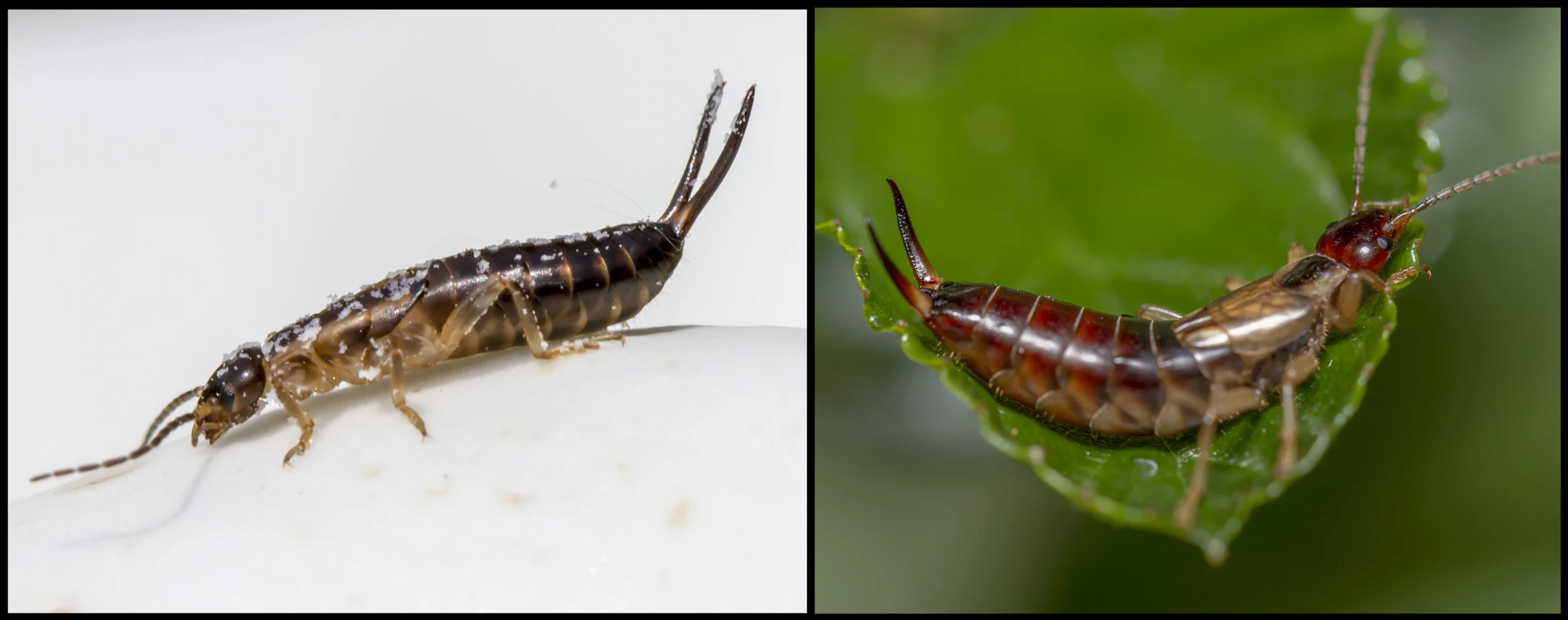
UC IPM notes that most earwig species have wings under short wing covers but seldom fly. Immatures resemble adults in general shape and lack wings. A pair of tail forceps is a more useful recognition feature than seeing an insect take off. Species differ, so it is too broad to say every earwig flies or none does. Observe from a safe distance and photograph the insect if its identity is uncertain. A wingless-looking individual might be immature or belong to a species with reduced wings.
Separate anatomy from an invented explanation
In winged forms, short forewing covers conceal much larger folded hindwings. That compact arrangement does not justify claiming that earwigs universally avoid flight because they are clumsy, too heavy or physically unable to deploy their wings quickly. A homeowner’s observation cannot demonstrate those mechanisms. The useful conclusion is limited: many have the equipment for flight, yet are often encountered crawling and sheltering. This guide does not assign a standard flight distance or promise that a particular species will never approach a light.

Finding one inside does not prove it flew in
Earwigs can enter through building gaps or arrive with objects from outdoors. They seek sheltered places, and weather or exterior conditions can influence movement into buildings. Inspect door seals, screens and accessible cracks along with damp debris near the entrance. A specimen on a windowsill is not proof it flew through the window. A repeated pattern near one doorway is more useful for prevention than guessing the route from the insect’s wings. Keep the inspection proportionate to the number and locations of actual sightings.
UC IPM describes earwigs as most active while feeding at night and sheltering by day in dark, cool, moist places such as soil clods, boards and dense vegetation. That ground-level shelter pattern guides inspection; it does not prove a mechanical reason for infrequent flight.
They are not looking for human ears
The name has encouraged a myth that earwigs seek out ears or burrow into the brain. That is not their biology. Their tail forceps can be used defensively, so avoid handling an insect or trapping it against the skin. Earwigs are not evidence that furnishings are being consumed, though some species can damage susceptible garden plants. If a person has a suspected insect in the ear or another health symptom, seek medical help rather than using the myth to identify it or applying a household pesticide.
Prevention should address entry and shelter
Sweep or vacuum incidental indoor earwigs and dispose of collected material appropriately. Reduce avoidable wet debris next to the structure, correct leaks and drainage concerns and repair access gaps. UC IPM advises that indoor pesticide use will not prevent new entry and is not recommended for this purpose. Lighting changes may reduce attraction for some insects, but do not substitute for route and shelter work. Repeated sightings or suspected garden damage warrant species confirmation and a targeted plan rather than a promise that one spray stops all flying and crawling insects. If repeated indoor activity is the concern, review earwig management separately from the question of whether an adult can fly.
For an identified outdoor earwig problem, rolled newspaper or short hose sections can serve as shelter traps near affected plants; check them in the morning and dispose of captures safely. Screens and repaired door seals provide entry barriers for the home. A trap catch confirms presence, not responsibility for every damaged leaf or complete control.
The nymph-versus-adult distinction matters
An immature earwig can resemble an adult but lack developed wings. An adult with folded wings may also appear wingless at a quick glance. Neither observation justifies a blanket statement about all earwigs in the home. Retain a clear photograph with the forceps and body visible, and ask for species or stage identification if flight capability is relevant. There is usually no need to unfold the wings physically. For home prevention, the observed entry route and shelter conditions remain more useful than forcing a specimen to demonstrate flight.
Light attraction does not prove the travel route
An insect resting near a porch light may have crawled from shelter or arrived by flight. The location alone cannot distinguish those paths. Inspect screens, door seals and nearby damp cover rather than using lighting as the only intervention. A change to less attractive outdoor lighting can be a supplementary measure, but should not be described as a complete earwig-control strategy. If repeated entry continues, compare locations and review building access. Do not assume that an exterior insect population must be eliminated before the doorway can be improved.
Avoid mixing insect facts with ear myths
Earwigs’ name and forceps have encouraged dramatic explanations that do not guide useful control. They do not specialize in entering people or damaging the brain. That fact should not become advice to ignore a person with a suspected foreign object in the ear; medical care is a separate issue. Likewise, the ability to pinch when confined is not proof that earwigs are hunting people. A calm response consists of identification, careful removal and checking recurrence, while actual symptoms should be referred to the appropriate clinician.
Understand the covers and folded wings
UC IPM describes most earwig species as having wings under short, hard wing covers, although they seldom fly. The small visible covers are not the full flight surface. Wings can be folded beneath them, so an adult can look largely wingless in an ordinary photograph. The presence of that anatomy does not establish how far a particular species flies or how frequently it does so around a Florida property. This guide makes no aerodynamic claim that the wings are too small or the body too heavy for flight.
Use the forceps-like appendages at the rear and the overall body as identification clues, not the apparent absence of open wings. Do not provoke an insect to make it unfold them. A safe, clear photograph of the whole animal can support identification without handling. If the species is uncertain, keep the explanation at the group level. An earwig from a garden, a greenhouse or an indoor corner may differ from the European earwig emphasized in UC IPM’s California discussion; the latter’s seasonal calendar is not a statewide Florida rule. Review earwig identification to assess the pincers and body form before drawing conclusions about flight or infestation.
Separate adult and immature observations
Immature earwigs resemble adults but are smaller and lack wings, according to UC IPM. A young insect without flight wings is not proof that every earwig lacks them. Conversely, a larger individual with short covers is not proof that it flew to the place it was found. Size and photographs can be misleading without scale, and species identification may still be needed. The useful distinction is the life stage visible in the specimen and the limits of what its anatomy tells you.
A photograph of one insect cannot establish how it entered a room. Earwigs can move through accessible gaps or arrive with objects and materials. An insect beside a light may have crawled there after entry. Finding it near a window is therefore a reason to inspect the accessible route, not evidence of a flight path. Record whether it was actually observed airborne or merely found at a surface; those are different observations and should not be merged in a report.
Investigate entry without turning anatomy into a treatment guide
For an isolated indoor earwig, safe sweeping or vacuuming and appropriate disposal may be sufficient while you inspect the setting. Check accessible door thresholds, screens and gaps without blocking intended drainage or ventilation. If activity repeats, examine avoidable damp debris and shelter immediately beside the building. A confirmed leak or damaged screen deserves the appropriate repair regardless of whether the insect could fly. Do not select indoor spraying solely because a winged adult exists.
Keep the question of plant damage separate from the question of wings. UC IPM describes earwigs as feeding on a range of organisms, including other insects, and as potentially beneficial. Actual feeding on a susceptible plant calls for a garden investigation; a winged insect on a wall does not. This article intentionally does not repeat a full garden-treatment program or a household trapping recipe. Flight anatomy explains the insect, while management should follow the problem observed at that property. Compare cricket identification when the insect has a different body form; the inspection and source question depend on identification.
Keep the ear myth separate from an actual medical issue
The common name does not establish that earwigs seek human ears or burrow into brains. Identifying an earwig at home should not lead to body pesticides or a frightening infestation narrative. If any foreign object or insect is suspected in an ear, seek appropriate medical advice rather than inserting tools or liquids based on a pest article. That is a medical handling question, not evidence that earwigs normally use people as a habitat.
The practical answer is nuanced but straightforward: some adult earwigs have functional flight wings, immature stages do not, and household observation alone may not show how an individual arrived. Use identification, life stage and actual observed movement to answer the anatomy question. Then use entry, shelter and recurrence evidence to decide whether the home needs any action beyond removal. That avoids both the false claim that earwigs can never fly and the false conclusion that every indoor finding demands a flight-related pesticide treatment.
Describe what you saw in terms an identifier can use
If the insect was observed airborne, record that observation and, if possible, its landing place. If it was merely found near a window or light, say so. A rear forceps shape and short covers may suggest an earwig, but a photograph of the whole body with scale is more useful than a conclusion about its travel. Do not require the insect to fly in order to identify it: many observations involve crawling or resting, even for adults that possess wings.
For an immature insect, note the lack of developed wings without assuming that the species is wingless throughout life. For an adult with folded wings, distinguish the visible covers from the concealed flight surfaces. This prevents contradictory statements such as all earwigs have no wings or every large earwig routinely flies into houses. It also avoids converting a single observation into an unsupported comparison of species’ flying ability.
If the homeowner’s real concern is repeated entry, the next decision is a safe check of accessible openings and nearby shelter, not a more elaborate flight theory. If the concern is plant damage, seek evidence of feeding. If the concern is an insect or object in an ear, get appropriate medical guidance. The same animal name can raise different questions, and answering the wing anatomy correctly should not replace the evidence needed for those separate decisions. Use centipede identification as a comparison before assigning a household arthropod to the wrong group. Compare silverfish identification when a small household insect is found; its identity and affected materials need separate inspection.
Sources and further guidance
Frequently Asked Questions
-
Do earwigs fly into your ears?
They do not seek human ears or burrow into the brain. A suspected insect in an ear still needs appropriate medical assistance.
-
Can the common European earwig fly?
Adults have folded wings but seldom fly, according to UC IPM. Do not infer regular flight from wings alone.
-
What attracts flying earwigs to my house at night?
Lighting can attract some insects, but entry gaps and nearby shelter also matter. A windowsill sighting does not establish flight as the route.
-
Are flying earwigs dangerous to humans or pets?
They are generally nuisance insects, but avoid handling because forceps can pinch. Health symptoms should be evaluated independently.
-
How far can an earwig fly?
This guide does not establish a typical flight distance. Species and conditions vary, and many observations involve crawling instead.
-
Do earwigs use their pincers to unfold their wings?
The guide does not establish a universal forceps-assisted deployment rule. Their folded wings and forceps are distinct identification features.
Get help with your pest concern.
Tell us what you are seeing. Our team can discuss the concern and the next step.
- Share your concern and contact details.
- Our team contacts you to discuss available service.
- Ask for a written scope and quote before work.
Where can we reach you?
Our team will call to confirm the next step.
By submitting, you’re asking On Demand Pest Control to contact you about this request.
↗ Prefer to call? (954) 947-0805