Table of Contents
ToggleKey Takeaways
- Whiteflies are tiny, sap-sucking insects that hide on the undersides of leaves and multiply rapidly in warm climates.
- Early identification — including recognizing honeydew, sooty mold, and yellowing leaves — is essential to preventing severe plant damage.
- Effective whitefly control combines cultural practices, biological controls like parasitic wasps, and targeted insecticidal treatments.
- Sticky yellow traps and regular leaf inspections are the most reliable monitoring tools for early whitefly detection.
- Preventing whitefly infestations requires inspecting new plants, maintaining plant health, and avoiding excessive nitrogen fertilization.
- Professional pest control may be necessary when whitefly populations overwhelm DIY methods or threaten valuable landscapes.
Identifying and controlling whitefly starts with understanding what you’re dealing with — tiny, moth-like insects that swarm from the undersides of leaves the moment you disturb an infested plant. These persistent pests attack ornamentals, vegetables, and citrus trees across warm-climate regions, draining vital nutrients and leaving behind a sticky residue that invites secondary problems like sooty mold. Left unchecked, a small whitefly population can explode into a full-blown infestation in just a few weeks. Much like other common household pests such as house flies, whiteflies thrive in environments where conditions favor rapid reproduction. This guide walks you through every stage — from identifying whitefly species and spotting early warning signs to deploying the most effective control and eradication strategies for your home and garden.
What Are Whiteflies and Why Are They a Problem?
Whiteflies belong to the family Aleyrodidae, a group of over 1,500 species of small, winged insects closely related to aphids and mealybugs. Despite their name, whiteflies are not true flies. They are hemipterans — piercing-sucking insects that feed on plant phloem sap.
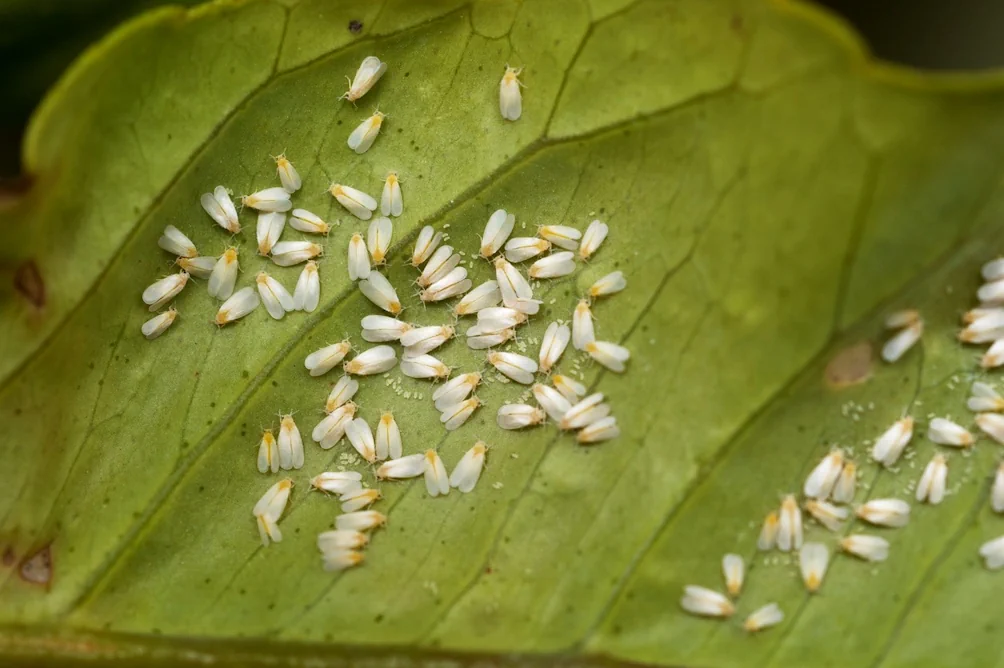
Adults are roughly 1–2 millimeters long with powdery white wings. They congregate on leaf undersides, where females lay tiny, oval eggs in circular or crescent patterns. A single female can lay 200–400 eggs during her lifetime, which means populations grow exponentially under favorable conditions.
Whiteflies cause damage in three distinct ways:
- Direct feeding injury: They extract sap, weakening plant tissue and causing yellowing, wilting, and stunted growth.
- Honeydew excretion: Their sugary waste coats leaves and attracts sooty mold, which blocks sunlight and reduces photosynthesis.
- Disease transmission: Several whitefly species vector plant viruses, including tomato yellow leaf curl virus and lettuce infectious yellows virus.
In warm, humid climates like South Florida, whitefly infestations can persist year-round. Without intervention, they can devastate ornamental landscapes and food gardens alike.
How to Identify Whitefly Species on Your Plants
Accurate identification is the first step toward effective whitefly control. Different species target different host plants and may respond differently to treatment methods. Here are the most common whitefly species you’ll encounter.
Silverleaf Whitefly (Bemisia tabaci)
The silverleaf whitefly is one of the most destructive species in tropical and subtropical regions. Adults are slightly smaller than other species and hold their wings at a 45-degree angle, giving them a more streamlined appearance. They target tomatoes, peppers, squash, poinsettias, and hibiscus. Heavy feeding causes a condition called “silver leaf” in squash plants, where leaf surfaces take on a silvery sheen.
Greenhouse Whitefly (Trialeurodes vaporariorum)
This species is the most common whitefly in greenhouses and indoor growing environments. Adults hold their wings flat, parallel to the leaf surface, and appear slightly larger and more triangular than silverleaf whiteflies. They prefer tomatoes, cucumbers, lettuce, and many ornamental houseplants. The greenhouse whitefly thrives in controlled environments where temperatures stay between 65°F and 80°F.
Giant Whitefly (Aleurodicus dugesii)
Originally from Mexico, the giant whitefly has spread across the southern United States. It’s easy to identify by the long, waxy filaments — sometimes several inches long — that hang from infested leaves like white spirals. Giant whiteflies attack hibiscus, banana plants, giant bird of paradise, and mulberry trees. Their large honeydew deposits cause especially severe sooty mold problems.
Ficus Whitefly (Singhiella simplex)
This species targets ficus hedges and trees exclusively. It was first detected in South Florida in 2007 and has caused widespread defoliation of ficus hedges throughout the region. Infested ficus leaves develop yellow spots on the upper surface and white, waxy patches on the underside before dropping prematurely.
What Are the Early Signs of a Whitefly Infestation?
Catching a whitefly infestation early makes treatment significantly easier and more effective. Here are the key warning signs to watch for during regular plant inspections.
| Warning Sign | What to Look For | Severity Indicator |
|---|---|---|
| Adult swarms | Tiny white insects fly up when you shake a branch or leaf | Moderate to heavy |
| Eggs on leaf undersides | Tiny yellow or white oval eggs arranged in circles or arcs | Early stage |
| Nymphs | Flat, translucent, scale-like insects stuck to leaf undersides | Moderate |
| Sticky honeydew | Shiny, sticky coating on leaves, stems, or surfaces below plants | Moderate to heavy |
| Sooty mold | Black, powdery fungal growth on honeydew-coated surfaces | Heavy |
| Leaf yellowing or drop | Chlorosis, wilting, and premature leaf drop | Severe |
The most reliable detection method is to gently shake a branch and watch for a cloud of tiny white insects taking flight. For ongoing monitoring, place yellow sticky traps near susceptible plants. Whiteflies are strongly attracted to the color yellow, making these traps both a detection and a partial control tool.
If you’re wondering whether these tiny insects pose risks beyond your garden, learn more about whether whiteflies are harmful to humans and what to expect from close contact with infested plants.
Whitefly Life Cycle: Why Timing Matters for Control
Understanding the whitefly life cycle is critical for timing your control efforts. Whiteflies go through four distinct stages: egg, nymph (with four instars), pupa, and adult. The entire cycle takes 16–38 days depending on temperature, with warmer conditions accelerating development.
Egg Stage (4–12 Days)
Females deposit eggs on the undersides of young, tender leaves. Eggs are tiny — about 0.2 mm — and may be pale yellow or white. They are often laid in semicircular patterns as the female rotates while ovipositing. Eggs are resistant to many contact insecticides, which is why a single treatment rarely eliminates an infestation.
Nymph and Pupal Stages (7–20 Days)
First-instar nymphs, called crawlers, are the only mobile nymph stage. After hatching, they walk a short distance, insert their mouthparts into the leaf, and remain stationary through the remaining three instars. Nymphs look like small, flat, translucent scales and are often mistaken for eggs or harmless debris. The fourth instar is sometimes called the “pupal” stage, during which the insect transforms into an adult.
Adult Stage (30–40 Days Lifespan)
Adults emerge from the pupal case ready to fly and mate. Females begin laying eggs within a few days. Because all life stages can exist on a plant simultaneously, effective whitefly control requires multiple treatments spaced 5–7 days apart to break the reproductive cycle.
How to Control Whitefly With Cultural Practices
Before reaching for sprays, adjust your gardening practices to make your landscape less hospitable to whiteflies. Cultural controls are the foundation of any integrated pest management approach.
- Inspect new plants before bringing them home. Check leaf undersides for eggs, nymphs, or adults. Quarantine new additions for a week before placing them near existing plants.
- Avoid over-fertilizing with nitrogen. Excess nitrogen produces lush, succulent new growth that whiteflies prefer. Use balanced, slow-release fertilizers instead.
- Prune heavily infested branches. Removing the most affected foliage reduces the population quickly and allows treatments to work more efficiently on what remains.
- Use reflective mulch. Aluminum foil or silver-colored plastic mulch around vegetable plants repels whiteflies by disorienting them with reflected light.
- Maintain proper plant spacing. Crowded plants create the humid, shaded microenvironments where whiteflies thrive. Good air circulation helps keep populations in check.
Biological Whitefly Control: Natural Predators That Work
Biological control agents are among the most effective and sustainable tools for managing whitefly populations, especially in landscapes where chemical resistance is a concern.
Parasitic Wasps
Encarsia formosa and Eretmocerus eremicus are tiny parasitic wasps that lay their eggs inside whitefly nymphs. The developing wasp larva consumes the nymph from within, eventually killing it. Parasitized nymphs turn black (Encarsia) or yellow-brown (Eretmocerus), making it easy to monitor their effectiveness. These wasps are commercially available and widely used in greenhouse and outdoor settings.
Ladybugs and Lacewings
Both ladybugs (Hippodamia convergens) and green lacewing larvae are generalist predators that feed on whitefly eggs and nymphs. Lacewing larvae are particularly voracious and are sometimes called “aphid lions.” Releasing these predators alongside parasitic wasps creates layered biological pressure that can suppress whitefly populations without chemicals.
Beauveria bassiana (Biological Insecticide)
Beauveria bassiana is an entomopathogenic fungus that infects and kills whiteflies and other soft-bodied insects. It is available as a commercial spray and is compatible with many organic farming programs. For best results, apply in the evening when humidity is higher and UV light won’t degrade the fungal spores before they germinate on the pest.
Chemical Whitefly Control: Sprays and Systemic Options
When cultural and biological methods aren’t enough, targeted chemical treatments can knock down whitefly populations rapidly. However, choosing the right product and application method matters enormously because whiteflies are notorious for developing insecticide resistance.
Insecticidal Soaps and Horticultural Oils
These are low-toxicity contact sprays that suffocate whitefly nymphs and adults on contact. They must directly hit the insect to work, so thorough coverage of leaf undersides is essential. Insecticidal soap and neem oil are effective for light to moderate infestations and are safe for use around pets and beneficial insects when applied correctly. Reapply every 5–7 days for at least three consecutive applications to catch emerging nymphs.
Systemic Insecticides
Systemic products containing imidacloprid or dinotefuran are applied as soil drenches and absorbed by plant roots. As the plant takes up the chemical, it becomes toxic to sap-feeding insects like whiteflies. Systemics provide longer-lasting control — often 6–12 weeks from a single application — but they should be used judiciously. Avoid applying systemic neonicotinoids to flowering plants visited by pollinators.
Insect Growth Regulators (IGRs)
IGRs like buprofezin disrupt whitefly development by preventing nymphs from molting properly. They don’t kill adults but effectively break the reproductive cycle. IGRs are especially useful in rotation with adulticides to combat resistance. For example, alternating an IGR application with an insecticidal soap treatment every 7 days covers multiple life stages simultaneously.
When to Call a Professional for Whitefly Eradication
DIY whitefly control works well for small gardens, container plants, and mild infestations. However, there are clear situations where professional pest management becomes the smarter choice.
Consider calling a professional when:
- Your ficus hedges or large ornamental trees are severely defoliated and you can’t reach the upper canopy.
- Whitefly populations rebound within days after repeated DIY treatments, suggesting insecticide resistance.
- The infestation has spread across your entire landscape, making targeted spot-treatment impractical.
- You’re dealing with a species like ficus whitefly that requires specialized systemic treatments applied to the root zone.
- You want an integrated management plan that combines biological, cultural, and chemical strategies tailored to your property.
Licensed pest control technicians have access to professional-grade products and application equipment that homeowners typically cannot purchase. They also understand local pest pressure, resistance patterns, and the best timing for treatments in your specific climate zone. If whiteflies are threatening your landscape, don’t wait until you’ve lost hedges or entire plantings — early professional intervention saves time, money, and plants.
Frequently Asked Questions
-
What is the fastest way to get rid of whiteflies?
The fastest method combines a strong water spray to knock adults off plants with an immediate application of insecticidal soap or neem oil to kill nymphs on leaf undersides. Follow up with a systemic soil drench containing imidacloprid for longer-lasting protection. Repeat foliar sprays every 5–7 days for at least three cycles.
-
Do whiteflies come back every year?
In warm climates like South Florida, whiteflies can be active year-round, so they may never truly disappear. In cooler regions, they die off outdoors during winter but can overwinter in greenhouses or on indoor plants. Consistent monitoring and preventive practices reduce the chances of a recurring infestation each growing season.
-
Can whiteflies kill my plants?
Severe, untreated whitefly infestations can kill plants, especially young seedlings, herbs, and stressed ornamentals. Heavy feeding causes nutrient depletion, and the resulting sooty mold blocks photosynthesis. Plants weakened by whiteflies also become more vulnerable to secondary diseases and environmental stress.
-
Are whiteflies the same as aphids?
Whiteflies and aphids are related — both are hemipterans that feed on plant sap — but they are different insects. Whiteflies have wings and fly, while most aphids are wingless or only develop wings under crowded conditions. Both excrete honeydew, but whiteflies tend to cluster on leaf undersides while aphids may colonize stems, buds, and leaf surfaces.
-
Will dish soap kill whiteflies?
A diluted dish soap spray can kill some whiteflies on contact by breaking down their waxy coating. However, commercial insecticidal soaps are formulated specifically to minimize plant damage while maximizing pest contact. Dish soap may burn sensitive foliage, especially in hot weather, so test on a small area first and rinse plants after a few hours.
-
How do I prevent whiteflies from infesting my garden?
Prevention starts with inspecting all new plants before adding them to your garden. Use yellow sticky traps to catch early arrivals and avoid over-fertilizing with nitrogen, which promotes the tender growth whiteflies prefer. Encourage natural predators like ladybugs and lacewings by reducing broad-spectrum insecticide use in your landscape.