Table of Contents
ToggleKey Takeaways
- White ants and termites are the same insect — ‘white ant’ is simply a common nickname for termites based on their pale appearance.
- Despite the nickname, termites are not ants at all — they are more closely related to cockroaches than to any ant species.
- You can tell termites apart from real ants by looking at their straight antennae, thick waists, and equal-length wings.
- Termites cause billions of dollars in structural damage each year, so early identification matters.
- If you spot pale, soft-bodied insects near wood in your home, treat the situation as a termite problem — not an ant problem.
If you have ever heard someone mention “white ants” and wondered whether termites are the same thing, you are not alone. This common question trips up homeowners all the time, and the confusion can lead to costly mistakes. The nickname “white ant” has been used for generations — especially in Australia and parts of the southern United States — to describe the pale, wood-eating insects that silently destroy homes from the inside out. But here is the catch: these so-called white ants are not ants at all. In this guide, you will learn exactly why the two names exist, how termites differ from actual ants at the biological level, and what steps to take the moment you spot either pest in or around your property.
Why Are Termites Called White Ants?
The term “white ant” stuck because termites share a few surface-level traits with ants. Both insects live in large colonies, build elaborate nests, and divide labor among castes — workers, soldiers, and reproductive members. To the untrained eye, a termite worker crawling through a piece of wood looks a lot like a small, pale ant.
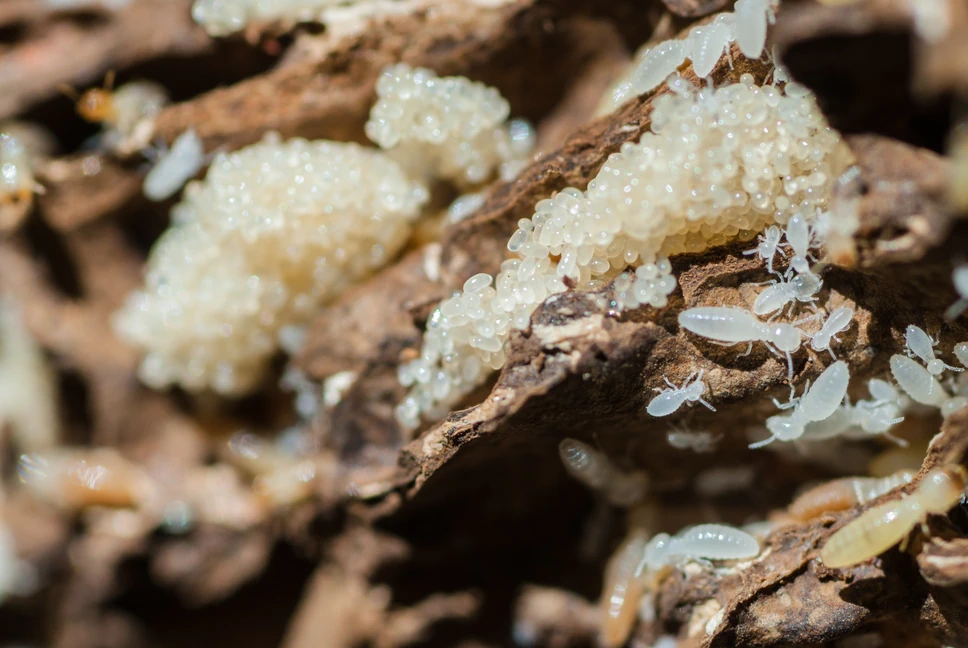
Color is the biggest reason for the nickname. Termite workers and nymphs are translucent or creamy white, unlike most ant species that range from brown to black. When early settlers and homeowners first encountered swarms of these tiny pale insects, calling them “white ants” was a logical shorthand.
However, the nickname is scientifically inaccurate. Termites belong to the order Blattodea, which they share with cockroaches. Ants belong to the order Hymenoptera, alongside bees and wasps. In other words, a termite is more closely related to the American cockroach scurrying across your kitchen floor than to any ant colony in your yard.
How to Tell Termites and Ants Apart
Once you know what to look for, distinguishing a termite from an ant is straightforward. The differences show up in body shape, antennae, wings, and behavior. Misidentifying the pest can lead you down the wrong treatment path, so getting this right matters.
Body Shape Differences
Ants have a distinctly pinched or narrow waist between the thorax and abdomen. Termites do not. A termite’s body is broad and relatively uniform from head to tail, giving it a thick, cigar-shaped silhouette. This is the single easiest way to tell the two apart, even without magnification.
Antennae and Wings
Ant antennae are elbowed — they bend at a sharp angle partway along their length. Termite antennae are straight and look like a string of tiny beads. When it comes to wings, both ants and termites produce winged reproductive members called swarmers. However, termite swarmers have two pairs of wings that are equal in length. Ant swarmers have a larger front pair and a noticeably shorter rear pair.
Color and Texture
Termite workers are pale, soft-bodied, and almost translucent. Most ant species you encounter around the home — like ghost ants or fire ants — have a harder exoskeleton with distinct coloring. If you crush a termite worker between your fingers, it offers almost no resistance. An ant’s body is notably firmer.
Quick Comparison: White Ants (Termites) vs. True Ants
| Feature | Termites (“White Ants”) | True Ants |
|---|---|---|
| Waist | Broad, no pinch | Narrow, pinched |
| Antennae | Straight, beaded | Elbowed |
| Wing Length | Both pairs equal | Front pair longer |
| Body Color | Pale, creamy white (workers) | Brown, black, red, or amber |
| Diet | Cellulose (wood, paper, cardboard) | Varied (sugars, proteins, fats) |
| Closest Relatives | Cockroaches | Bees and wasps |
Use this table as a field reference the next time you spot a suspicious insect near your home’s woodwork.
Are White Ants Dangerous to Your Home?
Because “white ants” are actually termites, the answer is a definitive yes. Termites are among the most destructive pests on the planet. According to industry estimates, they cause more than five billion dollars in property damage across the United States every year — and most homeowner insurance policies do not cover termite damage.
Termites feed on cellulose, the main structural compound in wood. They can eat through floor joists, wall studs, roof trusses, and even paper-backed drywall without ever breaking through to the surface. By the time you see visible damage — sagging floors, bubbling paint, or hollow-sounding wood — the colony may have been active for months or years.
Subterranean termites, the most common type in the southeastern United States, build mud tubes to travel between their underground colony and the wood they feed on. Drywood termites, on the other hand, live entirely inside the wood itself, making them even harder to detect early.
Which Ants Actually Damage Wood Like Termites?
Although real ants and termites are unrelated, one ant species does cause structural damage that gets confused with termite activity. Carpenter ants excavate galleries inside wood to build their nests. Unlike termites, carpenter ants do not eat wood. They hollow it out and push the debris — called frass — out of small kick-out holes.
Here is how to tell carpenter ant damage from termite damage:
- Frass: Carpenter ants leave neat piles of sawdust-like shavings. Termites leave behind mud or tiny fecal pellets.
- Gallery texture: Carpenter ant tunnels are smooth and clean. Termite tunnels are rough and packed with mud or soil.
- Insect appearance: Carpenter ants are large (up to half an inch), dark-colored, and have a pinched waist. Termites are smaller, pale, and thick-waisted.
Both pests require professional attention, but the treatment methods differ significantly. Knowing which one you are dealing with saves time and money.
Signs You Have Termites (Not Just Ants) in Your Home
Catching a termite infestation early is critical. Here are the warning signs every homeowner should watch for:
- Mud tubes: Pencil-thin tubes of dried mud running along your foundation, walls, or pipes indicate subterranean termites.
- Discarded wings: Piles of small, equal-length wings near windowsills or light fixtures suggest a recent termite swarm.
- Hollow wood: Tap on baseboards, door frames, and window sills. A hollow or papery sound points to hidden damage.
- Frass pellets: Tiny, six-sided fecal pellets beneath wood surfaces are a hallmark of drywood termites.
- Blistering paint or sagging drywall: Moisture from termite activity can cause paint to bubble and walls to warp.
If you notice any of these signs, do not wait. Termite damage compounds quickly, and what looks like a minor issue today can become a major structural problem within a single season.
What to Do If You Find White Ants or Termites
The moment you suspect termite activity, follow these steps to protect your property:
- Do not disturb the insects. Breaking open mud tubes or spraying store-bought pesticide can scatter the colony, making professional treatment harder.
- Collect a sample. Place a few insects in a sealed plastic bag or take a clear photo. This helps a pest professional identify the species quickly.
- Schedule a professional inspection. Trained technicians use moisture meters, thermal cameras, and sounding tools to map the full extent of an infestation — far beyond what you can see on the surface.
- Ask about treatment options. Depending on the species and severity, solutions range from liquid barrier treatments and bait stations for subterranean termites to localized treatments or fumigation for drywood termites.
DIY termite control products exist, but they rarely reach the heart of a colony. Professional-grade treatments target the queen and the entire nest, which is the only way to stop the damage permanently.
Understanding the difference between true ants and termites — the so-called white ants — is the first step toward protecting your home. Whether you are browsing the ant library to identify a mystery pest or already seeing mud tubes along your foundation, acting fast gives you the best chance of minimizing damage and repair costs.
Frequently Asked Questions
-
Do white ants actually exist as a separate species?
No. "White ant" is not a recognized scientific or common species name. The term is an informal nickname used to describe termites because of their pale color and colony behavior. If someone mentions white ants, they are talking about termites.
-
Can termites bite humans?
Soldier termites can technically bite, but they rarely do. Their jaws are designed to defend the colony against predators like ants, not to attack humans. Termite bites are not considered a health threat.
-
Why do termites look white?
Termite workers and nymphs spend their entire lives underground or inside wood, so they never develop pigmentation from sun exposure. Their soft, pale exoskeletons are adapted to a dark, humid environment. Only reproductive swarmers develop darker coloring.
-
How fast can termites damage a house?
A mature subterranean termite colony of around 60,000 members can eat about five grams of wood per day. That may sound small, but over months and years the damage adds up. Significant structural damage can develop within one to three years of a colony establishing itself in a home.
-
Should I treat for ants or termites if I see small white insects?
Treat for termites. Small white insects found near or inside wood are almost always termite workers. True ants are rarely white. Have a professional confirm the identification so the correct treatment plan is applied from the start.
-
Are white ants and termites more active in certain seasons?
Termite colonies remain active year-round, but swarming season — when winged reproductives leave the nest to start new colonies — typically peaks in spring and early summer. Warm, humid climates like Florida can see swarms as early as February.