
Clothes-moth and carpet-beetle larvae can damage animal-based fibers. Identify larvae or shed skins, find the feeding source, and clean stored textiles before treatment.
Clothes-moth and carpet-beetle larvae can damage animal-based fibers. Identify larvae or shed skins, find the feeding source, and clean stored textiles before treatment.
Holes in a sweater or stored garment can have different causes. Fabric pests include clothes moths and carpet-beetle larvae; other insects may damage susceptible or soiled materials. This guide explains evidence to inspect, textile-safe storage and cleaning, and when identification or treatment needs specialist help.
Which Bugs Eat Clothes and Damage Fabrics?
The groups below have different feeding habits and damaging stages. Match live insects, cast skins, cases, and other evidence to the affected material rather than identifying a pest from holes alone.
Clothes Moths (Webbing and Casemaking)
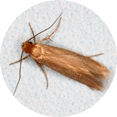
Webbing clothes moths (Tineola bisselliella) and casemaking clothes moths (Tinea pellionella) are two fabric-pest examples described by UC IPM. Adults are small and similar in appearance; clothes moths are weak flyers often found close to infested goods. A moth flying indoors may instead be associated with stored food, so confirm identification.
Clothes-moth larvae are the damaging stage. Webbing larvae can leave silk feeding tubes or mats; casemaking larvae carry silken cases. UC IPM describes feeding on woolen goods, furs, and other animal materials, including blends containing wool. Soiled fabrics can be more vulnerable, but a hole in a pure synthetic garment does not establish clothes-moth feeding.
Carpet Beetles
Larvae of black carpet beetles, varied carpet beetles, and furniture carpet beetles can damage susceptible materials. Adults do not feed on fabrics; UC IPM describes them seeking pollen and nectar, and sometimes flying inside. Look for larvae and their evidence near affected goods instead of diagnosing textile feeding from an adult at a window.
Carpet-beetle larvae can feed on susceptible textiles, accumulated lint, hair, or insect remains. Black carpet beetles are one example; identify specimens and inspect stored materials rather than inferring a population from an egg-count forecast.
Silverfish and Firebrats
Silverfish and firebrats are slender, wingless insects with long antennae and three thin tail-like appendages. They can feed on starch in clothing, as well as paper, paste and other available materials. Firebrats prefer warmer sites, including near heating equipment and warm attics; identify specimens and inspect the actual storage location rather than assuming every natural-fiber garment is their target.
Silverfish and firebrats can leave irregular holes in paper or susceptible fabrics. Damage overlaps other causes, so yellow stains or surface grazing do not reliably distinguish them from moths, beetles or wear. Look for the insects and associated delicate, dustlike scales near damaged items. They hide during the day and forage at night; inspect secluded storage areas and record evidence before selecting control.
Crickets
House crickets can feed on fabrics such as silk and wool. Other cricket species have different habits; the University of Minnesota notes that camel crickets rarely feed on fabrics. Irregular holes do not identify the insect. If crickets are suspected, confirm them and inspect where garments are stored.
How to Identify Bugs That Eat Clothes in Your Home
Catching a fabric pest infestation early saves you money and heartache. The challenge is that most clothing-eating bugs prefer darkness and seclusion. By the time you see damage on a garment, the infestation may be well established. Here are the key signs to watch for.
- Small holes in clothing: Irregularly shaped holes — especially in wool, silk, or cashmere items — are the classic sign of moth larvae or carpet beetle larvae.
- Silken webbing or tubes: Webbing clothes moth larvae leave behind fine silk threads on fabric surfaces, sometimes forming dense mats in heavy infestations.
- Larval cases or shed skins: Casemaking moth larvae leave tiny cigar-shaped cases. Carpet beetle larvae shed bristly skins that accumulate in corners, along baseboards, and inside drawers.
- Frass (insect droppings): Pellets beside damaged textiles can show where feeding has occurred, but they may be old. Record their location, inspect for larvae or other evidence, and recheck for fresh material or new damage after cleaning.
- Adult insects: Small golden-brown moths fluttering in closets, tiny round beetles on windowsills, or silverfish skittering across floors all point to a potential problem.
- Possible silverfish or firebrat evidence: Irregular holes can have several causes. Inspect for the insects or delicate scales near affected goods; stains or grazing alone do not identify the pest.
A thorough inspection should cover all closets, dresser drawers, storage bins, under-bed storage, attic boxes, and any area where clothing sits undisturbed for extended periods. Pay special attention to garments you haven’t worn in months.
What Materials Do Fabric Pests Target?
Clothes-moth and carpet-beetle larvae can damage animal-derived materials such as wool, fur, and feathers. Silk is also animal-derived but contains different proteins, so it should not be described as keratin. Starches, fabric finishes, food stains, and other residues can affect feeding by different insects.
| Material or condition | Inspection focus |
|---|---|
| Wool, fur, feathers, and susceptible blends | Look for larvae, shed skins, webbing, or new damage in folds and undisturbed storage |
| Silk and other delicate textiles | Inspect seams and care labels; choose material-compatible cleaning |
| Starch-finished or soiled material | Identify the insect and remove suitable residues without damaging the item |
| Clean synthetic fabrics | Do not assume a hole is insect damage; check nearby lint and natural-fiber materials too |
Why Retail Inventory Is Especially Vulnerable
Inspect undisturbed retail stock as well as frequently handled goods. Check susceptible materials, lint, packaging, and documented damage, and assign inventory checks rather than a universal risk ranking by garment or storage duration.
A single undetected infestation can spread across an entire inventory before staff notices the damage. The financial impact goes beyond the cost of ruined merchandise. Retailers may face customer returns, brand reputation damage, and the expense of professional remediation. Businesses should treat fabric pest prevention as a core part of their integrated approach to keeping pests out of their property.
Retail environments also deal with constant shipments from various suppliers. New inventory can introduce moth eggs, carpet beetle larvae, or other pests directly into a stockroom. Inspecting incoming shipments before placing them in long-term storage is a critical — and often overlooked — step.
How to Prevent Bugs From Eating Your Clothes
Cleaning, inspection, and suitable storage can reduce opportunities for textile pests. An active infestation still requires identification and source removal; the relative cost depends on the inventory, materials, and extent of damage.
Clean Before Storing
Clean garments according to their care labels before storage when appropriate. Removing food and body residues can support prevention, but use material-compatible laundering or dry cleaning rather than assuming every item tolerates one method.
Use Airtight Storage Containers
Use clean, intact containers or bags with tight closures suited to the textile. Cardboard boxes are not reliable sealed storage. Inspect and clean items before packing; a closed container does not eliminate insects already inside, and no bag is universally superior for every delicate material.
Add Natural Deterrents
Cedar and aromatic sachets are not dependable substitutes for cleaning, sealed storage, and source removal. Monitor stored goods and use insect-control products only according to their labels.
Maintain Low Humidity
Keep storage dry and address leaks or excessive humidity where appropriate for the material and building. Rain and pest activity is background, not a diagnosis of a textile infestation. Humidity reduction may help manage some conditions, but no fixed household threshold guarantees that clothes-moth or carpet-beetle eggs stop developing.
Vacuum and Inspect Regularly
Vacuum accessible closet edges, corners, under furniture, and accumulated lint or pet hair. Inspect undisturbed garments and previously affected locations, record larvae or shed skins, and recheck after source removal or treatment. Set follow-up from observed activity and the storage conditions.
How to Get Rid of Bugs That Eat Clothes
If prevention wasn’t enough and you’ve found active damage, quick action limits the spread. Here’s what to do when you discover a fabric pest infestation.
- Isolate affected items: Remove all damaged garments from closets and storage areas. Place them in sealed plastic bags to prevent larvae from migrating to other clothing.
- Treatment of infested textiles must account for material care, exposure time, and temperature throughout the item. Use suitable laundering or dry cleaning or a validated professional heat/freezing procedure; do not assume a short freezer or dryer routine eliminates every life stage in dense items.
- Vacuum accessible shelf seams, edges, lint, and debris, then clean hard surfaces with an appropriate household cleaner. Empty collected debris carefully outside and avoid moving infested textiles through clean inventory.
- Deploy pheromone traps: Sticky pheromone traps attract adult male clothes moths and help you monitor the infestation’s severity. These traps don’t eliminate infestations but provide valuable early-warning data.
- Review labeled treatment sites: Any pesticide must be labeled for the identified pest and intended application site. Do not spray clothing, bedding, or storage surfaces unless that use is specifically permitted; material compatibility and exposure precautions matter.
Sometimes fabric pests are just one part of a larger problem. Carpet beetles, for instance, also infest pantries and feed on dried food products. If you’re finding beetles near both your closet and your kitchen, you may also need to learn how to get rid of weevils and other stored-product pests as part of your overall treatment plan.
Common Mistakes That Make Fabric Pest Problems Worse
Many homeowners and retail managers unknowingly create conditions that invite clothing-eating bugs into their spaces. Avoiding these common mistakes that attract pests can make a significant difference.
- Storing dirty clothes: Even lightly worn garments carry enough body oils and skin cells to attract moth and beetle larvae.
- Unsuitable storage: An ordinary cardboard box is not reliable sealed storage for vulnerable textiles. Use clean, intact containers or bags suitable for the material and inspect their closures.
- Investigate new damage: A hole does not establish how many larvae are present or even prove insect feeding. Inspect nearby folds, seams, lint, webbing, and shed skins, and seek specimen identification.
- Mothballs are pesticides with specific labeled storage uses. Do not scatter them in open closets or occupied spaces. Keep them inaccessible to children and pets and follow the label, including airtight-container requirements.
- Skipping inspection: Check undisturbed goods and documented problem areas. Monitoring can reveal new damage or activity, but it does not guarantee that costly damage will be prevented.
It’s also worth noting that many tiny household pests are easily confused with one another. If you’re seeing small, reddish-brown mites near windows or walls, you might actually be dealing with clover mites rather than fabric pests. Proper identification is the first step toward the right solution.
When to Call a Professional for Clothing Pest Control
DIY methods work well for small, localized infestations. However, there are situations where professional pest control is the smarter investment.
Call a licensed pest control company when:
- Damage appears in multiple rooms or storage areas simultaneously.
- Pheromone traps continue catching moths after weeks of cleaning and treatment.
- You find carpet beetle larvae in wall voids, ductwork, or other inaccessible areas.
- A retail inventory shows widespread damage requiring immediate containment.
- You’re unsure which pest is causing the damage and need expert identification.
Ask a professional to identify the pest, inspect likely sources, and explain monitoring and any appropriate treatment. For household prevention or retail storage, compare the written scope and actual inventory risks; do not assume a contract is always cheaper than other suitable measures.
Frequently Asked Questions
-
What are the tiny bugs eating holes in my clothes?
Clothes-moth larvae, carpet-beetle larvae, and other insects can damage fabrics. Save larvae or shed skins for identification; holes alone cannot reliably distinguish pests from wear or other damage.
-
Do bugs that eat clothes only target natural fibers?
Clothes-moth and carpet-beetle larvae feed on susceptible animal-based materials; blends containing those fibers may also be affected. Holes or stains in a purely synthetic item do not identify the cause. Silverfish and other insects have different feeding habits.
-
Can washing clothes kill moth eggs and larvae?
Suitable laundering or dry cleaning can help treat affected textiles, but effectiveness depends on the process and the item. Follow care labels; do not assume every wash cycle kills every life stage.
-
How do I tell the difference between moth damage and carpet beetle damage?
Look for larvae, silk tubes or webbing, shed hairy skins, and the affected material. Damage patterns overlap, so a specimen is more reliable than the shape of a hole alone.
-
Are mothballs safe to use in my closet?
Mothballs are pesticides and must be used only as their label directs, typically in airtight storage. Do not scatter them in an open closet, occupied room, or attic, and keep them inaccessible to children and pets.
-
How quickly can a clothes moth infestation spread through a retail store?
Spread depends on stock conditions, pest biology, storage, and movement of items. Inspect incoming goods, isolate confirmed infestation, and track affected inventory; an exact timetable cannot be inferred from one moth.
Get help with your pest concern.
Tell us what you are seeing. Our team can discuss the concern and the next step.
- Share your concern and contact details.
- Our team contacts you to discuss available service.
- Ask for a written scope and quote before work.
Where can we reach you?
Our team will call to confirm the next step.
By submitting, you’re asking On Demand Pest Control to contact you about this request.
↗ Prefer to call? (954) 947-0805