
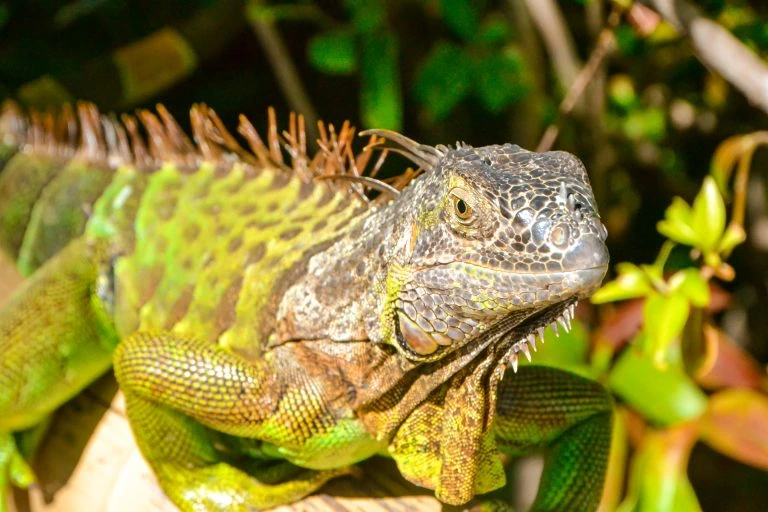
Key Takeaways
- Iguanas produce a range of sounds including hissing, sneezing, clicking, and low grunting noises that homeowners often hear after dark.
- Most iguana sounds serve a defensive or territorial purpose, and increased nighttime noise typically signals a population problem near your home.
- Green iguanas are the loudest species commonly found in South Florida, especially during breeding season from October through March.
- Understanding what sound an iguana makes helps you identify whether the animal on your property is actually an iguana or another wildlife species.
- If you hear persistent iguana noises at night, the animals are likely roosting in trees, on your roof, or inside structures very close to your home.
Strange iguana sounds coming from your yard, roof, or nearby trees at night can be unsettling — especially when you don't know what's making them. Many South Florida homeowners are surprised to learn that iguanas aren't silent creatures. While they lack vocal cords like mammals, iguanas produce a surprising variety of noises using their throats, nasal passages, and body movements. These sounds range from sharp hisses and forceful sneezes to low clicks and grunts that carry through the still night air. In this guide, you'll learn exactly what each iguana sound means, why these reptiles are noisiest after dark, and what their vocalizations tell you about what's happening on your property. By the end, you'll know how to identify iguana noises and when those sounds signal a bigger problem.
Do Iguanas Make Noise? Breaking the Silence Myth
One of the most common questions homeowners ask is: do iguanas make noise? The short answer is yes — but not in the way most people expect.
Iguanas don't have vocal cords. Unlike frogs, birds, or mammals, they can't produce complex calls or songs. However, they generate sounds through other physical mechanisms:
- Forced air expulsion through the throat and glottis (the opening to the windpipe)
- Nasal clearing that produces loud sneezing or snorting sounds
- Body movements like tail whips, scratching, and rustling through vegetation
- Jaw snapping when threatened or defending territory
Because iguanas are ectothermic reptiles, they tend to be most active during warm daylight hours. However, their sounds often become more noticeable at night when ambient noise drops. A hiss or sneeze that goes unnoticed during a busy afternoon becomes startlingly clear at 2 a.m.
Why Homeowners Often Miss Daytime Iguana Sounds
During the day, traffic, lawnmowers, air conditioners, and general neighborhood activity mask most iguana vocalizations. At night, the acoustic landscape changes completely. South Florida's warm evenings keep iguanas metabolically active enough to vocalize, move, and interact even after sunset. As a result, nighttime is when most homeowners first notice — and become concerned about — iguana sounds on their property.
What Sound Does an Iguana Make? A Complete Breakdown
Understanding what sound does an iguana make requires breaking down each noise type, what triggers it, and what it means. Here's a detailed look at every common iguana vocalization.
Hissing
Hissing is the most recognizable sound of iguana communication. It's a sharp, sustained rush of air forced out through the open mouth. Iguanas hiss when they feel threatened, cornered, or annoyed.
You might hear hissing at night if:
- A predator (cat, raccoon, or opossum) approaches a roosting iguana
- Two iguanas encounter each other in a territorial dispute
- An iguana is startled by sudden light, vibration, or noise
The hiss serves as a clear warning: back off. A hissing iguana often accompanies the sound with an inflated dewlap (the flap of skin under the chin), a raised body posture, and sometimes an open mouth displaying rows of small serrated teeth.
Sneezing and Snorting
Iguana sneezes sound exactly like what they are — sudden, forceful blasts of air through the nostrils. However, iguana sneezes aren't caused by colds or allergies. Iguanas sneeze to expel excess salt from their bodies through specialized nasal salt glands.
Because iguanas are herbivores that consume high-potassium plant matter, they need to regulate salt and mineral levels. The nasal salt glands filter excess sodium and potassium from the bloodstream, and the iguana forcefully sneezes the crystallized salt out. This creates a distinctive, sometimes startling, snorting noise.
At night, you might hear repeated sneezing from an iguana roosting in a tree directly above your patio or bedroom window. The sound is sharp and rhythmic — easy to mistake for a small animal sneezing or coughing.
Clicking and Clucking
Some iguanas produce quiet clicking or clucking sounds, particularly during social interactions. These low-level noises are less dramatic than hissing but can be audible in close quarters.
Clicking sounds typically occur when:
- Male iguanas are in proximity to females during breeding season
- An iguana is making subtle jaw movements while adjusting its position
- Young iguanas communicate distress or discomfort
These sounds are quieter than hissing and usually only noticeable if the iguana is very close — on your roof, inside a soffit, or in a tree directly overhead.
Grunting and Low Vocalizations
During breeding season, male iguanas occasionally produce low grunting or rumbling sounds. These vocalizations are part of territorial displays and mating behavior. The sound is guttural and brief, sometimes accompanied by head bobbing and pushup-like body movements.
If you hear low, rhythmic grunting from your roof or yard between October and March, breeding-season territorial behavior is the likely explanation.
Physical Noises: Rustling, Scratching, and Thumping
Not all nighttime iguana noises are vocalizations. Iguanas are heavy-bodied reptiles — adult green iguanas commonly weigh 10 to 15 pounds and can exceed 5 feet in length. When they move across your roof, climb through tree branches, or shift positions on a wall, they create noticeable physical sounds:
- Scratching from claws on roof tiles, stucco, or wood
- Thumping when an iguana drops from one branch to another or lands on a flat surface
- Rustling through palm fronds, hedge rows, or leaf litter
These mechanical sounds are often what homeowners actually hear at night, even more than vocalizations. A large iguana climbing across a barrel tile roof sounds surprisingly similar to a raccoon or large rat moving through an attic.
Why Are Iguana Sounds Louder at Night?
Several factors combine to make iguana sounds more prominent after dark in South Florida.
Reduced Ambient Noise
This is the simplest explanation. Your neighborhood is quieter at night. Sounds that are completely masked during daylight hours become clearly audible when background noise drops by 20 to 30 decibels after sunset.
Roosting Proximity
Iguanas choose roosting spots that are elevated and protected — tree canopies, roof ridges, attic soffits, and elevated ledges. These locations often put them directly above or adjacent to bedrooms, patios, and outdoor living spaces. When an iguana hisses, sneezes, or shifts position on your roof at midnight, the sound transmits directly through the building structure.
Nighttime Disturbances
While iguanas are primarily diurnal (active during the day), they don't fall into a completely motionless sleep at night. Nocturnal predators, passing animals, sudden storms, and even automatic sprinkler systems can startle roosting iguanas, triggering defensive hissing and rapid movement.
Breeding Season Amplification
From October through March, male iguanas become significantly more territorial and vocal. Breeding-season aggression leads to more frequent hissing, grunting, head bobbing, and physical confrontations — all of which generate noise. If you notice iguana sounds increasing during fall and winter months, breeding behavior is almost certainly the cause.
Does Lizards Make Noise? How Iguanas Compare to Other Reptiles
The question "does lizards make noise" comes up frequently because many people assume reptiles are universally silent. In reality, many lizard species produce sounds — but iguanas are among the louder ones you'll encounter in residential settings.
Geckos vs. Iguanas
Geckos are actually the most vocal lizards. Species like the tokay gecko produce loud, repeating calls that can carry hundreds of feet. However, Florida's common house geckos are much quieter, producing only soft chirps and clicks. Compared to geckos, iguanas make fewer distinct calls but produce louder individual sounds — particularly hissing — due to their much larger body size.
Anoles vs. Iguanas
Green anoles and brown anoles, both extremely common in Florida yards, are essentially silent to the human ear. They communicate almost entirely through visual displays like dewlap extensions and pushups. You won't hear anoles at night. If you hear a reptile-related noise in your yard after dark, an iguana is a far more likely source.
Monitor Lizards vs. Iguanas
Nile monitors, another invasive species in South Florida, can produce hissing sounds similar to iguanas. However, monitor hisses tend to be deeper and more sustained. Monitor lizards are also less common in residential neighborhoods compared to green iguanas, making iguanas the more probable source of nighttime reptile noise for most homeowners.
What This Means for Identification
If you hear hissing, sneezing, scratching, or thumping sounds at night in South Florida, an iguana is the most likely reptile culprit — especially if:
- The sound comes from trees, rooflines, or elevated structures
- You've seen iguanas on your property during the day
- The noise increases during cooler months (breeding season)
- You find iguana droppings near the sound source
Iguana Sounds During Breeding Season: What Changes
Breeding season dramatically changes the sound profile of iguanas on your property. Understanding this seasonal shift helps you interpret what you're hearing.
October Through March: Peak Noise Period
Male green iguanas become highly territorial during breeding season. They defend prime basking spots, roosting locations, and access to females through a combination of visual displays and vocalizations:
- Increased hissing frequency — males hiss at rival males more often
- Head bobbing with grunting — rhythmic bobbing accompanied by low grunts
- Tail whipping — the sharp crack of an iguana tail striking a branch or surface
- Physical combat sounds — two males fighting produces loud rustling, thumping, and scratching
Female iguanas also become more active and vocal during nesting periods. When searching for suitable egg-laying sites, females dig burrows — creating scratching and digging sounds that carry through soil and adjacent structures.
Post-Breeding Quiet Period
After breeding season winds down in late March and April, iguana vocalizations typically decrease. You may still hear occasional hissing and sneezing, but the territorial grunting and combat sounds drop significantly. If nighttime noise persists year-round at high levels, it likely indicates a large population density rather than seasonal behavior.
How to Identify Iguana Sounds on Your Property
Hearing strange noises at night is one thing. Confirming that iguanas are the source requires a systematic approach.
Step 1: Listen for Signature Sounds
Familiarize yourself with the key iguana sounds described above. Hissing is the easiest to identify — it's a sharp, sustained burst of air that lasts one to three seconds. Sneezing is short and percussive. Scratching on roof tiles has a distinctive scraping quality different from rodent scratching (which is faster and lighter).
Step 2: Check for Visual Evidence at Dawn
Iguanas roost in the same locations repeatedly. At first light, check the following areas for iguana presence:
- Tree canopies directly above the noise source
- Roof ridges, gutters, and soffits
- Fence tops and wall caps
- Pool cage frames and lanai structures
Step 3: Look for Droppings
Iguana droppings are large, dark, and often contain visible plant fiber. Finding droppings below a roosting site confirms iguana activity. Droppings on your roof, patio, or pool deck are a strong indicator that iguanas are spending nights directly overhead.
Step 4: Check for Physical Damage
Iguanas leave physical evidence beyond droppings. Look for:
- Claw marks on stucco, wood, or painted surfaces
- Damaged landscaping (chewed hibiscus, bougainvillea, or fruit trees)
- Burrow entrances along seawalls, foundations, or canal banks
- Worn paths through mulch or ground cover
What Nighttime Iguana Sounds Mean for Your Home
Persistent iguana sounds at night aren't just a nuisance — they signal that iguanas are living in very close proximity to your home. This proximity creates several practical concerns for homeowners.
Structural Concerns
Iguanas roosting on roofs can damage barrel tiles, displace flashing, and clog gutters with droppings. Their claws scratch protective coatings on metal and painted surfaces. Over time, repeated roosting in the same location leads to visible wear and potential water intrusion points.
Sanitation Issues
Iguana droppings carry Salmonella bacteria. When iguanas roost above patios, pool decks, outdoor kitchens, and play areas, their droppings contaminate surfaces that your family uses daily. Nighttime roosting means morning cleanup — and the health risks that come with repeated exposure.
Population Indicators
If you hear multiple iguanas vocalizing at night, you're dealing with an established population — not a single wandering animal. Iguanas are social enough to share roosting areas, and hearing several distinct sound sources suggests a group has claimed your property as territory.
Sleep Disruption
This is the most immediate impact for many homeowners. A large iguana hissing, sneezing, or scratching on your roof at 3 a.m. can wake you from deep sleep. During breeding season, these disturbances may occur multiple times per night.
How to Reduce Nighttime Iguana Noise on Your Property
Reducing nighttime iguana sounds requires addressing why the iguanas are there in the first place. Sound reduction is a byproduct of effective iguana management.
Remove Attractants
Iguanas are drawn to properties that offer food, shelter, and warmth. Reduce attractants by:
- Removing fallen fruit from mango, avocado, and citrus trees
- Trimming tree branches that overhang your roof or provide easy access to structures
- Replacing iguana-preferred plants (hibiscus, bougainvillea, roses) with species they avoid
- Securing garbage and compost bins
Modify Roosting Sites
If iguanas are roosting in specific trees or on your roof, modifying those sites discourages repeated use:
- Install trunk guards or smooth metal sheeting around tree trunks to prevent climbing
- Trim canopy branches to reduce protected roosting spots
- Seal soffit gaps and attic entry points to prevent iguanas from entering structures
Consider Professional Assessment
When nighttime iguana sounds are persistent and multiple animals are involved, professional removal is often the most effective solution. Trained wildlife professionals can assess population density, identify roosting and nesting sites, and implement removal strategies that address the root cause of the noise.
Frequently Asked Questions
-
What does an iguana sound like at night?
At night, iguanas most commonly produce hissing, sneezing, and scratching sounds. Hissing is a sharp burst of forced air that lasts one to three seconds. Sneezing sounds like a short, percussive snort caused by salt gland expulsion. You may also hear claws scratching on roof tiles, branches rustling, or heavy thumps as iguanas shift roosting positions.
-
Do iguanas hiss at humans?
Yes, iguanas hiss at humans when they feel threatened or cornered. Hissing is a defensive warning that means the iguana wants you to back away. If you approach a roosting iguana at night with a flashlight, hissing is the most likely response. A hissing iguana may also inflate its dewlap, raise its body, and prepare to bite or tail-whip if the threat continues.
-
Are iguanas active at night?
Iguanas are primarily diurnal, meaning they are most active during daylight hours. However, they don't become completely dormant at night, especially in South Florida's warm climate. Nighttime disturbances from predators, weather, or other iguanas can trigger movement and vocalizations. During breeding season, nighttime activity increases noticeably as territorial disputes extend into evening hours.
-
Can iguana sounds damage my hearing or pose health risks?
Iguana sounds themselves pose no hearing risk — they aren't loud enough to cause damage. However, the presence of iguanas close enough to hear at night does pose indirect health risks. Iguana droppings carry Salmonella, and proximity to roosting sites means increased exposure to contaminated surfaces. The sounds are more of an indicator of a sanitation and property damage problem than a noise hazard.
-
How can I tell if the nighttime noise is an iguana or a raccoon?
Iguana scratching on a roof sounds similar to raccoon movement, but there are key differences. Iguana movement is slower and more deliberate, with long pauses between movements. Raccoons move faster and produce chattering, purring, or growling vocalizations that iguanas cannot make. Finding large, fibrous droppings (iguana) versus smaller, seed-filled scat (raccoon) near the sound source helps confirm the species.
-
Why do iguanas sneeze so loudly?
Iguanas sneeze to expel excess salt from specialized nasal salt glands. Because iguanas eat a plant-heavy diet rich in potassium and other minerals, their bodies need a way to excrete surplus salt that the kidneys alone can't handle. The sneeze is forceful enough to expel crystallized salt deposits, which is why it sounds disproportionately loud for a reptile. This is completely normal iguana behavior and not a sign of illness.