
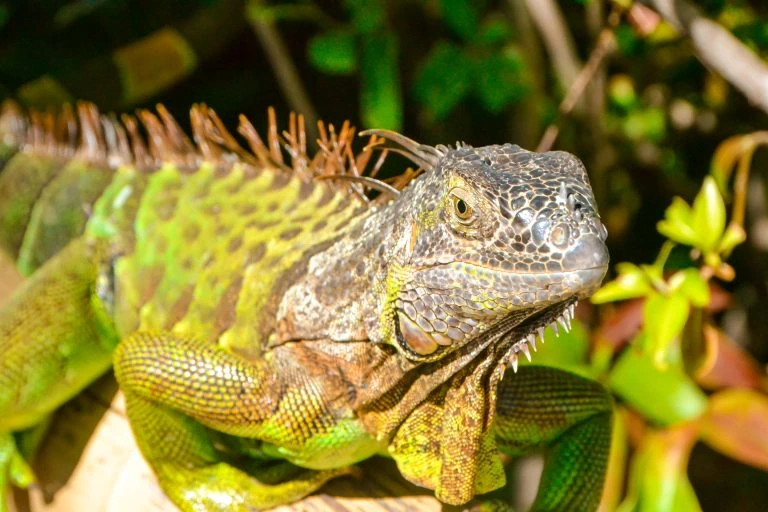
Key West residents should distinguish identification, property damage and lawful removal. Local access and weapon restrictions require separate checks from statewide green-iguana policy.
Why iguanas are a concern in Key West
FWC includes Monroe County among the Florida counties where green iguanas occur. Warm conditions, food plants and places to bask help explain why residents in the Keys encounter them. UF/IFAS describes introduced iguanas using landscaped areas, seawalls and docks—settings familiar on many island properties.
A citywide population estimate is not needed to assess one yard. Record the animal you saw, where it was and the actual effect: flowers being eaten, repeated waste, digging or an enclosed-space encounter. This guide does not assert that Key West has a verified particular number of iguanas or that every property is infested.
Identify the animal before making removal decisions
Green iguanas vary in color and are not always bright green. UF/IFAS describes green, black spiny-tailed and Mexican spiny-tailed iguanas established in South Florida, along with other large lizards that people confuse with them. A local photograph or species-specific expert assessment is more useful than a color-based label.
Do not infer that every established South Florida species is equally common on your block. The Florida Keys iguana guide provides regional context, while Florida iguana identification helps frame the species question. Avoid handling for identification.
Green iguanas and spiny-tailed lookalikes
A green iguana commonly has a prominent dewlap and a row of dorsal spines; adult color can be brownish, gray or orange as well as green. Spiny-tailed iguanas have distinctive tail scalation and should be assessed using more than one visible feature.
An anole or basilisk is a different animal, even if it is large and green. Current rules may depend on the actual species and activity, so leave uncertain animals alone while seeking identification. Do not repeat the blanket claim that every nonnative lizard may be handled in the same way.
Landscape damage residents can document
FWC and UF/IFAS report feeding on foliage, flowers and fruit. Orchids, hibiscus and other prized plants may suffer loss, but missing leaves alone do not identify the culprit. If possible, record feeding observations from a safe distance and compare photographs of the plant over time.
Protect high-value plants rather than assuming a whole landscape must be removed. Cages or screen enclosures are discussed by UF/IFAS. Review openings and maintenance access, and choose replacement plants with local growing conditions, salt exposure, mature size and household safety in mind.
Burrows, seawalls and infrastructure
FWC documents burrowing-related erosion and impacts involving seawalls, sidewalks, foundations, berms and canal banks. A hole beside a waterfront structure warrants attention, but a photo of an entrance cannot diagnose the supporting soil or prove that wildlife caused a crack.
Keep people and pets away from visibly settling or unstable areas and obtain the appropriate repair assessment. Do not fill a possibly occupied hole or undertake shoreline work without considering identification, vacancy and applicable protections. Removal, erosion assessment and repair are separate jobs.
Droppings on patios, docks and pool areas
FWC notes fecal contamination on outdoor surfaces and inside pools. CDC explains that reptiles can carry Salmonella even when they appear healthy. Exposure is possible through contaminated surroundings, not only through a bite or direct handling.
Keep children and pets away from waste and wash hands after contact with affected areas. A cleaning plan must suit the surface, and pool contamination warrants pool-professional guidance. This article does not prescribe a chemical mix or assure that a rinse makes a surface sanitary.
What Florida law allows on private property
FWC says green iguanas may be humanely killed on private property year-round with landowner permission and are protected by anti-cruelty laws. It also states that a permit is required to possess live captured green iguanas for eradication and control. Captured iguanas cannot be relocated and released elsewhere in Florida.
These separate requirements must be read together. A tenant, guest or contractor should not assume they have landowner permission, and a general statewide policy does not answer whether a particular method is lawful at a particular Key West address.
Local restrictions and public land are separate questions
Do not infer that an air rifle or other projectile weapon is permitted in a Key West yard simply because green-iguana removal is allowed at the state level. Check current local ordinances and relevant property restrictions with the responsible authorities. UF/IFAS cautions against unsafe projectile use in suburban settings.
Public parks, road corridors, shorelines and neighboring land are not open hunting areas merely because iguanas are present. FWC identifies specific Commission-managed areas under an executive order; that permission does not apply indiscriminately to every public place in the Keys. Verify the current managing agency’s rules and access conditions.
What must not be assumed
An animal cannot be relocated to another Florida neighborhood as an easy compromise. An older article saying captured iguanas can be donated or kept as pets is not a substitute for current prohibited-species and live-possession rules. Do not improvise trapping without a lawful disposition plan.
Avoid poisoning, drowning or freezing live animals as property-management shortcuts. This article does not provide killing instructions. A qualified professional should be able to explain how humane handling, current permits and applicable local restrictions are addressed.
What to ask a professional service
Ask about species identification, the affected locations, landowner permission, applicable live-possession requirements and the exact work proposed. The scope might involve assessment, removal or exclusion advice; do not assume every provider includes sanitation, structural repair or ongoing monitoring.
Confirm service-area availability before assuming an ODPC service covers Key West. The existing iguana removal information is a destination for discussing scope, not evidence that a particular local visit, method or timetable is available.
Pricing and follow-up
No current authoritative source reviewed here establishes standard Key West removal fees or monthly contract prices. The quote should identify the property, access conditions, work, follow-up and any exclusions. A per-animal fee and a property-management program are not necessarily comparable.
Ask what happens if activity returns and what the agreement actually promises. No article can guarantee a permanently iguana-free island yard. Retain dated observations and the completed-work record so later visits can be assessed against the original concern.
Landscape changes that can reduce feeding opportunities
Do not feed iguanas or put out fruit for wildlife. UF/IFAS notes that feeding can concentrate animals and affect neighbors. Maintain accessible fruit and food waste as ordinary property care, and protect plants showing verified feeding loss.
Consider resistant plants with professional horticulture advice. UF/IFAS lists citrus, some crotons and thick-leaved plants among options, but resistance is not a scent barrier or guarantee. Toxic plants are not an appropriate default around pets or children merely because an animal may avoid them.
Exclusion and access routes
Plant cages, maintained screens and suitable climbing guards may protect a particular area. The design must reflect the actual route: a dock guard is not sufficient if an adjoining tree or structure offers access. Avoid universal promises based on a single fence height or mesh size.
Tree work, waterfront installation and barrier repair should not damage roots, protected vegetation or shoreline stability. Inspect for trapped animals before closing an enclosure. Record the condition after work so that torn material or an open gate does not become an unnoticed gap.
Weather and breeding activity
Green iguanas are ectothermic: environmental warmth influences activity. Warm periods may bring more visible basking and feeding, while cold events can reduce movement or cause cold stunning. A motionless animal may recover; do not handle, warm or transport it as though it were harmless.
Reproduction is part of why established populations can persist, but this guide does not give a property-specific repopulation timetable or declare one month the worst for every Key West home. Monitor current activity and do not postpone an important assessment because it is outside a supposed season.
When residents should act
Seek help for recurring contamination in a frequently used area, an animal inside an enclosure, unsafe encounters or suspect digging beside infrastructure. A single meaningful problem can justify assessment; dozens of animals are not a prerequisite.
Our yard-management guide explains prevention and removal decisions, while the damage guide helps separate wildlife observations from repair diagnoses. Preserve the observations and ask for a site-specific plan rather than a universal island-wide solution.
Regional companion reading
For comparison, the existing articles on iguanas in Miami and iguanas in Fort Lauderdale address other South Florida settings. They do not establish Key West service availability or identical local rules. South Florida iguana removal information is a further scope reference; confirm the actual service area before requesting work.
Sources and evidence boundaries
This guide draws on FWC green-iguana profile and current management rules, UF/IFAS: Dealing with Iguanas in the South Florida Landscape, CDC reptile hygiene and Salmonella guidance, UF/IFAS: identifying introduced green iguanas. Current FWC rules govern the legal statements; older UF/IFAS capture, pet-donation or market passages are not treated as present-day permission. Local restrictions, individual property diagnoses, prices and service availability require separate confirmation.
Frequently Asked Questions
-
Why are there so many iguanas in Key West FL?
FWC records green iguanas in Monroe County, and warm conditions, plant foods and basking areas support their presence. The reviewed sources do not provide a verified Key West population count. Assess confirmed activity at your property rather than assuming a particular citywide number.
-
Can I shoot iguanas in Key West?
Do not infer permission from statewide green-iguana policy. Current Key West ordinances, property restrictions, safe access and anti-cruelty requirements are separate matters. Confirm applicable rules with local authorities and seek qualified assistance rather than relying on a blog as weapon authorization.
-
Are iguanas in Key West dangerous to pets?
Iguanas normally avoid people but can defend themselves when caught or cornered, including by pets. Bites, scratches and tail strikes are possible, and contaminated surroundings create a hygiene concern. Prevent pet chasing and consult a veterinarian after an injury or concerning exposure.
-
How quickly can iguanas repopulate a property after removal?
There is no reliable timetable for an individual property. Continuing visitors may come from nearby habitat, and sightings do not prove a measured population increase. Monitor the original concern and clarify what follow-up is included in any service agreement.
-
Do iguana repellents work in Key West?
The reviewed sources do not establish homemade scent recipes as dependable iguana treatments. FWC and UF/IFAS discuss habitat modification, suitable plant protection and humane deterrence. Evaluate the actual damage and any product label rather than expecting a guaranteed repellent result.
-
What time of year are iguanas most active in Key West?
Visibility and movement vary with environmental warmth and local conditions. There is no single supported Key West month that predicts every property problem. Cold-stunned animals can recover and should not be handled or transported as harmless.
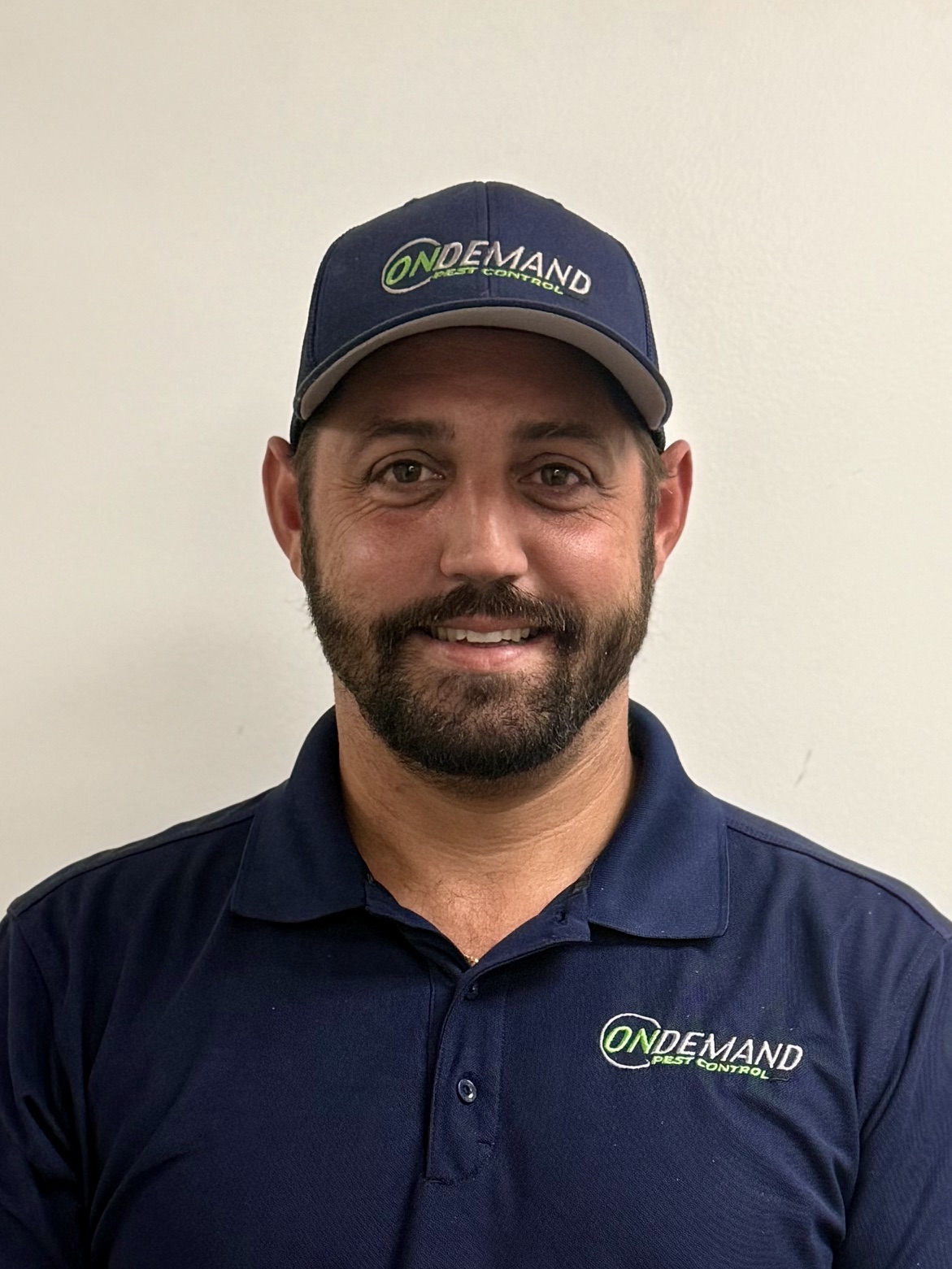
Vincent founded On Demand Pest Control in 2017 and is a Florida Certified Operator in all four state categories. He treats pest control as a systematic problem to solve, not a symptom to spray. Read Vincent’s full bio →
Get help with your pest concern.
Tell us what you are seeing. Our team can discuss the concern and the next step.
- Share your concern and contact details.
- Our team contacts you to discuss available service.
- Ask for a written scope and quote before work.
Where can we reach you?
Our team will call to confirm the next step.
By submitting, you’re asking On Demand Pest Control to contact you about this request.
↗ Prefer to call? (954) 947-0805