
Table of Contents
ToggleKey Takeaways
- Common household ingredients like vinegar, peppermint oil, and diatomaceous earth can effectively repel and eliminate sugar ants without harsh chemicals.
- Disrupting pheromone trails is critical — sugar ants rely on scent paths to guide the entire colony to food sources in your home.
- Natural solutions work best when combined with prevention habits like sealing entry points, storing food properly, and eliminating moisture sources.
- Borax mixed with sugar creates a powerful natural bait that worker ants carry back to the colony, targeting the queen directly.
- If natural remedies fail to control a persistent infestation, professional ant exterminators can provide targeted treatments that resolve the problem at its source.
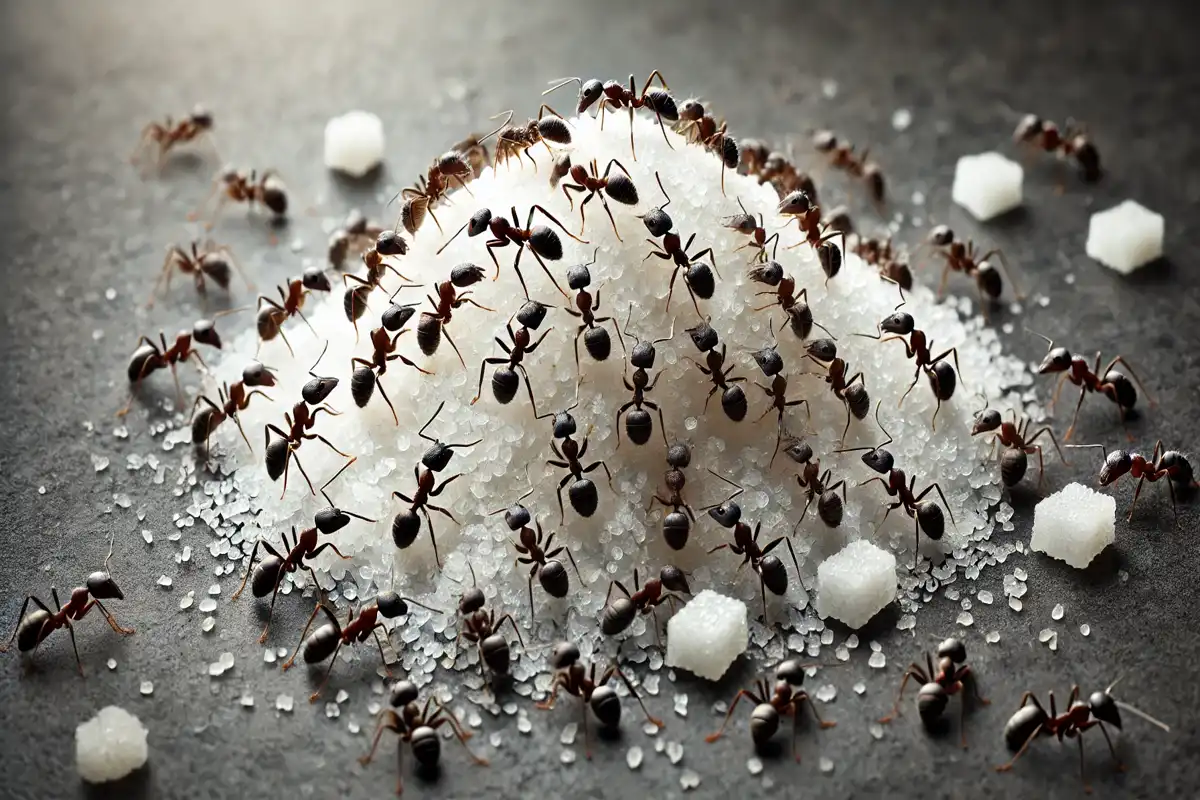
If you’ve spotted tiny ants marching across your kitchen counter toward a single crumb, you’re likely dealing with sugar ants — and you want natural ways to get rid of sugar ants before the problem spirals out of control. These persistent little invaders are attracted to anything sweet, and once a scout finds food, it leaves a pheromone trail that guides hundreds more directly into your home. The good news? You don’t need toxic sprays to fight back. Many effective solutions are already sitting in your pantry. In this guide, you’ll learn 10 proven natural remedies that repel and eliminate sugar ants, understand why they keep coming back, and discover prevention strategies that keep your home ant-free year-round. For a deeper look at the species and behaviors behind these tiny pests, explore our sugar ants pest library page.
Why Are Sugar Ants Invading Your Home?
Before you reach for a remedy, it helps to understand what draws sugar ants indoors. Sugar ants — a common name for species like ghost ants, pharaoh ants, and odorous house ants — are constantly foraging for two things: sweet food sources and moisture.
Scout ants leave your home’s perimeter and enter through tiny cracks, gaps around windows, or openings near plumbing. Once a scout discovers food, it deposits a chemical pheromone trail on its way back to the colony. Within hours, you’ll see a steady stream of ants following that invisible highway.
Several common habits attract ants into your home without you realizing it. Leaving ripe fruit on the counter, not wiping up spills immediately, or storing pet food in open bags all create irresistible targets. In warm, humid climates like South Florida, sugar ants stay active nearly year-round, making prevention an ongoing effort.
White Vinegar Spray to Erase Pheromone Trails
White vinegar is one of the simplest and most effective natural ways to get rid of sugar ants. It works by destroying the pheromone trails ants rely on to navigate between their colony and your food.
Mix equal parts white vinegar and water in a spray bottle. Spray directly along ant trails, around entry points, and on countertops where you’ve seen activity. The acidity of vinegar neutralizes the chemical scent markers ants leave behind.
For best results, wipe down surfaces with the vinegar solution daily — especially in the kitchen. While the vinegar smell fades quickly for humans, it remains disruptive to ants for hours. This method won’t kill the colony, but it effectively confuses foraging ants and slows the invasion while you apply other remedies.
Peppermint Essential Oil as a Natural Sugar Ant Repellent
Peppermint oil contains compounds like menthol that ants find overwhelming. A few drops can turn your home’s entry points into no-go zones for sugar ants.
Add 10-15 drops of peppermint essential oil to a cup of water. Spray the mixture around doorframes, windowsills, baseboards, and any cracks where ants enter. You can also soak cotton balls in the solution and place them near problem areas.
Peppermint oil serves double duty — it repels ants while leaving your home smelling fresh. Reapply every two to three days, as the scent fades over time. Other essential oils like tea tree, lemon, and eucalyptus also show ant-repelling properties, though peppermint tends to be the most effective against sugar ants specifically.
How Borax Bait Stations Eliminate the Entire Colony
If you want to go beyond repelling ants and actually eliminate the colony, borax-based bait is your strongest natural option. Borax is a naturally occurring mineral that disrupts an ant’s digestive system — but it works slowly enough that worker ants carry the poisoned bait back to the nest before dying.
This slow-acting mechanism is critical. Worker ants share the bait with other colony members, including larvae and the queen ant who controls the colony’s reproduction. Once the queen dies, the colony collapses.
Simple Borax Bait Recipe
Mix one tablespoon of borax with three tablespoons of sugar and enough warm water to create a syrupy paste. Place small amounts on pieces of cardboard or in shallow bottle caps near ant trails. For a more detailed walkthrough, check out our guide on how to get rid of sugar ants with borax.
Important safety note: keep borax bait stations out of reach of children and pets. While borax is far less toxic than commercial insecticides, it can cause stomach irritation if ingested in large amounts.
How Long Does Borax Take to Work?
Expect to see increased ant activity around the bait for the first 24-48 hours — this is actually a good sign. It means worker ants are finding the bait and carrying it back. Within one to two weeks, you should notice a significant decrease in ant traffic. Replace bait stations every few days to keep the mixture fresh and attractive.
Diatomaceous Earth: A Natural Ant Killer That Works on Contact
Food-grade diatomaceous earth (DE) is a powder made from fossilized algae. Under a microscope, DE particles have razor-sharp edges that cut through an ant’s exoskeleton, causing it to dehydrate and die within 24-48 hours.
Sprinkle a thin, even layer of food-grade DE along ant trails, around entry points, behind appliances, and along baseboards. The key word here is “thin” — ants will walk around thick piles. A light dusting they can’t avoid is far more effective.
Diatomaceous earth works best in dry conditions. If you live in a humid area, you may need to reapply after rain or heavy moisture. Always use food-grade DE, not pool-grade, which is chemically treated and unsafe for household use.
Does Cinnamon Actually Repel Sugar Ants?
Cinnamon is one of the most frequently recommended natural ant repellents — but does it actually work? The short answer is yes, but with limitations. Cinnamon essential oil and ground cinnamon both contain cinnamaldehyde, a compound that interferes with ants’ ability to detect pheromone trails.
Sprinkling ground cinnamon near entry points or along windowsills can create a temporary barrier. However, cinnamon doesn’t kill ants or destroy colonies. It simply redirects them. For a deeper look at the science behind this remedy, read our article on whether cinnamon repels ants.
Cinnamon works best as a supplement to other methods. Pair it with borax bait stations for a strategy that both redirects ants away from sensitive areas and eliminates the colony at its source.
Baking Soda and Powdered Sugar Ant Bait
This simple two-ingredient bait is another effective natural solution. Mix equal parts baking soda and powdered sugar. The sugar attracts the ants, while the baking soda reacts with the acid in their digestive systems, producing carbon dioxide gas that kills them.
Place the mixture in small, shallow containers along known ant trails. Like borax, baking soda bait works as a delayed-action killer, giving worker ants time to bring it back to the colony. Our full guide on using baking soda to kill ants covers additional tips for maximizing this method’s effectiveness.
One advantage of baking soda over borax: it’s completely non-toxic to humans and pets, making it a safer choice for homes with young children or curious animals.
Lemon Juice and Citrus Peels to Disrupt Ant Trails
The d-limonene in citrus fruits is a natural ant deterrent. Squeeze fresh lemon juice along entry points and wipe down countertops with a lemon-water solution. You can also place fresh citrus peels — lemon, orange, or grapefruit — near areas where ants enter your home.
Like vinegar, lemon juice works primarily by masking and destroying pheromone trails. It’s non-toxic, smells pleasant, and is safe around food preparation areas. Replace citrus peels every two to three days as they dry out and lose potency.
Natural Ways to Get Rid of Sugar Ants in the Kitchen
The kitchen is ground zero for sugar ant invasions. It’s where food is most accessible and moisture from sinks creates ideal conditions. Applying natural remedies strategically in this room makes the biggest impact.
For more kitchen-specific strategies, our guide on eliminating sugar ants in your Florida kitchen covers targeted approaches for this high-traffic area.
Kitchen-Specific Prevention Steps
- Store sugar, honey, and syrups in airtight containers — not just twist-tied bags
- Wipe down counters, stovetops, and tables after every meal with a vinegar solution
- Rinse dishes immediately or load them into a closed dishwasher
- Take out garbage daily, especially if it contains food waste
- Fix leaky faucets — even small drips provide enough moisture for an ant colony
- Sweep floors regularly to remove crumbs that collect under appliances and cabinets
Comparing Natural Sugar Ant Remedies: Which Works Best?
Not all natural remedies serve the same purpose. Some repel ants while others kill them. Understanding the difference helps you build a layered defense strategy.
| Natural Remedy | Type | Kills Colony? | Speed |
|---|---|---|---|
| White Vinegar | Repellent / Trail Disruptor | No | Immediate |
| Peppermint Oil | Repellent | No | Immediate |
| Borax Bait | Colony Killer | Yes | 1-2 Weeks |
| Diatomaceous Earth | Contact Killer | Partial | 24-48 Hours |
| Cinnamon | Repellent | No | Immediate |
| Baking Soda Bait | Colony Killer | Yes | 1-2 Weeks |
| Lemon Juice | Repellent / Trail Disruptor | No | Immediate |
The most effective approach combines repellents and colony killers. Use vinegar or peppermint oil to redirect ants away from food areas. Simultaneously, place borax or baking soda bait stations along their trails to destroy the colony from the inside out. For a complete overview of how to get rid of sugar ants, including both natural and conventional options, check out our full guide.
Seal Entry Points to Prevent Sugar Ants from Returning
Even the best natural remedy is temporary if ants can keep finding new ways inside. Inspect your home for common entry points and seal them with caulk or weatherstripping.
Focus on these vulnerable areas:
- Gaps around windows and door frames
- Cracks in the foundation or exterior walls
- Openings where plumbing or electrical lines enter the house
- Spaces under doors (install door sweeps if needed)
- Holes or gaps in window screens
Ants are incredibly small — some species can fit through openings thinner than a credit card. A thorough sealing job won’t stop every ant, but it dramatically reduces the number of entry points they can exploit.
Also consider the areas beyond your kitchen. Sugar ants frequently appear in bathrooms where moisture attracts them to drains and damp surfaces. Addressing these secondary hot spots prevents ants from establishing alternate routes into your living space.
When Natural Remedies Aren't Enough for Sugar Ants
Natural solutions work well for minor infestations and ongoing prevention. However, some sugar ant problems require professional intervention — especially when colonies are large, deeply embedded in walls, or when multiple colonies are active simultaneously.
You should consider professional help if:
- You’ve tried multiple natural remedies for two or more weeks with no improvement
- Ants keep reappearing in the same spots despite thorough cleaning
- You notice ants in multiple rooms across your home
- You see flying ants inside your home, which may indicate a mature colony nearby
A trained exterminator can identify the exact species, locate the nest, and apply targeted ant baiting techniques that eliminate entire colonies. If you’re unsure whether your situation warrants professional treatment, our guide on when to hire an ant exterminator walks you through the decision-making process.
Frequently Asked Questions
-
What is the fastest natural way to get rid of sugar ants?
White vinegar spray works the fastest to stop active ant trails. It destroys pheromone markers instantly, disorienting foraging ants within minutes. However, vinegar only repels — it doesn't kill the colony. For long-term elimination, combine vinegar with borax bait stations.
-
Are natural sugar ant remedies safe for pets and children?
Most natural remedies like vinegar, peppermint oil, cinnamon, and lemon juice are completely safe around pets and children. Borax and diatomaceous earth require more caution — place them in areas where pets and kids can't access them. Baking soda bait is the safest colony-killing option for households with small children or animals.
-
Why do sugar ants keep coming back after I clean?
Sugar ants return because the colony is still active somewhere nearby. Cleaning removes their food source and trails, but surviving ants will send out new scouts within hours. You need to eliminate the colony itself — borax or baking soda bait stations target the queen, which is the only way to stop reproduction and end the cycle.
-
Can I use multiple natural ant remedies at the same time?
Yes, layering remedies is actually the most effective approach. Use repellents like vinegar or peppermint oil to protect food areas while placing borax or baking soda bait along ant trails. Just avoid placing repellents directly near your bait stations — you want ants to find and consume the bait, not avoid it.
-
How long does it take for natural remedies to eliminate a sugar ant colony?
Colony elimination with borax or baking soda bait typically takes one to two weeks. Repellent-only methods like vinegar and essential oils don't kill colonies — they redirect activity. For full elimination, consistently maintain bait stations for at least 14 days and replace the mixture every three to four days.
-
Do sugar ants cause damage to your home?
Sugar ants don't cause structural damage like carpenter ants do. However, they contaminate food, spread bacteria across surfaces, and can become a persistent nuisance in large numbers. Addressing an infestation early prevents the colony from growing to a size that's much harder to control naturally.