
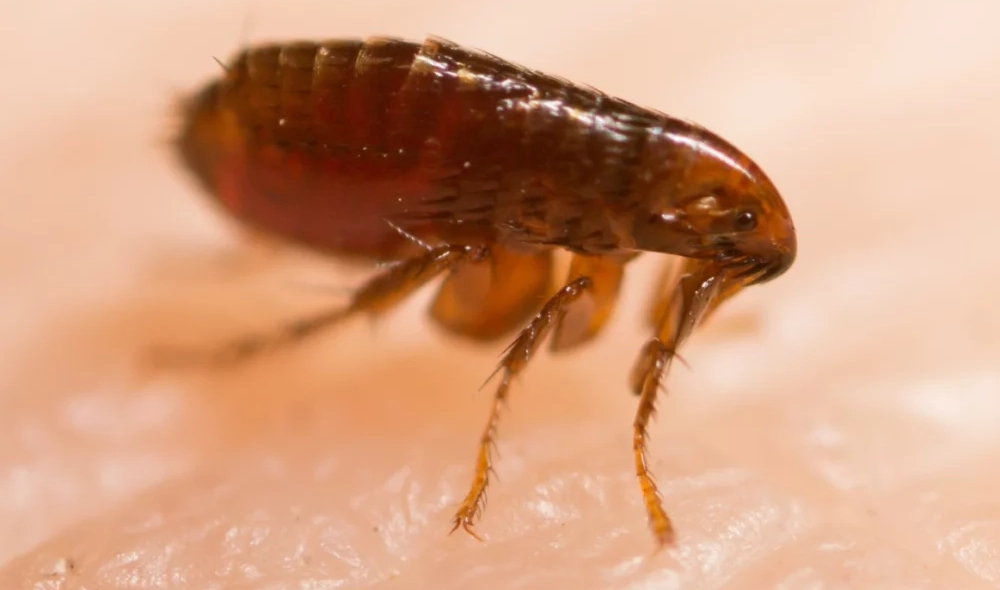
Flea larvae are small wormlike crawlers, not biting adults. Identify them, clean animal resting areas and coordinate home control with veterinary pet care.
Key Takeaways
- Flea larvae are small, pale, wormlike insects with a darker head and no legs.
- They develop off the host in protected places associated with animal resting areas.
- Larvae feed on dried blood in adult flea waste rather than biting people or pets.
- Cleaning, veterinary pet care and correctly labeled environmental control work together.
- A cocoon-protected stage can outlast an initial cleaning or treatment.
A small worm in pet bedding may be a flea larva, but the location alone is not enough to identify it. Capture a specimen or take a clear close-up before treating. Adult fleas and their immature stages look very different: the adult is a compact jumping insect, while the larva is a slender crawler. Understanding that difference helps you inspect the right places and avoid treating every speck of lint as an infestation. This guide follows identification, hiding places, feeding, development and practical control without assuming a particular population size.
What Does Flea Larvae Look Like Up Close?
Flea larvae are tiny, wormlike and legless. UC IPM describes them as no larger than 3/16 inch, with a distinct brownish head, body hairs and no eyes. Under a magnifier, look for the head and body form rather than relying on color alone. A newly found pale larva may be difficult to distinguish from other insect larvae without a good view. Flea eggs are a separate, small oval stage; they do not resemble a crawling adult.
Larvae favor protected sites rather than exposed, sunlit or heavily traveled surfaces. Carpet edges, the space beneath furniture and the underside of pet bedding can provide that protection. They move through debris and fibers, so a quick look at the top of a carpet may miss them. Use a flashlight and magnifier, and record exactly where each specimen was found; that information is more useful than a guess about how many larvae must be present.
Fine body details are difficult to judge from a moving insect. Photograph a collected specimen against a plain light background with a ruler nearby, then have uncertain specimens identified. A darker internal line, if visible, is not a stand-alone flea test. Identification should agree with the body shape, head, absence of legs and the presence of other flea evidence in the same area.
Flea Larvae vs. Other Household Pests
It’s easy to confuse flea larvae with other small pests you might find in your home. Here’s a quick comparison to help you identify them correctly:
| Possible pest / stage | Size (body length) | Appearance | Typical inspection sites |
|---|---|---|---|
| Flea larva — cat flea (Ctenocephalides felis) | 1.5–5 mm in UF’s larval description. | Pale/translucent, wormlike and legless, with sparse hairs and a distinct brownish head; dark gut contents may show. | Pet resting areas: bedding, protected carpet fibers, upholstery and floor/baseboard crevices. |
| Carpet beetle larva — black carpet beetle example | 3–7 mm for black carpet beetle larvae; other carpet beetles differ. | Carrot-shaped, with golden-brown hairs and a tail of long hairs at the rear. | Wool and other animal-derived materials; under furniture, along baseboards, and in little-used drawers or storage areas. |
| Bed bug nymph — Cimex lectularius | About 1.5, 2, 2.5, 3 and 4.5 mm through the five nymphal stages. | A small, flattened bug, not a wormlike larva; translucent or whitish-yellow when unfed. | Mattress seams, box springs, bed frames/headboards, and chair or sofa seams and folds. |
| Fruit/vinegar fly larva — Drosophila melanogaster and related drosophilids | About 4 mm in UC’s strawberry-field larval description; not a range for every household fruit fly or instar. | Whitish, wormlike maggot; eyeless and legless. | Fermenting fruit or vegetables and food-soaked mops/rags; check kitchen compost and food residues. |
| Inspection sites and overlapping sizes are clues, not confirmation. Collect a specimen. “Fruit fly” here means vinegar flies (Drosophilidae); a larva in a drain is not automatically a fruit fly. The 4 mm example comes from field strawberries, while the household breeding sites come from Cornell. | |||
| Carpet beetle larvae have different outlines: Maryland describes a varied carpet beetle larva as tear-drop shaped, and a black carpet beetle larva as carrot-shaped with a long rear hair tuft. The “oval” shorthand in the paragraph below is not a universal shape rule or a reliable way to exclude a carpet beetle larva. Compare the named larval form, hairs and feeding material with the specimen. | |||
Unlike carpet beetle larvae that have visible bristle-like hairs and a distinct oval shape, flea larvae are more elongated and worm-like. If you’re uncertain about identifying fleas and their life stages, examining where you found the pest is often the strongest clue.
Where Do Flea Larvae Hide in Your Home?
Flea larvae are masters of concealment. Because they avoid light, you’ll rarely find them out in the open. Instead, they burrow into the base of carpet fibers, wedge themselves into cracks in hardwood floors, and nestle deep inside upholstered furniture cushions.
The most common hiding spots include:
- Pet bedding and blankets — anywhere your pet sleeps regularly
- Carpet edges — along baseboards and under furniture that rarely gets moved
- Area rugs — especially on the underside where it’s dark and undisturbed
- Upholstered furniture — deep in cushion seams and beneath cushions
- Floor cracks and gaps — in hardwood, tile grout lines, and under vinyl flooring edges
Warm conditions can support flea development, but outdoor climate is not a measurement of the humidity inside every carpet or room. Indoor heating, cooling, animal use and protected microhabitats all matter. Finding signs of fleas in your house calls for inspection, not an automatic conclusion that larvae occupy every room. Concentrate first on the animal’s regular resting places and expand the search where evidence leads.
Understanding the Flea Larvae Life Cycle Stage
Fleas develop through egg, larva, pupa and adult. The larva is an environmental feeding stage; it is not a miniature biting adult. After feeding and growing, it builds a silken cocoon associated with dust, hair or carpet fibers. That protective cover limits the reach of some treatments. Effective control therefore combines removal of immature stages with control of adults on pets and monitoring for adults that emerge later.
How Long Does the Larval Stage Last?
Development varies with temperature and moisture. UC IPM describes larvae feeding and crawling for about 8–15 days before building a cocoon under favorable conditions, while cooler or otherwise unsuitable conditions change the timetable. That is a biological description, not a promise that treatment is finished by a specific day. Use actual activity and the product or service instructions to decide when follow-up is needed.
Eggs and larvae may be present at different stages when control begins. Keep a consistent cleaning routine and record newly observed adults, larvae or pet symptoms. One quiet day does not establish clearance, and a new adult soon after treatment does not automatically establish failure. Repeated pesticide applications are not a substitute for checking the label’s interval and the original treatment plan.
What Do Flea Larvae Eat?
Contrary to what many people assume, flea larvae do not bite or feed on blood directly. Instead, they survive on organic debris found in their environment. Their primary food source is flea dirt — the dark, pepper-like fecal matter that adult fleas leave behind after feeding on your pet’s blood.
Dried blood and adult flea excrement are important larval food sources. This connects larval development to places where a flea-infested animal rests and sheds eggs and waste. Removing that debris by cleaning is useful, but feeding preferences do not let you count an infestation from a handful of particles. If the animal is still carrying fleas, fresh eggs and waste can continue to enter otherwise clean bedding or flooring.
How to Get Rid of Flea Larvae: Step-by-Step Methods
Begin with confirmed identification and a coordinated plan. Cleaning removes accessible stages and larval food, veterinary treatment addresses fleas on animals, and a properly selected environmental product may address confirmed household activity. Each part has a different role. Do not treat the pet with a household pesticide, assume every fabric is a permitted treatment site, or judge the plan only by the adults visible on the first day.
Thorough Vacuuming
Vacuum carpets, rugs, upholstery and accessible crevices, concentrating on pet resting places, edges and areas under furniture. UC IPM recommends daily or alternate-day vacuuming during active control. Use the crevice attachment where it can reach without damaging flooring or furniture. Vacuuming can remove flea eggs, larvae and adults and encourage protected adults to emerge, but it cannot guarantee removal from every hidden recess.
Follow the vacuum manufacturer’s disposal instructions and contain collected debris before it can return to the room. Continue cleaning and monitoring according to the pest-control plan. If surfaces have been treated, ask when vacuuming is permitted and whether it would disturb the intended application. The goal is a consistent, compatible routine, not adding more pesticide whenever a flea is seen.
Hot Water Washing
Launder pet bedding, washable rugs and removable covers using detergent and the care label’s allowed wash and drying settings. Do not assume that a stated washer temperature kills every stage instantly or raise a household water heater to meet a pest-control recipe. Delicate fabrics, adhesives and bedding may need a different cleaning method. For sleeping-area inspection and cleaning, see our guide to fleas in bedding.
Repeat cleaning while activity persists, and keep cleaned items separate from uninspected ones. UC IPM recommends laundering pet bedding regularly as part of flea management. Bedding that cannot tolerate hot washing is not automatically trash; ask its manufacturer, a cleaner or the pest professional about an appropriate option. Cleaning the pet’s bedding while leaving flea activity on the animal untreated will not resolve both sources.
Insect Growth Regulators (IGRs)
Insect growth regulators such as methoprene or pyriproxyfen affect immature flea development. They can be part of a labeled flea product, but they are not interchangeable with medicines used on a pet. Their value is disrupting development rather than instantly removing all visible adults. The permitted pest, surfaces, re-entry requirements and application interval come from the actual product label.
Use an environmental flea product only in its labeled locations and amounts. UC IPM notes that fleas can continue to emerge because an environmental spray does not kill the protected pupal stage. Avoid reflexively reapplying it. Discuss how the selected product, pet care and cleaning schedule fit together, and follow the label or written professional directions instead of assuming a fogger reaches hidden larvae.
Diatomaceous Earth and Natural Options
Diatomaceous earth is not made safe for household dusting by the words “food grade.” A product used as a pesticide must be suitable for the intended use, and dust should not be scattered on exposed bedding, upholstery or walking surfaces without label authority. Avoid airborne dust and keep applications inaccessible as directed. Source-guided cleaning and pet care are a more useful starting point than covering the room with powder.
Salt and other household powders are not substitutes for a coordinated flea plan. Our discussion of salt as a flea remedy is a related topic, not a recommendation to coat carpets. Consider whether a proposed remedy has a labeled use, actual evidence for the stage being targeted and a practical way to monitor results. A visible powder layer does not show that hidden stages have been controlled.
How to Prevent Flea Larvae from Returning
Flea activity can recur if affected animals, environmental stages or new introductions remain. Continue appropriate pet care, cleaning and monitoring rather than treating one cleanup as permanent prevention.
- Coordinate pet care. Ask your veterinarian to choose products for each animal’s species, age, weight and health; follow the specified interval rather than assuming every product is monthly. Our Florida dog flea-prevention guide addresses that related concern.
- Clean resting areas. Vacuum accessible flooring and upholstery and launder bedding routinely.
- Inspect introductions. Check used furnishings and any newly affected pet bedding.
- Manage contributing conditions. Address damp protected resting sites without treating humidity control as a guarantee.
- Follow the evidence. Learn about conditions associated with fleas and inspect the sources relevant to your property.
When Should You Call a Professional for Flea Larvae?
Some accessible flea problems can be managed through coordinated veterinary pet care, cleaning and appropriately labeled environmental work; persistent evidence warrants assessment.
- Confirmed adult flea activity keeps returning despite coordinated pet care and cleaning.
- You cannot identify collected larvae or determine where they are developing.
- Infested areas are inaccessible, or multiple animal resting areas require a coordinated plan.
- A rental or shared building needs help coordinating access and responsibility.
- Pet illness or a person’s skin symptoms require veterinary or medical assessment alongside pest identification.
A pest professional can inspect activity, map resting-area hotspots and explain the permitted treatment sites, preparation and follow-up. Professional products are not automatically able to penetrate every cocoon or reach every life stage. Ask which stages the plan targets, what new activity may occur afterward and how the findings will be reviewed. Keep the veterinary portion of the plan with the veterinarian.
If recurring flea evidence is difficult to resolve, professional flea-control assessment can help coordinate the environmental work. Bring specimen photographs, the rooms involved and the names and dates of any pet or household products already used. A written plan based on those facts is more useful than an unsupported promise that every larva will disappear immediately.
Keep a useful flea-larva inspection record
Record the room, exact resting area and date for each confirmed specimen. Keep photographs of larvae separate from photographs of flea dirt or adult fleas. That makes it possible to distinguish continued larval development from a different insect or adults emerging from an older cocoon. Also list the pet products already used and their application dates. Share that record with the veterinarian and pest professional so the environmental and animal parts of control do not conflict.
During follow-up, compare the same locations rather than changing search areas every day. Check washable bedding before and after cleaning, examine accessible carpet edges and note whether new adult fleas are still present on the animal. A falling pattern of confirmed activity is useful; a fixed calendar promise or a guess based on the amount of lint is not.
Frequently Asked Questions
-
Can you see flea larvae with the naked eye?
Yes, they may be visible as small wormlike larvae, although identification can require magnification. UC IPM describes a distinct brownish head, body hairs and no legs or eyes. Collect a specimen rather than identifying a larva solely from its location.
-
How long does it take for flea larvae to turn into adult fleas?
It varies with conditions and the cocoon-protected stage. UC IPM describes larval feeding for about 8–15 days under favorable conditions, followed by development in a cocoon. A formed adult can remain inside that cocoon much longer under cool conditions, so there is no universal household deadline.
-
Do flea larvae bite humans or pets?
Flea larvae do not take blood meals by biting a person or pet. They feed off the host on dried blood and adult flea waste in the environment. Adult fleas are the biting stage.
-
Can flea larvae survive on hardwood floors?
Protected floor gaps or debris near animal resting areas can provide habitat even without wall-to-wall carpet. Inspect cracks, rugs and furniture crevices; a smooth exposed floor is not the same habitat as a sheltered gap.
-
Will washing clothes in hot water kill flea larvae?
Laundering is an important part of flea control, but there is no blanket temperature or drying-time guarantee for every item. Use detergent and the fabric care label’s permitted settings, coordinate with pet treatment and keep cleaning while activity persists.
-
How many flea larvae can be in a home at once?
You cannot calculate the larval population from a fixed household percentage or one flea sighting. The number depends on animal use, duration and conditions. Inspect the actual resting areas and monitor activity rather than assuming that every home contains thousands of larvae.
Get help with your pest concern.
Tell us what you are seeing. Our team can discuss the concern and the next step.
- Share your concern and contact details.
- Our team contacts you to discuss available service.
- Ask for a written scope and quote before work.
Where can we reach you?
Our team will call to confirm the next step.
By submitting, you’re asking On Demand Pest Control to contact you about this request.
↗ Prefer to call? (954) 947-0805