
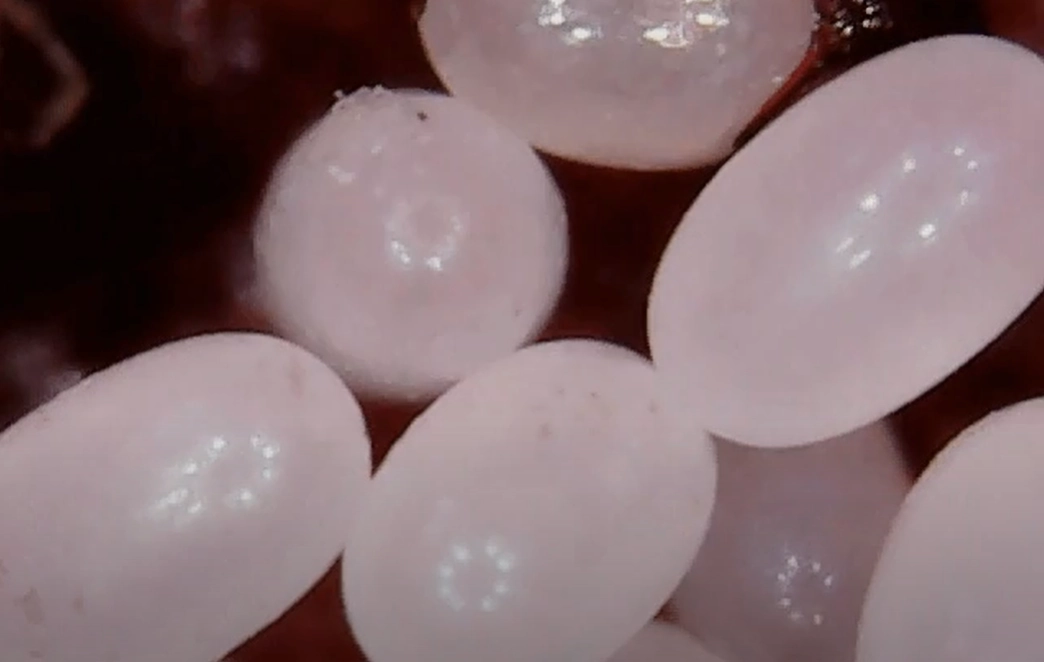
Understand how flea eggs fall into pet resting areas and why pet and environmental management must work together.
What flea eggs look like
Flea eggs are tiny, pale and smooth rather than dark specks or moving insects. They can be difficult to distinguish from lint or salt without magnification. Their presence is most convincing when adult fleas or flea dirt are also found on an animal or in its resting area. Photograph a suspected egg against a dark surface with a scale if possible, but do not diagnose a home infestation from an isolated white grain. Flea dirt is dried flea feces containing blood; it is not an egg. A veterinarian can help confirm a flea problem affecting a pet. For more detail, see fleas and What Do Fleas Look Like? Identify Fleas at Every Life Stage. For more detail, see Flea Dirt: Identification and Inspection.
Why eggs collect where animals rest
Adult cat fleas commonly feed and lay eggs on their host. The smooth eggs fall off into the surrounding environment, especially bedding, carpet and furniture where the animal spends time. That means treating only a visible patch on the floor leaves the continuing host source untouched. Make a map of the pet sleeping areas, favorite chairs, sheltered porch areas and travel carriers. The most useful inspection follows the animal movement pattern, not an assumption that every room contains the same number of eggs. A home without resident pets may still have animal visitors or a prior infestation. For more detail, see Signs of Fleas in Your House, Bed, and on Humans Explained and Flea Hosts and Household Sources.
Eggs are only one part of the life cycle
After hatching, larvae develop in protected material and eventually form cocoons. Adult emergence can continue after a treatment because protected pupae are difficult to reach. Timing changes with temperature and humidity, so neither a fixed egg-hatching deadline nor a single clean-up establishes elimination. Finding adults later does not automatically mean a properly applied product failed, but it does mean monitoring and host treatment must continue. Ask which stages a product targets and what post-treatment emergence is expected. An egg-focused plan should still address adults on animals and immature stages in resting sites. For more detail, see What Does Flea Larvae Look Like? Identify and Eliminate Them and How Long Can Fleas Live Without a Host? Survival Facts.
Coordinate pet treatment with veterinary advice
Ask your veterinarian which current flea prevention or treatment is suitable for each animal, its age, health and weight. Treating one pet while leaving another untreated can preserve the source. Do not apply a dog product to a cat or use a household insecticide on an animal; the labels and risks are different. A flea comb can help monitor adult activity, but it does not replace a complete plan where infestation is established. Tell the veterinarian about products already used so incompatible or excessive applications are not added while the home is also being treated. For more detail, see How to Keep Fleas Off Your Dog in Florida Year-Round and Fleas on Cats: Veterinary Care and Household Control.
Clean the environmental reservoirs repeatedly
Vacuum carpets, furniture seams, beneath cushions and the protected floor areas around pet beds. Launder pet bedding and washable throws according to their care instructions. Handle collected vacuum material so fleas are not returned to the living area. Repeated cleaning is more useful than a quoted percentage from a particular vacuum experiment because real carpet, equipment and placement differ. Check the same resting sites after cleaning and record new adult activity. Moving bedding from one room to another without containment can redistribute the material you are trying to remove. For more detail, see Fleas in Bedding: Inspection and Control.
When an environmental product is needed
A labeled flea product may address immature environmental stages, sometimes using an insect growth regulator, but its permitted site and re-entry directions must be followed. Do not assume a product killing exposed adults also kills protected pupae. Avoid repeated application ahead of the allowed interval just because a new adult appears. An outdoor treatment, if warranted, should follow evidence in shaded resting locations rather than automatically treating the whole sunny lawn. Consult a pest professional when the source remains active, the home is heavily affected or safe application is uncertain. For more detail, see How Effective Is Pest Control for Fleas in Your Home?.
Follow-up and preventing another egg reservoir
Continue the veterinarian-directed host program and the cleaning routine while assessing new evidence. If activity persists, check overlooked rooms, pet carriers and wildlife or feral-animal resting sites around the building. Remove attractants for visiting animals without attempting unsafe wildlife handling. A pet-free room is not automatically free of old environmental stages. Review progress with the professionals involved instead of setting a universal all-clear date. The goal is sustained reduction with no continuing egg source, not simply finding no white specks during one quick inspection.
Practical inspection checklist
- Map every indoor and sheltered outdoor location where animals sleep or rest.
- Use a flea comb and veterinary advice to confirm and address the continuing host source.
- Inspect bedding and upholstery seams and distinguish pale eggs from dark flea dirt.
- Vacuum and launder repeatedly as part of the plan, keeping cleaned materials separate from suspect reservoirs.
- Record adult activity after treatment and ask about expected emergence before applying another product prematurely.
Frequently asked questions
-
Can you see flea eggs with the naked eye?
Sometimes, but they are tiny and easily confused with debris. Magnification and confirmed adult flea evidence make identification more reliable than a white speck alone.
-
How long does it take for flea eggs to hatch?
Hatching depends on conditions. UC IPM reports about two to five days for cat flea eggs under described conditions; that is not a universal deadline for every household.
-
Do flea eggs die in the washing machine?
Laundering suitable pet bedding is part of control, but no single household wash setting guarantees every item is disinfested. Follow care instructions and coordinate laundry with host treatment and repeated cleaning.
-
Can flea eggs survive without a pet in the home?
Eggs already in the environment can develop without remaining on a pet. Later stages may persist, and visiting animals can provide new hosts. Removing a pet is not a complete treatment.
-
How many times should I vacuum to get rid of flea eggs?
Vacuum repeatedly during control, concentrating on pet resting areas and following the treatment plan. Do not rely on a universal removal percentage or a fixed number of passes to certify elimination.
-
What kills flea eggs but is safe for pets?
Ask your veterinarian about animal treatment and use environmental products only as labeled. No pesticide should be described as harmless to all pets; appropriate placement, precautions and re-entry directions still apply.
Get help with your pest concern.
Tell us what you are seeing. Our team can discuss the concern and the next step.
- Share your concern and contact details.
- Our team contacts you to discuss available service.
- Ask for a written scope and quote before work.
Where can we reach you?
Our team will call to confirm the next step.
By submitting, you’re asking On Demand Pest Control to contact you about this request.
↗ Prefer to call? (954) 947-0805