
Table of Contents
ToggleKey Takeaways
- German cockroaches reproduce faster than any other cockroach species, producing up to 400 offspring from a single female in one year.
- They spread over 30 types of bacteria, trigger asthma attacks, and contaminate food — making them a serious health hazard.
- German cockroaches live exclusively indoors, unlike other roach species that primarily stay outdoors.
- Their small size and nocturnal behavior allow infestations to grow undetected for weeks or even months.
- DIY treatments often fail because German cockroaches develop resistance to common pesticides quickly.
- Professional pest control with integrated pest management is the most reliable way to eliminate a German cockroach infestation.
German cockroaches are widely considered the worst pest you can have in your home — and for good reason. Unlike their larger cousins, such as the American cockroach, German cockroaches are strictly indoor pests. They don’t just visit your home. They move in permanently. These small, light-brown roaches breed at alarming rates, spread dangerous bacteria, and resist many over-the-counter pesticides. If you’ve spotted even one in your kitchen or bathroom, there are likely dozens — or hundreds — hiding behind your walls, under your appliances, and inside your cabinets. This guide explains exactly why German cockroaches earn their terrible reputation, the specific dangers they pose, and what you can do to take your home back from these relentless invaders.
What Makes German Cockroaches Different from Other Roaches?
Florida homeowners deal with many cockroach species, but German cockroaches stand apart from every other type. Understanding these differences helps explain why they are so much harder to control. If you’re unsure which species you’re dealing with, reviewing the common types of roaches in Florida is a smart first step.
They Live Exclusively Indoors
Most cockroach species — American, Australian, and wood roaches — primarily live outdoors. They enter your home occasionally, usually seeking water or shelter during extreme weather. German cockroaches are different. They have evolved to depend entirely on human environments. They cannot survive outdoors in most climates. Your kitchen, bathroom, and laundry room provide everything they need: warmth, moisture, and food.
This indoor dependency means they don’t come and go. Once they establish themselves, they stay and multiply relentlessly.
Their Small Size Gives Them an Advantage
Adult German cockroaches measure only about half an inch long. Compare that to American cockroaches, which can reach two inches or more. This small body allows German cockroaches to squeeze into cracks as thin as a credit card. They hide in places you’d never think to check — inside electrical outlets, behind switch plates, within the motor housing of your refrigerator, and even inside electronic devices. Understanding the differences between small roaches and big roaches helps you identify which species has invaded your space.
Why Do German Cockroaches Reproduce So Quickly?
The single most alarming trait of German cockroaches is their reproductive speed. No other household cockroach species comes close to their breeding rate, and this is the primary reason infestations spiral out of control so fast.
A single female German cockroach produces an egg case called an ootheca roughly every six weeks. Each ootheca contains between 30 and 48 eggs. Unlike other species that drop their egg cases early, the German cockroach female carries hers until just one to two days before hatching. This protective behavior dramatically increases the survival rate of her offspring.
Here’s what that looks like in numbers:
| Reproductive Factor | German Cockroach | American Cockroach |
|---|---|---|
| Eggs per ootheca | 30–48 | 14–16 |
| Oothecae per lifetime | 4–8 | 6–14 |
| Time to maturity | 36–60 days | 6–12 months |
| Offspring per year (one female) | Up to 400 | 150–224 |
Within just a few months, a handful of German cockroaches can become thousands. For a deeper look at how fast this happens, explore how quickly cockroaches reproduce in South Florida homes. Their short maturation period means each new generation begins breeding before you even realize the first generation arrived.
What Health Risks Do German Cockroaches Pose?
German cockroaches aren’t just disgusting — they’re genuinely dangerous to your health. They carry pathogens on their bodies and in their droppings that can cause illness in adults and children alike. The health risks associated with German cockroaches are well documented by entomologists and public health agencies worldwide.
Bacteria and Disease Transmission
German cockroaches are known to carry over 30 types of bacteria, including E. coli, Salmonella, and Staphylococcus. They pick up these pathogens from garbage, drains, and sewage, then deposit them on your countertops, dishes, and food preparation surfaces. Every surface a cockroach walks across becomes potentially contaminated.
Cockroach droppings, shed skins, and saliva also contaminate food and utensils. Gastrointestinal illnesses — including food poisoning, diarrhea, and dysentery — have all been linked to cockroach-contaminated environments.
Asthma and Allergy Triggers
For millions of Americans, German cockroach allergens are a major asthma trigger. The proteins found in cockroach droppings, saliva, and decomposing body parts become airborne. When inhaled, they cause allergic reactions and worsen asthma symptoms — especially in children.
The National Institute of Environmental Health Sciences has identified cockroach allergens as one of the leading causes of asthma in urban and suburban households. In homes with heavy infestations, allergen levels can remain elevated long after the roaches themselves are eliminated.
Why Are German Cockroach Infestations So Hard to Eliminate?
Even homeowners who take immediate action often struggle to eliminate German cockroaches. Several biological and behavioral traits make them extraordinarily resilient.
Pesticide Resistance
German cockroaches develop resistance to pesticides faster than almost any other household pest. Because their generations turn over so quickly — roughly every 60 days — natural selection works at an accelerated pace. A pesticide that worked six months ago may be completely ineffective against the current population in your home.
This is a major reason why safe alternatives to roach bombing are often more effective than traditional spray-and-pray approaches. Professionals rotate active ingredients and use targeted bait systems that circumvent resistance.
Nocturnal and Secretive Behavior
German cockroaches are almost entirely nocturnal. They spend the daylight hours hidden deep inside wall voids, appliance motors, cabinet hinges, and other tight spaces. You may live with a growing infestation for weeks without ever seeing a single roach. By the time you spot one during the day, the population has usually grown large enough that their hiding spots are overcrowded — meaning the problem is already severe.
Knowing how to identify baby cockroaches can help you detect an infestation earlier, since nymphs are often the first sign of a breeding population.
They Hitchhike Into Your Home
Unlike outdoor roach species that enter through cracks and gaps in your foundation, German cockroaches usually arrive by hitchhiking. They travel inside grocery bags, cardboard boxes, used furniture, appliances, and even backpacks. This means even a perfectly sealed home can develop an infestation. Understanding what attracts German cockroaches to your home helps you identify and reduce these entry vectors.
Where Do German Cockroaches Hide in Your Home?
German cockroaches prefer warm, humid environments close to food and water sources. Knowing their preferred hiding spots is critical for detection and treatment.
Common hiding locations include:
- Kitchen: Behind and under the refrigerator, inside the dishwasher motor, under the stove, inside cabinet hinges, behind microwave ovens, and around plumbing penetrations under the sink.
- Bathroom: Under the sink, behind the toilet, inside medicine cabinets, around plumbing access panels, and near leaking fixtures.
- Laundry room: Behind the washing machine and dryer, especially where warm, moist air accumulates.
- Electronics: Inside gaming consoles, cable boxes, coffee makers, and other devices that generate warmth.
German cockroaches rarely venture far from these zones. If you find them in bedrooms or living areas, that typically indicates the infestation has outgrown the kitchen and bathroom — a sign of a very large population.
How German Cockroaches Compare to Other Florida Roaches
Florida homeowners encounter several cockroach species regularly. However, German cockroaches are uniquely problematic compared to every other type. Here’s a side-by-side comparison:
| Trait | German Cockroach | American Cockroach | Palmetto Bug (Smokybrown) |
|---|---|---|---|
| Size | 0.5 inches | 1.5–2 inches | 1–1.5 inches |
| Primary habitat | Indoors only | Outdoors/sewers | Outdoors/attics |
| Reproductive rate | Very high | Moderate | Moderate |
| Pesticide resistance | High | Low | Low |
| Health risk level | Severe | Moderate | Low–moderate |
As this table shows, German cockroaches outpace every other common species in the traits that matter most: breeding speed, resistance, and health risk. For a comprehensive breakdown of all species, check out this guide to getting rid of a roach infestation in your Florida home.
How to Get Rid of German Cockroaches for Good
Eliminating German cockroaches requires a multi-pronged approach. A single treatment method almost never works on its own due to their resistance and hiding abilities.
Step 1: Deep Sanitation
Remove every food and water source you can. Wipe down countertops nightly. Store food in airtight containers. Fix leaky faucets and pipes. Take out the trash before bed. German cockroaches can survive on crumbs invisible to the human eye, so thorough sanitation is essential — not optional.
Step 2: Targeted Baiting
Gel baits are the most effective DIY tool against German cockroaches. Place small dots of bait in cracks, crevices, and near known hiding spots. The roaches eat the bait, return to their harborage, and die. Other roaches then feed on the dead roach and its feces, spreading the poison through the colony. This chain reaction is far more effective than spraying, which can actually scatter the population and make things worse.
Step 3: Insect Growth Regulators (IGRs)
IGRs disrupt the cockroach life cycle by preventing nymphs from reaching reproductive maturity. Combined with baits, IGRs help break the breeding cycle and prevent population rebounds after the initial knockdown.
Step 4: Professional Pest Control
For moderate to severe infestations, professional intervention is almost always necessary. A trained pest control technician uses integrated pest management (IPM) strategies — combining baits, IGRs, dust formulations, and ongoing monitoring to ensure the entire population is eliminated. Professionals also rotate active ingredients to combat pesticide resistance.
If you prefer chemical-free options, there are effective natural German cockroach control methods that complement professional treatments. For a complete prevention and elimination strategy, review this detailed guide on German cockroach control and prevention.
Why DIY German Cockroach Treatments Often Fail
Many homeowners try to handle German cockroach problems with store-bought sprays and foggers. Unfortunately, these methods fail more often than they succeed — and sometimes make things worse.
- Sprays repel rather than kill. Contact sprays cause roaches to scatter into new areas of your home, spreading the infestation to rooms that were previously clean.
- Foggers don’t reach hiding spots. Bug bombs release pesticide into open air, but German cockroaches hide deep inside walls, appliances, and crevices where the fog never penetrates.
- Resistance develops quickly. Using the same active ingredient repeatedly accelerates natural selection, creating a population that is immune to that chemical.
- Egg cases survive most treatments. Even if you kill every adult, surviving oothecae will hatch and restart the infestation within weeks.
This cycle of failed treatments is frustrating and expensive. Instead of wasting money on products that don’t work, investing in professional treatment from the start saves time, money, and stress. If you’ve been considering foggers, learn whether roach foggers and bombs really work before making that mistake.
Frequently Asked Questions
-
Why are German cockroaches worse than American cockroaches?
German cockroaches reproduce much faster, live exclusively indoors, and develop pesticide resistance quickly. American cockroaches primarily live outdoors and reproduce at a slower rate, making them far easier to control once they enter your home.
-
Can you get sick from German cockroaches in your home?
Yes. German cockroaches carry over 30 types of bacteria, including E. coli and Salmonella. Their droppings, shed skins, and saliva also contain allergens that trigger asthma attacks and allergic reactions, especially in children and people with respiratory conditions.
-
How fast can a German cockroach infestation grow?
A single female German cockroach can produce up to 400 offspring per year. Because nymphs reach reproductive maturity in as little as 36 days, a small infestation can grow into thousands of roaches within three to four months if left untreated.
-
Do German cockroaches only live in dirty homes?
No. While clutter and poor sanitation provide more food sources and hiding spots, German cockroaches infest clean homes as well. They frequently hitchhike inside grocery bags, cardboard boxes, and used appliances, meaning any home can become a target.
-
What is the most effective treatment for German cockroaches?
The most effective approach combines gel baits, insect growth regulators, and professional pest control using integrated pest management. This multi-pronged strategy targets all life stages and overcomes the pesticide resistance that makes single-product treatments unreliable.
-
How do I know if I have German cockroaches versus another species?
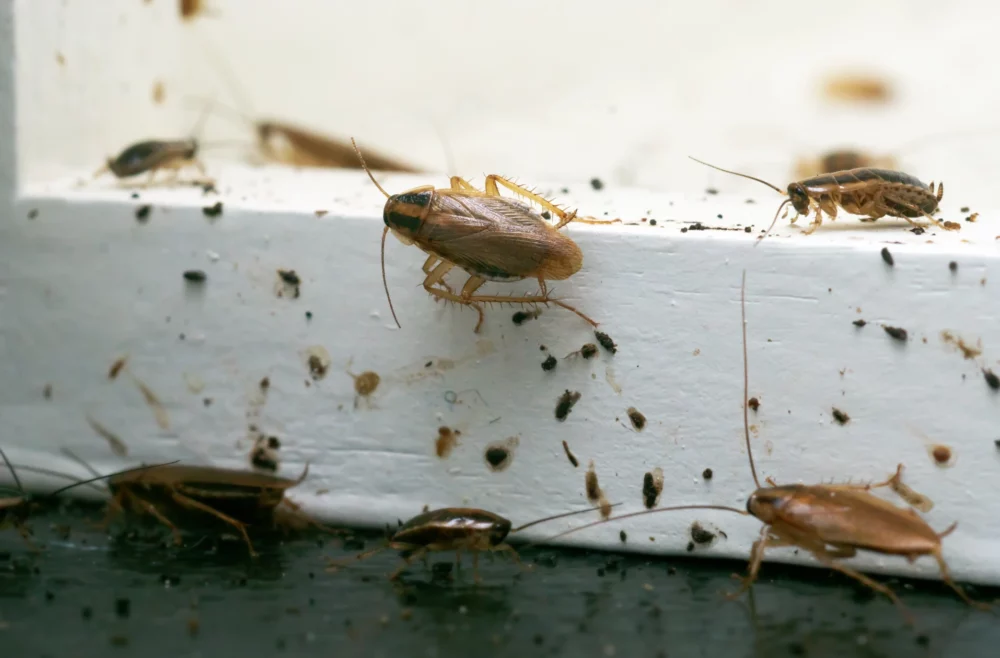
German cockroaches are light brown with two dark parallel stripes running behind their heads. They measure about half an inch long and are almost always found in kitchens and bathrooms. If you're seeing small roaches near appliances and plumbing, they're most likely German cockroaches.