
Identify a click beetle before responding. Inspect observed entry and lighting patterns; a wandering adult does not establish damaging larvae in the home.
Key Takeaways
- Click beetles are attracted to lights and enter homes through gaps around doors, windows, and foundations.
- Some click-beetle larvae, called wireworms, damage crops in soil. An adult inside the house does not establish that the lawn or garden has a damaging wireworm population.
- Suitable entry repairs, lighting adjustments and building maintenance can reduce opportunities for wandering click beetles. Monitor observed activity rather than treating these as universally ranked controls.
- Vacuuming or carefully collecting occasional adults, then correcting access and lighting, is usually more proportionate than indoor insecticide treatment.
- Repeated sightings warrant identification and entry-point inspection. They do not automatically require spraying the house or treating the soil.
If you’ve ever picked up a small brown beetle only to have it snap and flip into the air with an audible click, you’ve met a click beetle. Figuring out how to get rid of click beetles becomes a priority once these acrobatic insects start showing up inside your home — sometimes dozens at a time during warmer months. While adult click beetles don’t bite or cause structural damage, their larvae (called wireworms) can wreak havoc on garden roots and turf. Like the black carpet beetle, click beetles are a common household nuisance that homeowners often misidentify. This guide covers everything you need to know — from identification and behavior to proven removal methods and long-term prevention strategies that actually work.
What Are Click Beetles and Why Are They in Your Home?
Click beetles belong to the family Elateridae. Appearance and size vary by species, so a family name is not a precise household identification. Photograph the specimen and distinguish an adult click beetle from larvae and unrelated household beetles before management.
The “click” comes from a specialized spine-and-groove mechanism on their underside. When flipped on their backs, they arch their bodies and snap the spine into a groove, launching themselves into the air. This defense mechanism startles predators — and unsuspecting homeowners.
Click beetles end up indoors for a few predictable reasons:
- Light attraction: Porch lights, security lights, and illuminated windows draw them in at night.
- Gaps in your home’s exterior: Cracks around doors, windows, foundations, and utility penetrations provide easy access.
- Seasonal emergence: Adult activity depends on local species and weather; use actual sighting patterns rather than a universal spring-and-fall invasion calendar.
- Indoor shelter: An adult found in a damp room may have wandered there after entering. Moisture does not prove that click beetles are breeding in the room.
Understanding entry opportunities can guide practical exclusion and monitoring, without promising that every future beetle will be prevented.

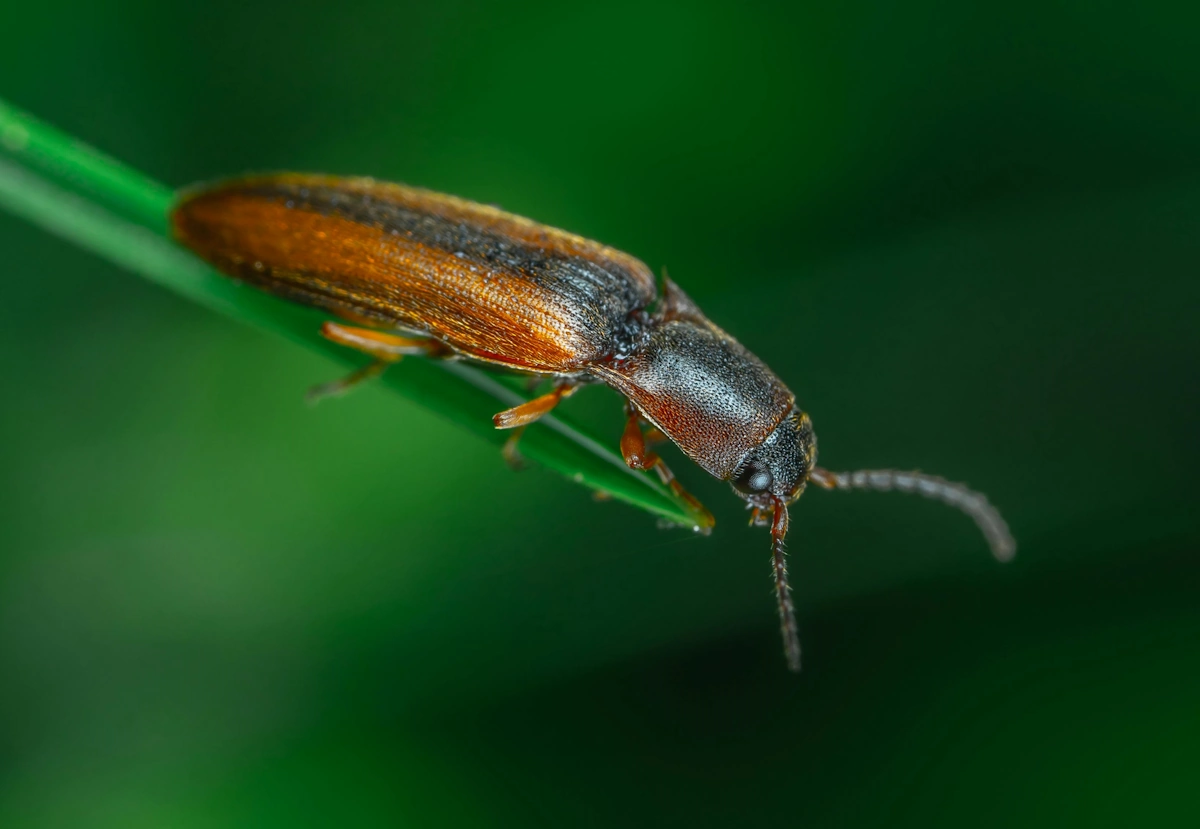
Click Beetles vs. Other Common Household Beetles
Homeowners frequently confuse click beetles with other beetle species. Correct identification matters because treatment methods differ. Here’s a quick comparison to help you tell them apart.
| Feature | Click Beetle | Carpet Beetle | Ground Beetle |
|---|---|---|---|
| Size | Varies by click-beetle species; size alone is insufficient | Varies by carpet-beetle species and life stage | Varies by ground-beetle species; size alone is insufficient. |
| Shape | Elongated, flattened | Oval, rounded | Oval, slightly flat |
| Color | Brown, black, gray | Black, mottled, varied | Black, iridescent |
| Clicking behavior | Yes — flips when disturbed | No | No |
| Primary damage | Larvae damage roots | Larvae damage fabrics | Generally beneficial |
If the beetles you’re finding are small, round, and appear near fabrics or carpets, you may actually be dealing with carpet beetles. Our ultimate carpet beetle guide covers identification, damage, and treatment for that species in detail. You can also learn what the signs of a carpet beetle infestation look like to rule them out.
How to Get Rid of Click Beetles with DIY Methods
For small to moderate infestations, several DIY approaches can significantly reduce click beetle numbers inside your home. The key is combining multiple methods for the best results.
Vacuum Them Up
The simplest immediate solution is vacuuming. Use a vacuum with a hose attachment to suck up click beetles from walls, ceilings, windowsills, and floors. Empty the vacuum bag or canister into a sealed outdoor trash bin immediately. This prevents any surviving beetles from crawling back out.
Vacuuming is especially effective when you notice a sudden cluster near a window or light fixture. It won’t solve the root problem, but it provides instant relief.
Set Up Sticky Traps
Glue-based sticky traps placed near entry points, windowsills, and baseboards capture wandering click beetles. Position traps in areas where you’ve spotted the most activity. Check and replace traps every one to two weeks.
Do not add a new attractant light indoors as a routine control step. Reduce unnecessary light spilling through open doors and use physical removal.
Assess Dust Labels and Exposure Before Considering Use
Do not broadcast food-grade dust along occupied-room baseboards. Occasional adult click beetles can normally be removed without a pesticide; insecticidal dust requires a suitable label and exposure precautions.
Inspect the route of entry after removal. Dust reapplication is not necessary simply because a beetle was seen.
Why Routine Residual Spraying May Be Unnecessary
A routine broad perimeter or indoor spray is not justified by an incidental adult sighting. Where a pesticide is considered, confirm identification and require a current label for the pest and exact site.
Any pesticide instructions, protective equipment and reentry restrictions come from its label. Do not assume an active ingredient authorizes every indoor use.
How to Prevent Click Beetles from Entering Your Home
Killing the beetles already inside is only half the battle. Long-term prevention focuses on eliminating the conditions that attract them and blocking their entry routes.
Seal Cracks and Gaps
Inspect your home’s exterior thoroughly. Pay close attention to:
- Gaps around door and window frames
- Cracks in the foundation
- Spaces around utility pipes and wiring
- Damaged or missing weatherstripping
- Torn or poorly fitting window screens
Use caulk for small cracks and expanding foam for larger gaps. Replace damaged weatherstripping and repair window screens promptly. These same entry points are how many pests gain access — including carpet beetles, which often get into your house through similar gaps and openings.
Reduce Outdoor Lighting
Since click beetles are strongly attracted to light, your outdoor lighting setup directly influences how many gather near your home at night. Switch to yellow “bug light” bulbs or warm-toned LED lights, which are far less attractive to beetles and other flying insects.
Move porch lights away from doors when possible. Consider motion-activated lights instead of always-on fixtures. Close curtains or blinds at night to reduce interior light visible from outside.
Eliminate Excess Moisture
Correct building leaks and drainage for overall maintenance. A room humidity target does not establish a click-beetle-specific treatment or prove adults have been excluded.
Good ventilation in attics and crawl spaces also discourages beetle activity. Proper moisture control makes your home less inviting to a wide range of pests.
How to Control Click Beetle Larvae (Wireworms) in Your Yard
Wireworms are larvae of click beetles. Some species feed on roots and seeds; others have different feeding habits. They occur in soil, and development varies by species. Confirm larval identity and plant injury before selecting garden management.
Signs of wireworm damage include:
- Wilting or yellowing plants with no apparent above-ground cause
- Patchy, dying sections of lawn
- Holes bored into root vegetables like potatoes and carrots
- Seedlings that fail to emerge or die shortly after sprouting
A garden extension service can help identify suspected wireworms and choose an appropriate sampling method. Plant wilting alone is not enough: drought, root disease and other soil insects can look similar.
Treating Wireworms in Garden Soil
Crop history and local recommendations matter for confirmed wireworms. Avoid a blanket tilling or crop-rotation prescription without knowing the plant, soil and species involved.
Do not promise that a generic beneficial nematode will eliminate wireworms. Biological performance depends on pest species and conditions; obtain crop-specific extension guidance.
Do not mix a named active ingredient into garden soil on internet advice. The product must be labeled for the crop, pest and placement. Food crops and ornamental lawns have different permissions.
Protecting Your Lawn from Wireworms
Healthy, well-maintained turf withstands wireworm feeding better than stressed lawns. Water deeply but infrequently to encourage deep root growth. Fertilize appropriately based on soil test results. Aerate compacted soil to improve drainage and root development.
Brown lawn patches have several possible causes. Obtain an actual soil-insect diagnosis before applying a lawn insecticide; do not treat a damaged lawn merely because an adult click beetle entered the house.
When to Call a Professional for Click Beetle Removal
Most minor click beetle encounters don’t require professional intervention. However, there are situations where expert help becomes the smartest investment:
- Recurring infestations: If click beetles return every season despite your DIY efforts, a professional can identify hidden entry points and breeding sites.
- Large numbers: Finding dozens of click beetles daily suggests a substantial population nearby or a significant gap in your home’s envelope.
- Widespread wireworm damage: Extensive lawn or garden damage from wireworms may require targeted soil treatments that professionals apply more effectively.
- Uncertainty about the species: If you’re unsure whether you’re dealing with click beetles, carpet beetles, or another pest, a professional inspection clarifies the situation quickly.
A pest control technician can apply commercial-grade perimeter treatments, inspect attic and crawl spaces, and create a customized plan based on your home’s specific vulnerabilities. This is especially valuable if you’re dealing with multiple pest issues at once — many homeowners battling beetles also discover problems with carpet beetle damage in stored fabrics or closets during the same inspection.
Garden wireworm management and adult exclusion indoors are separate questions. A professional can help with identification, but no household package is presumed to include crop treatment or a guaranteed lifecycle break.
Seasonal Timeline for Click Beetle Activity
Understanding when click beetles are most active helps you time your prevention and treatment efforts for maximum impact.
| Season / local conditions | What the evidence supports | Proportionate action |
|---|---|---|
| Early spring / local soil warming | Corn-pest wireworms in Minnesota are often shallower in spring; depth varies with species and soil conditions. This is not a Florida adult-emergence date. | Before planting a susceptible crop, investigate identified larvae and crop risk with local extension guidance. For adults entering the house, repair screens and reduce unnecessary night lighting. |
| Late spring and summer / observed adult flights | Virginia extension reports adults at lights in mid-to-late summer. Use actual local arrivals; this does not establish a Florida peak, mating period, or egg-laying window. | During repeated arrivals, reduce unnecessary outdoor lights and patch screens. Adult arrivals alone are not a reason to treat garden soil or schedule a perimeter spray. |
| Fall / observed arrivals and the next planting | The cited sources do not establish a family-wide fall shelter-seeking surge. Separate adult visitors from confirmed larvae and plant injury; the next planting date is more useful than a calendar spray date. | If adults are still arriving, check screens and light spill. If a crop problem is suspected, arrange identification and crop-specific preplant assessment rather than treating every larva as a pest. |
| Winter / local soil and shelter conditions | Minnesota corn-pest wireworms overwinter as larvae. Overwintering does not mean continuous feeding, and it does not establish dormancy of every adult in a Florida winter. | Plan crop assessment before the next planting and maintain entry screens. Choose any further action from identified insects and current activity, not a winter treatment schedule. |
| Season names organize inspection; they are not a Florida emergence calendar. Adult light-attraction and crop-feeding larvae are different problems, and some click-beetle larvae are predators. No calendar-based insecticide program is implied. Sources: Virginia extension, Minnesota extension, UC IPM, UF/IFAS. | ||
Use local activity records to prioritize repairs. There is no automatic two-season pesticide program for every home; exclusion and confirmed identification should guide the response. For related background, see carpet beetle larvae.
Separate the indoor visitor from a garden diagnosis
An adult click beetle near a lamp is useful evidence of an entry route, not a soil-damage diagnosis. Photograph the insect before removal and note whether sightings cluster at one door, after evening lighting or when windows are open. Repair the relevant screen or threshold and compare the next evenings rather than applying an indoor spray to every room.
Do not repeatedly force a beetle onto its back to demonstrate the click. Collection with a container or a vacuum is sufficient for household removal. Keep monitoring traps out of walking routes and away from children or pets, and avoid adding extra light near a doorway simply to lure more insects.
In the garden, retain an actual suspected larva and document the plant injury. Seeds failing to emerge, root holes or wilting can have several causes. Local extension guidance can distinguish a damaging wireworm from another soil organism and advise on the crop and planting history. This is a different investigation from a beetle on a curtain.
A product permitted for an ornamental foundation is not automatically permitted on vegetable soil. Nor does a treatment for one soil beetle cover every click-beetle larva. Ask for the precise pest and crop label before considering chemicals. If there is no confirmed larval injury, improving exclusion and removing the occasional adult may be the complete proportionate household response.
Sources and further reading
Frequently Asked Questions
-
Are click beetles harmful to humans or pets?
Incidental adults are mainly nuisance visitors, not routine biting household pests. Avoid handling unidentified insects and do not infer a garden problem from an adult indoors.
-
Why do I keep finding click beetles near my windows?
Many adults are drawn toward lights or reach windows after entry. Inspect screens, door seals and light spill rather than assuming they breed in the frame.
-
How long do click beetles live inside a house?
Survival varies by species and conditions, so no fixed indoor lifespan is useful. Remove the adult and investigate recurring access.
-
What is the fastest way to get rid of click beetles indoors?
Carefully collect or vacuum the adults, then inspect the entry route. Routine indoor spraying is usually disproportionate to occasional visitors.
-
Do click beetles cause damage to homes or furniture?
Adults indoors are not typical fabric or structural-wood pests. Their presence differs from carpet beetles and wood-damaging insects, which require their own identification.
-
Can wireworms from click beetles ruin my garden?
Some wireworm species injure seeds or roots. Confirm larvae and crop injury through local extension guidance before choosing soil management; an adult sighting alone is insufficient.
Get help with your pest concern.
Tell us what you are seeing. Our team can discuss the concern and the next step.
- Share your concern and contact details.
- Our team contacts you to discuss available service.
- Ask for a written scope and quote before work.
Where can we reach you?
Our team will call to confirm the next step.
By submitting, you’re asking On Demand Pest Control to contact you about this request.
↗ Prefer to call? (954) 947-0805