
Table of Contents
ToggleKey Takeaways
- Fruit flies are tan or brown with red eyes, while drain flies are fuzzy, moth-like insects with large wings.
- Fruit flies breed in overripe produce and fermented liquids, whereas drain flies lay eggs inside the organic buildup in drains.
- Both species reproduce rapidly, so early identification prevents a small nuisance from becoming a full infestation.
- Cleaning the breeding source — whether it’s a fruit bowl or a clogged drain — is the most effective elimination step.
- If DIY methods fail after one to two weeks, professional pest control may be needed to locate hidden breeding sites.
The difference between fruit flies and drain flies confuses many homeowners — especially when tiny flying insects suddenly appear around the kitchen sink or near a fruit bowl. Both pests are small, annoying, and seem to multiply overnight. However, they are entirely different species with different breeding habits, preferred food sources, and control methods. Treating for the wrong fly wastes time and lets the real population keep growing. Much like how proper identification matters for every pest — from common house flies to ants — knowing which tiny flier you’re dealing with is the first step toward getting rid of it. This guide breaks down appearance, behavior, breeding sites, and proven removal strategies for both fruit flies and drain flies so you can act fast and eliminate the right pest.
What Do Fruit Flies and Drain Flies Look Like?
The fastest way to tell the difference between fruit flies and drain flies is by looking at them closely. Even though both are small, their body shape, color, and wing structure are surprisingly distinct once you know what to look for.
Fruit Fly Appearance
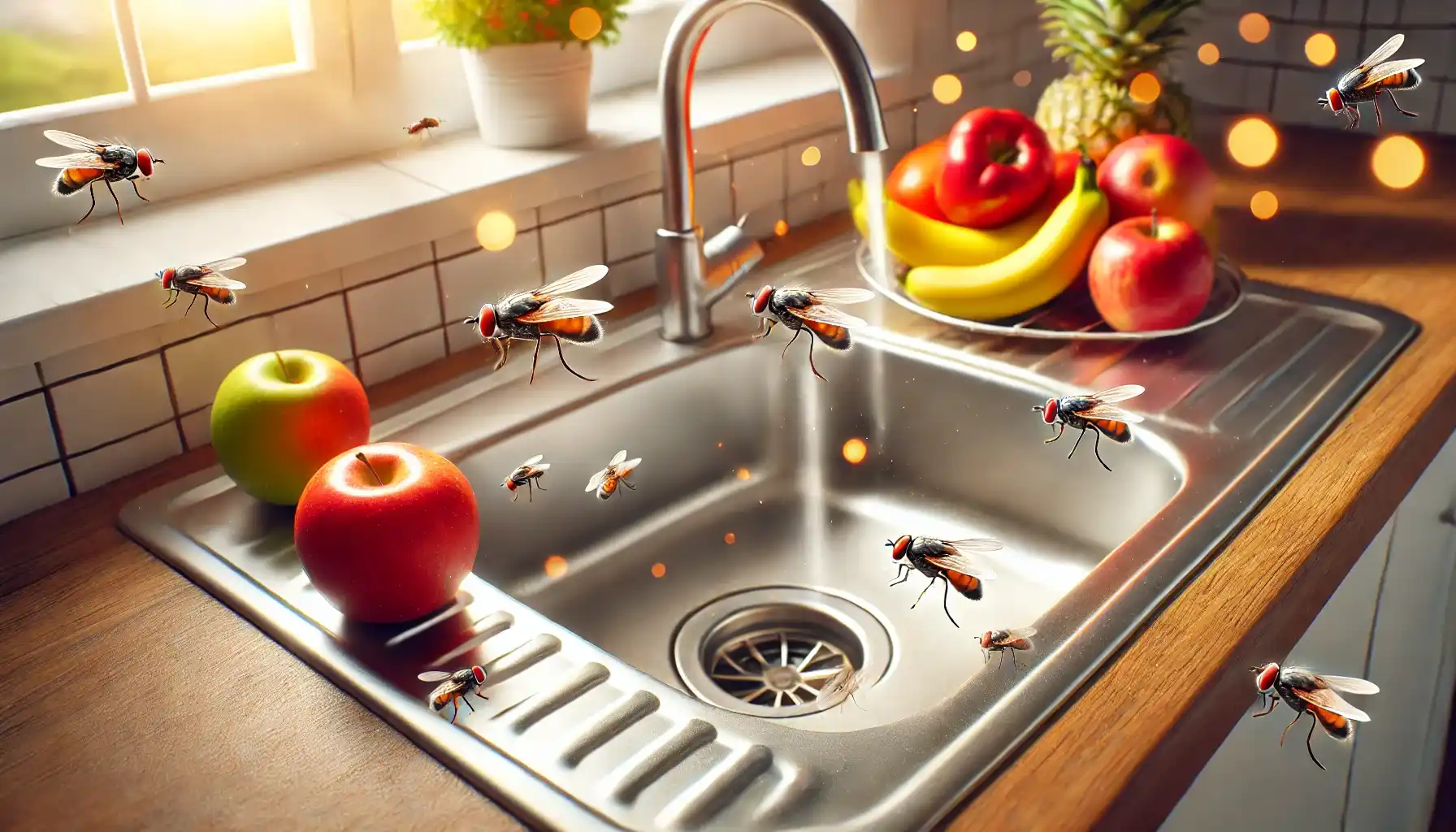
Fruit flies (Drosophila melanogaster) measure about 1/8 inch long. They have a rounded, tan or yellowish-brown body. Their most recognizable feature is a pair of bright red eyes, though some species have darker eyes. The wings are translucent and proportionate to the body, and they tend to hover in slow, lazy circles around food.
Drain Fly Appearance
Drain flies (Psychodidae) are slightly larger, usually around 1/8 to 1/5 inch long. They have a fuzzy, moth-like appearance because their wings and bodies are covered in tiny hairs. The wings are broad and leaf-shaped, held flat over the body when at rest. Drain flies are typically gray or dark brown. Unlike fruit flies, they don’t hover — they rest on walls and surfaces near drains. If you’ve ever noticed them gathering around your kitchen sink, you can learn more about why drain flies buzz around Florida kitchen sinks.
Side-by-Side Comparison: Fruit Flies vs Drain Flies
A quick reference table makes identification even easier. Use the chart below to compare the two species at a glance.
| Feature | Fruit Fly | Drain Fly |
|---|---|---|
| Size | ~1/8 inch | 1/8 to 1/5 inch |
| Color | Tan / yellowish-brown | Gray / dark brown |
| Eyes | Bright red (usually) | Black |
| Wings | Translucent, narrow | Broad, fuzzy, moth-like |
| Body Texture | Smooth | Covered in fine hairs |
| Flight Pattern | Hovering, circling | Short, weak hops |
| Primary Location | Near produce, trash cans | Near drains, sinks, sewage |
Even a brief look at these traits should help you tell which pest is in your home. Misidentification is common because both species tend to appear in kitchens and bathrooms, but the breeding source is what truly separates them.
Where Do Fruit Flies Come From?
Fruit flies are drawn to ripening or decaying organic matter. They don’t just target fruit — they will breed on any surface where fermentation is occurring. Understanding what attracts flies into your home helps you cut off the problem at its source.
Common breeding sites for fruit flies include:
- Overripe bananas, tomatoes, and other soft produce
- Spilled juice, wine, or beer
- Recycling bins with unwashed bottles or cans
- Compost containers without sealed lids
- Damp mops and sponges left sitting out
- Forgotten produce behind appliances
A single female fruit fly can lay up to 500 eggs near the surface of fermenting material. Those eggs hatch within 24 to 30 hours. As a result, a few fruit flies can become hundreds in under a week if the food source isn’t removed.
Where Do Drain Flies Breed and Live?
Drain flies have an entirely different breeding strategy. They lay their eggs inside the slimy organic film that lines the insides of drains, pipes, and sewage systems. This biofilm — a mix of hair, soap scum, grease, and bacteria — provides everything their larvae need to survive.
Typical drain fly breeding sites include:
- Kitchen sink drains
- Bathroom shower and tub drains
- Floor drains in basements or laundry rooms
- Septic tanks and sewage treatment areas
- Air conditioning drip pans
- Infrequently used toilets or sinks where water has evaporated
Because these flies depend on moisture and organic buildup, they thrive in humid climates like Florida’s. If you’re wondering whether these pests pose any risk, you can explore whether drain flies are harmful or dangerous to your household.
How to Get Rid of Fruit Flies in Your Home
Eliminating fruit flies starts with removing their food source. No trap or spray will work long-term if fermenting material is still available. Follow these steps for effective control.
Remove All Breeding Sources
Inspect your kitchen carefully. Throw away any overripe or damaged produce. Empty and rinse recycling bins. Clean up spilled liquids — especially fruit juice, vinegar, and alcohol. Wipe down counters and check behind appliances for hidden food scraps.
Set DIY Vinegar Traps
Fill a small jar with apple cider vinegar and add two to three drops of dish soap. The vinegar attracts fruit flies with its fermented scent. The soap breaks the surface tension, causing flies to sink and drown. Place several traps around the kitchen. Replace them every two to three days for best results.
Store Produce Properly
Once the infestation is under control, store ripe fruit in the refrigerator. Keep bananas in sealed bags if they’re ripening quickly. Use airtight compost bins and take trash out daily during warm months. These habits prevent reinfestation.
How to Eliminate Drain Flies From Your Pipes
Because drain flies breed inside plumbing, surface-level cleaning won’t solve the problem. You need to physically remove or dissolve the biofilm where they lay their eggs.
Clean the Drain Thoroughly
Use a stiff drain brush to scrub the inside walls of the affected pipe. Push the brush as deep as possible and twist it to dislodge the organic film. Follow up by flushing the drain with boiling water. Repeat this process daily for at least five days to catch newly hatching larvae.
Use an Enzyme Drain Cleaner
Enzyme-based or biological drain cleaners break down the organic matter that drain flies feed on. Unlike chemical cleaners, they’re safe for pipes and septic systems. Pour the recommended amount down the drain at night when water use is low. This gives the enzymes time to work undisturbed.
Check for Hidden Moisture Sources
Don’t forget about seldom-used drains in guest bathrooms, utility sinks, or basement floor drains. If a drain trap dries out, sewer gases and pests can enter the home. Run water through unused drains every week or two. Also inspect AC drip pans and condensation lines — these are frequently overlooked breeding areas in Florida homes. Homeowners dealing with flies near potted plants should also consider whether moisture in planters could be a factor, and can find advice on getting rid of flies in plants naturally.
Can You Have Both Fruit Flies and Drain Flies at the Same Time?
Yes — and it happens more often than you might expect, especially in kitchens. A fruit bowl on the counter attracts fruit flies, while the garbage disposal or sink drain harbors drain flies. Both populations can build simultaneously, making it seem like there are far more of one species than there actually are.
To figure out which pest you’re dealing with in a specific area, try this simple test. Place a piece of clear tape over the suspect drain opening at night, sticky side down. In the morning, check the tape. If you find small, fuzzy, moth-like insects stuck to it, you have drain flies. If tiny tan insects with red eyes are hovering around your fruit bowl instead, fruit flies are the culprit.
Treating only one species while ignoring the other lets half the problem persist. Identify both, target each breeding source independently, and you’ll resolve the infestation faster.
When to Call a Pest Control Professional
Most fruit fly and drain fly problems respond well to the DIY methods described above. However, there are situations where professional help is the smarter choice.
Consider calling a pest control expert if:
- The infestation persists for more than two weeks despite consistent cleaning and traps
- You can’t locate the breeding source — it may be inside a wall void, broken pipe, or sewer line
- Drain flies keep returning after thorough drain cleaning, suggesting a deeper plumbing issue
- You suspect the flies are a different species entirely, such as flesh flies or fungus gnats
A trained technician can inspect hidden plumbing, identify hard-to-reach breeding sites, and apply targeted treatments that eliminate larvae where household remedies can’t reach. In humid environments like Florida, where moisture-loving pests thrive year-round, early professional intervention saves time and prevents recurring infestations.
Frequently Asked Questions
-
Are fruit flies and drain flies the same species?
No. Fruit flies belong to the family Drosophilidae, and drain flies belong to the family Psychodidae. They differ in appearance, breeding habits, and preferred food sources. Fruit flies feed on fermenting produce, while drain flies breed inside the organic buildup in pipes.
-
Do fruit flies come from drains?
Fruit flies occasionally hover near drains if food residue is present, but they do not breed inside pipes. If you see fuzzy, moth-like flies emerging directly from a drain, those are drain flies. Fruit flies prefer to breed on exposed produce and other fermenting organic matter.
-
How long does it take to get rid of drain flies completely?
With consistent drain cleaning and enzyme treatments, most drain fly infestations clear up within one to two weeks. The key is removing the biofilm inside the pipes where eggs and larvae develop. Skipping even one day of cleaning can allow a new generation to hatch.
-
Can fruit flies or drain flies make you sick?
Fruit flies can transfer bacteria from decaying food to clean surfaces, potentially contaminating meals. Drain flies are generally not dangerous, though their presence indicates unsanitary drain conditions. In rare cases, large drain fly populations can trigger allergic reactions in sensitive individuals.
-
Why do I keep getting fruit flies even after throwing away all my produce?
Fruit flies breed on any fermenting organic matter, not just fruit. Check recycling bins, garbage disposals, trash cans, damp mops, and spilled liquids behind appliances. Even a thin residue of juice or wine is enough to sustain a breeding cycle.
-
Does pouring bleach down the drain kill drain flies?
Bleach may kill a few adult flies on contact, but it does not dissolve the biofilm where eggs and larvae live. The bleach passes through too quickly to be effective. Enzyme-based drain cleaners and manual brushing are far more reliable solutions for long-term control.