
Metallic blow flies can point to decaying material, but a fly at a window does not by itself prove a hidden animal carcass. Identify the fly and investigate the source.
Short answer
Metallic blow flies can point to decaying material, but a fly at a window does not by itself prove a hidden animal carcass. Identify the fly and investigate the source.
A metallic fly is a starting clue, not a species diagnosis
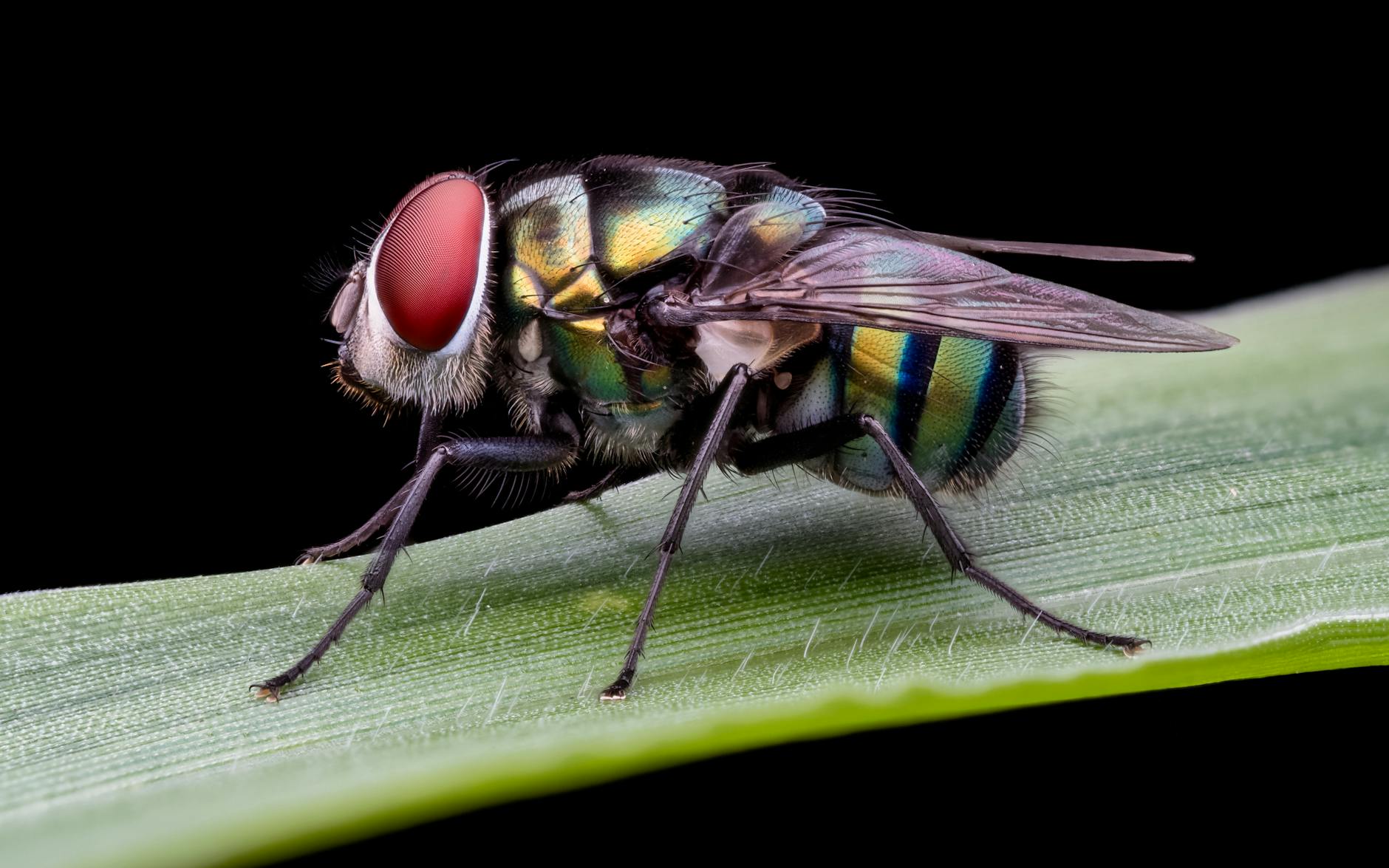
Green or blue metallic flies commonly belong to the blow fly family. Several species can have a similar appearance, so a phone photograph does not always justify naming Lucilia sericata. For comparison, the common house fly is dull gray with four dark thoracic stripes; common flesh-fly species are gray or black with three dark thoracic stripes and a checkerboard abdomen. These are tentative comparison clues to check in a clear image or specimen, not a complete species key. Record the fly’s size, color and location, and keep a specimen if identification matters. A small fuzzy drain fly or a tiny fly near fruit suggests a different breeding site. Identification changes the inspection: a fly associated with decay directs attention to waste or an animal source, whereas a drain-associated insect directs attention to wet organic material. Biting activity outdoors belongs to the separate topic of black flies in a Florida yard, not the indoor metallic-fly diagnosis.

Distinguish entry from indoor breeding
One adult can enter through an open door or damaged screen. Repeated clusters, especially with larvae or an odor, justify a more systematic search. Check household rubbish, forgotten food, outdoor bins close to doors and pet waste before assuming there is something in a wall. Emerging adults can gather at bright windows even when the source is elsewhere. Note which rooms and times produce the most activity; this helps narrow the search. Do not open walls, pull heavy appliances or enter an unsafe attic solely because you see flies.
Search accessible sources in a sensible order
Start with material you can safely reach. Empty a suspect bin into a sealed bag, clean residue under the liner, and inspect food spills around accessible appliance edges. Examine outdoor refuse storage and any waste-management issue near entrances. If an animal source is suspected because of an odor or other evidence, a building or wildlife professional may be needed. A homeowner should not handle a carcass, contaminated insulation or unknown animal waste without appropriate advice. Solving the access or animal problem may be as important as removing the remains.
Remove breeding material before choosing a trap
Adult traps may reduce nuisance flies and help track activity, but they do not remove the material supporting larvae. Use traps in places appropriate for the product and away from food preparation or children’s reach. Keep food covered and clean surfaces a fly may have visited. If a treatment product is proposed, confirm the listed pest, permitted indoor site and restrictions on food surfaces. A broad residual spray is not the default answer to an unidentified fly, and a fragrance or disinfectant does not substitute for finding decaying material.
Prevent another introduction
Repair torn screens, improve door closure and keep waste containers covered. Empty and clean bins often enough that residues do not remain available to flies, particularly when food scraps accumulate. Pick up pet waste and manage compost so it is not an exposed attraction beside an entrance. These steps reduce opportunity rather than create a fly-proof home. If an outdoor animal source exists, coordinate safe removal and exclusion with the right professional. Avoid sealing an opening until any live wildlife issue has been assessed.
When persistence changes the investigation
If adults keep emerging after an accessible source has been removed, check whether another source remains or whether identification was wrong. Flies near a drain may require a drain-specific investigation, and a concealed sewage defect may require a plumber. Record what was removed, when cleaning occurred and whether new larvae or adults are appearing. Ask a pest professional to explain the evidence for the source and the proposed monitoring plan. There is no universal number of days to resolution: development stage, temperature, source accessibility and continued entry all affect the outcome. If activity is concentrated at plumbing, review drain flies around a sink and inspect accessible buildup or defects safely.
Do not confuse a metallic body with a biting fly
A metallic appearance narrows a search but does not identify every fly. If someone reports bites, take that symptom seriously without assuming a familiar green bottle fly caused them. Retain or photograph the actual insect if possible and distinguish the identification question from medical assessment. Look for where adults rest and whether larvae are present in a source. A household can have more than one fly type at the same time. Treatment chosen for a drain-associated fly or a biting outdoor insect may not fit a metallic blow fly using decaying material. A clear specimen often saves unnecessary applications and an incorrectly directed inspection. Compare house fly identification when the specimen lacks the appearance described here; different flies can call for different source searches.
An animal source requires a second question
If a concealed animal is genuinely implicated, ask how it entered and whether live animals remain nearby. Removing decayed material without reviewing access can leave the route unresolved. Conversely, sealing an opening before a wildlife inspection can trap live occupants. A pest or wildlife provider should explain what evidence supports the source, what contaminated material needs attention and which repair is appropriate. A homeowner should not climb onto a roof, enter an unsafe confined space or cut into an unknown utility area to follow an odor. The fly complaint may require coordinated wildlife, cleanup or building work rather than another aerosol application. The guide to house fly identification provides another comparison when investigating flies associated with waste and decaying organic material.
Compare the fly before choosing the search route
A shiny metallic green or blue body is consistent with a blow fly, according to UC IPM, but color is not a complete species identification. Drain or moth flies have a fuzzy, moth-like appearance and are associated with wet organic buildup. Fruit or vinegar flies are small flies commonly associated with fermenting material. These are useful starting differences, not a guarantee that every green insect, tiny fly or fly near a sink belongs to that group. The UMN fly guide provides additional identification context. Save a clear photograph or safely contained specimen when the appearance and likely source do not agree.
Compare the body and wings as well as the setting. A metallic fly at a window may have developed in a waste source elsewhere or simply entered through a door. A small fly at a fruit bowl may have a nearby drain source instead. Observing several types at once is possible. Do not buy a trap solely because the package shows a fly, then treat its catches as proof of the source. A lure selects insects by attraction; it does not inspect the cabinet, bin or wall where development occurred. If identification points to drain flies, review drain fly nuisance and health questions separately from claims about a different fly.
Search bins and waste in a practical order
First remove exposed food and look at the most accessible waste sources. Check the kitchen bin, the underside of its lid, the liner folds and residue beneath the liner. A bag that looks closed at the top may have leaked into the base. Next inspect recycling for food or drink residue and check the container in which recyclables wait for collection. Outdoors, look at garbage lids, spilled material beside the bin and pet-waste storage. Use suitable gloves and cleaning methods; do not reach into unknown waste or handle animal remains. Secure collected waste and clean accessible container surfaces with soap and water as UC IPM recommends.
The search is more useful when each finding leads to an action. Food residue beneath a liner calls for removal and cleaning; a damaged bin lid calls for repair or replacement; waste accumulating between pickups calls for better containment. A large number of adult flies with no accessible source calls for further investigation, not immediate blanket spraying. Record what was removed so continued sightings can be interpreted against an actual change rather than a vague statement that the house was cleaned. Use the guide to conditions that attract flies to organize the source search rather than treating every fly as a drain problem.
Larvae and adults answer different questions
Maggots in waste show that a larval development site is present. They do not identify the fly species by themselves: UC IPM notes that house-fly and blow-fly larvae can look similar. Mature larvae may leave their food source to pupate in a drier, protected place. Thus a larva crawling beside a bin is not necessarily breeding in that exact floor crack. Search the nearby waste without tearing apart sound building materials. A sudden group of adults can also follow emergence from pupae; its location still needs to be connected to the earlier source.
After source removal, assess whether new material is accumulating and whether flies continue entering from outdoors. There is no single number of days that proves the entire problem is over under all temperatures and conditions. Persistent activity in the same inaccessible area, a decay odor or suspected wildlife remains deserves qualified investigation. Do not open an attic or wall simply to chase an odor without considering access, contamination and animal-removal rules.
Nonbiting does not mean suitable around food
Common blow flies have sponging mouthparts and do not bite or feed on blood, UC IPM explains. That answers the bite question for an identified blow fly, not for every insect that looks green. They can visit garbage and fecal material, so protecting food and food-contact surfaces still matters. Cover food while investigating, remove contaminated waste and clean surfaces appropriately. If someone reports bites, obtain identification rather than forcing the report into a blow-fly diagnosis. Trap placement should also keep an odor lure from attracting more flies toward an entrance or food area.
Compare two source-search outcomes
If larvae are found in residue beneath a bin liner, remove and contain the affected waste, clean the accessible bin and improve the closure and waste routine. Record the larval location separately from adult flies gathering at a nearby window. The window may be an attraction point rather than a breeding site. A lure placed there does not remove the bin residue. If a later inspection finds new residue, address why it is recurring rather than interpreting every adult as a failure of the earlier cleaning.
If no accessible waste source is found and metallic flies repeatedly emerge from an inaccessible area, the next action is qualified investigation of that area and any suspected animal source. A professional may need to coordinate building access and wildlife or contamination advice. Spraying the visible adults does not establish that the concealed source has been resolved. Do not cut open a wall, reach into an attic void or handle a carcass to complete a household checklist.
These outcomes can look similar from a distance because both produce annoying adults. Their management differs because the evidence differs. Supply the identifier with images, the locations of larvae if any, and the waste sources already checked. That information is more useful than a blanket description of green flies throughout the house and helps prevent spending on traps or residual applications that do not address development. Activity around potting soil calls for the separate investigation in small flies associated with plants, not an automatic drain or carcass diagnosis.
Sources and further guidance
Additional authoritative reference
Frequently Asked Questions
-
Why do I suddenly have green flies in my house?
Possible causes include decaying food, waste or an animal source, but adults can also enter from outdoors. Repeated emergence and larvae are more informative than one sighting.
-
How long does it take to get rid of green flies indoors?
There is no fixed timetable. Remove the breeding source and track new emergence; persistent activity may mean a concealed source remains.
-
Can green flies lay eggs inside my house?
Yes, suitable decaying material indoors can support blow fly development. An adult sighting alone does not prove eggs were laid inside.
-
Do green flies bite humans?
Common metallic blow flies are not blood-feeding biting flies. Identification matters if an insect is reportedly biting.
-
What is the difference between green flies and blue bottle flies?
They are groups of metallic blow flies with different coloration; color alone does not reliably identify the exact species or breeding source.
-
Will keeping my house clean prevent green flies completely?
No. Cleaning and covered waste reduce sources, while screens and door management reduce entry. A concealed animal or outdoor source may still need attention.
Get help with your pest concern.
Tell us what you are seeing. Our team can discuss the concern and the next step.
- Share your concern and contact details.
- Our team contacts you to discuss available service.
- Ask for a written scope and quote before work.
Where can we reach you?
Our team will call to confirm the next step.
By submitting, you’re asking On Demand Pest Control to contact you about this request.
↗ Prefer to call? (954) 947-0805