
Bed bugs can enter Hollywood homes in belongings and used furniture. Practical prevention depends on exposure and inspection, not a claim that this city has an unusually high infestation rate.
Short answer
Bed bugs can enter Hollywood homes in belongings and used furniture. Practical prevention depends on exposure and inspection, not a claim that this city has an unusually high infestation rate.
Local context without a city risk ranking
Hollywood residents travel, host visitors, buy used furniture and live in both detached homes and shared buildings. Each creates opportunities for a bed bug to arrive, but none establishes how many homes are infested. This guide does not have a local surveillance dataset showing Hollywood has more bed bugs than another city. The CDC notes that bed bugs occur in expensive hotels as well as other accommodations and that cleanliness does not determine their presence. A tidy home can receive an infested suitcase; a cluttered room can make inspection more difficult. Keep those separate ideas in mind when deciding what to check.
Indoor conditions matter more than a winter forecast
Bed bugs hide near places where people sleep or rest. Occupied, temperature-controlled buildings can support them in cold regions as well as South Florida. A cool outdoor night is therefore not a reliable treatment for an indoor infestation. Nor does Hollywood humidity establish a particular reproduction rate in your bedroom. Avoid putting furniture outdoors in the hope that the weather will solve the problem. EPA describes controlled heat and cold approaches with important limitations; a monitored treatment is different from leaving belongings on a balcony or in a parked vehicle. Review the limits of bed bugs and cold exposure before relying on outdoor weather to treat belongings.
Travel prevention starts before unpacking
At an accommodation, keep belongings off the bed while you examine mattress piping, headboard joints and the luggage rack. Look for live insects, cast skins and dark spotting rather than relying on bites alone. A bite reaction may be delayed and can resemble reactions to other insects. If you find suspicious evidence, photograph it and tell the accommodation manager without moving loose belongings between rooms. On returning home, inspect luggage and keep potentially exposed items contained. Use a clothes dryer on high heat only for items that can safely tolerate it, following the appliance and fabric instructions. Practical bed bug prevention focuses on belongings and exposure routes, not assumptions about a neighborhood or a person.
Shared buildings need coordinated inspection
Bed bugs can move with belongings and can spread between nearby units. If an expert identifies them in your apartment, notify management promptly and ask how neighboring units will be assessed. EPA specifically recommends inspection of units near an affected apartment. This is not proof that every neighbor is infested or permission to apply pesticides in shared spaces. Give the manager dates, room locations and photographs, and request written preparation instructions. Moving an untreated sofa into a corridor or sleeping in another room can complicate containment rather than resolve the source. Understanding bed bug spread helps frame containment decisions without assuming every nearby room is affected. For a shared-building finding, review responding to bed bugs in an apartment complex and coordinate the inspection with management.
Used furniture needs more than a surface glance
Inspect seams, underside fabric, screw holes, drawers and joints before accepting a used item. Ask about its history, but recognize that a seller may not know whether bugs are present. A clean exterior or a period in storage does not prove an upholstered item is clear. If evidence is found, avoid bringing it through your living space. If an item already inside can be treated, disposal is not always necessary; ask the treating professional. When disposal is necessary, coordinate with local collection rules and mark or damage the item so another household does not unknowingly reuse it. If the evidence is at a sofa rather than a bed, review bed bugs in a couch and include that resting area in the inspection.
A practical inspection and response record
Check resting areas after a meaningful exposure, such as a trip or used-furniture purchase, and whenever suspicious evidence appears. There is no researched Hollywood-specific rule requiring every household to inspect every two weeks. Once bed bugs are confirmed, EPA advises repeated evaluation and prevention, including checking for evidence at least weekly after initial control. Record where insects or signs occur, keep samples for identification, and ask what follow-up evidence will demonstrate progress. An encasement or interceptor can support monitoring, but neither is a substitute for treating all identified harborages. Use the guide to checking for bed bugs to organize the physical inspection instead of diagnosing from skin marks alone.
Vacation-rental turnover is an inspection opportunity
A manager can incorporate a consistent visual check of sleeping and resting furniture into turnover work. That is an operational suggestion, not evidence that a particular rental company or Hollywood neighborhood has a high bed bug rate. The check should record actual suspicious findings and refer them for identification. General cleaning and an attractive room photograph cannot certify a property free of bed bugs. Guests and cleaners should be given a clear reporting route so a questionable specimen is not simply discarded without review. If activity is confirmed, follow the pest provider’s containment and preparation instructions before moving bedding, furniture or cleaning equipment between rooms. A rental manager can use a vacation-rental post-cleaning inspection checklist as an operational prompt, while keeping suspected pest findings separate from routine cleaning sign-off.
Keep neighborhood assumptions out of the decision
Living next to a rental or cruise passenger does not by itself establish exposure. Bed bugs are not airborne, and identifying a travel industry nearby does not show how an insect entered a particular home. Ask what concrete evidence connects the household to an introduction: an identified specimen in luggage, an affected item or confirmed building activity. The purpose is not to blame travelers or neighbors. It is to select the resting areas and belongings needing inspection. If no pest has been identified, avoid repeated preventive pesticide use based on proximity alone. Property-specific findings provide a much better basis for a response than an unsupported local hot-spot ranking. The guide to bed bug introduction routes can help trace relevant belongings without assigning blame to a visitor.
Inspect a resting area in an orderly sequence
Start with the place where a person normally sleeps, then the chair or sofa where someone regularly rests. Use good light and inspect reachable edges rather than dismantling the room. On a mattress, examine piping, seams and labels; then inspect accessible box-spring edges and the bed-frame joints. Check the headboard where it joins the frame and the wall-facing areas that can be reached safely. On a sofa, inspect cushion seams, folds and accessible frame joints. Do not move heavy furniture alone or open electrical outlets. An inspection with inaccessible areas is incomplete, but that is a reason to record the limitation, not to improvise unsafe access.
Keep a suspicious specimen in a closed container if you can collect it safely, and photograph it with a size reference. A close photograph helps with anatomy; a wider photograph shows the location. Label the container with the room and date. Do not crush every specimen or clean away all the evidence before an identification visit. Conversely, do not leave an infested item uncontained merely to demonstrate the problem. Ask the provider how to preserve a useful sample while keeping the rest of the household protected. Consider bed bug mattress encasements as one component of an inspection and monitoring plan, not a replacement for checking surrounding furniture.
Read physical signs without overcalling them
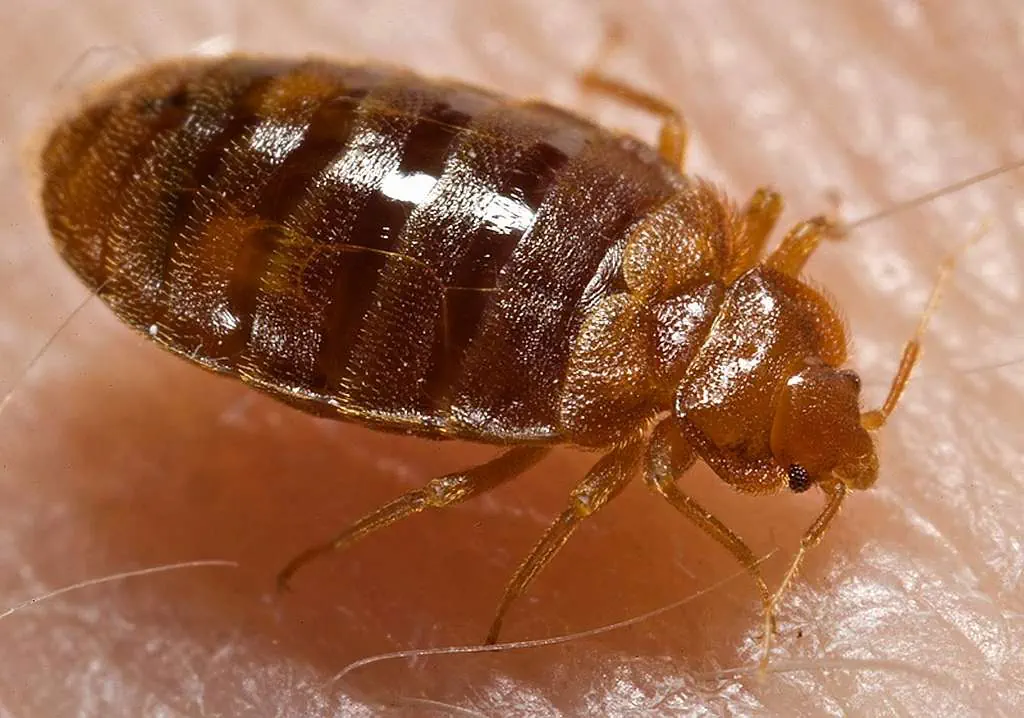
A live bug is different evidence from an old mark. Bed bugs are small, flattened insects; CDC describes them as reddish-brown and wingless. Eggs, shed skins and dark spotting in resting-area crevices can support an inspection, but photographs of spots alone cannot establish species or whether activity is current. Other insects and ordinary stains can be mistaken for bed bug evidence. Finding something on a mattress does not make it a bed bug. Record which sign was present and ask an expert to identify the material, especially when the only available evidence is a stain or a skin reaction.
A useful report separates three questions: what was identified, where it was found and what the inspection did not cover. For example, an identified insect inside a suitcase directs attention to the suitcase and the places it was opened; it does not prove every bedroom is affected. A specimen at a sofa joint calls for inspection of that resting area even when the bed looks clear. This prevents both underreaction and unnecessary whole-building assumptions. Compare any physical findings with early signs of bed bugs; an uncertain mark alone is not a confirmed infestation. Compare bed bug size and life stages when examining a specimen, while retaining it for identification rather than judging from size alone. Review the appearance of bed bug eggs before interpreting small pale material found in seams as proof of eggs.

Resistance and missed hiding places are different problems
EPA notes that some bed bug populations resist pyrethrins and pyrethroids. That general finding does not show resistance in your Hollywood home. Surviving bugs may also reflect an untreated hiding place, a product used at an unpermitted site, incomplete treatment of belongings or a new introduction. Repeatedly applying the same product without checking those possibilities can add exposure without resolving the cause. Ask what evidence distinguishes the explanations and how the plan will respond. Choosing a different active ingredient is a professional, label-bound decision, not permission to combine household products. Discuss bed bug treatment timelines alongside the inspection findings and follow-up method rather than expecting a fixed deadline.
A workable report for a landlord or rental manager
Give the manager a brief factual report: date, unit or room, exact resting area, specimen or photograph, and any known movement of suspect belongings. Ask who will arrange identification, how adjacent units will be considered and where residents can obtain preparation instructions. State any access or mobility constraints before the visit. Keep reports separate from accusations about a neighbor’s cleanliness or visitors. EPA’s recommendation to inspect nearby units supports coordinated investigation; it does not establish blame or authorize entering another resident’s home.
For rental turnover, distinguish a routine check from a confirmed finding. A cleaner can note a suspicious insect or seam stain and preserve a photograph, while a qualified identifier determines what it is. A property should not be advertised as certified clear merely because its linens were washed or a quick check found nothing. If evidence is confirmed, the next booking and room use should be handled under the management and bed bug treatment plan in Hollywood, not by covering the signs or moving untreated furnishings to another rental.
Work through a suitcase finding without making a citywide assumption
Suppose a returning traveler finds an insect at a luggage seam. The first decision is identification, supported by a safely contained sample or clear photograph. The second is containment of that suitcase and the items still awaiting assessment. The third is inspection of the places where it was opened or set down, especially resting furniture. The finding does not prove that the whole home is infested, but simply discarding the sample and hoping the problem ends loses useful evidence. Keep the sequence tied to the actual item and its movement.
If the insect is identified as a bed bug, give the provider the travel and unpacking locations, not a guess about which neighborhood caused it. Ask what items need preparation and which can remain undisturbed. A person who cannot move a bed or carry a heavy bag needs an adapted plan before the visit. If the sample is not a bed bug, return to the identified pest’s biology instead of continuing a bed bug program. This example illustrates decision-making, not an assurance that any particular suitcase can be cleared with one household action.
A rental or apartment report follows the same evidence-first logic while adding management coordination. Keep a copy of the report and preparation instructions so the next person handling the room knows what has been confirmed. Do not move suspect equipment to another unit merely to keep the first room available. Practical containment and a verifiable identification are more useful than a local vulnerability ranking.
Sources and further guidance
Frequently Asked Questions
-
Why does Hollywood, FL have more bed bug problems than other cities?
The article does not establish that Hollywood has more bed bugs than other cities. Travel and shared housing are relevant exposure pathways, but a city ranking needs surveillance data.
-
Can bed bugs spread between apartments in Hollywood condo buildings?
Yes, spread between nearby units is possible. Report confirmed evidence to management and request coordinated inspection rather than assuming the whole building is affected.
-
How do tourists bring bed bugs into Hollywood, FL neighborhoods?
Bed bugs can hitchhike in luggage, clothing and other belongings. Visitors are not automatically carriers, and proximity to a vacation rental does not prove an infestation.
-
Is it safe to buy used furniture in Hollywood, FL?
Used furniture can be inspected, but no quick check guarantees it is clear. Avoid accepting an item with live bugs, cast skins or suspicious spotting.
-
How often should I inspect my Hollywood home for bed bugs?
Inspect after relevant exposure and when evidence appears. Once an infestation is confirmed, follow the inspection and monitoring schedule in the treatment plan.
-
Why are DIY bed bug treatments less effective in Hollywood, FL?
DIY difficulty is not unique to Hollywood. Hidden harborages, incomplete preparation, surviving eggs and pesticide resistance in some populations can complicate control.
Get help with your pest concern.
Tell us what you are seeing. Our team can discuss the concern and the next step.
- Share your concern and contact details.
- Our team contacts you to discuss available service.
- Ask for a written scope and quote before work.
Where can we reach you?
Our team will call to confirm the next step.
By submitting, you’re asking On Demand Pest Control to contact you about this request.
↗ Prefer to call? (954) 947-0805