
Discard visibly infested flour, inspect neighboring stock and address pantry dampness. Keep sound food dry and securely stored; do not apply household pesticides to food or food-contact storage.
If you find booklice in flour, throw that flour out. Then check nearby foods and look for damp spots in the pantry. Booklice feed on fungi and stored materials, including cereals. Confirming them is a reason to check humidity and storage conditions, but the insects alone do not prove that a particular package contains mold.
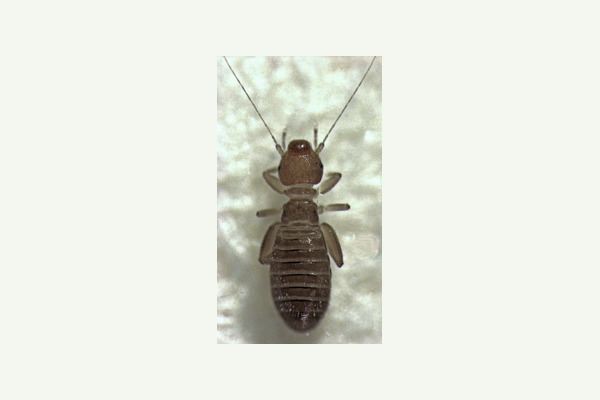
Finding tiny pale bugs in your flour bag is unsettling. Below, you’ll learn how to identify the insects, how to inspect neighboring packages and address damp storage. Visual checks cannot certify that a food is safe.
What Are Booklice, and Why Are They in Your Flour?
Booklice belong to a group of insects called psocids. Indoor species are usually less than 1/16 inch (1.5 mm) long. Their soft bodies range from translucent white to gray to light brown. Most indoor species have no wings.
Despite the name, booklice are not true lice. They are not parasites and do not bite people or pets. The name comes from how often they turn up among books and papers, where they eat the starch sizing in bindings.
According to the University of Florida (UF/IFAS), psocids feed mainly on:
- Fungi and mold
- Cereals and grain products
- Pollen
- Fragments of dead insects and similar debris
Flour fits that list in two ways. It is a cereal product, and when it absorbs humidity it can grow the microscopic mold booklice prefer. As a result, a pantry that stays warm and humid gives them both food and the conditions they like.
How to Tell Booklice From Other Pantry Pests
It’s easy to get the ID wrong. Several stored-food insects are small and light-colored, so look closely before you decide what you have. Use a bright light and, if you can, a magnifying glass.
Signs that point toward booklice:
- Size: extremely small, often under 1/16 inch
- Body: soft, pale, and wingless rather than hard-shelled
- Antennae: long and thread-like
- Head: a bulging area on the front of the head, between the eyes
- Location: damp spots, near paper, cardboard, or a moldy surface
Pantry beetles are a different problem. Adult beetles have a hard, shell-like body. Some pantry pests also leave webbing or clumped food behind. If what you see doesn’t match the list above, don’t assume it’s booklice. The cleanup steps overlap, but the cause may not.
Silverfish can also show up near flour. UF/IFAS lists moist wheat flour as one of their foods. However, silverfish are much larger, about 1/3 to 1/2 inch long, with a carrot-shaped, scaly body and three tail-like appendages. Their food preferences include starches and glued materials, so check the insect itself rather than identifying it from the flour alone.
Inspecting the Flour and Its Package
Start with the container where you saw the insects. Next, check everything stored close to it.
Check the Contents
If identification requires a sample, keep a small amount in a clear, sealed container or bag and view it over a pale background. Keep suspect material separate from food-preparation surfaces. Booklice are easier to spot when they move. Also look for:
- Clumps or a musty smell, which suggest the flour has taken on moisture
- Gray or discolored patches that could be mold
- Insects along the top surface or the inside edges of the bag
Check the Packaging
Paper flour bags absorb humidity easily. Look over the outside and the folds for:
- Damp, soft, or stained paper
- Insects tucked into the seams or the bottom crease
- Small tears or open folds where insects could get in
A cardboard box or paper bag that feels damp is a warning sign even if you don’t see any insects yet.
Deciding What to Throw Away
The UF/IFAS guidance is direct: discard infested food. If you can see live insects in a product, put it in a sealed bag and take it to an outdoor trash bin.
There’s no reliable rule for how many bugs are “acceptable” in home-stored food. Don’t try to sift out the insects and keep using the flour. UF/IFAS advises discarding infested food. Sifting does not establish that the remaining food is suitable to eat.
For food that looks clean, use judgment:
- Sealed, dry, undamaged containers: inspect the package and any visible contents; an intact container lowers concern but is not a safety certification
- Open paper bags stored next to the infested item: inspect them carefully, and throw them out if you have any doubt
- Flour or other dry goods that became damp, moldy or musty: discard rather than trying to salvage them; clumping warrants a closer check of the product and its storage
Do not spray insecticide on food or onto shelves where open food is stored.
Checking Neighboring Stock and Damp Spots
Booklice spread toward warm, humid areas. Once you’ve dealt with the flour, check the whole shelf and the cabinet around it.
Check these items next:
- Other grain products: cornmeal, cake mixes, cereal, rice, and pasta
- Paper-wrapped or boxed foods kept on the same shelf
- Cardboard boxes, paper shelf liners, and stored grocery bags
Next, look for where the moisture is coming from. Common sources include:
- Leaks or condensation around a cabinet near plumbing or an appliance
- Slow plumbing leaks under or behind the pantry
- Poor airflow in a closed cabinet against an exterior wall
- Condensation from steam while cooking
Drying the Pantry and Securing Good Food
Moisture control is the long-term fix. UF/IFAS notes that chemical control usually isn’t needed once moisture has been reduced.
Follow these steps once the infested food is gone:
- Empty the shelves. Take everything out so you can reach the corners.
- Vacuum and wipe down. Vacuum the shelves and cracks, then wipe them down. Let the surfaces dry completely.
- Remove cardboard and paper. Throw out old shelf liners and empty boxes. They hold moisture and can feed booklice.
- Lower the humidity. UF/IFAS recommends keeping humidity below 50% to slow mold growth. A dehumidifier or better ventilation can help.
- Fix leaks. Repair any plumbing drips you found during the inspection.
- Store sound food sealed. Put uninfested, dry flour and grains in clean, dry containers with tight lids; do not seal damp contents inside.
A moisture-control plan should address the actual leak, condensation or humid storage conditions you find. If specimens instead show silverfish with scales and three tail-like appendages, use a silverfish management plan after confirmation. The pests can share a room without sharing every feeding or treatment requirement.
If you use any pesticide around the pantry, always follow the label directions exactly. Keep it away from food and food-contact surfaces.
Source
UF/IFAS: Booklice and Silverfish provides the identification, feeding and humidity-control guidance, including discarding infested food.
Frequently Asked Questions
-
Are booklice in flour harmful to eat?
Booklice are not parasites and do not bite people. Even so, infested food is contaminated and should be thrown out. Do not infer that eating it is safe because the insects are nonparasitic; follow the extension recommendation to discard the infested product.
-
How fast do booklice multiply?
According to UF/IFAS, a female can lay 50 to 60 eggs during warm summer months. Most species pass through six nymphal stages. The full life cycle from egg to adult takes about 30 to 60 days.
-
Can I sift booklice out of flour and keep using it?
That isn't recommended. University guidance says to discard infested food. Sifting is not a validated way to make an infested product suitable for use.
-
Why do booklice keep coming back after I clean?
Recurring activity calls for another check of the insect identity, stored food and moisture conditions. Keeping humidity below 50% slows the mold growth they feed on. Check for leaks, poor airflow, and damp cardboard near the pantry.
-
Do I need a pesticide to get rid of booklice?
Usually not. UF/IFAS notes that chemical control often isn't needed once moisture is reduced. If you choose to use a product, follow the label directions and keep it away from food.
-
What is the best way to store flour so booklice don't get in?
Keep flour in tightly sealed containers in a cool, dry spot. Avoid storing it in paper bags near sinks, dishwashers, or exterior walls. Wipe down the shelves regularly to keep crumbs and moisture from building up.

Vincent founded On Demand Pest Control in 2017 and is a Florida Certified Operator in all four state categories. He treats pest control as a systematic problem to solve, not a symptom to spray. Read Vincent’s full bio →
Get help with pests in your home.
We’ll talk through what you’re seeing and arrange a time to inspect your home.
- Tell us what you’re seeing.
- We arrange an on-site inspection.
- You receive a written quote explaining the work.
Where can we reach you?
Our team will call to confirm the next step.
By submitting, you’re asking On Demand Pest Control to contact you about this request.
↗ Prefer to call? (954) 947-0805