
Drugstore beetle lures target adult males, while sticky surfaces can catch incidental insects. Confirm the catch and follow product directions; trap counts alone cannot identify the infested package or prove elimination.
Drugstore beetle pheromone lures attract adult males and help track activity. Identify the catch first: other beetles can respond to the same lure, and a sticky surface can catch incidental insects. Use confirmed catches to prioritize a source inspection; the lure does not target eggs or larvae inside stored products.
That difference matters. Many homeowners see a few beetles stuck to a card and assume the problem is handled. Others see zero beetles and assume the pantry is clean. Check catches alongside the actual products and source evidence. Once you know what the lure targets and what it misses, a trap becomes a useful tool for finding the source.
How Do Pheromone Traps Work on These Beetles?
Female drugstore beetles release a sex pheromone called stegobinone to attract mates. Commercial lures contain a copy of this scent. The lure sits on or inside a sticky trap. When a male follows the scent, he lands on the glue and stays there.
According to the University of Florida, sticky traps baited with stegobinone are used to monitor adult beetles. Their main job is detection and monitoring. Monitoring traps are not a substitute for locating and removing infested materials.
The sex pheromone targets males; insects can also become stuck incidentally. As a result, the trap samples just one part of the population:
- Adult males: attracted and caught
- Adult females: not drawn in by the lure
- Larvae: not attracted, and they stay inside food or other material
- Eggs and pupae: not affected at all
This matters because larval feeding causes the most damage. The larvae tunnel through flour, spices, dry mixes, pet food, and other stored products. A trap on the shelf does nothing to the grubs inside a box.
What a Trap Catch Actually Means
A male on the card tells you a few things. Adult beetles are active, and at least some have reached the spot where the trap sits. Record the catch location and inspect nearby stored materials, then expand the search as needed.
The pattern matters more than any single beetle. Commercial facilities often set traps in a grid and check them at regular intervals. If one area catches a larger share of beetles, they add traps there to narrow down the source. You can use the same logic at home on a smaller scale.
For example, say you have one trap in the pantry and one in a garage cabinet. If the pantry trap keeps catching beetles and the garage trap stays empty, start your inspection in the pantry. Prioritize that area while accounting for placement and lure condition; the package may be elsewhere.
Why Mass Trapping Rarely Solves the Problem
It’s tempting to put out lots of traps and hope to catch every beetle. Researchers have tried this approach, called mass trapping. UF reports that results are limited because only males are attracted. To work, the traps would need to catch so many males that very few females ever mate. UF describes limited effectiveness for mass trapping; household cleanup should remain focused on the infested materials.
What the Traps Can't Tell You
A sticky card has blind spots. Keep these limits in mind before you decide what to do next:
- It can’t name the infested item. Beetles fly, so a male on the card may have come from another shelf or another room.
- It can’t measure the whole population. You see some adult males, not the larvae feeding in food.
- An empty trap doesn’t mean “all clear.” Activity depends on temperature and life stage. Development happens between about 60°F and 93°F, with the best growth near 85°F.
- It can’t confirm control. Fewer catches can mean progress. They can also mean the population is between adult emergences.
The life cycle explains why a quiet trap can mislead you. Females lay up to 75 eggs in food. The larval stage can last from four to 20 weeks. The whole cycle usually takes less than two months, but it can stretch to seven. A trap might go quiet for weeks while larvae keep feeding in a forgotten bag of spice.
Confirm What You Caught Before You Act
Stegobinone doesn’t attract only drugstore beetles. UF notes that the same compound is the sex pheromone of the common furniture beetle, Anobium punctatum, a wood-feeding species. In lab tests, male furniture beetles were drawn to drugstore beetle extracts. Stegobinone has also been tentatively identified as the pheromone of two other wood-boring anobiids in North America.
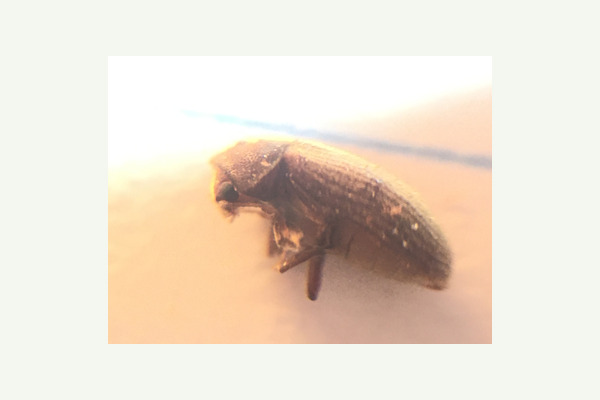
So a beetle on your trap could be a pantry pest or a wood-boring cousin. The right response for each one is very different. Look at the specimens closely, ideally with a magnifying glass. A drugstore beetle has these features:
- Size and shape: cylindrical, about 2.25 to 3.5 mm long (1/10 to 1/7 inch)
- Color: uniform brown to reddish brown
- Wing covers: rows of pits that give a lined, striated look
- Antennae: not saw-toothed, ending in a three-segmented club
The cigarette beetle looks very similar. However, its antennae are serrated like saw teeth, and its wing covers are smooth. Check the lure package to see which species it is labeled for. A drugstore beetle lure isn’t designed for every pantry pest.
Not every small beetle you find indoors is a stored-product pest, either. Carpet beetles are another common household beetle, and they tend to look rounder and more patterned than the smooth, cylindrical drugstore beetle. If your specimens look like that, compare them with our carpet beetle guide before you start emptying the pantry. A carpet beetle problem calls for a different inspection plan, and a drugstore beetle lure won’t help you track it.
Where to Place Pheromone Traps for Drugstore Beetles
Start with the correct product. Buy a trap and lure clearly labeled for drugstore beetles, and follow the manufacturer’s directions. The label covers placement, how long the lure lasts, and when to replace it. Don’t guess at these details.
In a home, sensible starting spots include:
- Pantry shelves and cabinets where flour, mixes, cereals, and spices are kept
- Areas where you store dry pet food or birdseed
- Medicine cabinets or shelves with dried herbs and supplements
- Closets or rooms with wool, leather, books, or dried flower arrangements
Drugstore beetles feed on a huge range of material. UF even quotes the saying that they eat “anything but cast iron.” That’s why non-food areas deserve a look as well.
Where the manufacturer recommends multiple placements, label their locations so catches can be compared. Follow the product directions for trap number and spacing instead of treating a fixed household count as a standard.
Keeping a Dated Trap Log
Write things down. A simple log turns random sightings into a pattern you can act on. Sketch a rough map of your kitchen and storage areas, then number each trap on the map.
Each time you check, record:
- The date
- The trap number and location
- How many beetles you counted
- Whether you confirmed them as drugstore beetles
- Any items you inspected or discarded nearby
There’s no magic number of beetles that triggers action. Instead, watch for trends. Is one trap catching more than the others? Did catches drop after you threw out an infested box? Did they return weeks later? These trends guide your next steps far better than a single count.
Turning Trap Results Into a Source Search
UF calls locating the source the first and most important step in managing drugstore beetles. Your trap log tells you where to start looking. Inspect packages and accessible stored materials carefully, keeping suspect items separate.
Near the trap with the highest catch, check every food container and stored item. Look for small round holes in packaging, fine powder, live beetles, or white grubs. Pay close attention to products that sit untouched for months, like baking supplies, holiday spices, and dried decorations. Our guide to keeping your kitchen free of pantry pests walks through common hiding spots in more detail.
Once you find and remove the source, keep the traps running. Continued catches may point to a second infested item you missed. Combine repeat trap checks with inspection of the affected stock and any newly reported sightings.
This article covers monitoring. Source cleanup involves discarding visibly infested ordinary food and cleaning shelves; affected medicines or valuable materials need appropriate specialist advice. Use your trap results to aim that work.
How Should You Store Food to Keep Beetles and Moths Out?
Food storage against pantry moths and beetles combines inspected contents, sound containers and traceable stock rotation. UF recommends tight-fitting glass, metal or plastic storage and cleaning spilled food. A container can limit spread while you monitor, but moving infested contents into it does not remove eggs or larvae.
Keep purchase information and use older stock first. The food storage guide for pantry moths and beetles explains how container selection and inspection work together. Record which products were removed or replaced so a later catch can be interpreted alongside the cleanup history.
Where This Information Comes From
The biology, identification details, pheromone facts, and monitoring guidance in this article come from the University of Florida IFAS Featured Creatures profile: Drugstore Beetle, Stegobium paniceum (UF/IFAS EENY-228).
Frequently Asked Questions
-
Will a pheromone trap get rid of drugstore beetles on its own?
No. The lure attracts only adult males, so females keep laying eggs and larvae keep feeding. Use the trap to find activity, then find and remove the infested items.
-
Why is my trap catching beetles even though my pantry looks clean?
Adult beetles fly, so they may come from another room or a product you haven't checked. Look beyond food at dried flowers, spices in other cabinets, pet food, books, and wool items. Adding a second trap lets you compare catches.
-
Can I make my own drugstore beetle trap at home?
A homemade sticky card won't carry the stegobinone lure, so it won't draw males in the same way. Commercial lures contain the copied pheromone. For reliable monitoring, use a product labeled for drugstore beetles.
-
How long should I keep traps out after I find the source?
Keep monitoring for a while after cleanup, because the life cycle can range from under two months to seven months. Follow the lure package for replacement timing. Watch your log for any return in catches.
-
Do pheromone traps attract cigarette beetles too?
Drugstore beetle lures are built around the drugstore beetle's own pheromone. Cigarette beetles look similar but are a different species. Check the product label for its target pests, and confirm specimens by their antennae and wing covers.
-
Is it safe to use pheromone traps around food?
Check the specific trap and lure directions for use near food; product components vary. Keep the trap away from exposed food and food-contact surfaces unless its directions permit that placement, and out of reach of children and pets.

Vincent founded On Demand Pest Control in 2017 and is a Florida Certified Operator in all four state categories. He treats pest control as a systematic problem to solve, not a symptom to spray. Read Vincent’s full bio →
Get help with pests in your home.
We’ll talk through what you’re seeing and arrange a time to inspect your home.
- Tell us what you’re seeing.
- We arrange an on-site inspection.
- You receive a written quote explaining the work.
Where can we reach you?
Our team will call to confirm the next step.
By submitting, you’re asking On Demand Pest Control to contact you about this request.
↗ Prefer to call? (954) 947-0805