
Table of Contents
ToggleKey Takeaways
- Africanized killer bees look nearly identical to European honey bees but are significantly more aggressive and defensive of their colonies.
- These hybrid bees arrived in Florida in 2005 and have established growing populations throughout the southern half of the state.
- Africanized bees can chase perceived threats for over a quarter mile and may sting in swarms of hundreds or thousands.
- You should never attempt to remove an Africanized bee colony yourself — always contact a licensed pest control professional.
- Prevention strategies like sealing wall cavities, inspecting your property monthly, and removing water sources can reduce the risk of nesting.
Africanized killer bees are one of the most feared stinging insects in the United States — and for good reason. These aggressive hybrids respond to disturbances faster, sting in larger numbers, and pursue threats far longer than their European counterparts. Since their confirmed arrival in Florida, they have steadily expanded across the state, putting homeowners, outdoor workers, and pets at increasing risk. Unlike the docile honey bees most people are familiar with, Africanized bees can turn a routine yard chore into a life-threatening emergency. In this guide, you will learn exactly how to identify Africanized killer bees, understand what makes them so dangerous, and discover proven strategies for keeping them away from your home.
What Are Africanized Killer Bees?
Africanized killer bees (Apis mellifera scutellata hybrids) are a cross between African honey bees and European honey bees. In 1956, a researcher in Brazil imported African honey bees to improve honey production in tropical climates. Some of those bees escaped quarantine and began mating with local European colonies. The resulting hybrid spread rapidly through Central and South America, reaching Texas in 1990 and Florida by 2005.
The term “killer bee” is somewhat misleading. A single Africanized bee sting is no more venomous than a regular honey bee sting. The danger comes from their extreme defensive behavior. When an Africanized colony perceives a threat, it mobilizes far more guard bees than a European colony would. This means more stings, delivered faster, over a much longer pursuit distance.
Today, Africanized bee populations have been confirmed in multiple Florida counties. Their ability to thrive in warm climates makes the state an ideal habitat, and experts expect continued northward expansion in the years ahead.
How to Identify Africanized Killer Bees
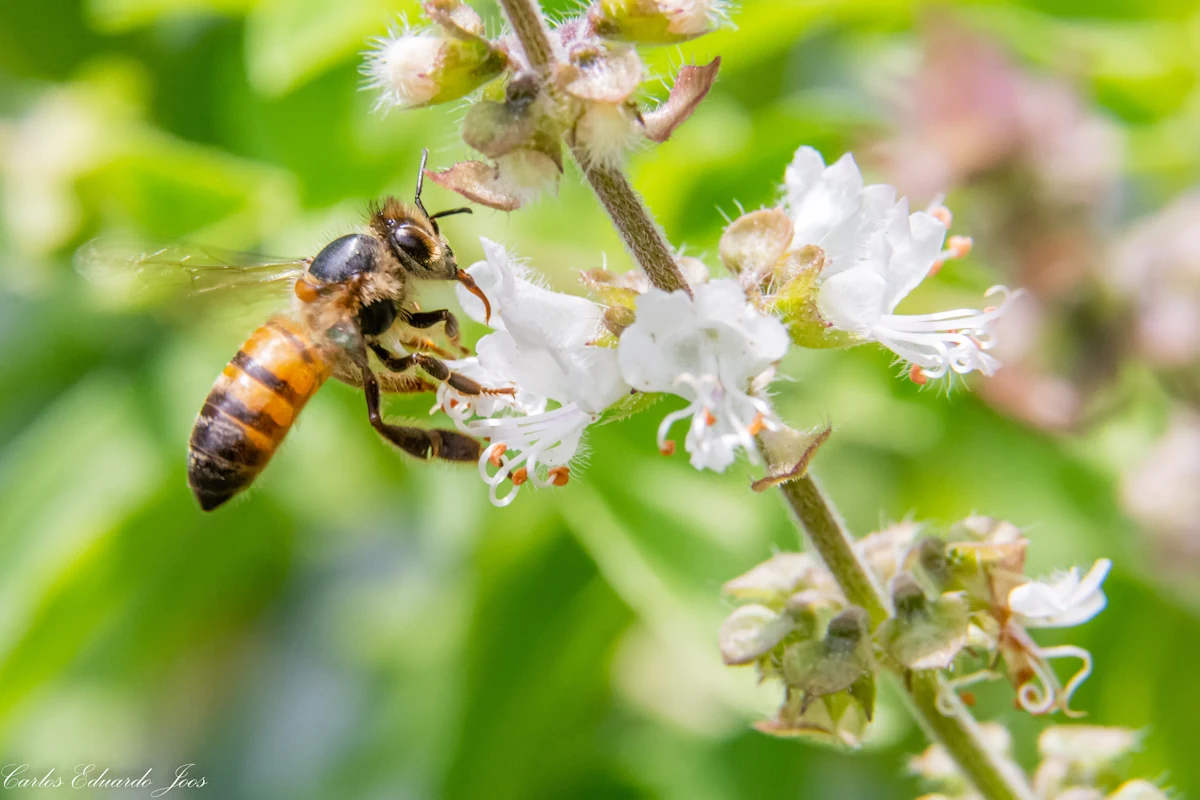
Identifying Africanized killer bees by sight alone is extremely difficult. They are nearly identical in appearance to European honey bees. Both species share the same golden-brown coloring, dark banding on the abdomen, and fuzzy body. However, there are subtle physical differences and major behavioral differences you can watch for.
Physical Characteristics
Africanized bees are slightly smaller than European honey bees, but the size difference is so subtle that it requires laboratory analysis to confirm. Entomologists use a technique called morphometric analysis — measuring wing venation patterns, body length, and other features under magnification — to definitively distinguish the two types.
For homeowners, visual identification is unreliable. The following comparison highlights the key differences:
| Feature | Africanized Killer Bees | European Honey Bees |
|---|---|---|
| Body Size | Slightly smaller (about 19 mm) | Slightly larger (about 20 mm) |
| Color | Golden-brown with dark bands | Golden-brown with dark bands |
| Wing Length | Marginally shorter | Marginally longer |
| Visual Distinction | Nearly impossible without lab analysis | Nearly impossible without lab analysis |
Behavioral Differences That Give Them Away
Since you cannot reliably identify Africanized bees by appearance, behavior is your best clue. Watch for these warning signs:
- Rapid colony alarm response: Africanized bees react to disturbances within seconds, whereas European bees take longer to mobilize.
- Large swarm attacks: They deploy ten times more guard bees than European colonies during a defensive response.
- Extended pursuit distance: Africanized bees can chase a perceived threat for over a quarter mile (400+ meters).
- Unusual nesting locations: They nest in small, enclosed spaces like water meter boxes, overturned pots, tires, wall cavities, and underground holes — places European bees typically avoid.
- Frequent swarming: Africanized colonies swarm more often, sometimes six or more times per year compared to one or two times for European bees.
If you notice bees nesting in ground-level cavities or behaving aggressively when you are still several yards away, treat the colony as potentially Africanized. Understanding the difference between wasps and bees can also help you make better judgments about what you are dealing with.
Why Are Africanized Killer Bees So Dangerous?
The danger of Africanized killer bees lies entirely in their collective defensive behavior. Individual sting venom is chemically identical to that of a European honey bee. However, the volume and speed of their attacks create a genuinely life-threatening situation.
When a colony is disturbed, Africanized bees release alarm pheromones that recruit hundreds — sometimes thousands — of worker bees to attack. A typical defensive response from an Africanized colony can involve 10 to 20 times more stings than a European colony response to the same disturbance.
Sting Volume and Health Risks
Most healthy adults can tolerate approximately 10 stings per pound of body weight. For a 150-pound person, that means roughly 1,500 stings before the venom alone becomes lethal. However, an Africanized swarm attack can easily deliver several hundred stings in minutes, which is enough to cause serious medical complications even in non-allergic individuals.
Health risks from mass stinging events include:
- Anaphylactic shock in individuals with bee venom allergies
- Rhabdomyolysis (muscle breakdown) from massive venom loads
- Kidney failure due to venom toxins
- Cardiac complications in elderly individuals or those with heart conditions
Children, elderly adults, and pets are especially vulnerable because of their lower body weight and reduced ability to flee quickly. If you or a family member has a known bee sting allergy, the presence of Africanized bees near your home is an urgent safety concern.
Threats to Pets and Livestock
Pets that are chained or penned cannot escape a swarm attack. Dogs, horses, and other outdoor animals have died from Africanized bee encounters in Florida and other southern states. Even vibrations from a lawnmower or weed trimmer can trigger a full-scale colony response if the equipment passes near a hidden nest. This is one of the reasons these bees pose similar outdoor hazards to dangerous wasps in Florida.
Where Do Africanized Killer Bees Nest?
One of the most unsettling traits of Africanized bees is their willingness to nest almost anywhere. European honey bees prefer elevated, protected cavities like hollow trees or established hive boxes. Africanized bees are far less selective.
Common nesting sites around residential properties include:
- Water meter boxes and utility housings
- Overturned flower pots and empty planters
- Old tires, discarded appliances, and junk piles
- Wall voids, soffits, and attic spaces
- Underground burrows (especially abandoned animal holes)
- Sheds, gazebos, and storage buildings
- Hollow fence posts and mailbox stands
Because these nesting locations are at or below ground level, people and pets can stumble into a colony without any warning. Routine yard maintenance — mowing, trimming hedges, moving stored items — frequently triggers attacks from hidden colonies.
This nesting behavior also sets them apart from species like carpenter bees that bore into wood structures. Africanized bees do not damage wood; they simply occupy any enclosed space that offers minimal shelter.
What to Do If Africanized Killer Bees Attack
Knowing how to react during an Africanized bee attack can save your life. These bees will not calm down quickly, and standing still or swatting at them will only make the situation worse.
Immediate Steps to Take
Follow these survival steps if you are attacked by a swarm of Africanized bees:
- Run. Sprint in a straight line away from the colony. Cover as much distance as possible.
- Cover your face. Pull your shirt over your nose and mouth as you run. Bees target the face and head.
- Seek enclosed shelter. Get inside a car, house, or any building with doors you can close. A few bees may follow you inside, but the bulk of the swarm will stay outside.
- Do NOT jump into water. The bees will hover above the surface and sting you each time you come up for air.
- Do NOT swat. Crushing bees releases more alarm pheromone, which intensifies the attack.
After the Attack
Once you reach safety, remove stingers by scraping them with a credit card or fingernail. Do not pinch stingers — squeezing pushes more venom into the wound. If you experience difficulty breathing, swelling of the face or throat, dizziness, or rapid heartbeat, call 911 immediately. Even without an allergy, receiving more than 15-20 stings warrants a trip to the emergency room.
How to Control and Prevent Africanized Killer Bees
Prevention is always safer and more effective than dealing with an established colony. You can reduce your risk significantly by eliminating potential nesting sites and maintaining regular property inspections.
Property Maintenance Tips
Take these preventive steps around your home and yard:
- Seal wall openings: Use caulk or hardware cloth to close gaps larger than 1/8 inch in exterior walls, soffits, and eaves.
- Cover utility boxes: Ensure water meter covers fit tightly. Check them monthly for bee activity.
- Remove debris: Clear junk piles, old tires, and unused equipment from your property.
- Fill ground holes: Abandoned animal burrows and irrigation valve boxes should be filled or covered.
- Manage water sources: Standing water attracts foraging bees. Keep pools covered when not in use and fix leaky outdoor faucets. If bees are already visiting your pool, learn how to keep bees away from your pool.
- Inspect monthly: Walk your property regularly, looking and listening for bee activity in sheltered areas.
Why DIY Removal Is Never Safe
Attempting to remove or kill an Africanized bee colony yourself is extremely dangerous. Spraying a nest with insecticide, sealing an entrance hole, or disturbing the colony in any way can trigger a massive attack. Unlike carpenter bees, which are rarely aggressive, Africanized bees respond with overwhelming force to the slightest disturbance.
Professional pest control technicians use specialized equipment, protective suits rated for mass stinging events, and targeted insecticide applications to safely eliminate Africanized colonies. They also remove the entire comb and seal the cavity to prevent reinfestation.
Africanized Bees vs. European Honey Bees: A Full Comparison
Understanding the key differences between Africanized and European honey bees helps you assess the risk level when you encounter bees on your property. The following table summarizes the most important distinctions.
| Trait | Africanized Killer Bees | European Honey Bees |
|---|---|---|
| Defensiveness | Extremely aggressive; mobilize in seconds | Generally docile; slow defensive response |
| Pursuit Distance | Over 1/4 mile (400+ meters) | Typically less than 50 meters |
| Guard Bees Deployed | Up to 10x more than European bees | Moderate defensive response |
| Swarming Frequency | 6+ times per year | 1-2 times per year |
| Preferred Nest Sites | Small cavities, ground level, unusual spots | Large elevated cavities, hollow trees |
| Honey Production | Lower per colony | Higher per colony |
Because Africanized bees look so similar to European honey bees, many people are unaware that the colony near their shed or fence line is Africanized until it is too late. In Florida, it is important to understand the legal protections surrounding honey bees as well. Learn more about whether honey bees are protected in Florida before taking any action against a colony.
When Should You Call a Pest Control Professional?
Any time you suspect Africanized bee activity on your property, contact a licensed pest control company immediately. Do not wait to confirm whether the bees are Africanized or European — the risk is too high.
Situations that demand professional help include:
- You see bees entering and exiting a wall void, utility box, or ground hole
- Bees behave aggressively when you are still yards away from them
- You notice multiple small swarms on your property in a single season
- A family member or pet has been stung by a swarm
- You hear a loud buzzing sound coming from inside a wall, attic, or shed
Professional removal ensures your safety and also prevents the colony from splitting and spreading further. In a state where stinging insects are a year-round concern, staying proactive is essential. Knowing when stinging insects are most active helps you plan inspections and outdoor activities more safely. If you have concerns about any bee or wasp species on your property, a trained technician can identify the species and recommend the safest course of action.
Frequently Asked Questions
-
Can you tell the difference between Africanized killer bees and regular honey bees by looking at them?
No. Africanized killer bees and European honey bees are nearly identical in appearance. The only reliable way to distinguish them is through laboratory morphometric analysis. Behavior — such as extreme aggression and nesting in unusual locations — is the best field indicator for homeowners.
-
Are Africanized killer bees found in Florida?
Yes. Africanized bees were first confirmed in Florida in 2005, primarily in the southern part of the state. Since then, they have been detected in multiple counties and are expected to continue spreading northward due to Florida's warm climate.
-
How many stings from Africanized bees can be fatal?
For a non-allergic adult, the lethal threshold is approximately 10 stings per pound of body weight. However, even a few hundred stings can cause serious medical emergencies including kidney failure and cardiac complications. Anyone with a bee venom allergy can experience life-threatening anaphylaxis from just one sting.
-
What should I do if I find a bee nest in my yard?
Do not approach, disturb, or attempt to remove the nest yourself. Keep children and pets away from the area and contact a licensed pest control professional immediately. Africanized bee colonies can attack with little provocation, so safe distance is critical.
-
Why do Africanized bees chase you so far?
Africanized bees have an evolved hyper-defensive response inherited from their African honey bee ancestors, which faced more predators in their native habitat. Their alarm pheromone triggers a larger number of guard bees for a longer duration, causing them to pursue threats for over a quarter mile.
-
Can Africanized killer bees be managed without killing them?
In some cases, beekeepers can re-queen an Africanized colony with a European queen to gradually reduce aggressive behavior. However, this is only possible in managed apiary settings. Wild Africanized colonies near homes typically require professional extermination to ensure public safety.