
Table of Contents
ToggleKey Takeaways
- Adult bed bugs are visible to the naked eye and roughly the size of an apple seed (4-7 mm long).
- Newly hatched bed bug nymphs are translucent and about 1 mm long, making them extremely difficult to see without magnification.
- Bed bug eggs are pearl-white, roughly the size of a pinhead, and often hidden in tight crevices where you’d never think to look.
- Knowing the visual signs of bed bugs — including fecal spots, shed skins, and blood stains — helps you detect infestations even when the bugs themselves hide.
- A flashlight and a magnifying glass are essential tools for spotting bed bugs in all life stages during a thorough inspection.
Are bed bugs visible to the naked eye? The short answer is yes — but the full picture is more complicated than most people realize. While adult bed bugs are certainly large enough to see without a microscope, their youngest nymphs and tiny eggs can easily escape your notice. Bed bugs are masters of hiding in dark, narrow spaces, and their flat bodies allow them to squeeze into cracks thinner than a credit card. That’s why so many infestations go undetected for weeks or even months. In this guide, you’ll learn exactly what bed bugs look like at every life stage, where to look for them, and which visual clues signal an infestation — even when the bugs themselves stay out of sight.
What Do Bed Bugs Look Like to the Naked Eye?
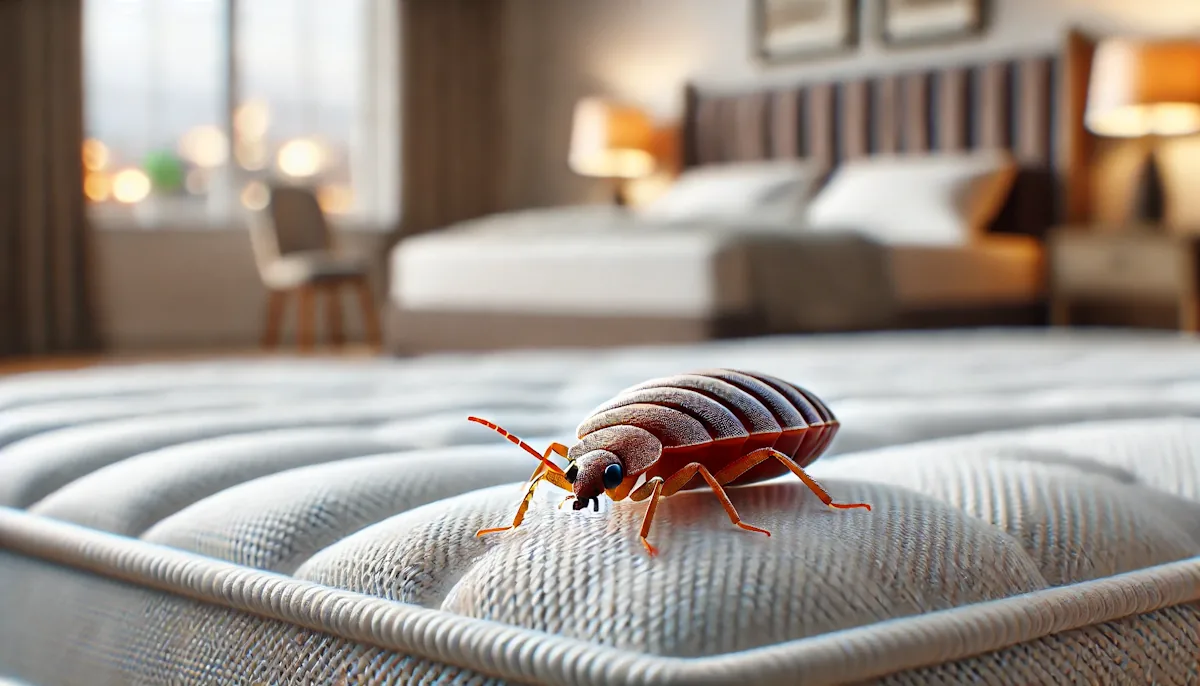
An adult bed bug (Cimex lectularius) is about 4 to 7 millimeters long — roughly the size and shape of an apple seed. Their bodies are flat, oval, and reddish-brown. After a blood meal, they swell slightly, become more elongated, and take on a deeper reddish color.
Here are the key visual features of an adult bed bug:
- Color: Reddish-brown (unfed) to dark red or purplish (recently fed)
- Shape: Flat and oval when unfed; elongated and balloon-like after feeding
- Size: 4-7 mm, comparable to an apple seed or small lentil
- Wings: None — bed bugs are wingless and cannot fly
- Legs: Six legs, visible under close inspection
Because of their size, adults are visible to the naked eye under good lighting. However, they avoid daylight and typically hide in dark crevices, making them harder to spot than their size might suggest. For a deeper dive into their dimensions across every life stage, check out this guide on the size of bed bugs.
Are Bed Bug Nymphs Visible Without Magnification?
This is where things get tricky. Bed bugs go through five nymphal stages before reaching adulthood. Each stage requires a blood meal and a molt. The youngest nymphs — first instars — are only about 1 to 1.5 mm long and nearly translucent.
Against a white sheet, a first-instar nymph is almost invisible. Against darker fabric, you might notice a faint yellowish speck, but most people would overlook it entirely. As nymphs feed and grow, they gradually become easier to see:
Bed Bug Size by Life Stage
| Life Stage | Approximate Size | Color | Visible to Naked Eye? |
|---|---|---|---|
| Egg | ~1 mm | Pearl-white | Barely — very difficult |
| 1st Instar Nymph | 1-1.5 mm | Translucent/pale yellow | Very difficult |
| 2nd Instar Nymph | ~2 mm | Light tan | Difficult |
| 3rd Instar Nymph | ~2.5 mm | Tan to light brown | Yes, with effort |
| 4th Instar Nymph | ~3 mm | Brown | Yes |
| 5th Instar Nymph | ~4 mm | Reddish-brown | Yes |
| Adult | 4-7 mm | Reddish-brown | Yes — easily |
The takeaway: early-stage nymphs are technically visible, but you’d need excellent lighting and likely a magnifying glass to spot them. This is one reason infestations often go unnoticed until the population grows significantly.
Can You See Bed Bug Eggs with Your Eyes?
Bed bug eggs are about 1 mm long — roughly the size of a pinhead. They’re pearl-white, slightly curved, and have a glossy surface. Female bed bugs lay eggs in clusters of one to five at a time, cementing them into cracks, seams, and hidden joints with a sticky substance.
Under bright light and close inspection, you can sometimes see bed bug eggs. However, they blend easily into white or light-colored surfaces, and their small size makes them easy to miss. They’re often deposited deep inside mattress seams, behind headboards, or within furniture joints — places where your eyes rarely go.
For a detailed look at what these eggs look like and where to find them, read this article on what bed bug eggs look like. Knowing what you’re searching for dramatically improves your odds of early detection.
Why Bed Bugs Are Hard to Spot Despite Being Visible
Even though adult bed bugs are visible to the naked eye, several behavioral traits make them remarkably difficult to find. Understanding these behaviors explains why so many people share a home with bed bugs for weeks without realizing it.
Nocturnal Feeding Habits
Bed bugs are most active between 1 a.m. and 5 a.m. They emerge from hiding spots, feed for 5 to 10 minutes, and retreat. Most people are sound asleep during this window, which means the bugs complete their entire feeding cycle undetected. By daylight, they’ve already returned to their hiding places.
Expert Hiding Ability
A bed bug’s flat body lets it squeeze into gaps as narrow as 2 mm. They hide in mattress piping, behind outlet covers, inside box springs, within picture frames, and along baseboards. These tight, dark spaces are rarely examined during routine cleaning. To learn where bed bugs commonly nest, explore this resource on what a bed bug nest looks like.
Population Growth Is Gradual
A single female can lay one to five eggs per day, and eggs take about 6 to 10 days to hatch. In the early weeks, you might only have a handful of bugs in your home. That small population is incredibly easy to overlook. By the time you notice bites or other signs, dozens — or even hundreds — of bugs may be present. Understanding how quickly bed bugs spread in your home highlights why early detection matters so much.
Visual Signs of Bed Bugs You Can See Without Spotting the Bugs
You don’t always need to see a live bed bug to know they’re present. Bed bugs leave behind several telltale clues that are often easier to find than the insects themselves. Recognizing these early signs of bed bugs can save you from a full-blown infestation.
Fecal Spots and Stains
Bed bug droppings appear as tiny dark brown or black dots, roughly the size of a marker tip. They show up on mattress seams, pillowcases, sheets, and nearby furniture. These spots are digested blood and tend to bleed into fabric like an ink stain. A cluster of bed bug droppings is one of the most reliable indicators of an active infestation.
Shed Skins (Exoskeletons)
As nymphs grow, they molt five times before becoming adults. Each molt leaves behind a translucent, hollow exoskeleton that mirrors the bug’s shape. Finding multiple shed skins — especially near your bed or furniture seams — strongly suggests a growing population.
Blood Stains on Sheets
Small rust-colored stains on your sheets or pillowcases may result from accidentally crushing a recently fed bed bug in your sleep. These stains are typically smeared rather than circular and are often found near where you sleep.
A Sweet, Musty Odor
In larger infestations, bed bugs release pheromones that produce a distinct sweet, musty smell — sometimes compared to overripe raspberries or wet cardboard. If you notice an unusual odor in your bedroom that you can’t explain, it’s worth investigating further.
How to Spot Bed Bugs During a Visual Inspection
Armed with the knowledge of what bed bugs look like and where they hide, you can conduct your own inspection. A thorough visual check is the first line of defense. For a comprehensive walkthrough of every step, follow this detailed guide on how to check for bed bugs.
Here’s a basic inspection process:
- Gather your tools: A bright flashlight, a magnifying glass, a credit card or thin piece of plastic, and white latex gloves.
- Strip your bed: Remove all sheets, pillowcases, and mattress pads. Check the fabric closely for fecal spots, blood stains, and shed skins.
- Inspect the mattress seams: Run the edge of the credit card along piping and seams. Bed bugs and eggs often hide inside these tight folds.
- Check the box spring: Flip it over and examine the fabric cover, stapled edges, and wooden frame joints.
- Examine the headboard and bed frame: Pull the bed away from the wall. Look at screw holes, crevices, and joints — bed bugs love wooden furniture. Learn more about whether bed bugs prefer wood furniture.
- Widen your search: Check nightstands, baseboards, electrical outlets, picture frames, and upholstered furniture nearby. Bed bugs can also hide in clothes stored near sleeping areas.
Conduct inspections in the morning when bed bugs are still settled in their harborage sites. Natural daylight combined with a flashlight gives you the best visibility.
Bed Bugs vs. Look-Alike Insects: Don't Get Confused
Seeing a small, brownish bug in your bed doesn’t automatically mean you have bed bugs. Several common household insects resemble bed bugs and can cause unnecessary panic — or worse, lead you to treat the wrong pest.
Carpet beetle larvae, spider beetles, booklice, and bat bugs all share visual similarities with bed bugs. Each requires a different treatment approach. Before you take action, make sure you’ve correctly identified the insect. This guide on bugs that look like bed bugs walks you through the most common look-alikes and how to tell them apart.
Key differences to note:
- Carpet beetle larvae are fuzzy and have visible hairs — bed bugs are smooth.
- Spider beetles have a more rounded, globular body shape.
- Booklice are much smaller and lighter in color.
- Bat bugs look nearly identical to bed bugs but have longer hairs on their thorax.
If you’re unsure, capture the insect in a sealed bag and consult a pest control professional for identification.
When You Can't See Them: Other Detection Methods
Because young nymphs and eggs are so difficult to see, relying solely on visual inspection has its limits. Fortunately, additional detection strategies can help confirm or rule out an infestation.
- Interceptor traps: These small, dish-shaped traps fit under bed legs and catch bed bugs as they climb up or down. Checking these traps regularly helps monitor activity.
- Mattress encasements: A high-quality bed bug mattress cover eliminates hiding spots on your mattress and makes bugs easier to spot against the smooth, light-colored surface.
- Canine inspections: Trained bed bug detection dogs can identify infestations by scent with high accuracy, even in early stages.
- Professional inspections: A licensed pest control technician knows exactly where to look and can confirm the presence of bed bugs using tools and expertise beyond what’s available to homeowners.
If you suspect you have bed bugs but can’t find any during a visual inspection, it’s worth investing in one of these secondary methods. Early detection keeps the problem manageable and reduces treatment costs. To learn how to keep these pests out of your home entirely, review these strategies for preventing bed bugs at home and during travel.
Frequently Asked Questions
-
Can you see a single bed bug without a magnifying glass?
Yes, a single adult bed bug is large enough to see without magnification. It's about the size of an apple seed with a reddish-brown color. However, first-instar nymphs are translucent and only 1 mm long, making them nearly impossible to spot without a magnifying glass and bright light.
-
What color are bed bugs to the human eye?
Adult bed bugs appear reddish-brown when unfed and darker red or purplish after feeding. Nymphs start out nearly colorless and become progressively browner as they mature and feed. Eggs are pearl-white and glossy.
-
Why can't I find bed bugs even though I have bites?
Bed bugs are skilled at hiding in tiny crevices and only emerge to feed at night. Early infestations involve very few bugs, making them especially hard to find. You may also be dealing with a different biting insect. A professional inspection can help confirm what's causing your bites.
-
Are bed bug eggs visible to the naked eye?
Bed bug eggs are technically visible but extremely small — about 1 mm, roughly the size of a pinhead. They're pearl-white and often tucked into seams, cracks, and crevices. A flashlight and magnifying glass significantly improve your chances of spotting them.
-
Do bed bugs move fast enough to see them crawling?
Bed bugs crawl at roughly 3 to 4 feet per minute on flat surfaces. That's fast enough to see them move but slow enough to catch if you're paying attention. They do not jump or fly. For more on their movement patterns, read about how quickly bed bugs move.
-
What should I do if I see one bed bug but no others?
Even a single bed bug warrants a thorough inspection. Where there's one, there are likely more hiding nearby. Check mattress seams, box springs, headboards, and nearby furniture carefully. Consider setting interceptor traps and scheduling a professional inspection to assess the extent of any infestation.