
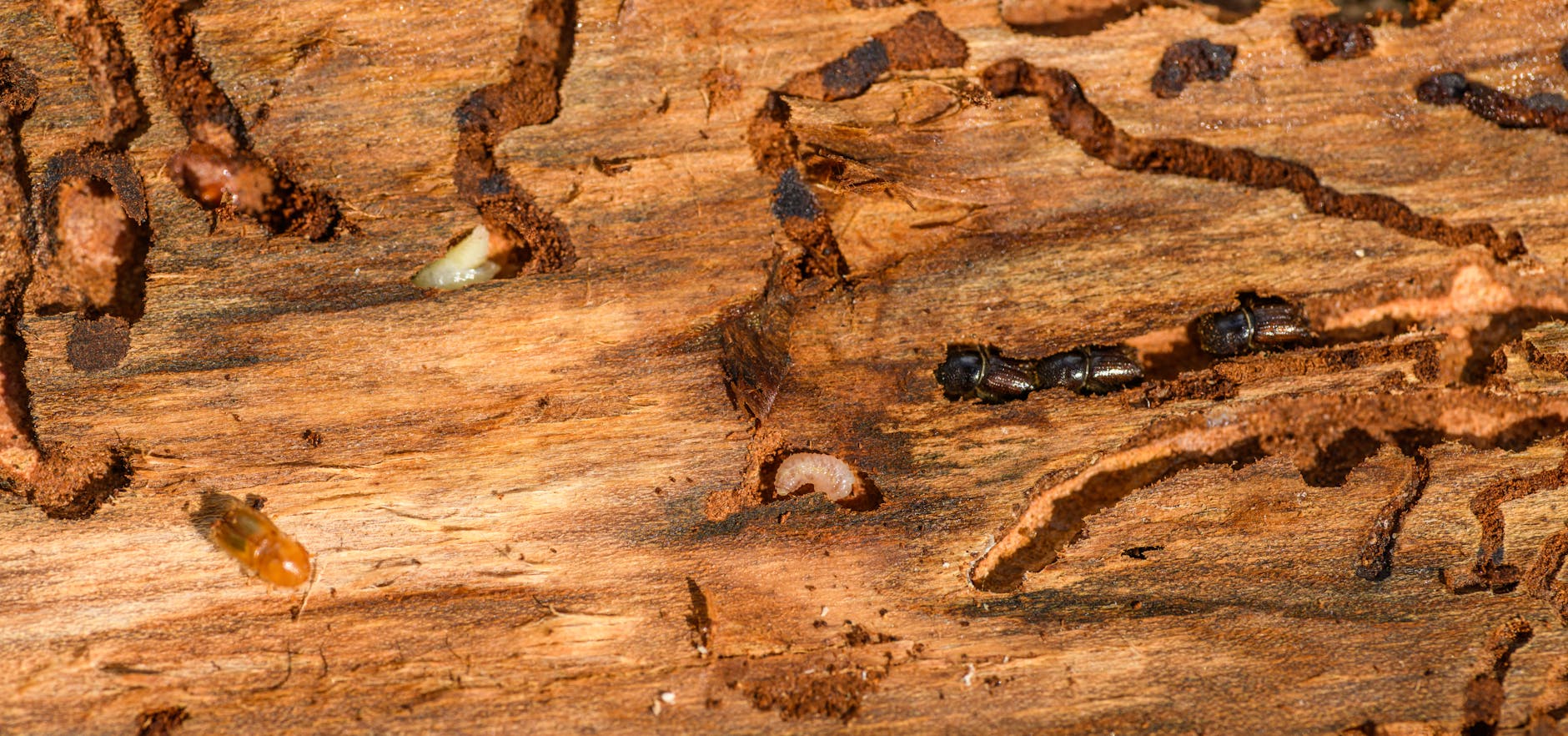
Can termites spread through clothes? In nearly every realistic scenario, the answer is no — termites do not infest, travel inside, or hitchhike on clothing the way bed bugs or lice do. They are wood-feeding insects that depend on cellulose and moisture from structural timber, not fabric, so your laundry pile, suitcase, or closet is not a vector for moving an infestation from one Florida home to another.
That said, there are a few narrow exceptions worth understanding, especially if you live in South Florida where subterranean and drywood species are both active year-round. This guide breaks down exactly when termites might briefly end up in clothing, why a true infestation never starts there, and what actually does spread termites between properties.
Can Termites Spread Through Clothes the Way Bed Bugs Do?
No. The comparison many homeowners reach for is bed bugs, which famously travel in luggage, jackets, and folded garments. Termites behave nothing like that. They are eusocial insects that live in colonies tied to a food source, almost always wood inside a structure, a tree stump, or buried debris in the soil. A worker termite removed from that colony and its moisture supply will die within hours.
Because clothing offers no cellulose for them to digest and no humidity to sustain them, termites have no biological reason to enter your wardrobe. So when people ask “can termites travel in clothes” out of fear that a friend’s infestation could ride home with them on a sweater, the honest answer is that it essentially never happens in any meaningful way.
What Termites Actually Need to Survive
Termites need three things in constant supply:
- Cellulose, the carbohydrate found in wood, paper, cardboard, and some plant fibers
- Moisture, which they pull from soil, damp wood, or humid air inside wall voids
- The colony itself, since workers rely on the queen, soldiers, and shared gut microbes to digest cellulose
A cotton t-shirt is technically cellulose-based, but it lacks the structure, moisture, and protected environment termites require. Stray fibers in a closet are not a meal a colony can sustain itself on.
When Termites Might Briefly End Up in Clothing
While a real infestation will not start in your closet, there are a handful of situations where you might genuinely find a termite on or near clothes. Knowing the difference between an accidental visitor and a household problem matters.
During a Swarm
Once or twice a year, mature colonies release winged reproductives called alates. In Florida, native subterranean termites swarm in spring, Formosan termites swarm on warm humid evenings in late spring, and drywood termites often swarm in late summer and fall. Swarmers are attracted to light, so they can flutter through open doors and windows and land on anything inside, including laundry on a chair, a hanging shirt near a window, or shoes by the door.
These swarmers are not infesting the clothing. They are looking for a mate and a piece of wood to start a new colony. Once they shed their wings, they die quickly if they cannot find soil or a wood crevice.
Stored Items Pressed Against Infested Wood
If you store clothing in cardboard boxes inside a garage, attic, or shed, and those boxes sit directly against infested framing or sit on a damp slab, termites tunneling through the cardboard can reach the fabric inside. They will chew through cotton, linen, or rayon if it is in their way, not because they want it, but because it is in the path between two wood sources. This is the closest thing to “termites in clothes” that real homeowners ever encounter.
Items Made of Natural Fiber Stored Long-Term in Florida
In humid storage spaces, natural-fiber clothing left undisturbed for years against wood shelving can occasionally show termite damage. The pests are after the shelf, the studs, or the wood framing, but they will travel through anything cellulose-based in their way.
How Termites Actually Spread From Property to Property
If clothing is not the vehicle, then how do colonies actually move into a new home? Understanding where termites come from in the first place is the key to preventing an infestation in your own house.
Soil-to-Wood Contact (Subterranean Termites)
Eastern subterranean and Formosan termites live in the soil and tunnel up into structures through any wood-soil contact point. Wooden fence posts, deck supports, mulch piled against siding, and porch steps embedded in the ground all create direct highways into the house. This is the most common way termites spread across South Florida neighborhoods, moving block by block through shared landscaping and irrigation lines.
Infested Wood and Furniture
Drywood termites, the species you most often hear about in coastal Florida, live entirely inside the wood they eat. They do not need contact with soil. That makes them capable of riding into a home inside used furniture, reclaimed lumber, picture frames, wooden art, or antiques. If you buy a hardwood dresser at an estate sale and bring it home, you can absolutely import a drywood colony with it. This is many times more likely than any scenario involving “do termites travel on clothes.”
Flying Swarmers
Every spring through fall, alates leave existing colonies and fly to start new ones. A neighbor’s heavily infested tree stump can seed a swarm that lands on your roofline, finds a gap around a soffit or exposed rafter tail, and starts a new colony in your attic. This is why Florida homes can develop termite problems even when no obvious wood-to-soil contact exists.
Signs of Termites Already Inside Your Home
Since clothing is essentially a dead-end for these pests, the meaningful question becomes whether termites are already inside the structure itself. The signs of termites in Florida homes are often subtle until damage is significant.
- Mud tubes the width of a pencil running up foundation walls, piers, or interior baseboards
- Discarded wings in piles near windowsills, light fixtures, or door tracks after a swarm
- Tiny pellets that look like coffee grounds or coarse sand under wooden furniture or window frames — these are drywood termite frass
- Hollow-sounding wood when tapped along baseboards, door frames, or window trim
- Blistered or rippled paint that looks like minor water damage but spreads slowly
- Sagging floors or doors that suddenly stop closing properly in older sections of the house
If you see any of these, the colony is already in the wood of your home, not in your closet. Inspect framing, trim, and the slab perimeter rather than your wardrobe.
Do Termites Bite Humans or Damage Clothing?
A related worry many homeowners raise is whether termites pose a direct threat to people or their belongings beyond structural wood. The short answer is reassuring on both counts. Termites do not bite humans in any meaningful way. Soldiers have powerful mandibles built for fighting ants, but they almost never make contact with skin, and even when they do, the bite is not venomous, not allergenic, and barely registers as a sensation. They carry no diseases transmissible to humans or pets.
As for clothing damage, the fabric itself is not what termites are after. They will only chew through textiles caught between them and the wood they actually want. A shirt hanging in a closet with no contact with infested studs is in no danger.
Florida Termite Species You Should Recognize
South and Central Florida sit in the highest-pressure termite zone in the continental United States. Knowing which species are active in your area helps you focus prevention on the right vectors.
- Eastern subterranean termites are the most widespread native species, swarming in spring after warm rain
- Formosan subterranean termites, an aggressive invasive species, build massive colonies and swarm at dusk on humid evenings
- West Indian drywood termites infest dry, undamaged wood inside walls, attics, and furniture without ever touching soil
- Conehead termites, established in Broward and Dade counties, forage above ground in distinctive mud trails
None of these species are spread through clothing. All four are spread through soil contact, infested wood, or aerial swarms.
Effective Termite Control Methods for Florida Homes
Because the real spread vectors are soil, wood, and air rather than fabric, effective termite control methods focus on the structure and its perimeter. The most common professional approaches in Florida include in-ground baiting systems installed around the foundation, liquid termiticide barriers applied to the soil at vulnerable entry points, and whole-structure tent fumigation for established drywood infestations inside the home.
For homeowners, the best defenses are preventive. Keep mulch and soil at least six inches below siding and stucco weep screeds. Eliminate wood debris and old stumps from the yard. Address roof leaks and plumbing drips that create the moist wood termites prefer. Have a licensed inspection done every twelve to eighteen months, since Florida termite pressure is constant and early detection saves thousands in repair costs. If you find any active signs, call a licensed Florida pest control professional before the colony expands further into your framing.
Frequently Asked Questions
Can termites travel in clothes from one house to another?
No, termites cannot meaningfully travel in clothes between houses. They require constant moisture, a living colony, and access to wood, none of which clothing provides. A worker termite separated from its colony in a piece of clothing will dehydrate and die long before reaching a new home. If you visit a friend with a termite problem, you do not need to wash your clothes or quarantine your luggage.
Will termites eat the cotton or linen clothing in my closet?
Termites can chew through cotton, linen, and other plant-based fabrics when those fabrics are physically in the way of wood they are trying to reach, but they do not target clothing as food. Fabric on its own, especially clothing that is moved, washed, and worn regularly, will not sustain a colony. Damage almost only happens in long-term storage where boxes sit directly against infested wood.
How can I tell if the bug I found on my shirt is a termite or an ant?
Look at the waist and antennae. Termite swarmers have straight, beaded antennae, a thick uniform waist with no pinch, and four wings of equal length. Flying ants have bent or elbowed antennae, a clearly pinched waist, and front wings noticeably larger than back wings. If you see piles of equal-sized discarded wings near windows, that points to termites rather than ants.
Do termites bite or harm people if they get on your skin?
Termites do not bite humans in any practical sense. Soldier termites have strong jaws built for defending the colony from ants, but they rarely contact people, and any nip would be painless and harmless. Termites are not venomous, do not transmit diseases, and pose no medical threat to humans or pets.
What is the first thing I should do if I see a termite swarm inside my house?
Collect a few of the insects or their shed wings in a sealed bag or container, then call a licensed pest control company for an inspection. A swarm inside the home almost always means an established colony is already living in the structure. Do not spray over-the-counter insecticide first, since killing visible swarmers does nothing to the colony hidden in the wood and can interfere with professional treatment.
How often should Florida homeowners have a termite inspection?
Most Florida homes benefit from a professional termite inspection every twelve to eighteen months. The combination of warm temperatures, year-round humidity, and multiple aggressive species, including Formosan and drywood termites, makes Florida one of the highest-risk regions in the country. Annual inspections paired with an active bait or barrier system are the most reliable way to catch problems early before structural damage becomes expensive.

Vincent founded On Demand Pest Control in 2017 and is a Florida Certified Operator in all four state categories. He treats pest control as a systematic problem to solve, not a symptom to spray. Read Vincent’s full bio →