
Table of Contents
ToggleKey Takeaways
- Iguanas can and will bite humans when they feel cornered, threatened, or provoked — even seemingly calm ones.
- An iguana bite can range from a minor scratch to a deep laceration requiring medical attention, depending on the animal's size.
- Iguana bites carry a risk of bacterial infection, including Salmonella, so proper wound care is essential immediately after a bite.
- Understanding iguana body language — head bobbing, dewlap extension, and open-mouth displays — helps you avoid a bite before it happens.
- If you encounter iguanas on your property in South Florida, professional removal is far safer than handling them yourself.
Do iguanas bite? The short answer is yes — and if you live in South Florida, this is more than an academic question. With the green iguana population exploding across residential neighborhoods, encounters between homeowners and these large reptiles are increasingly common. Whether you've spotted one sunning on your pool deck, raiding your garden, or perched on your seawall, you need to know what happens if it feels threatened. This guide covers everything from how powerful an iguana's bite actually is to the warning signs that precede an attack, the health risks involved, and exactly what to do if you or a family member gets bitten.
Can Iguanas Bite Hard Enough to Hurt You?
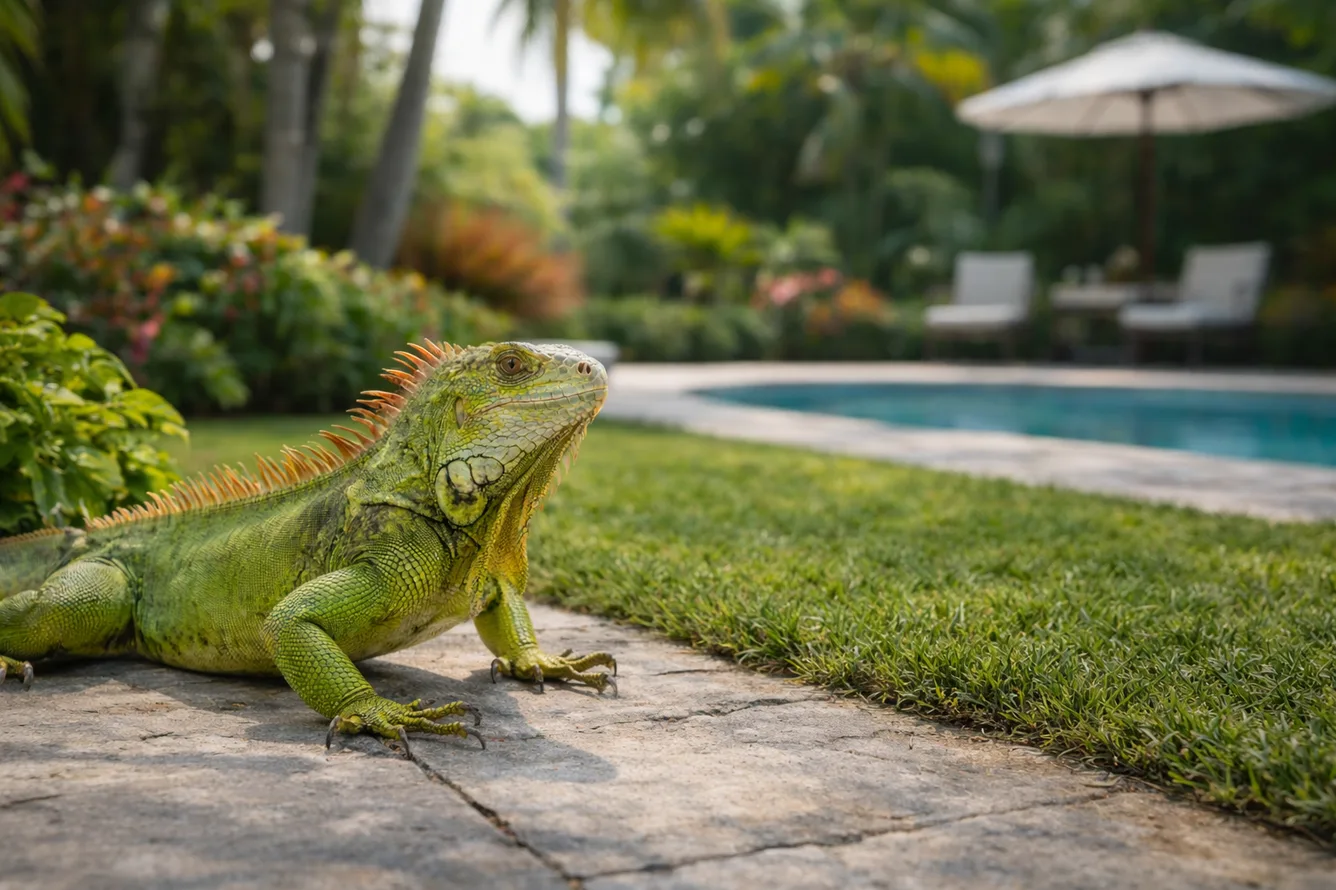
Iguanas are equipped with rows of small, serrated teeth — in fact, iguanas have teeth designed for tearing through tough vegetation like leaves, flowers, and fruit. Those same teeth can slice human skin with surprising ease. The force behind an iguana bite depends largely on the animal's size, and adult green iguanas in Florida commonly reach four to six feet in total length.
A juvenile iguana — say, under a foot long — can deliver a nip that might draw a small amount of blood. It stings, but it's manageable. However, a full-grown adult iguana is a different story entirely. Their jaw muscles generate enough pressure to leave deep puncture wounds, tear skin, and even remove small chunks of flesh from fingers or hands.
How Strong Is an Iguana's Jaw?
While exact bite-force measurements vary, research on similarly sized herbivorous lizards suggests iguanas can exert significant pressure relative to their head size. Their teeth don't crush like a dog's bite — instead, they shear. The serrated edges act like tiny saw blades, which means iguana bites often produce ragged lacerations rather than clean punctures. This tearing action makes wounds harder to close and more prone to infection.
Size Matters: Small vs. Large Iguana Bites
Here's a general breakdown of what to expect based on iguana size:
- Hatchlings and juveniles (under 12 inches): Minor pinch, rarely breaks skin
- Sub-adults (1–3 feet): Can draw blood and leave small lacerations
- Adults (3–5 feet): Deep cuts, potential tissue damage, significant bleeding
- Large adults (5–6+ feet): Capable of removing flesh, may require stitches or medical attention
The largest iguanas found in South Florida can weigh over 15 pounds, and their bites are no joke. If you encounter one that size, keeping your distance is the smartest move.
Why Do Iguanas Bite Humans?
Iguanas are not naturally aggressive toward people. They're herbivores, so they don't see you as prey. However, they are territorial animals with strong self-defense instincts. Understanding why an iguana bites is the key to avoiding one — and it's worth knowing about the dangers iguanas pose beyond biting as well.
Feeling Threatened or Cornered
The most common reason an iguana bites a human is self-defense. When an iguana feels trapped — backed against a wall, stuck in a pool enclosure, or grabbed by someone trying to remove it — biting becomes its primary weapon. Wild iguanas in Florida are not domesticated, and they view humans as predators.
Territorial Aggression
Male iguanas become especially aggressive during breeding season, which runs roughly from October through April in South Florida. During this period, males display heightened territorial behavior. They may charge, whip their tails, and bite if you enter what they perceive as their space — even if that space is your own backyard.
Accidental Provocation
Sometimes people provoke a bite without realizing it. Common triggers include:
- Reaching toward an iguana to shoo it away
- Attempting to hand-feed a wild iguana
- Cornering an iguana while trying to chase it off your property
- Startling an iguana that was hidden in landscaping or bushes
- Children poking or grabbing at an iguana
Even iguanas that appear docile or accustomed to humans can bite without warning. A wild iguana is never truly tame, no matter how often it hangs around your yard.
Mistaking Fingers for Food
Iguanas that have been fed by humans — a common problem in parks and waterfront areas — may associate human hands with food. When they lunge for what they think is a piece of fruit, your finger takes the hit. This is one reason wildlife experts strongly discourage feeding wild iguanas.
Do Iguana Bites Hurt? What the Pain Feels Like
Do iguana bites hurt? Absolutely. The pain level depends on the size of the iguana and the location of the bite, but even a moderate bite from a mid-sized iguana is enough to make most people react immediately.
Victims commonly describe the sensation as a sharp, slicing pain — not a dull crush like you'd feel from a mammal bite. Because iguana teeth are serrated, the wound feels more like a cut from a jagged piece of metal than a simple puncture. Bites to fingers and hands tend to be the most painful due to the density of nerve endings in those areas.
Common Bite Locations on the Body
Iguana bites most often occur on:
- Hands and fingers — by far the most common, usually from reaching toward the animal
- Forearms — when attempting to handle or restrain an iguana
- Feet and ankles — when accidentally stepping near a hidden iguana
- Face — rare but possible, especially with children who lean in close
A bite to the hand from a large iguana can be genuinely debilitating. Some bites have required stitches, and in rare cases, individuals have lost the tips of fingers.
Health Risks From an Iguana Bite
Beyond the immediate pain and tissue damage, iguana bites carry real health risks that many people underestimate.
Bacterial Infection
Iguanas' mouths harbor a variety of bacteria, including Salmonella, which is present in the digestive systems and oral cavities of most reptiles. When an iguana's teeth break the skin, those bacteria enter the wound directly. Signs of infection include:
- Increasing redness and swelling around the wound
- Warmth radiating from the bite area
- Pus or discharge
- Red streaks extending from the wound
- Fever or chills
Any bite that breaks the skin should be taken seriously. Even small punctures can become infected if not properly cleaned.
Salmonella Exposure
Salmonella is a particular concern with iguana bites. While Salmonella is more commonly associated with contact with iguana droppings, a bite creates a direct pathway for bacteria to enter your bloodstream. Symptoms of Salmonella infection include nausea, vomiting, diarrhea, abdominal cramps, and fever — typically appearing 6 to 72 hours after exposure.
Tetanus Risk
If your tetanus vaccination is not up to date, an iguana bite warrants a booster. Any animal bite that breaks the skin can introduce Clostridium tetani spores, especially if the wound is deep or contaminated with soil or debris.
Risk to Children, Elderly, and Immunocompromised Individuals
People with weakened immune systems face a higher risk of serious complications from iguana bites. Children are also more vulnerable because of their smaller body size and tendency to approach animals without caution. If a child is bitten by an iguana, seek medical attention promptly regardless of how minor the wound appears.
What to Do Immediately After an Iguana Bite
If you or someone near you gets bitten by an iguana, take these steps right away:
- Move away from the iguana. Do not attempt to retaliate or capture it — this only increases the risk of additional bites or a tail whip.
- Wash the wound thoroughly. Use warm running water and antibacterial soap for at least five minutes. This is the single most important step to reduce infection risk.
- Apply pressure with a clean cloth to stop any bleeding.
- Disinfect the wound with hydrogen peroxide, rubbing alcohol, or an antiseptic like Betadine.
- Apply an antibiotic ointment such as Neosporin and cover the wound with a sterile bandage.
- Monitor for signs of infection over the next 48 to 72 hours.
When to See a Doctor
Seek medical attention if:
- The bite is deep, gaping, or won't stop bleeding
- You can see underlying tissue or bone
- The bite is on your face, hand, or near a joint
- Signs of infection develop within the first few days
- You haven't had a tetanus shot in the last five years
- The person bitten is a child, elderly, or immunocompromised
- You develop fever, nausea, or other systemic symptoms
Don't downplay an iguana bite. Doctors who practice in South Florida see these injuries regularly and understand the bacterial risks involved.
Warning Signs an Iguana Is About to Bite
Iguanas rarely bite without warning. Learning to read their body language can help you avoid a painful encounter entirely.
Body Language Cues to Watch For
- Head bobbing: Slow, deliberate head bobs signal territorial assertion. Fast, jerky bobs indicate agitation.
- Dewlap extension: The flap of skin under the iguana's chin fans out as a display of dominance or warning.
- Open-mouth gaping: An iguana holding its mouth open is telling you to back off — it's the lizard equivalent of baring teeth.
- Lateral body flattening: When an iguana turns sideways and flattens its body, it's trying to look larger and more intimidating.
- Tail raised and rigid: A stiff, elevated tail often precedes a tail whip or a lunge.
- Hissing: Audible hissing is a clear, unmistakable warning. If you hear it, you're too close.
The Strike Pattern
When an iguana does attack, it typically lunges forward with its mouth open, snapping and then immediately pulling back. Some iguanas bite and hold, shaking their head side to side — this is when the most tissue damage occurs. Others deliver a quick snap-and-release bite. In either case, the iguana usually tries to flee immediately after biting.
How to Avoid Getting Bitten by an Iguana
Prevention is always better than treatment. If you live in an area with a high iguana population, follow these practical guidelines.
Keep Your Distance
The simplest way to avoid an iguana bite is to stay at least six feet away from any wild iguana. Never reach toward one, even if it appears relaxed or accustomed to people. Iguanas can strike faster than most people expect.
Never Hand-Feed Wild Iguanas
Feeding iguanas teaches them to associate humans with food, which increases the likelihood of bites — both for you and for your neighbors. In many Florida municipalities, feeding iguanas is actively discouraged.
Secure Your Property
Iguanas are attracted to yards with abundant vegetation, fruit trees, and flowering plants. Reducing these attractants helps minimize encounters. Trimming trees and shrubs away from your home also removes the perching spots iguanas prefer.
Do Not Attempt DIY Removal of Large Iguanas
Trying to grab, trap, or chase a large iguana off your property is one of the fastest ways to get bitten. Adult iguanas are powerful, surprisingly fast, and equipped with sharp teeth, strong claws, and a muscular tail capable of delivering a painful whip. Professional wildlife removal is the safest option when an iguana has taken up residence on your property.
Protect Children and Pets
Teach children to never approach, touch, or chase iguanas. Supervise young children in yards where iguanas are known to frequent. Small dogs can also provoke iguanas — and a defensive iguana can injure a small pet with a bite or tail strike.
Will Iguanas Bite People Unprovoked?
Unprovoked iguana bites are rare but not unheard of. Most documented cases of seemingly unprovoked bites involve iguanas that have become habituated to humans — often because they've been fed regularly in parks, marinas, or residential areas.
In these situations, the iguana approaches a person expecting food. When food isn't offered, the iguana may bite an outstretched hand, a dangling foot, or any body part it mistakes for something edible. From the iguana's perspective, this isn't truly unprovoked — it's learned behavior reinforced by previous feeding.
Territorial males during breeding season may also display aggressive behavior toward people who simply walk through "their" area. While a charging iguana might seem unprovoked from your perspective, the iguana is defending territory it has claimed.
The bottom line: while iguanas don't hunt humans or bite for fun, certain conditions make bites more likely even when you haven't intentionally provoked the animal.
Iguana Bite vs. Tail Whip: Which Is Worse?
Many people who encounter aggressive iguanas experience a tail whip rather than a bite — and the question of which is worse doesn't have a simple answer. Tail whip injuries from iguanas can be surprisingly serious, and understanding them helps put the overall threat in perspective.
An iguana's tail makes up roughly half to two-thirds of its total body length and is lined with hard, bony ridges. A full-force tail whip from a large adult can leave deep welts, bruises, and even break skin. The pain is immediate and intense, similar to being struck with a thick switch or a belt.
However, a bite carries greater long-term health risks because of the infection potential. A tail whip rarely introduces bacteria into a wound the way a bite does. In terms of sheer tissue damage, a bite from a large iguana is typically more severe than a tail strike.
In reality, an agitated iguana often deploys both — a tail whip as a first line of defense, followed by a bite if the threat persists. This is yet another reason to maintain distance and let professionals handle removal.
When Professional Iguana Removal Makes Sense
If iguanas are regularly appearing on your property, the bite risk is ongoing — not just for you but for your family, guests, and pets. Repeated encounters with territorial iguanas during breeding season can escalate quickly.
Professional iguana removal services are equipped to handle even the largest, most aggressive iguanas safely. Trained trappers understand iguana behavior, use proper restraint techniques, and can identify entry points and attractants on your property that keep drawing iguanas in.
Rather than putting yourself at risk of a bite, a scratch, or a tail whip, calling in a professional is the practical choice — especially if you're dealing with large adults or nesting females that have claimed your yard as their territory.
Frequently Asked Questions
-
Do iguana bites require stitches?
It depends on the severity. Small bites from juvenile iguanas usually heal with proper wound care at home. However, bites from large adults can produce deep lacerations that require stitches, especially on the hands, fingers, or face. If a wound is gaping or won't stop bleeding after 10 minutes of pressure, see a doctor.
-
Can you get Salmonella from an iguana bite?
Yes. Iguanas commonly carry Salmonella bacteria, and a bite that breaks the skin creates a direct route for infection. Thorough wound cleaning reduces the risk significantly, but watch for symptoms like fever, nausea, diarrhea, and abdominal cramps in the days following a bite.
-
Do baby iguanas bite too?
Baby iguanas can bite, but their small size means the bites rarely cause serious injury. A hatchling iguana might leave a small scratch or pinch that barely breaks the skin. However, even minor bites should be cleaned properly to prevent infection. The real concern comes as iguanas grow — a sub-adult iguana can deliver a significantly more painful bite.
-
Are iguana bites worse than a dog bite?
Iguana bites and dog bites cause different types of injuries. Dogs have crushing jaw strength that can fracture bones, while iguanas have shearing teeth that produce ragged, saw-like cuts. In terms of raw force, a large dog's bite is stronger. However, iguana bites carry a high risk of bacterial infection due to Salmonella and other reptile-associated pathogens. Both should receive prompt medical attention.
-
What should I do if my child is bitten by an iguana?
Wash the wound immediately with soap and warm water for at least five minutes. Apply antibiotic ointment and a clean bandage. Take your child to a doctor or urgent care, especially if the bite is deep, located on the face or hands, or if your child's tetanus vaccination isn't current. Monitor closely for signs of infection over the following 72 hours.
-
Will iguanas bite my dog or cat?
Yes. Iguanas will bite pets that approach too closely, especially if the iguana feels cornered. Dogs that chase or bark at iguanas are particularly at risk. A large iguana can inflict serious bite wounds on a small dog or cat. If your pet is bitten, clean the wound and contact your veterinarian — the same bacterial infection risks apply to animals.