
Table of Contents
ToggleKey Takeaways
- Mice absolutely have bones — a full skeleton with over 200 individual bones, more than humans.
- Their skull is one of the few rigid parts, so any gap a mouse can fit its head through, the rest of its body can follow.
- Mice can squeeze through openings as small as a dime (about ¼ inch) thanks to a flexible ribcage and collapsible body shape.
- Sealing gaps, cracks, and entry points with steel wool, caulk, or metal flashing is the best defense against mice exploiting their flexibility.
- Understanding mouse anatomy helps you identify vulnerable spots in your home and take targeted prevention steps.
If you’ve ever watched a mouse disappear through an impossibly small crack, you’ve probably asked yourself: do mice have bones? It seems like these tiny rodents must be made of liquid to pull off such feats. The truth is more fascinating — and more important for your home’s pest defense — than you might expect. Mice do have a complete skeletal system, but their bones and body structure work very differently from ours. In this guide, you’ll learn exactly how the mouse skeleton is built, why it allows them to navigate through shockingly tiny spaces, and what you can do to use this knowledge to keep mice out of your house for good.
Do Mice Have Bones? The Anatomy Behind the Myth
Yes, mice have bones. In fact, a mouse has roughly 231 bones — more than the 206 bones found in the adult human skeleton. The myth that mice are “boneless” likely comes from watching them flatten their bodies and slide through gaps that seem far too small for any creature with a rigid skeleton.
So how do they do it? The answer lies not in the absence of bones but in the design of those bones. Mouse bones are thin, lightweight, and surprisingly flexible compared to the bones of larger mammals. Their skeletal system evolved for exactly this purpose: squeezing into tight hiding spots to escape predators and access food sources.
The key takeaway here is simple. The question shouldn’t be “do mice have bones?” — it should be “why are their bones so different from ours?”
How the Mouse Skeleton Differs from Other Mammals
While mice share the same basic skeletal blueprint as other mammals — a skull, spine, ribcage, and four limbs — several structural differences give them a dramatic advantage in flexibility.
A Narrow, Wedge-Shaped Skull
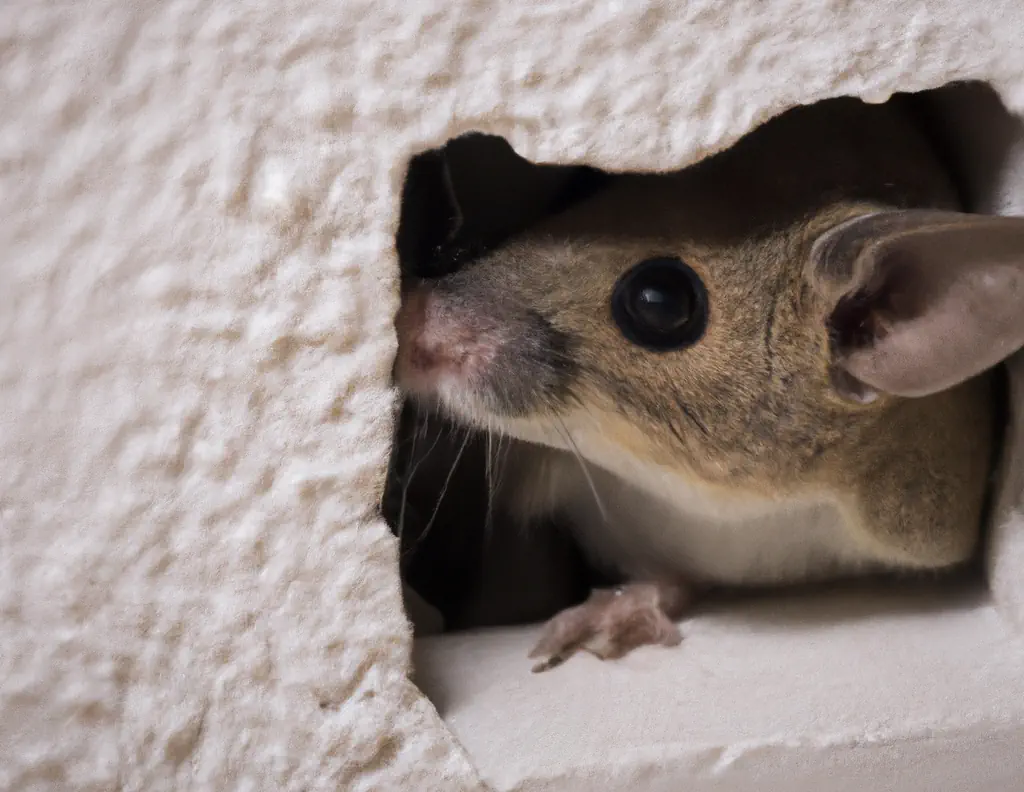
The mouse skull is one of the few truly rigid parts of its body. It’s small, narrow, and wedge-shaped. This design allows a mouse to probe openings and push its head through tight spaces. Here’s the critical rule of thumb: if a mouse can fit its skull through a gap, the rest of its body will follow.
For a standard house mouse, this means any hole roughly the diameter of a dime — about ¼ inch — is a potential entry point. That’s a sobering thought when you consider how mice get into your house through overlooked cracks and crevices.
A Collapsible Ribcage
Unlike the relatively rigid human ribcage, a mouse’s ribs are hinged and flexible. They can compress inward, allowing the mouse to flatten its torso dramatically. Think of it like an accordion — the ribs fold closer together under pressure, then spring back once the mouse passes through the opening.
This collapsible ribcage is the single biggest reason mice appear “boneless.” Their ribs don’t break or dislocate; they simply flex to a degree that seems impossible for a bony creature.
A Highly Flexible Spine
A mouse’s spine contains many small vertebrae connected by flexible cartilage. This gives the animal an extraordinary range of motion. A mouse can twist, bend, and contort its body in ways that let it navigate around corners inside walls, through pipe chases, and along wiring channels.
Combined with the collapsible ribcage, this flexible spine means a mouse can reshape its entire body profile on demand. If you’ve ever heard scratching sounds inside your walls, it’s likely mice using this flexibility to travel through the narrow spaces between studs and drywall.
How Small of a Hole Can a Mouse Fit Through?
This is the question that shocks most homeowners. A full-grown house mouse can squeeze through an opening as small as ¼ inch in diameter. To put that in perspective, here are some common household items for comparison:
| Opening Size | Everyday Comparison | Can a Mouse Fit? |
|---|---|---|
| ¼ inch (6 mm) | Diameter of a pencil | Yes — adult mouse |
| ½ inch (12 mm) | Diameter of a dime | Yes — easily |
| ¾ inch (19 mm) | Diameter of a nickel | Yes — with room to spare |
| 1 inch (25 mm) | Diameter of a quarter | Yes — no effort at all |
This means that gaps around plumbing pipes, utility line penetrations, door sweeps, dryer vents, and foundation cracks are all potential mouse highways. Even the gap beneath a standard interior door is often wide enough for a mouse to slide through.
For a deeper look at these vulnerable areas, read our guide on how to find and seal rodent entry points around your property.
Why Do Mice Need to Squeeze Through Small Spaces?
Mice didn’t evolve their flexible skeletons by accident. This ability serves several critical survival functions that have been refined over millions of years.
- Predator evasion: Mice are near the bottom of the food chain. Squeezing into tight gaps lets them escape cats, snakes, birds of prey, and other predators that can’t follow.
- Foraging access: Seeds, crumbs, and food scraps often settle in narrow crevices. A flexible body means more food sources are accessible. Learn more about what food sources attract rodents to your home.
- Nesting security: Mice build nests in sheltered, enclosed spaces. Wall voids, attic insulation, and the backs of cabinets all offer the concealment they crave.
- Temperature regulation: Tight spaces retain heat better, which is why mice push deeper into your home’s structure during cooler months.
From the mouse’s perspective, your home is a paradise of narrow, warm, food-adjacent gaps. Their anatomy is perfectly designed to exploit every one of them.
Do Mice Have Bones That Break Easily?
Despite their flexibility, mouse bones are not fragile. They’re thin and lightweight, but they’re also surprisingly durable relative to the mouse’s body size. A mouse doesn’t risk fractures when squeezing through a tight opening — its skeleton is built for exactly that kind of stress.
That said, mice can sustain injuries from snap traps, falls, or encounters with predators. Their bones do break under enough force. However, the normal act of compressing through a small gap is well within the safe operating range of their skeletal system.
This durability is one reason mice are such persistent invaders. They don’t hesitate at tight openings because squeezing through them is effortless and painless. If you suspect mice are already inside your walls, our article on how exterminators get rid of mice in walls and crawlspaces explains the professional approach to removing them.
Other Physical Abilities That Help Mice Navigate Tight Spaces
A flexible skeleton is just one part of the equation. Mice have several other physical traits that work together to make them extraordinary navigators.
Whiskers as Measuring Tools
A mouse’s whiskers (vibrissae) are highly sensitive tactile organs. Before entering a gap, a mouse sweeps its whiskers across the opening to gauge the size. If the whiskers suggest the head can fit, the mouse commits. This is why mice rarely get stuck — they measure first.
Climbing and Jumping Ability
Mice are excellent climbers. They can scale rough vertical surfaces, run along wires, and jump up to 12 inches high from a standing position. These abilities let them reach gaps that are elevated or in hard-to-access locations. For more on this, check out our article on whether mice can climb up walls.
Compact Body Size
An adult house mouse typically weighs between ½ ounce and 1 ounce and measures 3 to 4 inches in body length (not including the tail). This tiny baseline size, combined with skeletal flexibility, makes them far more capable infiltrators than rats, which are larger and less flexible by comparison.
How to Keep Mice Out Despite Their Flexible Bones
Now that you understand how mice use their anatomy to invade homes, you can take targeted steps to stop them. The core strategy is exclusion — physically blocking every gap that a mouse could exploit.
- Inspect your foundation: Walk the perimeter of your home and look for cracks or gaps wider than ¼ inch. Pay close attention to where pipes, wires, and conduits penetrate the exterior wall.
- Seal with the right materials: Mice can chew through caulk, foam, and even wood. Use steel wool packed into gaps, then cover with metal flashing or hardware cloth. Copper mesh is another excellent option.
- Address door and window gaps: Install door sweeps on all exterior doors. Replace worn weatherstripping around windows and garage doors.
- Don’t forget the roof: Mice can climb to your roofline. Seal gaps around soffit vents, roof vents, and chimney flashing. Our guide on what attracts mice to your attic covers this area in detail.
- Eliminate food sources: Store pantry items in airtight glass or metal containers. Clean up crumbs and spills promptly. Keep pet food sealed overnight.
For a comprehensive walkthrough of mouse prevention, read our step-by-step guide on rodent-proofing your home.
What to Do If Mice Are Already Inside Your Home
If mice have already exploited their flexible skeletons to get inside, exclusion alone won’t solve the problem. You need a removal strategy paired with prevention.
Start by identifying signs of activity: droppings near food sources, gnaw marks on packaging, or noises in your ceiling or walls at night. Once you’ve confirmed an infestation, consider snap traps placed along walls and near entry points. Our guide on the best bait for mouse traps can help you choose effective lures.
However, remember that seeing one mouse usually means there are more. Mice reproduce rapidly, with females producing up to 10 litters per year. A small problem can become a serious infestation quickly. If you’re unsure how widespread the issue is, our article on how many mice you actually have when you spot one provides helpful context.
For persistent or large-scale infestations, professional pest control is the most effective solution. A trained technician can identify every entry point, set up a comprehensive trapping program, and seal your home properly. Read our complete guide on how to completely get rid of mice in your home for a full breakdown of your options. And if you’re also dealing with rats, our resource on how to get rid of rats covers the specific differences in treatment strategies.
Frequently Asked Questions
-
Do mice have a skeleton like other mammals?
Yes, mice have a full mammalian skeleton with over 230 bones. Their skeletal structure includes a skull, spine, ribcage, and four limbs — all the same components found in other mammals. The difference is that their bones are thinner, lighter, and more flexible.
-
Can a mouse really fit through a hole the size of a dime?
Absolutely. A house mouse can squeeze through any gap that its skull can pass through, which is roughly ¼ inch in diameter. Their collapsible ribcage and flexible spine allow the rest of their body to compress and follow the head through remarkably small openings.
-
Do mice break their bones when squeezing through tight spaces?
No, mice do not break or dislocate their bones when compressing their bodies. Their skeletal system evolved specifically for this purpose. The ribs hinge inward and the spine flexes naturally, keeping the mouse safe and comfortable during the process.
-
What is the smallest gap I need to seal to keep mice out?
You should seal any gap or crack that is ¼ inch or larger. Use materials mice cannot chew through, such as steel wool, copper mesh, or metal flashing. Standard caulk and expanding foam alone are not enough because mice can gnaw through them.
-
Are rats able to squeeze through small gaps like mice can?
Rats can also compress their bodies, but they are significantly larger than mice. A young rat may squeeze through a ½-inch gap, but adult rats typically need openings closer to ¾ inch or larger. Mice remain the more flexible and harder-to-exclude of the two rodents.
-
How do I know if mice are using gaps in my home to get inside?
Look for telltale signs around suspect openings: dark grease marks (rub marks) from their fur, small droppings nearby, or gnaw marks on the edges of gaps. You may also notice a musty odor or hear scratching and scurrying sounds at night near walls and ceilings.