
- If you suspect a woodrat in your house, confirm the species before choosing a removal method. Scratching, droppings, and collected debris are not enough to identify it.
- Woodrats, also called pack rats, are different from roof rats. Roof rats are among the nonnative rodents that commonly cause problems in Florida buildings.
- The Key Largo woodrat is federally endangered and occurs only in Key Largo’s tropical hammocks. A suspected animal or nest there needs wildlife-agency guidance, not a DIY extermination plan.
- While identification is pending, secure household food and keep children and pets away from the affected area. Do not set traps, use poison, move a suspected woodrat nest, or seal an occupied opening.
The first step for suspected wood rats is identification, not trapping. A rodent in an attic may be a roof rat, but an animal described as a pack rat may be native wildlife. The distinction changes what you can safely do next. This guide explains the useful identification clues, the special protection for Key Largo woodrats, and how to arrange an assessment without disturbing an unidentified animal.
What Are Wood Rats, and Where Are They in South Florida?
Woodrats belong to the genus Neotoma; roof rats belong to Rattus. They are not interchangeable names for the same pest. Among the different types of rodents, location and physical features matter more than a homeowner’s nickname.
The locally important conservation distinction is the Key Largo woodrat (Neotoma floridana smalli). According to the Florida Fish and Wildlife Conservation Commission (FWC), it occurs only in tropical hammocks on Key Largo and is protected under federal and Florida endangered-species rules. That restricted distribution does not support treating woodrats as a routine attic pest throughout South Florida.
The U.S. Fish & Wildlife Service (USFWS) describes the Key Largo woodrat as having a gray-brown back and head, a white underside, and a hairy tail. A clear photograph can help an expert assess these features; do not catch or handle the animal to inspect it.
Why Are They Called Pack Rats?
The name refers to woodrats’ habit of collecting material around their nests. Key Largo woodrats build stick nests and may store food in them. FWC describes nesting sites at the bases of trees, rocks, or stumps, with tree roots and solution holes also used. A pile of sticks or household objects is a clue to investigate, not proof of the species or permission to dismantle a nest.
How to Identify Wood Rats in Your Home
Record where the animal or signs occur, when you noticed them, and whether you have a clear view of the tail and body. Share photographs taken from a safe distance with the person assessing the problem. Do not enter a cramped attic or move nesting material just to get a better picture.
Signs That Need a Rodent Assessment
- Collected sticks or nesting material: Photograph the area without pulling it apart. Nest material alone cannot distinguish a woodrat from other animals.
- Droppings: Our rodent-dropping identification guide provides background, but droppings alone should not be used to confirm a protected woodrat.
- Gnawing or damaged packaging: These suggest activity but do not establish the species.
- Nighttime sounds: If you hear noises in your ceiling or walls, note the location and timing. Sound is not a species diagnosis.
- Urine stains or odor: Keep people and pets away from contaminated areas rather than touching material to assess how fresh it is.
Wood Rat vs. Roof Rat: Useful Differences
| Feature | Key Largo Woodrat | Roof Rat |
|---|---|---|
| Tail | Hairy; brown above and white below | Longer than the head and body combined |
| Color | Gray-brown to brown-and-black above, with a light underside | Can be black, gray, or tan; color alone is unreliable |
| Nesting | Stick nests, tree-root systems, or solution holes in hammock habitat | Often nests above ground, including attics and trees |
| Florida context | Restricted to Key Largo tropical hammocks; endangered | A nonnative household rodent found in Florida |
| Next step | Seek FWC or USFWS guidance before disturbing the animal or nest | Confirm identification and arrange an appropriate rodent-control plan |
UF/IFAS describes roof rats’ tail proportions and attic nesting in its archived Rat and Mouse Control identification guide. Its current guidance on Florida household rodents distinguishes these nonnative pests from native wildlife. Our article on roof rats in Florida provides additional household context, not confirmation that the animal on your property is a roof rat.
What Risks Should You Address?
Species uncertainty does not mean you should ignore contaminated surfaces or damaged wiring. Limit access to the affected area and arrange an assessment. The appropriate response depends on what is present, where it is, and whether protected wildlife is involved.
Health Risks and Contamination
Rodent urine and droppings can contaminate food and surfaces. Our overview of rodent diseases and health dangers explains general concerns; it does not mean every woodrat carries a particular disease. Do not sweep or vacuum dry waste. Disturbing contaminated material can send particles into the air, so cleanup should follow the precautions described below.
Structural and Electrical Damage
Rat gnawing can damage wiring and building materials. If you see exposed or chewed wiring, have a licensed electrician assess it; a pest inspection does not replace an electrical repair. Contamination of attic insulation also needs evaluation. The amount and location of damage should guide repair or removal, rather than assuming the entire attic needs replacement.
Where Should You Look for Rodent Entry Points?
Inspect accessible areas from the ground and record openings for a professional to assess. Finding a gap identifies a possible access route, not the animal that used it.
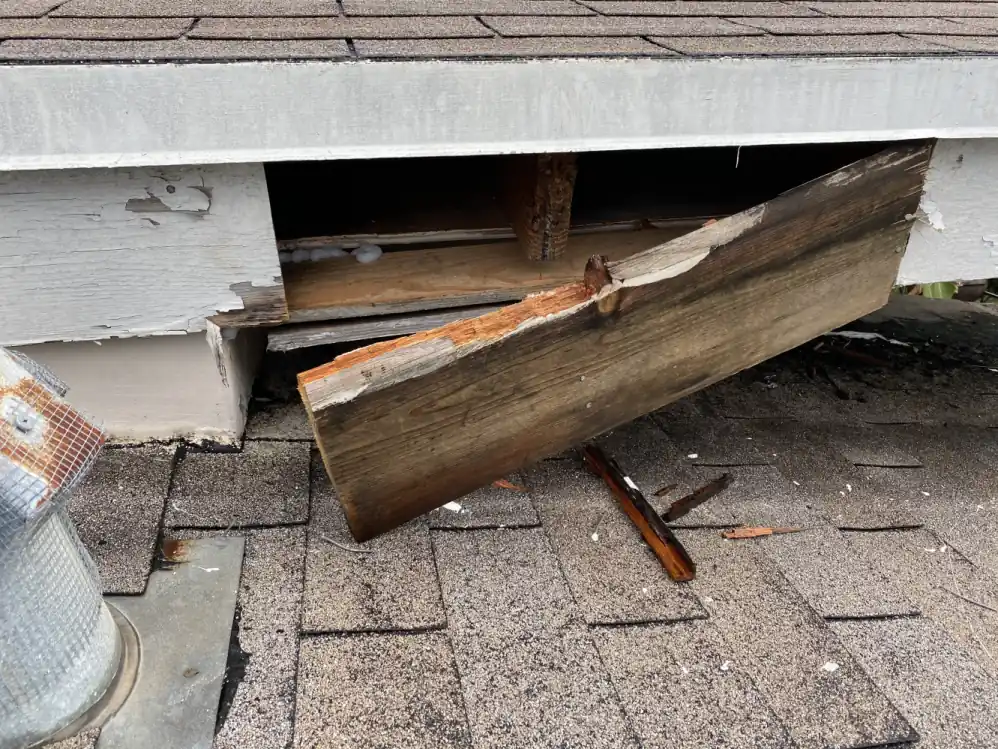
- Damaged soffits, fascia, and roof-edge wood.
- Gaps around plumbing, electrical, or air-conditioning penetrations.
- Broken vent screens or missing covers.
- Worn garage-door or exterior-door seals.
- Branches that reach over or contact the roof.
Our guide to how rats get inside houses explains common building vulnerabilities. Do not climb onto a roof or close an opening that may contain an animal.

What to Do if You Suspect Wood Rats: Step-by-Step
Use this assessment-first sequence instead of applying a generic rat-removal method to unidentified wildlife.
Step 1: Document Activity Without Disturbing It
Note the affected rooms, openings, sounds, and visible damage. Photographs and a short activity log help the assessor distinguish current activity from old evidence. Our guide to signs of a rat infestation can help organize what you are seeing. Leave suspected nests intact.
Step 2: Confirm the Species and Its Protection Status
Tell the assessor your location, especially if the property is on Key Largo or beside tropical hammock habitat. For a suspected Key Largo woodrat, contact FWC or USFWS before trapping, relocating, poisoning, disturbing a nest, or attempting exclusion. General pest-control guidance is not authorization to handle an endangered animal.
If the animal is confirmed to be a nonprotected household rat, our guide to getting rid of rats provides background for discussing the control plan. It is not a removal plan for native woodrats.
Step 3: Plan Exclusion After Identification
For a confirmed household-rat problem, finding and sealing rodent entry points is part of prevention. The timing matters: closing an occupied route can leave animals inside. Ask the professional how activity will be resolved and checked before permanent repairs.
Durable repairs may require metal flashing, hardware cloth, or steel mesh appropriate to the opening. Our discussion of steel wool and small-gap repairs is supporting information, not a substitute for repairing deteriorated wood or protecting ventilation. Any work affecting a suspected protected woodrat needs wildlife-agency guidance first.
Step 4: Arrange Safe Cleanup and Damage Repairs
Cleanup comes after assessment and must not disturb a suspected protected nest. For ordinary rodent waste on accessible hard surfaces, the CDC’s rodent-cleanup guidance calls for rubber or plastic gloves, thoroughly wetting waste with an appropriate disinfectant, and allowing five minutes or the label-specified contact time before wiping it up. Do not sweep or vacuum dry droppings.
Heavy contamination, affected insulation, and inaccessible spaces require additional precautions and may need professional cleanup. Arrange electrical and building repairs with the appropriate trades rather than treating sanitation as the whole solution.
Step 5: Reduce Household Food Attractants
Secure trash lids, store pet food and birdseed in closed containers, clean up spills, and collect fallen fruit. These are practical ways to reduce food sources that attract rodents. They do not identify or remove the animal already present. On or beside Key Largo hammock habitat, seek wildlife guidance before clearing vegetation or dismantling stick piles that may be nests.
Should You DIY or Call a Professional for Wood Rats?
Arrange identification before attempting woodrat removal. Professional help is particularly important when the species is uncertain, a nest may involve protected wildlife, activity is inside a wall or attic, or wiring and insulation are damaged.
A useful assessment should document the identification, evidence of activity, possible entry routes, and recommended next steps. Contact On Demand Pest Control about professional rodent control services for a household-rodent concern. A suspected protected woodrat requires the appropriate wildlife-agency route; do not assume an ordinary pest-control visit includes permission to handle it.
If the assessment identifies mice instead, our guide to getting rid of mice addresses that separate problem. Identification keeps the plan focused on the animal actually present.
Preventing Future Household-Rodent Problems
- Check repaired openings: Reinspect after storms or building work, and address new damage.
- Maintain food storage: Keep pantry food, pet food, and seed inaccessible to rodents.
- Keep storage accessible: Organized storage makes it easier to notice new damage or waste.
- Maintain exclusion: Use our rodent-proofing checklist for ongoing building maintenance after the species and safe repair sequence are established.
- Evaluate monitoring carefully: Rodent bait stations do not establish which species is present. Poison is not an automatic prevention step, especially where native wildlife may be exposed.
UF/IFAS explains the wildlife risks of rodenticides and recommends starting with prevention and less-toxic measures. A control plan for a confirmed household rat should account for children, pets, and wildlife as well as the building’s entry points.
Frequently Asked Questions
-
Are wood rats the same as roof rats?
No. Woodrats, or pack rats, belong to Neotoma; roof rats are Rattus rattus. The Key Largo woodrat is protected native wildlife, while roof rats are nonnative household rodents. Location, a clear view of the animal, and professional identification matter before choosing a control method.
-
What do wood rats eat in South Florida?
FWC lists mushrooms, fruits, berries, seeds, leaves, and plant buds in the Key Largo woodrat's diet. Food damage alone does not identify a woodrat: household rats may eat some of the same foods. Do not use food to lure a suspected protected animal into a trap.
-
Can wood rats cause a house fire?
Rodent-damaged electrical wiring can create a fire hazard. Chewed wiring is a reason to call a licensed electrician, not proof that a woodrat caused the damage. Have the animal identified and the electrical condition assessed separately.
-
How many wood rats are usually in one house?
There is no reliable household count to infer from a noise, dropping, or nest. An inspection must first establish the species and whether activity is current. Finding several piles of material does not establish how many animals are present.
-
Do ultrasonic repellents work against wood rats?
Do not rely on a plug-in repellent to resolve a suspected woodrat problem. It does not identify the animal or repair an entry point. Begin with identification, and ask FWC or USFWS for guidance before attempting to deter a suspected Key Largo woodrat.
-
When should I call a pest control professional for wood rats?
Call for an assessment when the species is uncertain, activity is inaccessible, or you find damaged wiring or contaminated insulation. For a suspected Key Largo woodrat, seek FWC or USFWS guidance before control or nest disturbance. Do not wait through unsuccessful DIY trapping to request identification.
Get help with pests in your home.
We’ll talk through what you’re seeing and arrange a time to inspect your home.
- Tell us what you’re seeing.
- We arrange an on-site inspection.
- You receive a written quote explaining the work.
Where can we reach you?
Our team will call to confirm the next step.
By submitting, you’re asking On Demand Pest Control to contact you about this request.
↗ Prefer to call? (954) 947-0805