
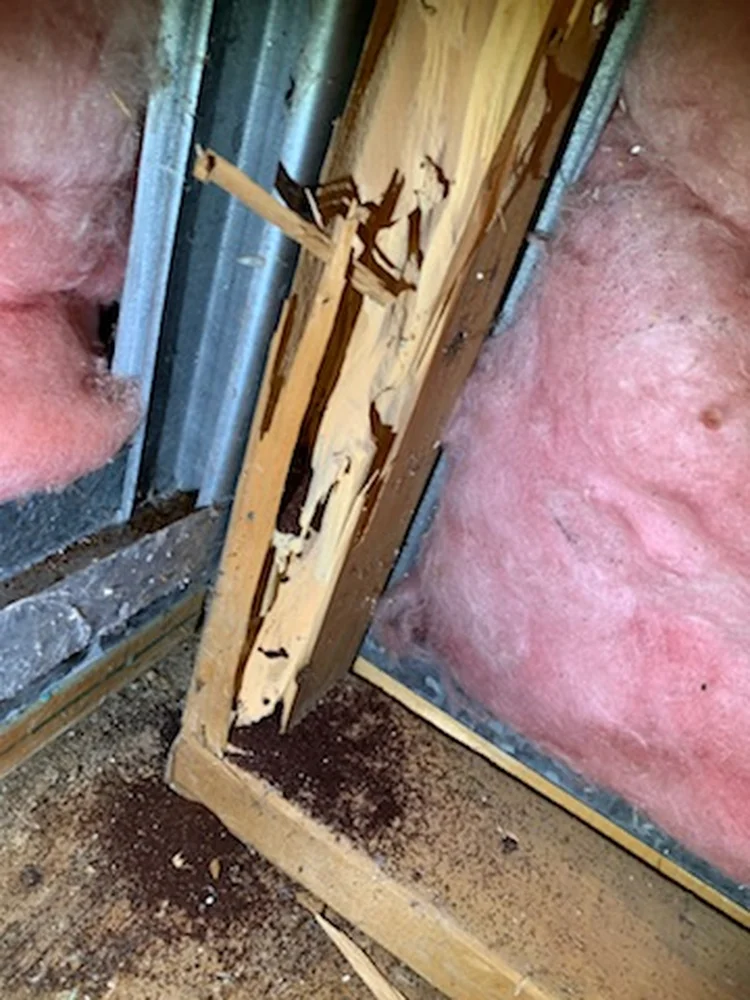
The short version: Yes, termites do eat drywall — but only the paper backing, not the gypsum core. In Florida homes, both drywood and subterranean termites will chew through the paper layer to reach the wood studs behind it, leaving behind hollow-sounding walls, pinholes, and blistered paint.
If you’ve spotted soft spots in your sheetrock or noticed tiny piles of what looks like sawdust near a baseboard, you’re right to be concerned. South Florida’s humid climate makes our homes prime real estate for termite colonies, and drywall sits directly between hungry insects and the structural lumber they crave. This guide walks you through exactly what termites do to drywall, how to spot the damage early, which species are most likely behind the destruction, and what your real treatment options look like in a Florida home.
Do Termites Eat Drywall in Florida Homes?
Termites can and do eat drywall, but it’s important to understand what they’re actually consuming. Standard drywall — also called sheetrock or gypsum board — has a gypsum core sandwiched between two layers of heavy paper. That paper is made of cellulose, the exact compound termites are biologically built to digest.
The gypsum itself has zero nutritional value to a termite. They don’t munch through it the way they would a piece of pine framing. Instead, they tunnel along the paper face, scrape away the cellulose, and use the soft layer as a highway to reach the wood studs, joists, and trim behind the wall.
In Florida, where humidity stays elevated almost year-round, drywall paper holds just enough moisture to make it especially attractive to subterranean species. That’s why so many local homeowners discover infestations only after damage has already spread inside the wall cavity.
How Do Termites Eat Drywall From the Inside Out?
Termites almost never start their meal on the visible side of your wall. They work from the back, which is why infestations often go unnoticed for months. Here’s the typical progression in a Florida home:
- Entry point — Subterranean termites travel up from the soil through mud tubes built along the foundation, while drywood termites fly in through eaves and attic vents, then bore directly into wood framing.
- Wood-to-paper transition — Once a colony has chewed through studs or sheathing, foragers reach the back paper of the drywall and begin eating outward.
- Hollowed sections — They consume the inner paper liner, leaving the gypsum core intact but unsupported.
- Visible breakthrough — Eventually the outer paper blisters, peels, or develops small pinholes where workers have come close to the surface.
By the time you notice damage on the painted side, the colony has often been active for six months or longer.
What Termite Damage to Drywall Actually Looks Like
Recognizing termite damage drywall patterns early can save you a small fortune in repairs. Florida pest control technicians look for a specific combination of clues during inspections.
Visible Surface Signs
- Pinholes — Tiny, perfectly round holes (about the size of a pencil tip) where drywood termites have pushed out frass.
- Blistered or rippled paint — When the inner paper is eaten away, the paint film loses its backing and bubbles outward, sometimes mimicking water damage.
- Sagging or soft spots — Press lightly with your finger and the surface gives, because the cellulose backing is gone.
- Hollow sound — Tap along the wall; sections under attack produce a dull, papery thud instead of a solid knock.
- Faint mud streaks — Subterranean termites sometimes extend earthen tunnels right up the face of drywall, especially in garages, closets, and behind furniture.
What You Find Below the Damage
Drywood termites push their waste pellets out of the gallery through those pinholes. These pellets, called frass, are one of the clearest signs of termites in any Florida home. If you’re wondering what do termite droppings look like, picture tiny six-sided granules in tan, brown, or near-black tones — they often resemble coarse coffee grounds or coarse sand. A small pile on a windowsill or baseboard is a giveaway.
Termites in Drywall: Which Florida Species Is Likely to Blame?
Two termite groups cause virtually all damage in our region, and they leave very different fingerprints inside your walls.
Drywood Termites
Drywood termites live entirely inside wood — no soil contact needed. They establish small colonies in attic rafters, door frames, baseboards, and any exposed lumber. When they reach drywall, they typically work from one stud bay to the next. Learning how to identify drywood termites is straightforward: look for the pellet piles described above, kick-out holes the size of a pinhead, and swarmer wings shed near windowsills in late spring or early summer.
Subterranean Termites
Formosan and Eastern subterranean species require contact with moist soil. They build the famous termite mud tubes — pencil-thick tunnels of mud, saliva, and feces — that climb up foundation walls, piers, and slab edges to reach wood above. Once inside the wall cavity, they can devour the back of your drywall while the painted face still looks pristine. Florida’s Formosan colonies are especially aggressive and can consume far more material in a single season than native subterranean species.
Do Termites Eat Sheetrock the Same Way They Eat Wood?
Homeowners often ask, “Do termites eat sheetrock, or just real wood?” The answer comes down to cellulose. Termites can’t digest gypsum, but they also can’t digest pure cellulose without help — their gut microbes do the heavy lifting. Anything with cellulose fits the menu:
- Paper-faced drywall
- Cardboard boxes stored in garages and attics
- Wallpaper and the paste behind it
- Books, magazines, and stored documents
- Wooden trim, baseboards, door jambs, and window frames
- Plywood, OSB, and structural lumber
This is why a termite-infested home can show damage in multiple, seemingly unrelated areas. Once a colony is established, it forages wherever cellulose is available — and modern construction puts cellulose in nearly every interior surface.
Why South Florida Homes Are Especially Vulnerable
A few local factors make termite damage drywall problems more common here than in cooler states:
- Year-round warmth — Termite colonies never enter winter dormancy in our climate, so they feed and reproduce continuously.
- High humidity — Drywall paper readily absorbs ambient moisture, making it more palatable to subterranean termites.
- Slab-on-grade construction — Most Florida homes sit directly on concrete slabs, giving subterranean colonies short, easy access to interior framing.
- Stucco-over-wood exteriors — Common in older builds, these walls can hide active galleries for years before anyone notices interior damage.
- Frequent rain events — Roof leaks, plumbing condensation, and storm intrusions raise indoor humidity and weaken drywall, attracting foragers.
How to Catch the Damage Early
Inspections are easier than most homeowners think. Once a year, walk every interior wall and look for the warning signs above. Pay extra attention to:
- Baseboards in closets, under sinks, and behind heavy furniture
- Window frames and door jambs (drywood favorites)
- Garage walls where the slab meets the framing
- Attic rafters, especially near vents and eaves
- Bathroom and laundry-room corners where humidity peaks
Tap walls with your knuckles, shine a flashlight at a shallow angle to spot subtle blisters, and inspect baseboards for tiny piles of frass. If you find anything suspicious, mark the spot with painter’s tape and schedule a professional inspection — the earlier the colony is identified, the smaller the repair bill.
Treatment Options That Actually Solve the Problem
When termites have already breached drywall, removing them takes more than spraying a baseboard. Effective termite control methods in Florida fall into a few proven categories, and the right choice depends entirely on the species and the size of the infestation.
Treating Drywood Infestations
For localized damage in trim, doorframes, or a single wall section, drilling and injecting borate or non-repellent foam into the galleries can wipe out the colony without major disruption. For whole-structure infestations, the best treatment for drywood termites is structural fumigation — better known as tenting for termites. The home is sealed under a tarp and filled with sulfuryl fluoride gas, which penetrates every gallery and kills every life stage, including eggs. Tenting is dramatic but reliably effective when drywood activity is widespread across the framing.
Treating Subterranean Infestations
Subterranean colonies require a soil-based approach. Modern non-repellent liquid treatments (such as fipronil-based products) are applied around the foundation, where foragers carry the active ingredient back to the colony. Baiting systems — stations placed in the soil around the perimeter — offer a low-impact alternative that gradually eliminates the entire colony.
Why DIY Termite Treatment Falls Short Here
Plenty of homeowners try DIY termite treatment with over-the-counter foams, sprays, and bait stakes. These products can knock down foragers you can see, but they almost never reach the queen or the bulk of the colony hidden in soil or framing. In Florida especially, where Formosan colonies can include millions of workers, partial treatment usually means the infestation returns within a season. Save the DIY effort for prevention — sealing cracks, fixing leaks, clearing wood debris from the yard — and bring in a licensed technician for the actual elimination work.
How to Prevent Termites From Reaching Your Drywall
Prevention is dramatically cheaper than repair. Keep these habits in your seasonal rotation:
- Move mulch, firewood, and yard debris at least 18 inches from the foundation
- Repair plumbing leaks and roof drips within days, not months
- Run dehumidifiers in closed-off rooms during summer
- Reseal cracks in stucco, around window frames, and where pipes enter walls
- Schedule a professional termite inspection every 12 months — many Florida policies require it for warranty coverage
- Replace any wood-to-soil contact (deck posts, fence boards) with concrete or metal supports
If your home has never been treated, a preventive perimeter treatment or bait system is a worthwhile investment. The cost of prevention is a small fraction of repairing extensive termite damage drywall and structural framing later.
Frequently Asked Questions
Can termites eat through painted drywall?
Yes. Paint slows them down slightly but doesn’t stop them. Termites eat the back paper of the drywall first, so painted walls often look perfect right up until the surface blisters or a swarmer chews through to fly out. A pinhole in the paint film usually means the colony has already been active inside the wall for months.
How long does it take termites to damage drywall?
Visible damage typically appears six to twelve months after a colony reaches the wall, though Formosan subterranean termites can hollow out a sheet of drywall in a fraction of that time. Because the destruction happens from the back, by the time you see surface signs the structural framing behind the drywall is often also affected.
Will replacing the damaged drywall solve the problem?
No. Replacing drywall removes the evidence of feeding but does nothing to the colony itself. You must treat the underlying infestation first — through fumigation, soil treatment, or baiting — and only then replace the damaged sheetrock. Skipping the treatment step almost guarantees the termites return to the new drywall within months.
How expensive is termite damage to drywall to repair?
Cost depends on several factors: how many rooms are affected, whether the studs and sheathing behind the drywall were also chewed, and how much insulation needs replacing. A localized repair in a single closet looks very different from a whole-home restoration after a long-running Formosan infestation. Treatment for the colony itself is a separate line item, and skipping it makes any drywall work meaningless because the new sheetrock will be attacked next.
Are termites in drywall covered by homeowners insurance?
In nearly every case, no. Standard homeowners policies in Florida specifically exclude termite damage because it’s considered preventable through routine maintenance. This is why an annual inspection — and a termite bond with a reputable local company — is so important for long-term protection.
How can I tell termite damage from water damage in drywall?
Both can cause blistering and softness, but water damage usually leaves discoloration, staining, or a musty smell, and the affected paper feels soggy when pressed. Termite damage stays dry, often shows pinholes or kick-out holes, and frequently has frass pellets nearby. When in doubt, cut a small inspection hole and check the back of the drywall — termite galleries are unmistakable.

Vincent founded On Demand Pest Control in 2017 and is a Florida Certified Operator in all four state categories. He treats pest control as a systematic problem to solve, not a symptom to spray. Read Vincent’s full bio →