
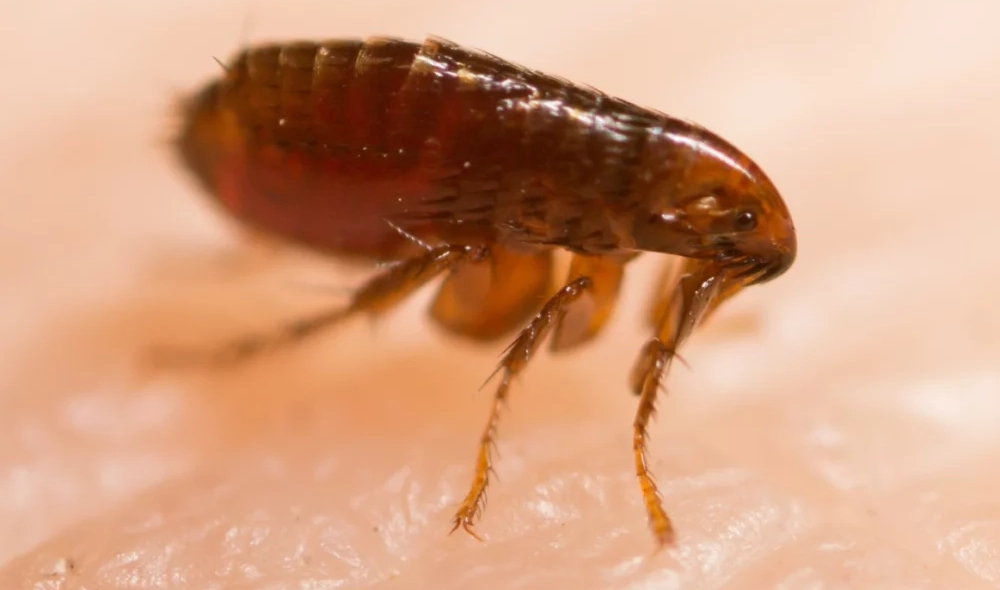
A flea’s host-free survival depends on its stage and conditions. Vacancy is not clearance; protected adults can emerge after cleaning or treatment.
Key Takeaways
- There is no single host-free survival deadline for every flea, life stage and room.
- Eggs and larvae develop off the animal, but larval food includes dried blood in adult flea waste.
- A fully formed adult can remain protected inside its cocoon, especially under cool conditions.
- Vacancy alone is not a reliable test that a property is clear.
- Combine inspection, cleaning, veterinarian-directed pet care and any correctly labeled environmental treatment.
Removing a pet or leaving a home empty does not tell you how long fleas will persist there. The answer depends on the life stage, whether an adult has emerged from its cocoon, and the conditions in its particular hiding place. A fixed starvation countdown can therefore be misleading. This guide explains the important stage differences, why activity may recur in a previously occupied property, and how to assess an actual problem instead of waiting for a promised deadline.
The Flea Life Cycle: Why It Matters for Host-Free Survival
Fleas develop through egg, larva, pupa and adult. Adult cat fleas obtain blood meals from an animal; larvae do not bite for a meal. The animal nevertheless remains important to the environmental stages because eggs and flea waste accumulate where it rests. A host-free floor is not necessarily free of material that supports larval development.
The four life stages are:
- Egg: Laid on an animal and readily falls into bedding or flooring.
- Larva: Develops off the host and feeds on dried blood and adult flea excrement.
- Pupa and pre-emerged adult: Develop within a protective silken cocoon.
- Emerged adult: Seeks a host; adult cat fleas normally remain on an animal for feeding, mating and egg laying.
The proportions of these stages change over time. A fixed claim that every infestation contains exactly 95% immature stages cannot describe your property. The useful distinction is their different appearance and location. Learn to identify flea life stages, then record which stages are actually found in animal resting areas.
How Long Can Adult Fleas Live Without a Host?
Do not use “one or two weeks without blood” as a universal adult survival limit. Species, temperature, moisture and feeding history affect survival, and an emerged flea is different from an adult still protected inside a cocoon. The reviewed UC IPM guidance does not establish a single starvation deadline suitable for clearing a home. An inspection and monitoring record answers that question more directly than a calendar estimate.
Adult cat fleas depend on an animal for feeding and reproduction, and UC IPM states that they usually remain on that host. Separating one flea from an animal is not the same experiment as leaving a room that contains eggs, larvae and cocoons empty. Avoid extending an off-animal adult survival figure to the entire infestation.
Newly noticed adults after pet or environmental treatment may have emerged from previously present cocoons. They can also reflect an unresolved source or ineffective pet care. Review the specimen, location and treatment dates before deciding what happened. Do not respond to every new adult by immediately repeating an application.
Newly Emerged vs. Fed Adult Fleas
Feeding status is one reason adult survival cannot be summarized by a single number. For household control, the more important distinction is whether the insect is an emerged adult or a formed adult still within its cocoon. Neither state can be inferred simply from the day a person returned to the room.
When returning to a formerly animal-occupied home, check the previous resting areas and ask about the earlier control plan. Warmth and mechanical disturbance can stimulate emergence from a cocoon. Activity on re-entry is consistent with an older environmental problem, but does not prove that every cocoon emerged at once or that a particular adult had never fed.
Flea Eggs and Larvae: Surviving Without Blood
Cat flea eggs are laid on an animal and readily fall into the surrounding bedding, carpet or upholstery. They do not need to take a blood meal themselves. White particles are not automatically eggs; collect and identify suspicious samples. Our flea-egg identification guide discusses that stage separately from adults.
UC IPM describes cat flea eggs hatching in about two to five days under suitable conditions. Conditions can alter development, so this is not a guaranteed timetable for each egg in a room. The practical response is to remove accessible eggs and their associated debris while addressing the fleas on the animal, rather than trying to wait out one hatching date.
Larvae live off the animal in protected sites and feed there. Their food connects them to the host even though they do not climb onto it for a blood meal. The most useful feeding evidence is:
- Dried blood in adult flea excrement, often called flea dirt.
- That material accumulated among protected bedding fibers, carpet or other resting-area debris.
- Actual larvae or adults identified from the same inspection area, rather than unrelated crumbs or lint.
UC IPM describes larval feeding and movement for about 8–15 days under favorable conditions before a silken cocoon is built. The duration changes with conditions. Our flea-larva guide explains their wormlike, legless form. Do not assume every small worm found in the house is a flea larva.
The Cocoon: Protected Fleas Can Wait for a Host
The cocoon helps explain delayed activity. It can become covered in dust, hair and carpet fibers, making it hard to see and reducing the reach of some treatments. Development occurs inside it; a waiting occupant may already be a fully formed adult. Calling all long-term protected fleas “dormant pupae” loses that important distinction.
UC IPM reports that fully formed fleas can remain inside their cocoons for up to 12 months at cool temperatures. That is a condition-specific biological observation, not a promise that every indoor cocoon lasts a year or that warmth causes immediate clearance. A home’s actual temperature and microhabitats matter.
Reviewed sources describe cues associated with emergence or adult host finding:
- Mechanical pressure from walking or vacuuming can stimulate emergence.
- Warm temperatures can promote emergence from the cocoon.
- Emerged adults use heat, movement, vibration and breathing to find hosts.
A newly occupied rental or vacation property may therefore reveal flea activity that was not noticed while it was unused. The observation should prompt an inspection of earlier animal resting areas and the property’s history. It is not enough to conclude that there must be a large new population or that treatment has never occurred.
How Long Can Fleas Live Without a Host in Different Environments?
Temperature, moisture and protected habitat influence development and persistence. Conditions beside a damp pet bed or under furniture can differ from a weather report or the thermostat reading. There is no dependable survival table that turns outdoor conditions into a household clearance date.
Temperature and Humidity Effects
UC IPM describes faster larval development at higher temperatures and a requirement for moist protected sites. Florida weather may make some outdoor sites favorable, but it does not measure every indoor hiding place. Focus on the animal’s actual resting sites and confirmed evidence instead of assuming every Florida home has an ideal flea climate.
| Condition | Relevant biological point | Household decision |
|---|---|---|
| Cool protected cocoon | Pre-emerged adults may persist for a long time | Do not use vacancy alone as clearance |
| Moist protected debris | Can support larval development | Clean animal resting areas and address moisture |
| Exposed dry surface | Different from a sheltered microhabitat | Inspect nearby cracks and bedding before ruling out activity |
| Occupied pet resting area | New eggs and waste can continue to arrive | Coordinate veterinary pet care with environmental control |
Changing a thermostat or leaving the property vacant is not a tested whole-home flea treatment. It can also leave the original animal source unaddressed. Use the conditions to guide inspection, not to calculate a date on which every life stage must have died.
Indoor vs. Outdoor Survival
Carpets, upholstery and bedding can shelter environmental stages indoors. Outdoors, animal resting sites in protected shade deserve attention when evidence points there. Indoor and outdoor locations should be assessed separately; one finding does not establish that the entire yard and every room require pesticide treatment.
Inspect outdoor places the animal actually uses and note any wildlife-associated resting site that can be addressed lawfully. Our discussion of flea-associated conditions provides related context. Shade or soil alone is not proof of fleas; collect evidence before selecting an outdoor product.
Why Vacating Your Home Won't Kill Fleas
Vacancy removes some host contact but does not reliably remove all environmental stages. Protected pre-emerged adults may remain, and development varies with conditions. It is better to call an empty home “not yet assessed” than to declare it clear because a fixed number of weeks has passed.
Here’s what actually happens when you leave:
- Some emerged adults may die while no suitable host is available.
- Existing eggs and larvae may continue development if conditions and food permit.
- Adults can remain protected inside cocoons, particularly under cool conditions.
- Only a follow-up inspection and monitoring record establishes what is still present.
When people or animals return, newly noticed fleas can be consistent with protected stages emerging. Confirm the insects and record where encounters occur. Do not infer a worse infestation solely from how surprising the first encounter feels.
If you notice possible household flea evidence, investigate promptly. Coordinate the animal and environmental work, allowing for protected stages and the actual product instructions. It is not possible to assume that one application simultaneously contacts every life stage.
How to Eliminate Fleas That Are Living Without a Host
Begin with identification, a map of affected resting areas and a review of pet treatment. Clean accessible habitat and use any environmental pesticide only as labeled. “Aggressively and repeatedly” is not an application instruction: the selected product’s sites, amounts and interval control how it may be used.
Vacuuming: Your Most Powerful Weapon
Vacuuming can remove eggs, larvae and adults from accessible carpets, upholstery and crevices and stimulate pre-emerged adults to leave their cocoons. UC IPM recommends daily or alternate-day vacuuming during active control. Ask how this routine fits with any treated surfaces rather than disturbing an application contrary to the written plan.
For best results:
- Concentrate on pet resting places, carpet edges and accessible furniture crevices.
- Use the appropriate attachment without damaging surfaces.
- Contain collected debris and follow the vacuum manufacturer’s disposal instructions.
- Keep monitoring and follow the treating professional’s cleaning and follow-up directions.
Laundering Bedding Without a Blanket Heat Guarantee
Launder washable pet bedding and removable covers with detergent and the fabric care label’s allowed settings. Do not assume a universal 130°F setting kills every stage in every item, and do not increase a household water heater for that purpose. Our flea-in-bedding guide addresses the related inspection task. Delicate items may need a cleaner or manufacturer-approved method.
Professional Flea Treatment
A professional flea-control assessment can locate environmental activity and explain whether a labeled insecticide or insect growth regulator is appropriate. IGRs affect immature development, but environmental sprays do not reliably kill the protected cocoon stage. Ask about preparation, permitted sites, cleaning compatibility and the evidence used to decide follow-up.
Follow-up timing depends on the product and findings, not an automatic two- or three-week promise. New adults can appear after an initial application. Record that activity and consult the treating professional; do not reapply earlier or more broadly than instructed.
Preventing Fleas From Surviving in Your Home Long-Term
After activity declines, preserve the habits that reduced introductions and supported control. Prevention is a continuing routine rather than a guarantee that one treatment protects the property permanently.
- Ask the veterinarian to choose prevention for each animal’s species, age, weight and health, including the correct interval. See our Florida dog flea-prevention discussion.
- Clean animal resting areas and launder bedding regularly.
- Inspect used furnishings before bringing them inside.
- Address relevant protected outdoor animal-resting habitat without blanket yard treatment.
- Record early confirmed insects and veterinary symptoms so changes can be assessed.
Calendar season alone does not rule out flea activity on pets or in protected indoor sites. Maintain the veterinarian’s prevention plan and investigate actual findings. Routine inspection and appropriate pet care are more useful than assuming either a winter break or a need for unlimited scheduled household pesticide applications.
Frequently Asked Questions
-
Can fleas survive in an empty house with no pets?
Yes, protected environmental stages can persist in a formerly occupied house, especially a formed adult inside its cocoon. Absence of a current pet or occupants is not proof of clearance. Inspect previous animal resting areas and confirm any insects found.
-
How long do fleas live without a host on furniture?
There is no furniture-specific countdown. Eggs, larvae and cocoon-protected stages can occupy suitable protected upholstery associated with animals, and conditions affect persistence. Inspect and clean the actual furniture rather than waiting for a fixed starvation date.
-
Will fleas eventually die on their own without treatment?
Some stages may die if conditions or host access become unsuitable, but waiting alone is not a reliable control or clearance method. Protected adults can persist, and new introductions or untreated animals can sustain activity. Monitor confirmed evidence and coordinate a plan.
-
Can fleas live on humans if no pets are available?
Cat fleas can bite humans, but normally live and reproduce on suitable animal hosts rather than becoming a routine human-resident infestation. Investigate animal and environmental sources, including previous occupancy. Do not apply pet or household pesticides to people.
-
How long should I vacuum after a flea treatment to kill remaining fleas?
UC IPM recommends daily or alternate-day vacuuming during active control. The duration should follow observed activity, the treatment plan and product compatibility, not a universal number of weeks. Vacuuming supports control but cannot guarantee removal of every hidden stage.
-
Do flea bombs work to kill fleas living without a host?
Room foggers have coverage limitations and are not a substitute for cleaning, veterinary pet care and targeted labeled environmental control. They should not be assumed to reach protected cocoons or every larva. Ask a professional about the actual sites and stages involved.
Get help with your pest concern.
Tell us what you are seeing. Our team can discuss the concern and the next step.
- Share your concern and contact details.
- Our team contacts you to discuss available service.
- Ask for a written scope and quote before work.
Where can we reach you?
Our team will call to confirm the next step.
By submitting, you’re asking On Demand Pest Control to contact you about this request.
↗ Prefer to call? (954) 947-0805