
Florida’s September 20–26, 2026 surveillance report lists 38 travel-associated malaria cases with onset in 2026. These differ from the seven locally acquired cases in Sarasota County in 2023. Here is what the dated figures mean, which symptoms need medical care and how to reduce mosquito bites.
Florida malaria cases in 2026
The Florida Department of Health’s September 20–26, 2026 surveillance report lists 38 travel-associated malaria cases with onset in 2026, including six reported in Broward County. Four of the 38 cases were reported in non-Florida residents. The report classifies these cases as travel-associated; the total is not a count of infections acquired from mosquitoes in Florida.
These are provisional year-to-date figures from that reporting week, not a full-year total or a real-time case tracker. For personal travel advice or unexplained fever, contact a healthcare professional. Household mosquito control cannot diagnose malaria or guarantee disease prevention.
What the Sarasota investigation established
CDC’s September 2023 report described seven locally acquired cases in Sarasota County and one in Texas during May–July 2023. The seven Florida patients lived within a 4-mile radius in Sarasota County. All eight cases in that report involved Plasmodium vivax. The report documented case finding, mosquito surveillance and control, and public communication at the time.
Those dates matter. The event is historical, and its numbers should not be read as a current Florida outbreak alert. A later CDC summary of all locally acquired U.S. cases in 2023 included additional cases in Maryland and Arkansas. Use current health-department notices for present advisories, and distinguish an advisory from an individual diagnosis.
The report gives a useful sequence of the response, rather than a single undated case total. Florida asked CDC to confirm the first patient’s malaria on May 18, 2023. Enhanced mosquito control began May 24, including adult control and larvicide treatment in affected wetland areas. A Sarasota–Manatee advisory followed May 26; a local alert followed the second case on June 19, and a statewide advisory followed the third and fourth cases on June 26. Six additional Florida cases were identified during June 19–July 17. Across the combined Florida–Texas group, seven of the eight patients were hospitalized. All eight recovered; none developed severe malaria and no deaths were reported. The report does not assign all seven hospitalizations to the Florida patients.
Outbreak surveillance and patient recovery are separate milestones. CDC’s September 2023 MMWR reports that, as of August 4, no additional locally acquired P. vivax cases had been detected in Florida or Texas since early July. Its footnote anticipated heightened vigilance at least through mid-September 2023, conditional on no additional human cases or infected Anopheles vectors. That dated observation does not establish that Florida later downgraded an alert, or describe today’s advisory status.
By August 4, investigators had tested 407 Anopheles mosquitoes. None tested positive for the sporozoite stage that a mosquito transmits to people. Parasite DNA in the abdomens of three Anopheles crucians indicated recent feeding on an infected person, rather than proof that those mosquitoes were infectious. Surveillance findings and human case confirmation answer different questions.
Transmission requires the parasite and a capable mosquito
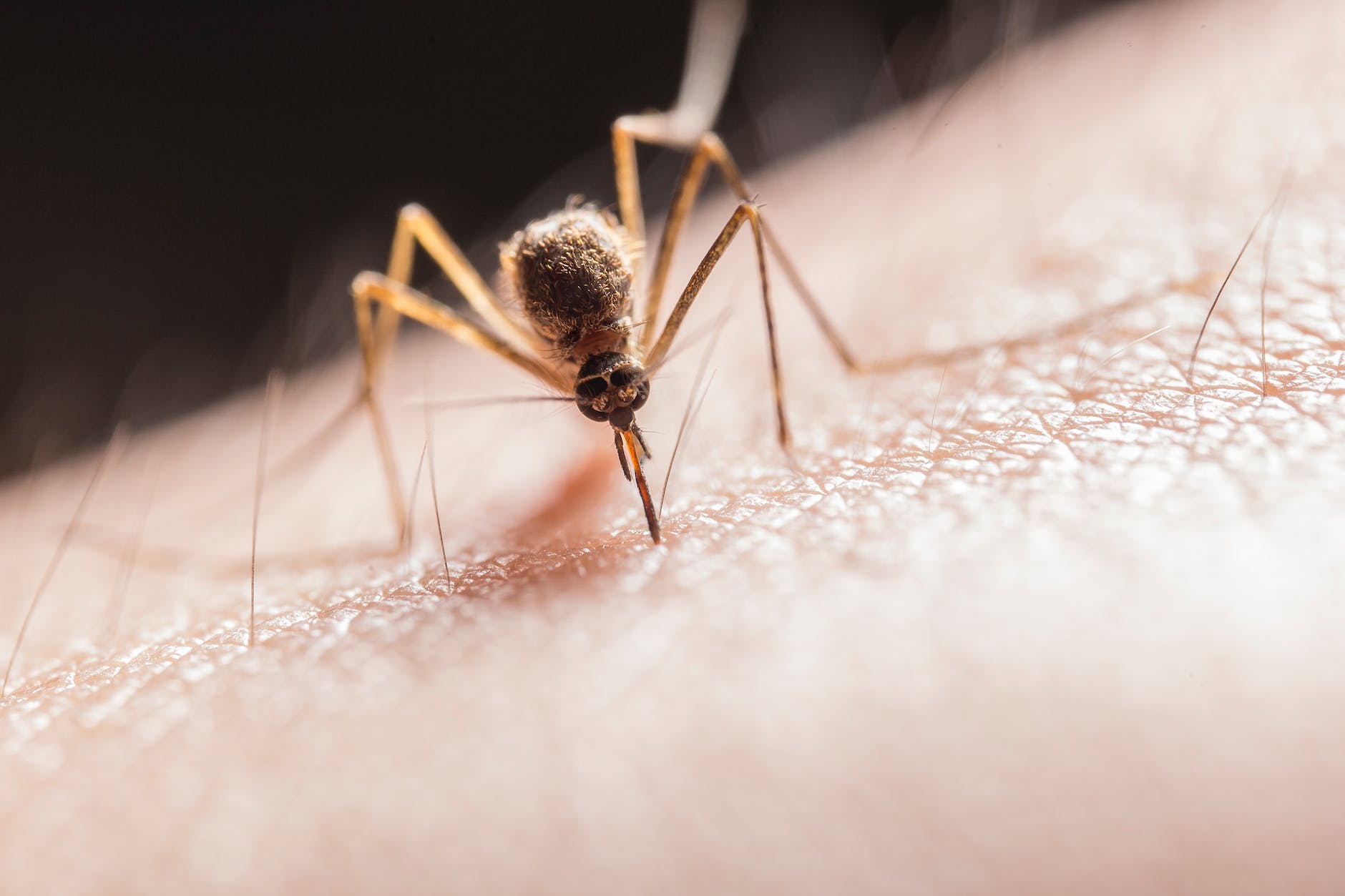
Malaria is caused by Plasmodium parasites. An infected female Anopheles mosquito can transmit the parasite during a blood meal. The broader mosquito group includes many species: not every species can transmit malaria, and not every Anopheles is infected.
A mosquito can acquire the parasite from an infected person and later infect another person. Casual social contact does not spread malaria like a cold or flu. The 2023 investigation initially found imported cases nearby, but proximity did not by itself prove which person started local transmission.
CDC’s later genetic analysis found the Florida parasites closely related; the Texas and Arkansas P. vivax cases differed from Florida and from each other. That supports separate introductions rather than one outbreak traveling between all states. It does not identify a particular household or mosquito as the source of an individual infection.
P. vivax has both blood and liver stages that matter to the reader’s healthcare decision. Blood-stage parasites cause the acute illness; dormant liver-stage parasites can reactivate months or years later. The 2023 report describes acute blood-stage treatment followed by treatment to prevent relapse. A person who has recovered still needs the clinician’s complete plan; mosquito treatment at home does not treat either stage of infection.
How local transmission differs from endemic spread
CDC states that malaria is not endemic in the United States: it does not regularly occur or spread here. Most U.S. cases involve people infected while traveling abroad. Rare local transmission remains possible where a capable mosquito encounters an infected person. Mosquito prevention is therefore worthwhile without labeling every yard a malaria hotspot.
Temperature, mosquito habitat, travel, and public-health response can affect transmission opportunities, but the Sarasota report does not establish that rising temperatures caused the event or that a particular travel increase explains it. Avoid converting plausible factors into a measured Florida trend.
Standing water supports mosquito development, but different species use different habitats. Removing containers around a home helps reduce some mosquitoes; it does not remove every marsh, wetland or off-property source. Mosquito development and adult survival are separate intervals, neither of which establishes that an insect is infected or can transmit a parasite.
Symptoms and the healthcare decision
Early malaria symptoms may include fever, chills, headache, muscle aches, and fatigue; nausea, vomiting, or diarrhea can occur. These symptoms overlap with other illnesses. A clinician and laboratory testing are needed to diagnose malaria. Do not wait for a textbook repeating fever pattern, and do not use an insect photograph or a pest inspection as a medical test.
Seek care promptly for unexplained fever, particularly after travel to a malaria area or where local transmission has recently been reported. Tell the clinician when and where you traveled and about relevant exposure. Severe confusion, seizures, or other emergency symptoms require emergency care. Untreated malaria can become severe or fatal, including infections sometimes described as “milder.”
Dengue in South Florida is a different mosquito-borne illness; do not treat it as interchangeable with malaria. CDC’s separate dengue and malaria symptom accounts both include fever, headache, muscle aches, nausea and vomiting. That concrete overlap means symptoms alone cannot select between them; the causes differ and evaluation belongs with a clinician. Dengue testing and malaria testing address different infections. Seek prompt healthcare for unexplained fever and report travel and exposure history. Do not self-prescribe antimalarial drugs or treat a past negative result as permanent reassurance if illness continues.
CDC describes an incubation period of 7–30 days in most malaria cases, with shorter or longer periods depending on the parasite. Some people become ill much later, and dormant liver stages can cause another episode months or years after the initial infection. These ranges help explain exposure history, but cannot rule out illness from a calendar. Seek care for concerning symptoms and mention relevant travel or exposure even when it was not recent.
Compare the full 2023 U.S. record
| State | Cases | Parasite |
|---|---|---|
| Florida | 7 | Plasmodium vivax |
| Texas | 1 | Plasmodium vivax |
| Arkansas | 1 | Plasmodium vivax |
| Maryland | 1 | Plasmodium falciparum |
CDC’s later summary totals ten cases in four states. The Maryland case shows why “all modern U.S. local malaria is vivax” is inaccurate. These counts describe 2023 and do not establish present risk in any listed neighborhood.
For a longer historical comparison, CDC records eight locally acquired P. vivax cases in Palm Beach County in 2003. The 2023 Sarasota County event involved seven cases, and the Texas case occurred in Cameron County. These are separate events in specified places and years, not a measure of current neighborhood risk.
Bite prevention at home and during travel
For yard mosquito reduction, empty and scrub water-holding containers at least weekly, maintain gutters, cover stored water properly, and repair screens. Do not drain natural wetlands or add household chemicals to shared water. Ask local mosquito-control officials about sources beyond your property.
Use an EPA-registered repellent with a suitable active ingredient and follow its label. Wear loose long sleeves and pants where practical. Anopheles exposure often matters in the evening and at night, but other mosquitoes can bite during the day. Use netting for babies and suitable screened spaces. Do not use OLE or PMD products on children under three, and do not apply permethrin clothing treatments to skin.
Natural repellents are not automatically equivalent to tested, registered personal repellents. A plant, essential-oil recipe, or bracelet does not establish protection against infection. Travelers to a malaria area should discuss destination-specific preventive medication with a healthcare provider before departure.
Mosquito service and public-health information
Private mosquito treatment may complement source reduction when inspection identifies a suitable target. It cannot certify that a yard is disease-free or replace public-health response, clinical care, or personal bite protection. Ask whether In2Care systems are currently available and suitable for the confirmed mosquito sources at your property.
Larval-stage control requires an appropriate labeled product and site. For water that cannot be drained or covered, follow local guidance and label directions; do not improvise pesticide doses. Adult treatment can be temporary and may miss new emergence or incoming mosquitoes.
Combine mosquito prevention and management with current health-department advice when an alert is issued. Keep historical outbreak reporting separate from current instructions and seek healthcare promptly for illness rather than waiting for a pest treatment appointment.
Frequently asked questions
-
Is malaria still a risk in Florida?
Florida’s September 20–26, 2026 surveillance report lists 38 travel-associated malaria cases with onset that year. Rare local transmission is possible, but these travel-associated cases are separate from the seven locally acquired Sarasota cases in 2023. Check current health-department notices for advisories and seek medical care for unexplained fever.
-
What type of malaria was found in Florida?
The September 20–26, 2026 Florida report lists 33 travel-associated cases of Plasmodium falciparum, two of Plasmodium ovale and three of Plasmodium vivax. The seven locally acquired Sarasota cases in 2023 involved Plasmodium vivax. These figures describe different years and transmission settings.
-
Can you get malaria from any mosquito in Florida?
No. Infected female Anopheles mosquitoes transmit malaria; not all Anopheles are infected, and other mosquito groups are associated with different pathogens.
-
How quickly do malaria symptoms appear after a mosquito bite?
CDC describes 7–30 days in most cases, with shorter or longer periods depending on the parasite. Some malaria parasites can remain dormant in the liver for months or years and later cause illness. Do not use this range as a symptom countdown or a reason to rule out illness. Seek care promptly for concerning fever or illness and tell the clinician about travel and relevant exposure.
-
What is the best way to prevent malaria at home in Florida?
Combine EPA-registered personal repellent, suitable clothing, screens or netting, and water-source reduction. No private yard treatment guarantees prevention of malaria.
-
Should Florida residents take antimalarial medication?
Residence in Florida alone does not establish a routine medication need. Discuss travel to malaria areas or a specific exposure concern with a healthcare provider and follow current public-health guidance.
Get help with your pest concern.
Tell us what you are seeing. Our team can discuss the concern and the next step.
- Share your concern and contact details.
- Our team contacts you to discuss available service.
- Ask for a written scope and quote before work.
Where can we reach you?
Our team will call to confirm the next step.
By submitting, you’re asking On Demand Pest Control to contact you about this request.
↗ Prefer to call? (954) 947-0805
Vincent founded On Demand Pest Control in 2017 and is a Florida Certified Operator in all four state categories. He treats pest control as a systematic problem to solve, not a symptom to spray. Read Vincent’s full bio →