

Return to a fumigated home only after the licensed fumigator completes required aeration and instrument-based clearance under the applicable label. A removed tent, an elapsed number of hours, or lack of smell is not permission to enter.
The answer to when you can return after structural fumigation is not a universal number of hours. It is the release given by the licensed fumigator after the required aeration and clearance procedure. This applies whether the job targets termites or another labeled pest. Removing the tent and finishing treatment do not, by themselves, authorize entry.
Arrange your absence around the provider’s written instructions and leave room for the actual clearance process. Do not send someone inside to collect belongings or start cleaning before release. The most useful preparation is a clear communication plan: who gives permission to return, how you receive it, and who to contact if anything is uncertain.
What structural fumigation does
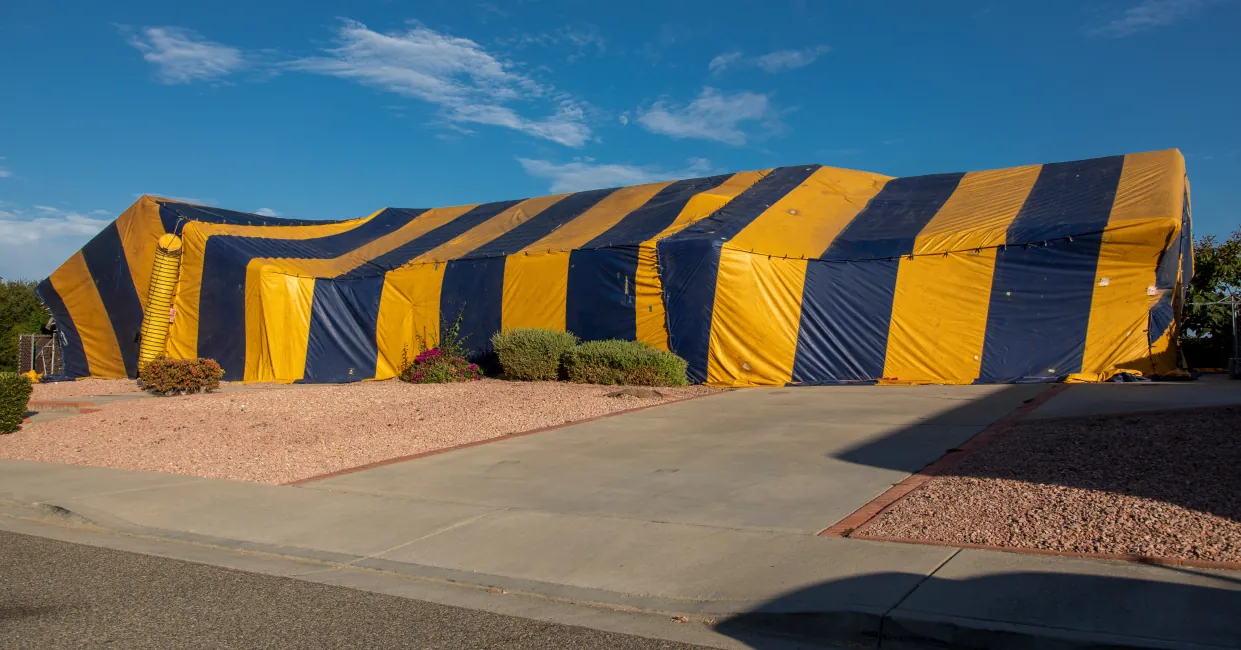
Structural fumigation fills enclosed space with a fumigant gas. For residential sulfuryl fluoride treatment, the material is a restricted-use pesticide requiring trained, authorized applicators. The procedure includes securing the structure, posting warnings, treatment, aeration, and air monitoring before occupants return.
This is different from an ordinary room spray or a consumer fogger. Do not borrow a re-entry time from another pest product, another building, or a previous fumigation. Ask which fumigant and label apply to the current job and what the licensed fumigator requires for this structure.

Clearance is an instrument-based procedure
Before you return, our licensed fumigator uses specialized electronic clearance equipment to measure fumigant levels and confirm the home meets the applicable clearance requirements.
Sulfuryl fluoride is colorless and odorless. EPA describes clearance devices and updated label requirements for residential fumigation, including aeration procedures. NPIC explains that applicators conduct air monitoring and that occupants cannot re-enter until the checks are complete. A person’s sense of smell cannot replace those measurements.
Ask how release will be documented and how the provider verifies the monitoring equipment and readings. Obtain the applicable job records or release instructions rather than assuming every company issues an identically named certificate. If the message is ambiguous or the fumigator has not released the home, remain out and contact the provider.
Why a clock does not provide clearance
The treatment specification, structure, aeration method, and product-label requirements govern the process. A planned departure and return date is useful for lodging, but it is not an independent test of the air. Do not treat a standard “24 to 72 hours” statement as permission when the actual procedure is unfinished.
EPA has changed sulfuryl fluoride residential label requirements, including longer active and passive aeration procedures. That is another reason to follow the applicable current job instructions rather than an older article’s table. Ask in advance what happens if clearance is delayed and how you will receive an updated return instruction.
Odor and warning agents are different matters
Chloropicrin is used as a warning agent with residential sulfuryl fluoride because the fumigant itself is odorless. The warning agent can irritate the eyes and airways. Neither noticing an odor nor failing to notice one is a homeowner’s clearance method.
If an unusual odor or symptoms concern you after release, leave the environment and seek appropriate advice instead of attempting your own exposure test. Give the provider and healthcare professional the treatment information. Do not assume discomfort is a normal part of re-entry or wait for it to disappear according to an online timetable.
Prepare people, animals, and food before treatment
Follow the fumigator’s preparation checklist before the job. NPIC describes removing people, pets, fish, reptiles, and plants; addressing waterproof covers; and preparing food, feed, medicines, and other specified items. Do not assume covering an aquarium is adequate for whole-structure fumigation. Ask about every animal and the exact arrangements required.
Only use the special bags and packaging instructions specified by the fumigator when bagging is required. Ordinary storage bags are not a substitute. Discuss refrigerated and frozen items, opened packages, pet food, and medicines before the crew arrives. If something was prepared incorrectly, do not consume it or improvise a cleanup remedy; ask the provider what to do.
Children, pregnancy, and medical needs require specific discussion
Tell the fumigator about pregnancy, respiratory conditions, medical equipment, infants, and other relevant household needs before work. Clearance is a required part of the process, not a promise that an article can make about every person’s health. Ask a clinician about individual medical concerns and keep the treatment information available.
There is no unsupported extra “four to six hours” rule here for a baby or small pet. Follow the licensed release and any additional instructions applicable to the situation. If the provider or clinician recommends another precaution, document it rather than replacing it with a generic internet waiting period.
Cleaning is not a substitute for air monitoring
NPIC says leftover fumigant residues are not expected to remain on surfaces after structural fumigation. That does not justify ignoring food-preparation instructions, but it does distinguish the process from a liquid pesticide coating. Do not present laundering every garment, mopping every floor, or steam-cleaning upholstery as the procedure that makes re-entry permissible.
Ask what ordinary cleanup is useful for pest debris and what instructions apply to any improperly prepared item. Never begin that work before release. If rodent waste is present, use the separate CDC rodent-cleanup precautions rather than ordinary dry sweeping or vacuuming; clearance from fumigation does not convert contamination into harmless dust.
Ventilation and equipment changes belong in the instructions
NPIC discusses additional ventilation after a professional clears the home for re-entry. Ask the fumigator how that applies to this job and when air-handling equipment may be used. Do not enter early to open windows, turn on fans, or run the air conditioner in an attempt to speed clearance.
Heating elements, ignition sources, appliance controls, covers, and enclosed spaces have preparation requirements. Clarify who manages these before leaving. A homeowner should not improvise equipment changes inside a restricted structure. The provider’s applicable checklist and label control the process.
Respond to suspected exposure as a health concern
If you suspect exposure, leave the area and follow the product’s first-aid instructions while seeking appropriate help. NPIC directs exposure questions to Poison Control; severe breathing problems, collapse, seizures, or another emergency require emergency medical assistance. Do not re-enter an uncleared space to rescue belongings or inspect the gas yourself.
Contact the fumigation provider as well, but do not use a callback as a substitute for urgent health care. Share the product and job information with the clinician or veterinarian. An article cannot determine whether a symptom is due to a fumigant, warning agent, another illness, or something unrelated.
Plan later pest management separately
Fumigation is not residual prevention against future infestation. Continued or new pest evidence needs identification and review of the treatment scope. Cockroaches, carpenter ants, and roof rats have different habitat and control needs; do not assume they require the same response.
Address entry and moisture conditions where appropriate, including those relevant to silverfish. Ask what post-treatment inspection and agreement terms actually cover rather than assuming a standard warranty duration. Keep clearance records, preparation instructions, and the agreed follow-up together so later decisions have a clear starting point.
Frequently Asked Questions
-
How long after fumigation is it safe to sleep in my house?
Sleep in the home only after the licensed fumigator releases it following the required aeration and air-monitoring checks, and follow any additional job instructions. No generic number of hours replaces clearance.
-
Can fumigation chemicals make you sick after the tent is removed?
The tent coming off is not clearance. Sulfuryl fluoride is odorless, and the warning agent is a separate substance. If exposure or symptoms are suspected, leave, seek appropriate health advice, and contact the provider.
-
Do I need to wash everything in my house after fumigation?
There is no universal requirement here to launder or wash everything as a way to remove fumigant. NPIC says surface residues are not expected after the process. Follow the preparation and item-specific instructions; cleaning does not replace clearance.
-
Is fumigation safe for pregnant women after the clearance test?
A blog cannot guarantee safety for an individual pregnancy. Discuss the job and required clearance with the fumigator and ask your healthcare provider about personal concerns. Never enter before release.
-
How long should I air out my house after fumigation?
Follow the licensed fumigator’s instructions. Additional ventilation can be discussed after clearance, but no homeowner-selected ventilation period substitutes for required air monitoring or allows early entry.
-
Will fumigation leave a smell in my home?
Sulfuryl fluoride itself is odorless; chloropicrin is a warning agent that has an irritating odor. Smell is not a clearance test. Report unusual odor or suspected exposure and seek appropriate advice rather than assuming the home is clear.
Get help with your pest concern.
Tell us what you are seeing. Our team can discuss the concern and the next step.
- Share your concern and contact details.
- Our team contacts you to discuss available service.
- Ask for a written scope and quote before work.
Where can we reach you?
Our team will call to confirm the next step.
By submitting, you’re asking On Demand Pest Control to contact you about this request.
↗ Prefer to call? (954) 947-0805