
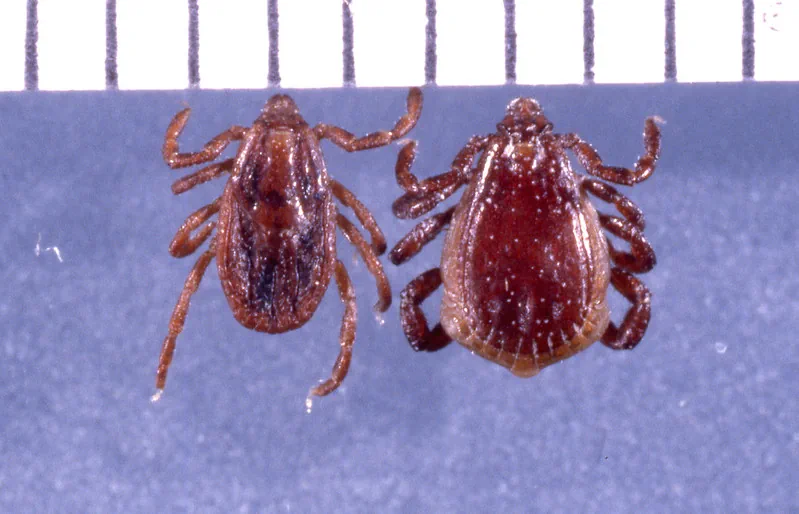
Identify the tick and coordinate pet care with environmental inspection. Brown dog ticks can complete their life cycle indoors; yard spraying alone does not resolve that problem or replace personal bite prevention.
Finding a tick on a dog and repeatedly finding ticks on indoor walls are different situations. Start by identifying the specimen and recording where it was found. A single outdoor encounter does not measure an established indoor population, while recurring indoor evidence needs more than a general lawn treatment.
The plan should connect the animal, the tick’s development sites, environmental conditions, and personal bite prevention. No calendar slogan can promise that every stage disappears today. The practical objective is to stop overlooking part of the cycle and to define what the next inspection will check.
Why brown dog ticks deserve particular attention
UF/IFAS describes the brown dog tick as unusual because it can complete its life cycle both indoors and outdoors. Dogs are its preferred host in the United States, and infestations can develop in residences and kennels. This is different from assuming that every tick carried inside can establish an indoor breeding population.
The Florida tick identification guide helps prepare an identification request. Do not decide from color alone. If the species affects treatment or a medical question, preserve an appropriate specimen or photograph and obtain expert guidance. Avoid transplanting a disease association or seasonal pattern from one tick species to another.
Separate an encounter from recurring indoor evidence
Record ticks found on pets, walls, curtains, bedding areas, or other household locations. UF/IFAS notes that early brown dog tick activity can be missed until ticks are seen climbing walls or curtains. A generic egg count cannot tell you how many ticks are now in the home.
The indoor tick guide and tick life-cycle overview are useful for understanding why inspection includes more than the pet’s coat. Tell the investigator about grooming, boarding, dog parks, visitors with animals, and other recent exposures without treating any one visit as proof of the source.
Use a coordinated veterinary plan
Check pets for ticks and remove attached ticks promptly using an appropriate technique. Discuss prevention products with the veterinarian, including any illness, age restriction, other medicine, or previous reaction. CDC cautions that cats are sensitive to a variety of chemicals and advises asking a veterinarian before applying tick prevention to them.
A pet preventive and a room treatment are not interchangeable. The animal can continue feeding ticks if its care is not addressed, while a pet product does not automatically remove all ticks developing in the environment. Provide the environmental treatment provider with the pet product information so the overall plan can be reviewed coherently.
Inspect and clean the animal’s living areas
Begin with bedding, crates, furniture edges, and accessible cracks near places the dog rests. Vacuum appropriate surfaces and launder washable pet items according to their care instructions. UF/IFAS discusses cleaning and environmental treatment as part of brown dog tick management, but cleaning alone should not be assumed to reach every protected location.
Ask what access is needed and which rooms have evidence. Do not move untreated bedding or furnishings between rooms merely to clear floor space without discussing containment. Keep observations tied to their original location so the next inspection can distinguish an affected resting site from an isolated tick carried elsewhere.
Indoor pesticides must be labeled for the actual problem
An outdoor tick product is not automatically suitable for carpets, walls, kennels, or another indoor setting. Confirm the labeled pest and location, the application method, and all preparation and re-entry instructions. Keep animals and people away as directed. Do not add products or increase the dose because a tick remains visible.
Ask whether the proposed product targets the stage and location where evidence was found, and how later findings will be assessed. Avoid blanket claims that a growth regulator or a professional-strength spray eliminates all tick stages. The treatment plan needs a defined scope and follow-up, not a ranking based only on the seller or concentration.
Reduce yard exposure without assuming the yard is the only source
CDC recommends clearing tall grass and brush, removing leaf litter, mowing, and organizing wood storage. Its landscaping guidance for blacklegged ticks can reduce suitable yard habitat, but it should not be treated as proof that mowing controls an indoor brown dog tick population. Identify the problem before selecting the scale of yard work.
Keep recreation and pet areas away from dense edges where appropriate. The article about animals and tick populations is not a reason to acquire or attract wildlife as a control program. Do not substitute a hoped-for predator population for animal checks, appropriate prevention, and management of the actual site.
Outdoor application does not replace personal protection
CDC states that pesticides can reduce ticks in treated yard areas but should not be relied on to reduce infection risk by themselves. Discuss the suitable product, local application rules, and timing with appropriate officials or a qualified provider. Treatment cannot be assumed to cover every trail, neighboring property, or animal exposure.
Use the tick-bite prevention guide for the personal layer: appropriate registered repellent, protective clothing, checks after exposure, and examination of gear and pets. Follow the actual product directions, and keep human skin products separate from pet and clothing treatments.
Remove an attached tick promptly and watch symptoms
CDC advises removing an attached tick as soon as possible. Use clean fine-tipped tweezers close to the skin and pull with steady, even pressure; do not twist or jerk. Avoid heat, nail polish, petroleum jelly, or other substances intended to make the tick detach. Clean the bite area and hands after removal.
The tick-check guide helps with a full inspection after outdoor exposure. If a rash or fever develops after a tick bite, contact a healthcare provider and describe when and where the exposure likely occurred. The tick-associated disease overview does not diagnose an illness from a tick’s color or a property inspection.
Agree on follow-up and keep flea control distinct
Record new specimens, their locations, pet prevention, cleaning, and all products used. Ask which evidence would show improvement and what would trigger another inspection or change in scope. The number of visits depends on the actual infestation and method; it cannot be predicted reliably from a generic treatment-count promise.
If fleas are present too, ask for a separate identification and stage-specific plan. The flea-treatment overview does not establish that one product, one visit, or one schedule automatically resolves both pests. Get the intended work, precautions, and follow-up obligations in writing before deciding.
Frequently Asked Questions
-
How quickly can a tick infestation spread in South Florida?
An unnoticed brown dog tick problem can become extensive, but a generic egg or breeding count cannot predict the speed of your infestation. Identify the tick and inspect recurring indoor locations promptly.
-
Can ticks survive inside air-conditioned homes in South Florida?
Yes. Brown dog ticks can complete their life cycle indoors, including in residences and kennels. Air conditioning is not proof that an indoor infestation cannot develop.
-
What time of year are tick infestations worst in South Florida?
There is no universal South Florida peak month established for every species and property. Exposure can occur year-round; use the identified tick and actual findings to plan prevention and follow-up.
-
Will keeping my grass short prevent a tick infestation?
No. Mowing and removing suitable yard habitat can help reduce exposure, but they do not replace pet prevention, personal checks, or an indoor brown dog tick plan.
-
Are tick infestations in South Florida dangerous for humans?
Ticks can transmit pathogens, but a tick encounter does not diagnose infection. Remove attached ticks promptly and seek healthcare advice for rash or fever after a bite. Retain bite prevention even if the yard is treated.
-
How many treatments does it take to eliminate a tick infestation?
There is no fixed number that applies to every infestation. Species, development sites, pet care, access, product directions, and follow-up findings determine the plan. Ask for the reassessment criteria in writing.

Vincent founded On Demand Pest Control in 2017 and is a Florida Certified Operator in all four state categories. He treats pest control as a systematic problem to solve, not a symptom to spray. Read Vincent’s full bio →
Get help with your pest concern.
Tell us what you are seeing. Our team can discuss the concern and the next step.
- Share your concern and contact details.
- Our team contacts you to discuss available service.
- Ask for a written scope and quote before work.
Where can we reach you?
Our team will call to confirm the next step.
By submitting, you’re asking On Demand Pest Control to contact you about this request.
↗ Prefer to call? (954) 947-0805