
Table of Contents
ToggleKey Takeaways
- Pantry pests like Indian meal moths, weevils, and beetles can infest sealed food packages and multiply rapidly in warm kitchens.
- Proper food storage in airtight glass or hard plastic containers is the single most effective way to prevent pantry pest infestations.
- Regular cleaning routines — including wiping shelves, vacuuming crumbs, and rotating stock — eliminate the conditions pantry pests need to thrive.
- Bay leaves, diatomaceous earth, and freezing techniques offer eco-friendly ways to deter and kill pantry pests without harsh chemicals.
- A professional pest control inspection can uncover hidden infestations in wall voids, behind appliances, and inside insulation where DIY methods fall short.
Pantry pests are among the most frustrating invaders a homeowner can face. You reach for a bag of flour or a box of cereal, and suddenly you spot tiny beetles crawling inside, webbing stretched across the bag’s opening, or small larvae wriggling through your rice. These stored-product insects — including Indian meal moths, grain weevils, sawtooth grain beetles, and even certain species of moths — enter your home inside grocery packaging and can spread to every shelf in your pantry within weeks. The worst part? They often go unnoticed until the infestation is well-established. In this guide, you will learn exactly how to identify common pantry pests, eliminate active infestations, and build lasting prevention habits that keep your kitchen clean and pest-free year-round.
What Are Pantry Pests and Why Are They in Your Kitchen?
Pantry pests are a group of insects that feed on and breed inside stored food products. Unlike outdoor pests that enter through cracks and crevices, most pantry pests arrive in your home as stowaways. They hitch rides inside bags of grain, cereal, flour, dried fruit, pet food, spices, nuts, and birdseed purchased from grocery stores or warehouses.
Once inside your pantry, these insects find an ideal environment. Warm temperatures, darkness, and an unlimited food supply let them reproduce at alarming rates. A single female Indian meal moth can lay up to 400 eggs in her lifetime. Those eggs hatch within days, and larvae begin tunneling through your food immediately.
Pantry pests thrive especially well in humid climates. If you live in South Florida, the year-round warmth accelerates their life cycle. Understanding how weather impacts household pests in South Florida helps explain why these insects can become a persistent problem in warmer regions.
Common Types of Pantry Pests
Knowing which pest you are dealing with determines the right response. Here are the most common culprits:
- Indian Meal Moths: The most widespread pantry pest. Adults have a distinctive copper-and-gray wing pattern. Larvae produce silken webbing in food.
- Sawtooth Grain Beetles: Tiny, flat, brown beetles with saw-like projections along the thorax. They infest flour, cereals, and dried fruit.
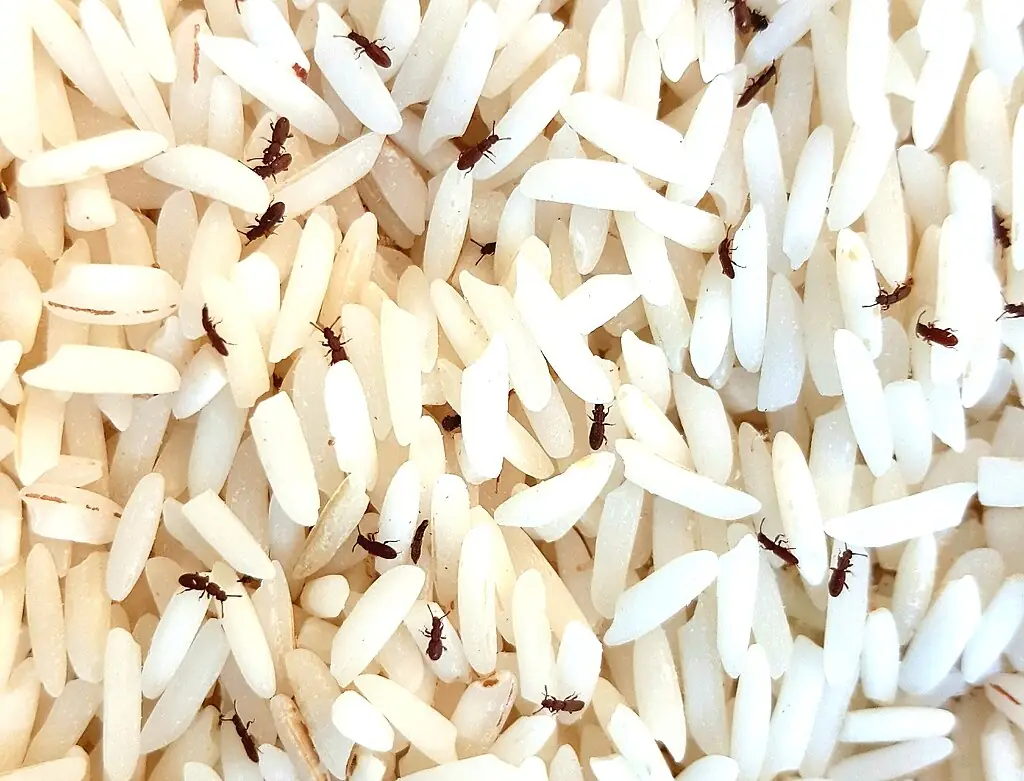
- Rice Weevils: Small beetles with elongated snouts. Females bore into individual grains to lay eggs inside.
- Drugstore Beetles: Oval, reddish-brown beetles that feed on an unusually wide range of products — from spices and dried herbs to pet food.
- Flour Beetles: Reddish-brown beetles commonly found in flour, cake mix, and processed grain products.
How to Identify a Pantry Pest Infestation
Many homeowners do not realize they have pantry pests until the infestation is obvious. Catching it early saves you from throwing out hundreds of dollars in contaminated food. Here are the key warning signs to watch for.
Visual Signs in Your Food
Open each package and look carefully. Tiny holes in packaging are a red flag — beetles and moth larvae can chew through cardboard, thin plastic, and paper. Inside the food, look for:
- Small worm-like larvae (often white or cream-colored)
- Fine silken webbing, especially near the top of bags or jars
- Tiny eggs that resemble grains of sand
- Live or dead adult insects
- A musty or off-putting odor in otherwise fresh products
Signs Around Your Kitchen
Pantry pests do not always stay in the pantry. Adult Indian meal moths fly to other rooms and gather near light sources. You may notice small moths fluttering around ceiling lights or windows in the evening. Beetles sometimes wander across countertops and shelves far from the original food source.
Shed larval skins and frass (insect droppings) along shelf edges are another telltale sign. If you spot these indicators, it is time for a thorough pantry inspection. Scheduling a professional pest inspection can reveal infestations hiding in areas you might overlook, such as behind appliances or inside wall voids.
How to Eliminate Pantry Pests Step by Step
Once you confirm an infestation, act quickly. Pantry pests multiply fast, and a half-hearted cleanup will not stop the cycle. Follow this step-by-step process to eliminate them from your kitchen completely.
Step 1: Remove and Inspect All Food
Take everything out of your pantry — every box, bag, can, and container. Inspect each item carefully. If you find any sign of infestation — larvae, webbing, holes in packaging, or live insects — discard the item immediately. Place contaminated food in a sealed plastic bag before putting it in your outdoor trash bin.
Even items that look clean may harbor eggs. If you are uncertain, place suspect packages in the freezer at 0°F for at least four days. Freezing kills all life stages of pantry pests.
Step 2: Deep Clean Every Surface
With shelves empty, vacuum every shelf, corner, crack, and crevice in the pantry. Pay special attention to shelf liner edges where larvae and eggs collect. After vacuuming, wipe all surfaces with a solution of warm water and white vinegar. This removes pheromone trails that attract more insects.
Empty your vacuum canister or bag into an outdoor trash bin immediately afterward. Larvae inside the vacuum can crawl back out if left indoors.
Step 3: Treat Problem Areas
For severe infestations, apply a thin layer of food-grade diatomaceous earth along shelf edges and in cracks where insects hide. This natural powder damages the exoskeleton of crawling insects, causing dehydration. Learn more about whether diatomaceous earth is effective for pest control and how to use it safely around food storage areas.
Pheromone traps designed for Indian meal moths are also useful. These sticky traps attract adult males, reducing the breeding population and helping you monitor whether the infestation is truly resolved.
Step 4: Restock Using Pest-Proof Storage
Never return food to the pantry in its original packaging. Transfer dry goods into airtight containers made of glass, thick plastic, or metal with tight-fitting lids. Pantry pest larvae can chew through cardboard, thin plastic wrap, and paper bags. Rigid containers create a physical barrier they cannot penetrate.
Best Storage Practices to Prevent Pantry Pests
Prevention is always easier than dealing with an active infestation. The following storage habits dramatically reduce your risk of pantry pests taking hold in your kitchen.
| Food Type | Recommended Container | Additional Tip |
|---|---|---|
| Flour and baking mixes | Glass jar with screw-top lid | Freeze for 4 days before storing |
| Rice and grains | Thick plastic container with snap-lock lid | Add a bay leaf inside as a natural deterrent |
| Cereals and crackers | Airtight plastic or glass canister | Check expiration dates and rotate stock often |
| Dried fruit and nuts | Glass jar or vacuum-sealed bag | Store in the refrigerator for long-term keeping |
| Spices and dried herbs | Glass spice jars with tight seals | Buy in smaller quantities to use quickly |
| Pet food and birdseed | Metal bin with locking lid | Never store in the garage near entry points |
Adopting a first-in, first-out system is also smart. Move older items to the front and use them first. This prevents food from sitting untouched for months, giving pests time to establish colonies undetected.
Natural and Eco-Friendly Ways to Deter Pantry Pests
If you prefer to minimize chemical use in your kitchen — especially around food — several natural methods can complement your prevention strategy. These are not standalone solutions for an active infestation, but they work well as ongoing deterrents.
- Bay leaves: Place whole bay leaves on pantry shelves and inside containers. Many pantry pests dislike the scent and avoid areas where bay leaves are present.
- Cloves and peppermint oil: A few drops of peppermint essential oil on cotton balls, or whole cloves scattered on shelves, create an unwelcoming environment for beetles and moths.
- Freezing new purchases: Before storing any new dry goods, place them in the freezer for four days. This kills eggs and larvae that may already be present from the store.
- Vinegar shelf wipes: Clean pantry shelves with a 50/50 vinegar-water solution every two to four weeks to remove food residue and pheromone trails.
For a broader look at chemical-free strategies for your entire home, explore eco-friendly pest control methods that balance safety and effectiveness.
How Kitchen Design and Insulation Affect Pantry Pests
Your kitchen’s structure plays a bigger role in pest prevention than most people realize. Gaps around pipes, poorly sealed baseboards, and missing caulk around cabinet backs give insects pathways from wall voids into your pantry. Even if you eliminate pests inside your food containers, new ones can keep entering through structural gaps.
Insulation is another factor. Traditional insulation materials can harbor insects — including pantry pests — within walls and attic spaces adjacent to kitchens. Upgrading to pest-control insulation, which contains borate-based treatments, creates a hostile barrier that kills insects attempting to travel through wall cavities. Learn how pest control insulation works and why it is a long-term investment in keeping your home pest-free.
Sealing cracks around plumbing penetrations, installing door sweeps on pantry doors, and caulking gaps where shelving meets walls are simple exclusion techniques that limit pest entry points. For more detail on this approach, read about what exclusion means in pest control and how it protects your property.
When to Call a Professional for Pantry Pest Problems
Most minor pantry pest issues can be resolved with thorough cleaning, proper storage, and monitoring traps. However, some situations call for professional help. You should contact a pest control expert if:
- The infestation returns after you have cleaned and restocked multiple times.
- You find pests in rooms far from the kitchen, suggesting a widespread colony.
- Insects are emerging from wall voids, light fixtures, or ceiling cracks — areas you cannot access yourself.
- You are unsure which pest you are dealing with, making treatment difficult to target.
A licensed technician can perform a comprehensive inspection, identify the pest species, locate hidden breeding sites, and apply targeted treatments that are safe for food-storage areas. If you are weighing DIY options against hiring a pro, reviewing the advantages of DIY versus professional pest control services can help you make the right call for your situation.
Ongoing pest management plans are especially valuable for homeowners who have dealt with repeated infestations. Professionals can set up quarterly monitoring and preventive treatments that catch problems before they escalate. Investing in regular service often costs far less than repeatedly replacing contaminated food.
Frequently Asked Questions
-
Can pantry pests make you sick if you accidentally eat contaminated food?
Pantry pests are not known to transmit diseases directly. However, consuming food contaminated with larvae, eggs, shed skins, and frass can cause digestive discomfort, allergic reactions, or nausea in some people. It is always best to discard any food that shows signs of infestation.
-
How do pantry pests get into sealed packages?
Many pantry pests infest food products at the warehouse, processing plant, or distribution center before they reach store shelves. Larvae can also chew through thin plastic, cardboard, and paper packaging. Transferring food into rigid airtight containers at home is the best defense.
-
How long does it take to fully eliminate a pantry pest infestation?
A thorough cleaning and restocking can resolve most infestations within one to two weeks. However, if eggs remain hidden, you may see new adults emerge for up to six weeks. Pheromone monitoring traps help confirm when the infestation is completely gone.
-
Do pantry pests only infest dry goods like flour and rice?
While dry grains, flour, and cereal are the most common targets, pantry pests can also infest spices, dried herbs, chocolate, dried fruit, pet food, birdseed, and even decorative dried flowers. Any shelf-stable organic material is potentially at risk.
-
Are pantry pests more common in warm climates like South Florida?
Yes. Warm, humid environments accelerate the reproductive cycle of most stored-product insects. In South Florida, pantry pests can breed year-round rather than slowing down during cooler months. Consistent prevention habits and proper food storage are especially important in these regions.
-
Is it worth hiring a professional for a small pantry pest problem?
For a minor issue limited to one or two food items, DIY cleanup and improved storage are usually sufficient. However, if the problem persists after multiple cleanings or spreads to other areas of your home, a professional can identify hidden breeding sites and apply targeted treatments that end the cycle for good.