
Rat nest removal begins with deciding whether animals are still using the site and whether the material can be reached safely. Pulling out a clump of insulation or leaves does not remove rats elsewhere, close an entry point or clean the surrounding contamination. Keep the material undisturbed while a qualified professional assesses activity and the cleanup scope.
The nest’s setting matters. A small abandoned nest on an accessible hard surface calls for different work from a burrow, an occupied tree nest or contaminated insulation in an attic. The goal is to coordinate animal control, material removal and access prevention without creating a dust exposure or leaving an active nesting area unresolved.
At a glance
- Live animals, young or uncertain occupancy: leave the material alone and arrange professional assessment.
- Small, confirmed abandoned nest in an accessible area: follow a defined wet-disinfection and disposal plan.
- Insulation, ducts, wiring or unsafe access: obtain a separate material and building-system assessment.
- After removal: check the surrounding contamination, feeding routes and openings; keep records of renewed signs.
What does a rat nest look like?
Norway rats may line a sheltered nest with leaves, shredded paper, cloth or other fibrous material. Their nests can be inside burrows or protected building spaces. Roof rats often use elevated locations, including vegetation, attics and wall voids. UC’s citrus guidance describes roof-rat nests made from leaves and twigs in trees.
There is no single nest shape that identifies every rat. The available materials and shelter influence appearance. Gathered fibers beside droppings or gnawing deserve assessment, but a pile of damaged insulation can also be loose debris. Avoid pulling it apart to look for a chamber or hidden animals.
The differences between rats and mice help explain why the material alone is insufficient. Several rodents use fibrous shelter. Combine a safe distant sighting with surrounding evidence and habitat, then obtain qualified confirmation before choosing a removal method.
Use rodent-dropping identification as a visual reference for nearby signs, not a reason to handle pellets. Photographs of the location are more useful than samples collected casually. Neither dropping size nor a nest’s dimensions provides a reliable count of animals using the space.
Where roof rats and Norway rats may nest
Roof rats are capable climbers and commonly use concealed elevated shelter. An attic nest may be among insulation, stored belongings or adjoining voids. Outside, dense vegetation and trees can provide nesting sites. In citrus settings, UC notes that roof rats may also nest in ground debris, thick mulch or shallow burrows.
Norway rats more often use ground burrows around foundations, woodpiles, rubbish and gardens. They can also occupy building interiors and ceiling spaces. A ground-level nest is not automatically a Norway-rat nest, and an attic location is not conclusive proof of roof rats.
The guide to roof rats and palm rats in Florida explains the common-name connection and elevated habitat clues. When vegetation is involved, identify the animal before clearing a suspected nest. Birds, squirrels and native rodents can also use sheltered plant material.
Do not climb into a palm canopy or probe an outdoor burrow. For indoor shelter, inspect only from safe accessible positions. A flashlight does not make attic flooring, electrical equipment or confined spaces safe. Qualified people should select the access method and determine whether another trade is needed.
Does the nest still contain rats?
A nest can be active, temporarily empty or abandoned. Seeing no animal during one observation does not establish which condition applies. Rats are mostly active at night and may forage away from shelter, but activity patterns cannot provide a dependable clearance time.
Photograph the location without touching the material. Note nearby feeding damage, repeat sightings and other accessible evidence. Ask the inspector how current activity will be evaluated and what must happen before the nesting material is removed. Do not lift the material to check for babies or use a household pet to investigate.
A nest is not a population census. Several piles may be old sites or unrelated debris, while more than one animal may use a shelter. Avoid plans based on a fixed “rats per nest” number. The physical evidence should guide inspection and monitoring.
If live animals or young are present, the pest professional must address that situation before ordinary cleanup. Do not attempt to drown, suffocate, relocate or handle them. Removing an occupied nest without a coordinated plan can create animal-welfare, exposure and building-access problems.
What safe removal of an abandoned nest involves
CDC provides a wet-disinfection procedure for dead rodents and nesting material. This procedure belongs within a cleanup plan for confirmed abandoned material in a safely accessible setting. It does not authorize entering unsafe attics, disturbing live animals or treating heavy contamination as a small household task.
For homes and outbuildings, CDC advises opening doors and windows for 30 minutes before cleaning and leaving the area during ventilation. Return only when access is safe. Ventilation does not replace the additional precautions needed for heavy contamination.
For a small abandoned nest, the CDC sequence includes:
- Wear rubber or plastic gloves.
- Thoroughly wet the nest and surrounding area with an appropriate disinfectant.
- Allow five minutes of contact, or follow the disinfectant label’s instructions.
- Place the material in a plastic bag and seal it.
- Put that bag inside a second plastic bag and seal the outer bag.
- Dispose of it in a covered garbage container that is regularly emptied, following local requirements.
- Wash gloved hands before removing the gloves, then wash bare hands.
Do not sweep, vacuum or shake nesting material before disinfection. Avoid dragging contaminated material across clean rooms. Follow the product’s surface compatibility and handling directions, and never mix cleaning chemicals. Rodents may carry fleas; discuss flea exposure and label-appropriate protective measures with the cleanup provider. A large, inaccessible or porous affected area needs a different scope.
The surrounding surface still requires cleaning and disinfection after the nest is removed. Check adjacent storage, waste and stained material with the cleanup provider. A bagged nest is only one part of the affected area, not proof that the room or attic is fully restored.
When insulation or building systems are affected
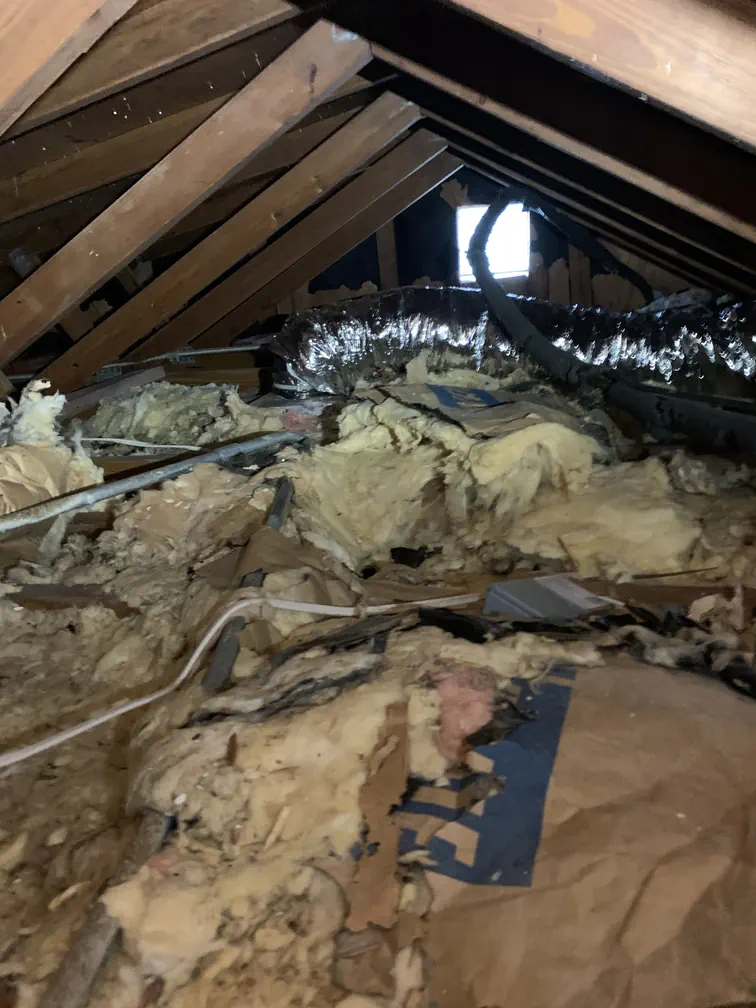
Nesting rats can disturb insulation and gnaw wiring or other materials. Cleanup should identify what is contaminated, what is damaged and what remains sound. Odor or a nest observation alone does not establish that every part of an attic needs replacement.
The guide to attic insulation damage and replacement decisions explains why material condition matters. Contaminated insulation cannot be treated like a wipeable cabinet surface. Ask the provider to describe the affected area, proposed removal and how any remaining material will be assessed.
Suspected wiring damage needs a qualified electrician. Evidence of access to heating or cooling ducts needs professional rodent assessment and a suitable duct-cleaning or HVAC scope. Do not open electrical equipment or run an ordinary household vacuum through contaminated insulation.
For signs in an attic, assessing rats in attic spaces connects animal evidence with safe access and damage inspection. Ask whether adjoining voids have been considered and how contaminated material will be taken out without passing through unprotected household areas.
Require the cleanup scope to distinguish nesting debris, surrounding waste, insulation, stored items and system repairs. These tasks may involve different providers. Confirm inclusions and pricing directly; nest removal does not automatically include full insulation replacement, duct work or electrical repair.
Outdoor nests and burrows need a different approach
An outside shelter can connect feeding areas with a building, but its appearance does not identify the animal. Have a qualified professional evaluate a suspected burrow or tree nest before removal. Do not collapse, excavate or flood an occupied or unidentified shelter.
In developed areas, organize clean storage and remove ordinary debris that has been confirmed free of contamination or occupied nests. Collect fallen produce and secure garbage and feed. Vegetation work should reduce convenient building access while preserving appropriate plant care and protected habitat.
Trimming branches or removing a nesting site at height belongs to qualified people. Work near overhead wires requires the relevant utility or trade. Do not use a ladder to follow rats along a roofline or attach improvised devices to electrical equipment.
The removal decision should account for shelter beyond the visible nest. Rats can travel between properties and feed away from their nesting location. Eliminating one outside shelter therefore does not establish that indoor activity is absent or that food resources have been addressed.
Prevent the site from becoming useful again
After active animal control and appropriate cleanup, inspect the routes connected to the nest. A convenient wall gap, damaged vent or open utility penetration can allow continued use even after the material is gone. Ask who will repair each documented opening and how the fit will be checked.
A complete rat-management plan combines sanitation, exclusion and population control. Use that framework when comparing a nest-removal quote with the wider problem. The plan should account for animals already inside and explain how control and closures will be coordinated.
Keep clean storage organized so edges remain visible. Protect food and animal feed, secure waste and correct unnecessary water leaks. Address accessible nesting materials without handling contaminated items as ordinary clutter. These steps improve prevention, but one cleanup visit cannot guarantee that rats will never return.
Retain dated photographs and the work scope. New droppings, feeding damage or renewed sightings after appropriate cleanup should prompt reassessment. Ask the provider which observations will trigger another inspection, and avoid using one quiet night or a deodorized room as proof of clearance.
Frequently Asked Questions
-
How much does rat nest removal cost?
Cost depends on access, current animal activity, contamination, affected materials and the work included. Ask for a written scope separating animal control, cleanup, insulation removal and building repairs. A small accessible abandoned nest and a contaminated attic are different jobs.
-
Will rats leave if I remove their nest?
Nest removal alone does not reliably remove established rats or prevent return. Food, other shelter and entry points may remain available. Coordinate active control and access repairs with cleanup.
-
Can I vacuum up an abandoned rat nest?
Do not vacuum or dry sweep nesting material before appropriate disinfection. CDC recommends wet disinfection and bagged removal, with additional precautions for heavy contamination. Inaccessible or porous affected areas need a separately assessed scope.
-
Do roof rats always nest above ground?
No. Roof rats often use elevated shelter, but UC guidance also describes nests in debris, mulch and shallow burrows. Location helps an inspection without conclusively establishing species.
-
Does a rat nest mean there are babies inside?
It may, but a nest observation does not prove that young are present. Leave the material undisturbed and have a qualified professional assess occupancy. Do not open it to check.
-
Must all attic insulation be replaced after finding a nest?
Not automatically. Replacement decisions should follow the documented contamination, damage and material condition. Have the affected area assessed so the work matches its actual condition.

Vincent founded On Demand Pest Control in 2017 and is a Florida Certified Operator in all four state categories. He treats pest control as a systematic problem to solve, not a symptom to spray. Read Vincent’s full bio →
Get help with pests in your home.
We’ll talk through what you’re seeing and arrange a time to inspect your home.
- Tell us what you’re seeing.
- We arrange an on-site inspection.
- You receive a written quote explaining the work.
Where can we reach you?
Our team will call to confirm the next step.
By submitting, you’re asking On Demand Pest Control to contact you about this request.
↗ Prefer to call? (954) 947-0805