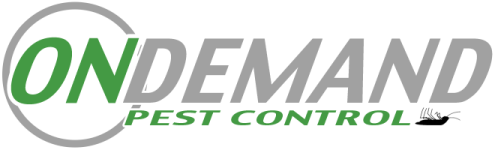
Sewer rat usually means Norway rat. Record where the animal was seen, investigate building and drainage access, and coordinate control with supported repairs. A bathroom sighting alone does not identify the entry route.
Sewer rat is a common name for the Norway rat, also called a brown rat. The name does not mean the animal lives exclusively in a sewer. Norway rats also use ground burrows, sheltered storage areas and buildings. Rats can swim through sewer systems and enter through toilets or broken drains, but finding one in a bathroom does not establish how it arrived.
Start with the location and what you actually saw. A rat in the toilet bowl raises a different inspection question from droppings beneath the vanity. Keep people and pets away, avoid handling the animal, and arrange qualified help. The next step is to connect the observation with a verified access route, then coordinate removal, repair and cleanup.
How to recognize a sewer rat
An adult Norway rat generally looks stockier than a roof rat, with a blunter muzzle and a tail shorter than its head and body combined. Roof rats are usually slimmer and have a longer tail relative to their body. Coat color alone is a poor identification shortcut because lighting, age and individual variation change how an animal appears.
The comparison in rat and mouse identification helps separate these proportions from a simple size guess. A young rat can resemble a mouse. Record a sighting from a safe distance if possible, but never catch, corner or handle an animal to examine its tail or feet.
Norway rats commonly shelter in burrows and lower building areas. Roof rats favor elevated spaces, although either species can use other levels. UC Integrated Pest Management notes that roof rats may also occupy sewers. Identify a rat emerging near plumbing before selecting the control method.
Droppings, gnawing and nesting material can support an inspection, but none proves that a sewer connection is involved. Do not pick up pellets, test them for softness or infer a rat count from their number. Describe the room, nearby fixtures and whether an animal was actually seen.
Can rats come up through a toilet?
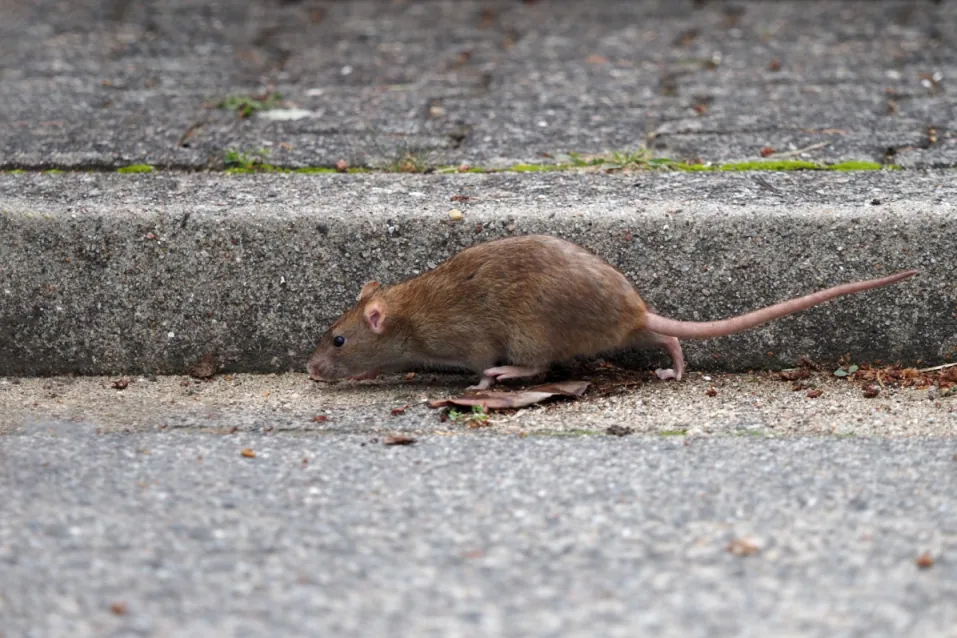
Yes. UC Integrated Pest Management describes rats swimming through sewers and gaining access through toilets or broken drains. Norway rats are stronger swimmers than roof rats. That documented ability establishes a possible route; it does not show how common the route is at your property or in your neighborhood.
If you see a rat inside the bowl, leave it alone and keep the bathroom out of use. Close the room door if you can do so without approaching the animal. Do not reach into the toilet, try to trap it by hand, or repeatedly flush in an attempt to force it away. Tell the responding professional exactly where it was seen.
A pest professional handles identification and the animal-control plan. A qualified plumber assesses suspected drain connections, damage and any proposed plumbing repair. Ask the providers to coordinate their findings. A standard inspection of roof gaps cannot, by itself, establish the condition of a concealed sewer connection.
A closed bathroom door is temporary separation, not a repaired entry route. If the animal disappears, keep the observation in the inspection record. Its absence from the bowl does not show whether it returned to the drainage system, moved elsewhere or remains concealed nearby.
Bathroom signs do not always mean sewer access
A rat beneath a sink may have traveled through a gap around a pipe, an adjoining wall void or an ordinary exterior opening. The pipe and the opening around it are different pathways. Sealing a cabinet hole does not repair a damaged drain, and repairing a drain does not close an unrelated wall gap.
The broader guide to how rats enter a house explains why ground-level openings, utilities and roof access belong in the same investigation. Use that wider inspection when signs extend beyond one bathroom. An indoor trail may connect several rooms without identifying a separate exterior entrance for each.
Give the inspector a simple evidence list:
- The date and location of an actual sighting.
- Whether the animal was inside a fixture or elsewhere in the room.
- Photos of accessible waste or damage taken without disturbing it.
- Other rooms with current signs.
- Recent plumbing work or known damage.
- Any recurring observations after earlier removal or repairs.
A sewer odor, scratching noise or nearby street drain is not proof of a rat route. Report those details without treating them as a diagnosis. Existing plumbing records may help the plumber decide what needs inspection, while physical rodent evidence guides the pest professional.
What to ask during the plumbing assessment
Ask the plumber which connection or defect is suspected and what evidence would support that conclusion. The useful outcome is a documented finding, not a generic recommendation to cover every opening. The appropriate inspection method depends on the building, access and the reported location.
Questions worth putting in the work order include:
- Is there evidence of a damaged drain or a connection to a concealed space?
- Does the finding explain the specific sighting?
- Is additional inspection needed before a repair is selected?
- Who is responsible for the affected part of the system?
- How will the completed repair be checked?
Do not block a working drain, roof vent or sewer cleanout with improvised mesh or expanding foam. A plumbing barrier or other device must suit the system and preserve its operation. Have a qualified plumber determine whether any proposed modification is appropriate.
For an apartment or shared building, report the observation to the responsible property manager as well as the responding professionals. Supply the date, fixture and photos. A shared connection may require access or coordination beyond your unit; the observation alone does not establish which party owns the defect.
Check nearby ground-level shelter too
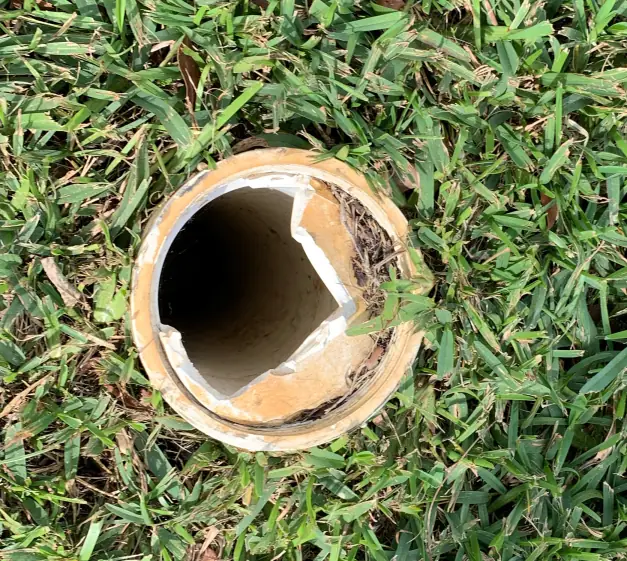
A sewer-associated rat may also use an accessible food source or ground burrow outside. UC Integrated Pest Management describes Norway-rat burrows near foundations, rubbish, woodpiles, gardens and fields. Look at safely accessible developed areas around the building, especially waste storage and adjoining structures.
Use the outdoor rat inspection and prevention guide to connect these resources with building pressure. Photograph a suspected burrow from a distance. Do not probe, flood, smoke or poison a hole to find out what is inside; other animals can use similar spaces.
Secure garbage lids and stored animal feed. Clean ordinary food spills where there is no rodent contamination, and collect neglected produce. If you find waste or a possible nest, stop ordinary sweeping or decluttering and use a contamination plan. These improvements reduce support without proving that a plumbing route has been fixed.
Public drains, utility structures and sewer openings require the responsible agency or qualified trade. Do not lift a manhole cover or enter a drainage space to search. If observations involve public property, ask the local utility or municipality which department receives reports and handles the affected infrastructure.
Separate control from the entry repair
Removing the visible rat and repairing access solve different parts of the problem. A pest professional should explain the identified species, active locations, proposed devices, non-target protections and follow-up. The plumber should explain the supported plumbing finding and repair. Neither task automatically includes the other.
The complete rat-control approach connects current removal with sanitation, exclusion and monitoring. Use it to evaluate whether the plan addresses the building as a whole. One captured animal cannot certify that every route has been repaired or every affected space inspected.
Rodenticides are toxic and require the correct species, site and directions on the label. Do not pour pesticides, bleach or other chemicals into plumbing as a rat-control method. Household disinfectants are cleanup products when used as directed, not a substitute for professional animal removal or drain repair.
Ask how carcasses and contaminated material will be located and managed if bait is proposed. Rodents do not reliably leave a building before dying. The plan should consider inaccessible spaces, protect children, pets and wildlife, and address the supported entry route.
Clean the affected area and document follow-up
Keep the bathroom or other affected space separate from normal household use until the animal and contamination have been assessed. Rodent urine, droppings and nesting material should not be dry swept or vacuumed. Heavy contamination, inaccessible material and sewage involvement need a scope matched to those conditions.
For small, accessible rodent waste on hard surfaces, CDC describes gloves, thorough wet disinfection, the specified contact time and careful removal. Its guidance includes further surface cleaning and handwashing. Follow product compatibility instructions, and do not mix cleaning chemicals. A surface that looks clean is not proof that a concealed route is closed.
The explanation of rodent contamination and exposure risks helps separate cleanup concerns from species identification. Seek medical advice after a concerning bite or illness following exposure, and describe the actual contact. A property inspection cannot diagnose an infection.
Keep the removal record, plumbing findings and before-and-after repair photos together. Note renewed sightings or waste after appropriate cleanup. If evidence returns, tell both providers what changed and where. Reassessment should test the suspected route and other possible access. Ask what the new findings mean for the treatment and repairs.
Frequently Asked Questions
-
Does every sewer rat come from a sewer?
No. Sewer rat is a common name for the Norway rat, which also uses burrows, sheltered outdoor areas and buildings. A particular animal's entry route requires evidence from the property.
-
Can a roof rat use a sewer?
Yes. UC Integrated Pest Management notes that roof rats may occupy sewers and that rats can enter through toilets or broken drains. Habitat tendencies help an inspection but do not conclusively identify the animal.
-
Does a rat in the bathroom mean the toilet is the entry point?
Not necessarily. An animal elsewhere in the room may have used a wall void, utility gap or ordinary building opening. Tell the inspector whether it was actually inside the toilet or simply near plumbing.
-
Who should I call about a rat inside a toilet?
Arrange qualified pest assistance for the animal and a licensed plumber for suspected drainage access. Keep people and pets out of the room while the situation is assessed. Report a shared-building observation to the responsible property manager too.
-
Will repairing one drain eliminate the rat problem?
A supported drain repair addresses that particular route. Animals already indoors, other openings and outdoor food or shelter may still need attention. Ask how removal, repairs and follow-up will be coordinated.
-
Can I use bleach in the toilet to get rid of a rat?
Do not use bleach or another chemical as an animal-removal method. Keep the area separate and seek qualified assistance. Use disinfectants only for appropriate cleanup according to their labels.
Vincent founded On Demand Pest Control in 2017 and is a Florida Certified Operator in all four state categories. He treats pest control as a systematic problem to solve, not a symptom to spray. Read Vincent’s full bio →
Get help with pests in your home.
We’ll talk through what you’re seeing and arrange a time to inspect your home.
- Tell us what you’re seeing.
- We arrange an on-site inspection.
- You receive a written quote explaining the work.
Where can we reach you?
Our team will call to confirm the next step.
By submitting, you’re asking On Demand Pest Control to contact you about this request.
↗ Prefer to call? (954) 947-0805