
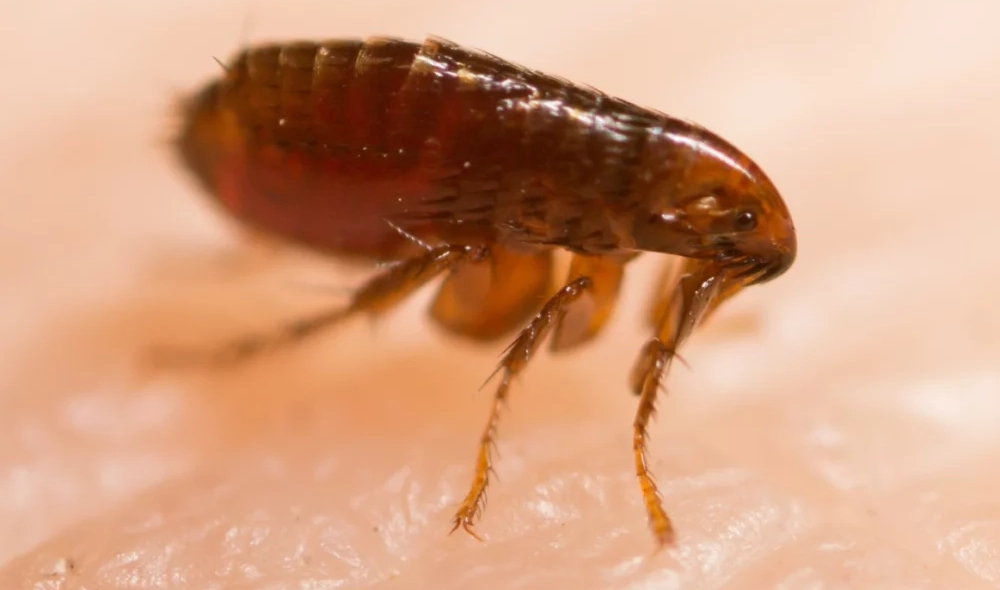
Confirm fleas with insect and pet evidence—not a rash pattern. Check bedding and animal resting places, then coordinate cleaning and veterinary care.
Key Takeaways
- Confirmed jumping adults and identified flea waste are more useful evidence than a bite pattern.
- Inspect pets and their regular resting places, including bedding and upholstery.
- Eggs and larvae develop in the environment; adults on an animal are only one part of the problem.
- Vacant or pet-free homes may still contain protected pre-emerged adults.
- Coordinate cleaning, veterinarian-directed pet treatment and any labeled home treatment.
Signs of fleas can appear on an animal, in its bedding or elsewhere in the home. Scratching and itchy bumps may prompt a search, but they do not prove which pest is involved. Start with a specimen, a flea-comb check or identified flea waste, then inspect the places where the animal rests. This guide separates useful household evidence from skin symptoms, explains what to check in sleeping areas and describes a coordinated response. Seeing one insect does not establish that thousands of hidden stages occupy the whole house.
What Are the First Signs of Fleas in Your House?
Fleas are tiny — adult cat fleas (Ctenocephalides felis) measure only 1 to 3 millimeters long — so they’re easy to miss during the early stages of an infestation. However, several telltale indicators show up well before you see fleas jumping across your floor.
The most common early signs of fleas in your house include:
- Possible flea waste: Dark particles on fur or bedding may be flea dirt. A reddish-brown stain when dampened can support that assessment, but compare it with other evidence.
- Pet symptoms: Scratching, hair loss or irritation can have more than one cause; ask the veterinarian.
- Possible eggs: Small pale particles are not automatically flea eggs. Magnification or identification may be needed.
- Collected insects: Dark jumping insects near animal resting areas warrant identification.
- Human symptoms: Itchy bumps are a reason to investigate and, when needed, obtain medical advice—not to diagnose fleas from appearance alone.
Adult fleas, eggs, larvae and cocoon-protected stages occur in different places. The proportion of each changes with the infestation and conditions. A fixed “5% adults and 95% hidden stages” diagram is not a census of your home. The practical lesson is to inspect both the pet and the environment, not to infer a precise population from one adult flea.
The White Sock Test
Dark jumping insects can be easier to notice against light fabric. UC IPM describes checking suspected outdoor animal resting areas while wearing white socks. Do not deliberately walk through an infested room to attract bites, especially if you have had a strong reaction. A flea comb, carefully placed monitoring and collected specimens are other ways to document activity without treating the white-sock check as a complete room survey.
CDC explains that adult fleas locate hosts through heat, movement, vibration and breathing. Those cues help explain an encounter, but they do not identify a specimen or establish the source by themselves. Photograph an insect against a plain background if possible. A single negative check does not rule out fleas, particularly when the animal was recently groomed or treated.
How to Spot Fleas in Your Bed and Bedding
Sleeping-area evidence is most relevant when an affected animal uses the bed or nearby furniture. Bedding can collect eggs and adult flea waste from that animal. Inspect the animal’s usual position, removable blankets, accessible mattress edges and the nearby floor. A bedroom does not become confirmed flea habitat simply because someone wakes with an itchy spot.
Here’s what to look for in and around your sleeping area:
- Collected insects: Use the flea-identification guide to compare a specimen, not just a moving dark dot.
- Dark particles: Examine suspected flea waste in conjunction with pet and insect evidence.
- Pale crawling larvae: Compare them with flea larval features, including a distinct head and no legs.
- Pet resting areas: Note the bedding and nearby furniture the animal actually uses.
- Skin symptoms: Document them separately and avoid assuming that a line or cluster proves fleas rather than another cause.
Pets do not have to sleep on the bed for flea evidence to occur nearby, but the route should be investigated rather than assumed. Check other animal resting areas and shared furnishings before treating the entire bedroom. If fleas are confirmed in sleeping areas, our flea-in-bedding guide covers the related inspection and cleaning topic. Laundering does not replace care for an affected pet.
Fleas vs. Bed Bugs: Know the Difference
Finding bites after sleeping doesn’t automatically mean fleas. Bed bugs cause similar symptoms, so correct identification matters. Here’s how to tell them apart:
| Observation | Flea investigation | Bed bug investigation |
|---|---|---|
| Movement | A confirmed flea is wingless and can jump | Inspect a collected crawling specimen |
| Body form | Adult flea is narrow from side to side | Compare the specimen with the broader bed bug outline |
| Where to inspect | Pet and animal resting areas, flooring and upholstery | Sleeping furniture and nearby hiding places |
| Skin reaction | Not sufficient to confirm fleas | Not sufficient to confirm bed bugs |
| Decision | Identify actual insect and environmental evidence | Identify actual insect and environmental evidence |
Ask for an identification-based inspection when you cannot distinguish the evidence. Give the professional collected specimens and photographs before applying products that could obscure it. Skin symptoms may need a clinician’s assessment as well. A pest inspection can identify insects and activity, but it is not a medical diagnosis of the cause of every lesion.
Signs of Flea Bites on Humans: What to Look For
Fleas prefer animal hosts, but they absolutely bite humans when the opportunity arises — or when their preferred host isn’t available. Recognizing flea bite signs on humans helps you connect the dots between mysterious bites and a potential infestation.
What Flea Bites Look Like
Flea bites may cause small itchy or irritated bumps, sometimes on the lower legs. Reactions vary, and a particular row, cluster, size or red halo does not prove fleas. Mosquitoes, other insects, dermatitis and several non-pest conditions can produce overlapping symptoms. Look for confirmed insect evidence and ask a clinician about unexplained, persistent or worsening symptoms.
Common bite locations include:
- Lower-leg or ankle irritation can be consistent with flea exposure but is not specific.
- Symptoms elsewhere do not exclude fleas or identify a different insect.
- Location, timing and appearance should be recorded for a clinician rather than used as a self-diagnosis.
Wash affected skin gently with soap and water and avoid scratching. Ask a pharmacist or clinician about age-appropriate symptom relief. Seek medical assessment for worsening pain, warmth, redness, swelling or discharge. Breathing difficulty or sudden swelling of the lips, tongue or throat requires emergency medical help. Finding fleas in the home does not establish an infection or explain every skin symptom.
Can Fleas Live on Humans?
The common cat flea primarily lives on animal hosts after reaching adulthood, although it can bite humans. Human exposure can occur around infested resting areas even when no adult is obvious on a person. Questions about fleas and human hair should not be confused with the usual environmental control task. Do not apply pet products to people or use a hair treatment as a substitute for insect identification.
For cat fleas, the off-host eggs, larvae and cocoon-protected stage are particularly important when investigating a home. Adults do not routinely spend most of their lives leaving a host between meals; UC IPM states that adult cat fleas usually remain on it for feeding, mating and egg laying. Inspect and manage the affected animals as well as the rooms they use.
Where Do Fleas Hide in Your Home?
Understanding where fleas hide is critical to finding and eliminating them. Adult fleas spend most of their time on a host animal, but eggs, larvae, and pupae are scattered throughout your home’s environment.
The most common flea hiding spots include:
- Carpet and rugs: Deep carpet fibers provide ideal conditions for flea eggs and larvae. Larvae feed on organic debris and flea dirt trapped between fibers.
- Pet bedding and blankets can accumulate eggs and flea waste from an affected animal. Inspect the places that animal actually rests, rather than assuming a universal highest-concentration location.
- Upholstered furniture: Couch cushions, armchairs, and fabric-covered furniture harbor fleas at every life stage.
- Cracks in hardwood floors: Even homes without carpet aren’t immune. Fleas hide in gaps between floorboards.
- Baseboards and corners: Larvae tend to migrate away from light, settling along walls and in dark corners.
Several factors make your home more attractive to these pests. Warmth, humidity, and the presence of hosts all play a role. Learning what attracts fleas in the first place can help you address the root causes of the infestation.
How Long Can an Infestation Persist Without Pets?
Removing pets or leaving a property empty does not establish that fleas are gone. A formed adult can wait inside its protective cocoon, especially under cool conditions, and activity may be noticed when the site is used again. That is not proof of a fresh introduction or a predictable mass outbreak. Inspect previous animal resting areas and review any earlier treatment record.
Understanding how long fleas can live without a host helps set realistic expectations for how long treatment may take.
Signs of Fleas on Dogs and Cats
Pets provide a useful starting point for inspection, not a universal explanation for every household flea problem. A recently moved household, previous animal occupant or wildlife-associated resting area may change the source investigation. Persistent scratching, hair loss or irritated skin needs veterinary assessment even when no flea is found during one combing session.
Watch for these signs on your pets:
- Check fur and bedding for collected adult fleas or possible flea waste.
- Record persistent scratching, licking, hair loss or irritated skin for the veterinarian.
- Inspect the places the animal actually rests, not only where symptoms were noticed.
- Ask the veterinarian about illness or possible tapeworm segments; tapeworm infection can involve ingesting an infected flea while grooming.
- For a weak or unwell animal, seek prompt veterinary advice rather than relying on a household diagnosis or increasing a flea-product dose.
If you have a dog in Florida, flea prevention is a year-round concern due to the warm, humid climate. Explore specific advice on how to keep fleas off your dog in Florida for region-specific strategies.
What Should You Do After Finding Signs of Fleas?
Once a specimen or other evidence confirms fleas, respond in a coordinated way. Treating only the visible adults or washing one blanket leaves other parts of the problem unaddressed. UC IPM notes that females can lay eggs on the animal which readily fall into its environment. That supports early action, but does not justify predicting thousands of fleas in a particular home within a fixed number of weeks.
- Coordinate veterinary care. Treat affected animals only with products suitable for their species, weight, age and health. Read our cat flea-care discussion as related guidance, not a prescription.
- Clean resting areas. Vacuum accessible carpets, upholstery and crevices and contain collected debris.
- Launder washable bedding. Follow detergent and fabric-care instructions; there is no universal instant-kill washer setting.
- Assess the environment. Use a labeled flea product only where appropriate, or ask about professional environmental flea control.
- Monitor and follow the plan. Protected adults can emerge later; do not reapply pesticides sooner or more broadly than instructed.
Consistency matters because different life stages are present at the same time. Continue the compatible cleaning and monitoring routine, record confirmed new activity and consult the treating professional about follow-up. Do not assume a fixed two- or four-week period guarantees elimination, and do not label every newly noticed adult as treatment failure without reviewing the cocoon-protected stage and pet care.
For persistent confirmed activity, a professional can help identify the source and coordinate environmental treatment. Ask about preparation, actual permitted treatment sites and the follow-up decision. Share the veterinary products and household products already used. Neither a spray nor a fogger can be assumed to penetrate every hidden stage, and a company visit is not a diagnosis of a person’s rash.
Separate evidence from symptoms during follow-up
Keep a simple room map showing where a flea, larva or suspected flea waste was actually found. Also record where pets sleep and the dates of grooming, laundering and any product application. If someone has a skin reaction, keep that symptom record separate. This prevents a symptom in one room from being treated as proof that the room contains fleas, or a flea found on a pet from being treated as the cause of every rash.
Use the same evidence categories at the next check. A confirmed specimen, a veterinarian’s finding and a fresh environmental observation each answer a different question. Share those observations with the relevant professional so the home-control plan can be adjusted without duplicating pet treatments or spraying areas unsupported by evidence.
Frequently Asked Questions
-
How do I know if I have fleas or just dry skin bites?
You cannot reliably separate flea bites from dry skin or another rash by appearance alone. Look for identified insects, flea-comb findings and animal-resting-area evidence. Ask a clinician about unexplained or persistent symptoms.
-
Can you have fleas in your house without pets?
Yes. A pet-free or previously vacant home can still contain cocoon-protected flea stages, and animal activity outside or before occupancy may be relevant. Confirm the insects and investigate the actual source instead of assuming that no current pet means no fleas.
-
How quickly can a flea infestation spread in a house?
It depends on conditions, the affected animals and the life stages already present. Females lay eggs on animals that fall into the environment, so early coordinated action is useful. A fixed prediction of thousands of fleas in a month is not a household-specific assessment.
-
What time of day are fleas most active indoors?
An indoor encounter does not have one dependable clock-time explanation. CDC describes host detection through heat, movement, vibration and breathing. Inspect actual animal resting areas and collect specimens rather than diagnosing fleas from the time of a bite.
-
Do flea bombs really work for a house infestation?
Total-release foggers are not a substitute for veterinary pet care, cleaning and targeted labeled environmental control. UC IPM describes limitations in their coverage and long-term effectiveness. Do not assume that a fogger reaches protected cocoons or every larva.
-
Are flea bites on humans dangerous?
Flea bites can cause itching or irritation, and some fleas can transmit germs. The risk depends on the flea, infection and exposure; it is not established by a bite-like mark. Tapeworm transmission involves accidentally swallowing an infected flea, not an ordinary bite. Obtain medical help for worsening or severe symptoms.
Get help with your pest concern.
Tell us what you are seeing. Our team can discuss the concern and the next step.
- Share your concern and contact details.
- Our team contacts you to discuss available service.
- Ask for a written scope and quote before work.
Where can we reach you?
Our team will call to confirm the next step.
By submitting, you’re asking On Demand Pest Control to contact you about this request.
↗ Prefer to call? (954) 947-0805