
Trace attic mouse activity to access, shelter and nearby resources, then prioritize durable repairs and a monitored plan rather than scented products or insulation promises.
An attic supplies shelter and connected routes
Mice do not need food to be stored directly in an attic to use it. A sheltered void can provide nesting space while wall and utility routes connect it to food elsewhere. Warmth, cover and disturbance vary by building, season and use. An attic is not uniformly comfortable, and a tidy space can still be accessible.
First distinguish mice from roof rats or native wildlife. Sounds and insulation disturbance do not establish the species. Document accessible signs and ask for identification before control or sealing. Ceiling noises may help locate the investigation but can also come from building systems.
Food, nesting material and moisture
Rodent attractants include sheltered nesting places and accessible food. Stored birdseed, pet supplies and forgotten snacks can support mouse activity. Food elsewhere in the building also matters. Secure it in robust closed containers rather than relying on a thin bag or cardboard carton.
Fibrous insulation, paper and fabric may provide nest material. Learn the appearance of a mouse nest without pulling it apart or moving dependent young. Soiled insulation needs assessment for contamination and replacement; it is not automatically a reason to replace the entire attic.
Leaks and condensation deserve repair, but mice do not always need a separate drinking source: they can obtain sufficient moisture from food. A claim that every mouse must drink a fixed number of milliliters each day misstates the biology. Correcting a leak is useful without promising that dry conditions alone remove mice.
Pest-related attic insulation options do not replace physical exclusion. Any pesticidal use must follow the specific material’s label. Maintain physical entry repairs and monitoring alongside any insulation work.
Small openings and climbing routes
Mouse entry routes can include utility penetrations, loose vent screens and gaps at roof or wall junctions. CDC uses roughly a quarter-inch, pencil-width opening as a warning. The mouse skeleton is real; entering small gaps does not involve collapsing a boneless body.
Mice climb rough surfaces and utility routes, so they can reach upper floors without a direct ground-to-attic hole. Check ground-level openings as well as accessible exterior roof evidence. Leave roof work, utility repairs and unsafe attic access to qualified people.
At the roofline, ask the inspector to check rafters, gables, eaves and soffits, including screens and gaps at soffit and roof or ridge vents. Check construction gaps around roof-edge flashing and fascia, dormers and roof joints, plus plumbing vent stacks and other utility penetrations. These are inspection locations, not proof that each feature admits mice. Roof access and any repair that affects ventilation, drainage or utilities need qualified assessment.
Compare attic conditions without ranking homes
| Condition | Why it matters | Practical response |
|---|---|---|
| Stored cardboard or fabric | Conceals signs and can supply nest material | Organize clean storage in closed durable bins |
| Branches or climbing vegetation at a building | May provide access toward upper openings | Arrange safe pruning and inspect the building itself |
| Damaged screens or utility gaps | Can provide direct entry | Repair with durable construction that preserves ventilation |
| Leaks or damp materials | Damage materials and add moisture | Repair the cause and assess affected materials |
Building age alone does not determine activity. An older house with maintained screens may be better protected than a newer house with an open utility gap. Tree cover is a route to inspect, not proof of an infestation. Inspect the actual routes and signs at the property.
Prioritize access repairs and resource reduction
Use durable rodent proofing with metal, suitable mesh or other gnaw-resistant materials. For confirmed house mice, the University of Arkansas rodent-proofing table specifies 24-gauge hardware cloth with 1/4-inch (6 mm) openings. Have it fitted with durable edges and fastening appropriate to the opening. Expanding foam and soft sealants alone may fail. Fine mesh can reduce airflow, so have vent screening and repairs assessed for the building. Preserve ventilation, drainage and required service access. If the occupant might be native wildlife, confirm lawful timing and that dependent young are addressed before sealing.
Reduce unnecessary clutter after suspect material has been assessed and safely managed. Keep food out of storage, clean spills in connected rooms, repair leaks and arrange pruning where vegetation provides a building bridge. These changes reduce resources and improve inspection access; they do not guarantee removal of animals already inside.
Use signs to define the next step
Small droppings, new gnawing, nests and suspected urine stains can corroborate activity. Never dry-sweep or vacuum rodent waste. For small accessible contamination, CDC recommends gloves, thorough wet disinfection, the stated contact time, wiping and handwashing. Heavy waste, ducts and contaminated insulation need professional assessment.
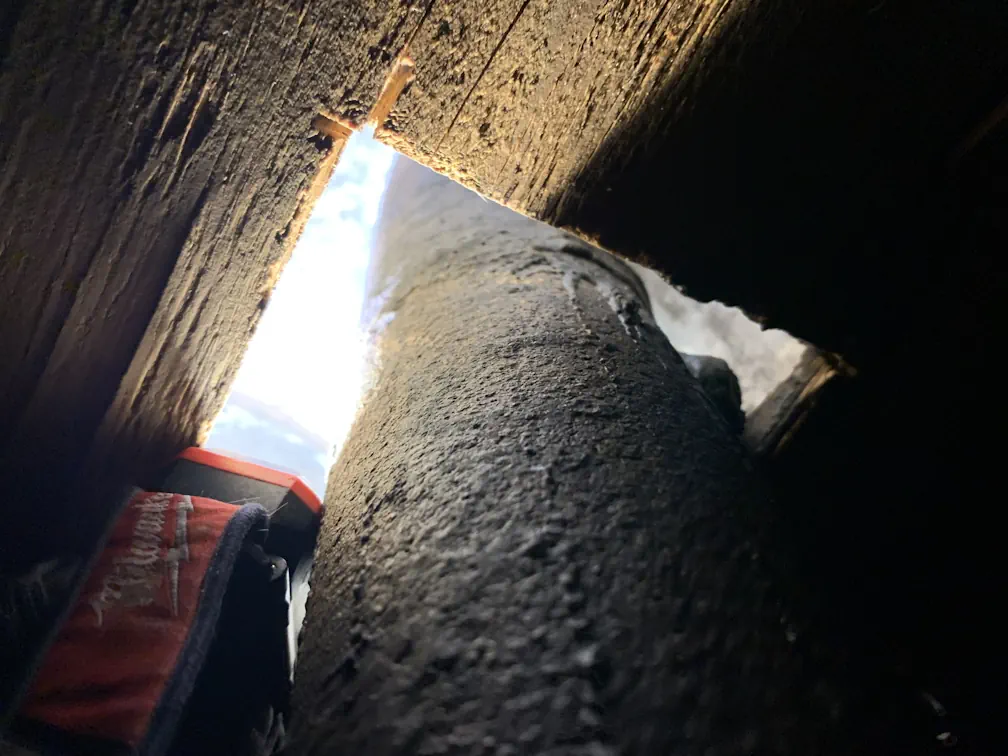
Dark, oily rub or smear marks can form where rodents repeatedly brush along walls, beams, rafters or pipes. House mice also have a characteristic musky odor that UC associates with large or long-term infestations. Look from safe access and corroborate with droppings, gnawing, nests and renewed evidence. A smear or odor alone cannot identify the species, count animals or date the activity.
Safely cleaned areas with renewed signs are more useful than trying to calculate mouse numbers from a pile. A professional plan can combine protected population-reduction devices, access repairs and monitoring. Trap bait choice should follow the identified mouse, actual feeding and safe placement.
UC IPM describes a female house mouse as capable of 5–10 litters in a year, with about 5–6 pups per litter, when plentiful, stable resources allow year-round reproduction. These figures describe reproductive potential, not the number of mice in an attic or a forecast from one sighting. Survival, available resources and continued entry affect the actual population.
Confirmed rats require rat-specific control. For mice, resolution should be checked with follow-up evidence rather than a quiet night. Ask for a written scope explaining which areas can be inspected, what is repaired and how recurrence will be evaluated.
For confirmed house mice, UC IPM describes trapping as a useful first control option in many situations, particularly limited activity in a building. Discuss mouse-size snap traps placed on observed routes, protected from children and pets, with checks and retrieval included in the plan; rat-size equipment is a different decision. UC recommends starting with food the mice are already eating. Its house-mouse account identifies peanut butter as a popular lure but warns about allergy risks, and describes small amounts of food or nesting material such as cotton wool or dental floss on the trigger. Discuss those actual mouse-specific choices and household access with the provider rather than importing a rat-bait list. Rodenticide can kill in inaccessible voids and introduces non-target exposure, whereas a retrieved trap allows removal and monitoring. Unsafe attic access still requires appropriate help; a lure is not a substitute for species identification, adequate placement or maintained exclusion.
Sources and further guidance
Frequently asked questions
-
Can mice in my attic make me sick?
Rodent waste can expose people to pathogens and allergens depending on species, infection and exposure. Do not disturb dry waste. Heavy attic contamination or soiled insulation calls for professional assessment; seek medical advice for illness after exposure.
-
Do mice stay in the attic or travel to other parts of the house?
Mice can use wall and utility routes to reach food or shelter on different levels. Attic signs therefore do not establish that activity is confined upstairs. Include connected accessible areas in the inspection.
-
How quickly can a few mice in the attic become a full infestation?
With plentiful, stable resources, house mice can reproduce year-round. UC IPM describes a female having 5–10 litters in a year, with about 5–6 pups per litter; sexual maturity can occur around five to six weeks but may be later. These figures describe reproductive potential, not the population in your attic or a deadline calculated from a few sightings.
-
Will peppermint oil keep mice out of my attic?
Do not rely on peppermint to protect an attic from mice. It cannot repair gaps or remove hidden nests. Use identification, durable exclusion and monitored control.
-
What time of year are mice most likely to enter attics?
Outdoor mice may seek buildings when conditions change, including cooler nights, but Florida homes can provide shelter and food at different times of year. There is no guaranteed safe season; inspect access and respond to current signs.
-
Should I replace my attic insulation after a mouse infestation?
Replacement depends on the extent and type of contamination, material condition and the cleanup plan. Obtain an assessment rather than assuming all insulation must be removed. New insulation does not replace entry repairs or verify rodent resolution.
Get help with your pest concern.
Tell us what you are seeing. Our team can discuss the concern and the next step.
- Share your concern and contact details.
- Our team contacts you to discuss available service.
- Ask for a written scope and quote before work.
Where can we reach you?
Our team will call to confirm the next step.
By submitting, you’re asking On Demand Pest Control to contact you about this request.
↗ Prefer to call? (954) 947-0805
Vincent founded On Demand Pest Control in 2017 and is a Florida Certified Operator in all four state categories. He treats pest control as a systematic problem to solve, not a symptom to spray. Read Vincent’s full bio →