
Table of Contents
ToggleKey Takeaways
- Florida’s warm, humid climate creates year-round rodent activity — not just seasonal surges like in northern states.
- Exclusion and sealing entry points is the single most effective long-term rodent control technique for Florida homes.
- Roof rats are the most common rodent pest in South Florida and often enter through gaps along the roofline and attic vents.
- Combining trapping, baiting, sanitation, and professional inspections delivers the best results against persistent infestations.
- Outdoor habitat management — including trimming trees and removing fruit — is critical in Florida’s lush, tropical landscape.
Rodent control in Florida is a challenge that homeowners face every single month of the year. Unlike colder states where mice and rats retreat during winter, Florida’s subtropical heat and humidity allow roof rats, house mice, and Norway rats to breed nonstop. The result? Scratching sounds in your attic at 2 a.m., gnawed wires behind walls, and droppings in your kitchen cabinets. Whether you live in Fort Lauderdale, Naples, or anywhere in between, you need a strategy built for Florida’s unique conditions. In this guide, you’ll discover five proven rodent control techniques designed specifically for the Sunshine State — from sealing entry points to knowing when it’s time to call a professional.
Why Rodent Control Is Different in Florida
Florida is not like the rest of the country when it comes to rodent pressure. In northern states, cold winters naturally reduce rodent populations outdoors and push activity into brief seasonal surges. In Florida, mild winters and average temperatures above 60°F mean rodents remain active outdoors and indoors all year long.
The state’s tropical vegetation also plays a major role. Fruit trees — mango, avocado, citrus — drop fruit that becomes an easy food source. Dense palm fronds and overgrown landscaping provide shelter just feet from your home. As a result, Florida properties face a constant supply of rodents looking for food, water, and nesting sites.
The most common species Florida homeowners encounter include:
- Roof rats (Rattus rattus) — agile climbers that prefer attics, soffits, and upper floors
- Norway rats (Rattus norvegicus) — burrowers that favor ground-level entry points and basements
- House mice (Mus musculus) — small enough to squeeze through a gap the size of a dime
Understanding which species you’re dealing with matters because each one requires a slightly different approach. If you’re unsure, our guide to different types of rodents can help you identify what’s in your home.
Technique 1: Seal Entry Points to Keep Rodents Out
Exclusion is the foundation of effective rodent control. If rodents can’t get inside, traps and bait become secondary concerns. Florida homes are especially vulnerable because construction styles — stucco walls, barrel-tile roofs, and elevated foundations — create dozens of potential entry points.
Common entry points in Florida homes include:
- Gaps where the roofline meets the soffit
- Unsealed A/C line penetrations through exterior walls
- Broken or missing attic vent screens
- Cracks in stucco near the foundation
- Garage door seals that have warped in the heat
Mice can fit through a hole the size of a nickel, and young rats can squeeze through openings as small as a quarter. Use steel wool, copper mesh, or metal flashing to seal gaps — rodents chew through foam and caulk easily. For a detailed walkthrough, check out our article on how to find and seal rodent entry points.
Pay special attention to your roofline. Roof rats in Florida are exceptional climbers and frequently enter through gaps along barrel-tile edges, ridge vents, and gable vents that have deteriorated in the humidity.
Technique 2: Strategic Trapping for Rodent Removal
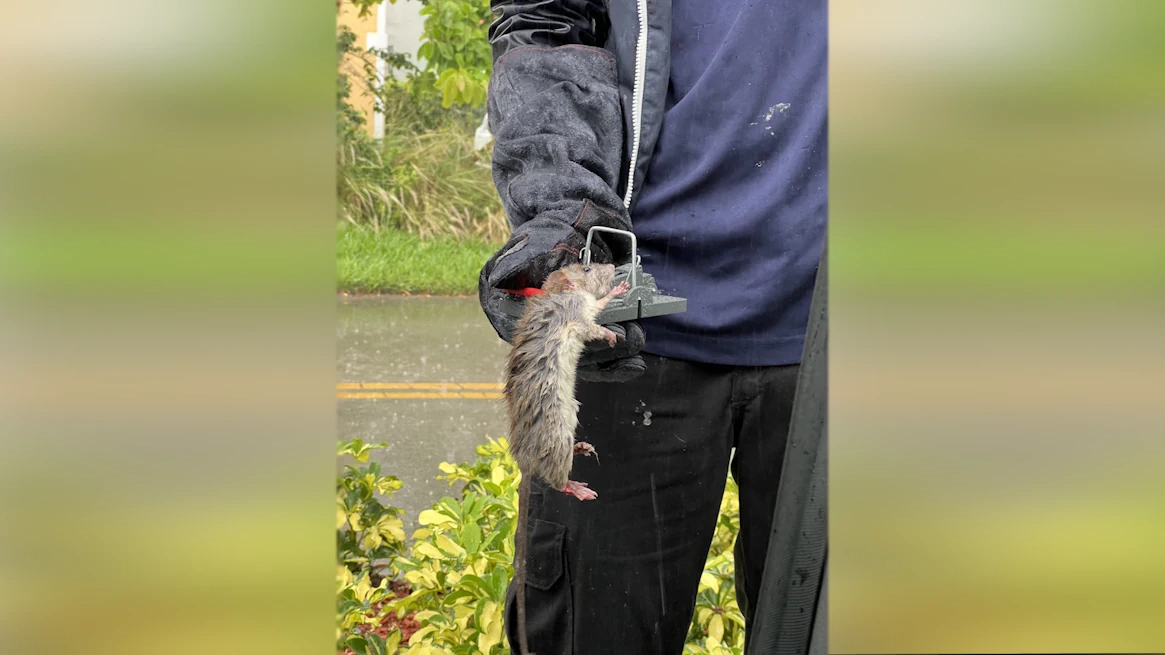
Once rodents are inside, trapping is one of the fastest and most targeted ways to reduce the population. Trapping also gives you physical evidence — you can confirm the species, gauge the severity of the infestation, and track whether the problem is getting better or worse.
Choosing the Right Trap
Snap traps remain the gold standard for quick kills. They’re affordable, reusable, and effective for both rats and mice when sized correctly. Avoid using mouse-sized traps for rats — the trap won’t have enough force, and you’ll end up with an injured, trap-shy rodent.
Glue boards can work in dry areas but lose adhesion quickly in Florida’s humidity. Electronic traps are another option, delivering a lethal shock and containing the rodent for easy disposal.
Placement and Bait Tips for Florida Homes
Place traps along walls, behind appliances, and near droppings or gnaw marks. Rodents travel along edges, so position the trigger side perpendicular to the wall. In attics — one of the most common problem areas in South Florida — set traps along rafters and near insulation disturbances.
For bait, peanut butter works well because its strong scent carries in warm air. You can also learn about the best bait options for mouse traps to maximize your catch rate. For a full step-by-step approach, our complete guide to getting rid of rats covers everything from initial setup to final removal.
Technique 3: Rodent Bait Stations for Ongoing Control
Bait stations are tamper-resistant boxes that hold rodenticide in a controlled, safe manner. They’re especially useful for ongoing rodent control around the perimeter of Florida homes, where outdoor activity never stops.
Here’s how they work: a locked station is placed along a known rodent travel path. The rodent enters, consumes the bait, and leaves. Most modern rodenticides are anticoagulants that take effect over several days, preventing bait shyness in the colony.
Bait stations are not a set-it-and-forget-it solution. They need regular monitoring and refilling, especially during Florida’s rainy season when moisture can degrade the bait. To understand the mechanics in greater detail, read our breakdown of how rodent bait stations work.
Important safety note: Never place loose rodenticide in areas accessible to children, pets, or non-target wildlife. Licensed pest control professionals use bait stations that meet EPA tamper-resistance standards.
Technique 4: Sanitation and Habitat Management in Florida's Climate
Rodents need three things to thrive: food, water, and shelter. Florida’s environment provides all three in abundance. However, you can dramatically reduce rodent pressure by eliminating what’s within your control.
Indoor Sanitation Steps
- Store all pantry items in airtight glass or metal containers
- Clean up crumbs and spills immediately — especially in kitchens
- Take out trash nightly and use bins with tight-fitting lids
- Fix leaky faucets and pipes — Florida’s heat makes water scarce outdoors during dry spells, pushing rodents inside to find moisture
If you’ve already spotted mouse droppings in your kitchen, sanitation alone won’t solve the problem, but it will make your trapping and exclusion efforts far more effective.
Outdoor Habitat Reduction
This is where Florida homeowners have the biggest opportunity. Trim tree branches at least four feet away from your roofline — roof rats use overhanging limbs as highways onto your home. Pick up fallen fruit daily from mango, avocado, and citrus trees. Fruit rats are a major problem in South Florida, and leaving ripe fruit on the ground is essentially setting out a buffet.
Remove wood piles, dense ground cover, and clutter near the foundation. In Florida’s warm climate, these areas become nesting sites within days. Keep compost bins sealed and bird feeders out of reach — or remove them entirely if you have an active rodent issue.
Technique 5: Professional Rodent Control for Florida Homes
DIY methods can handle minor issues, but Florida’s relentless rodent pressure often requires professional intervention. A licensed pest control technician brings expertise in identifying species, locating hidden entry points, and deploying a multi-layered control strategy.
Professional rodent control typically includes:
- A thorough inspection of the interior, exterior, attic, and crawl spaces
- Species identification and population assessment
- Exclusion work — sealing all entry points with professional-grade materials
- Strategic trap and bait station placement
- Attic sanitation and, in severe cases, pest control attic insulation replacement
- Follow-up visits to monitor and adjust the plan
For homeowners dealing with mice specifically, our in-depth resource on how to completely get rid of mice in your home covers the full process from detection to long-term prevention.
When Should You Call a Professional?
Call a professional if you notice any of the following:
- Droppings in multiple rooms or on multiple floors
- Gnaw marks on wires, pipes, or structural wood
- Scratching or scurrying noises in your ceiling or walls
- A persistent musty odor — often a sign of urine accumulation or a dead rodent
- You’ve set traps for two weeks with no improvement
If you’re located anywhere in South Florida, On Demand Pest Control provides comprehensive rodent control services tailored to the local species and conditions homeowners face year-round. Our technicians serve communities across Broward, Miami-Dade, Collier, and Lee counties — from Fort Lauderdale and Pompano Beach to Naples and Cape Coral.
Rodent Control Techniques Compared for Florida Conditions
| Technique | Best For | Effectiveness in Florida | DIY or Professional |
|---|---|---|---|
| Entry Point Sealing | Long-term prevention | Very High | Both |
| Snap Trapping | Active infestations indoors | High | DIY |
| Bait Stations | Perimeter and outdoor control | High (needs monitoring) | Professional recommended |
| Sanitation & Habitat Management | Reducing rodent attraction | Moderate alone, high when combined | DIY |
| Professional Pest Control | Severe or recurring infestations | Very High | Professional |
The most effective approach combines all five techniques. No single method works in isolation, especially in Florida where rodent pressure is constant.
Frequently Asked Questions
-
What is the most common rodent in Florida homes?
The roof rat (Rattus rattus) is the most common rodent pest in Florida homes, particularly in South Florida. These agile climbers enter through rooflines, attic vents, and overhanging tree branches. House mice and Norway rats are also present but less frequently encountered in residential settings.
-
Why do I have rodents in my Florida home even though I keep it clean?
Cleanliness helps, but it doesn't prevent rodent entry. Rodents are attracted by structural openings, nearby food sources like fruit trees, and access to water. Florida's warm climate means outdoor rodent populations are always high, and even small gaps in your home's exterior can invite them inside.
-
Are rodents in Florida active year-round?
Yes. Unlike northern states where cold winters reduce rodent activity, Florida's mild temperatures allow rodents to breed and forage 12 months a year. This makes ongoing prevention and monitoring essential rather than seasonal.
-
Can I use poison bait inside my Florida home safely?
Loose rodenticide should never be placed in areas accessible to children or pets. Tamper-resistant bait stations are the only safe way to use rodenticide indoors, and they're best deployed by licensed professionals who can monitor them regularly and comply with EPA guidelines.
-
How quickly can a rodent infestation grow in Florida?
Very quickly. A single pair of roof rats can produce up to 40 offspring per year under ideal conditions, and Florida's climate is close to ideal. If you spot one rodent, there are likely more. Early intervention prevents a small problem from becoming a large-scale infestation.