
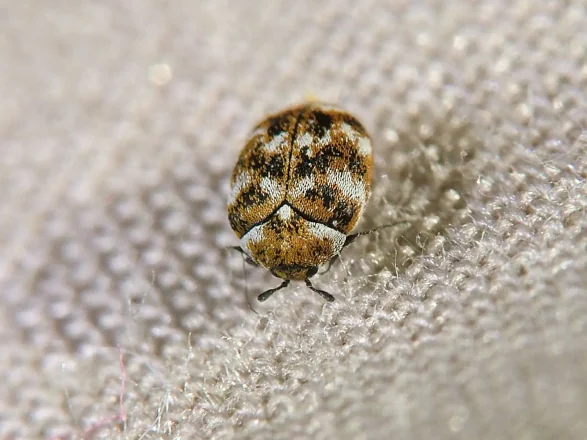
Carpet-beetle larvae may damage susceptible materials and irritate sensitive skin. Identify the insect and food source, and keep medical symptom assessment separate.
Key Takeaways
- Carpet-beetle larvae can damage susceptible materials, and their hairs may irritate sensitive skin. A sighting does not diagnose a medical condition.
- Carpet beetle larvae cause significant property damage to wool, silk, leather, and other natural fibers in your home.
- Skin marks cannot reliably distinguish pest causes. Inspect actual insects and seek appropriate clinical assessment for unexplained symptoms.
- People with persistent skin or respiratory symptoms need medical assessment. A carpet-beetle sighting does not establish a particular vulnerable group or a diagnosed allergy.
- Early detection and thorough cleaning are the most effective ways to prevent carpet beetle dangers from escalating.
Carpet beetles in a closet or near a window warrant identification and a search for larval feeding material. Adults and larvae have different roles, and a skin complaint alone does not prove that either caused it. This guide separates documented material damage from uncertain medical attribution and explains how to inspect, clean and monitor belongings. Related background: black carpet beetles
Are Carpet Beetles Dangerous to Human Health?
Carpet beetles themselves do not bite, sting, or carry venom. However, calling them “harmless” would be misleading. The real health threat comes from carpet beetle larvae and the tiny, barbed hairs — called setae — that cover their bodies. When these hairs come into contact with human skin, they can cause a condition known as carpet beetle dermatitis.
Carpet-beetle larval hairs may irritate sensitive skin, but an unexplained skin mark does not establish a cause. Educational pest information can explain biting versus irritation; persistent or concerning symptoms need clinical assessment. Related background: carpet beetles actually bite humans
Larval hairs may cause irritation in susceptible people. The following symptoms deserve appropriate medical attention, but none alone confirms that carpet beetles caused them:
- Unexplained sneezing or eye symptoms need appropriate clinical assessment; do not attribute them to carpet beetles from a sighting alone.
- Continue any clinician-directed asthma care independently of the pest inspection.
- Contact dermatitis from handling infested fabrics
- Persistent eye irritation warrants medical advice, not an assumed insect-allergy diagnosis.
Symptoms and sensitivity vary. Do not use a pest article to decide that an unexplained reaction is mild or that a child is safe without appropriate assessment.
What to Do About Unexplained Symptoms
Avoid unnecessary contact with infested materials, especially during cleaning. A clinician can assess persistent symptoms, while an insect specimen helps establish whether carpet beetles are present. Age alone does not establish a specific carpet-beetle diagnosis.
An existing allergy does not prove a reaction to carpet beetles. Several indoor allergens and other causes can coexist; document the affected material and discuss persistent symptoms with a clinician.
Carpet Beetle Dermatitis vs. Bed Bug Bites
An itchy red mark does not identify a pest or establish a medical diagnosis. Carpet-beetle evidence, suspected bed bugs and clinical symptoms should be evaluated on their own merits.
| Feature | Carpet-beetle dermatitis | Bed-bug bites |
|---|---|---|
| Cause and exposure | Contact with larval hairs, including hairs on infested clothing or upholstery, can provoke an allergic skin reaction in susceptible people; the beetles are not biting or blood-feeding. | Blood-feeding bugs bite a host, often while the person sleeps. Nighttime feeding is typical, but hungry bugs can also seek hosts in daylight. |
| Symptoms | Itchy, raised red papules were documented in the French Anthrenus case series. Susceptibility varies; this symptom description is not a way to identify a beetle infestation. | Bites may produce itching, swelling, or slightly swollen red marks; some people have no visible reaction. Similar-looking rashes have other causes. |
| Pattern / distribution | The case series found isolated papules mostly under clothing, including the thighs, arms, chest, and abdomen. “Random clusters” is not a validated diagnostic pattern. | Marks can be random or in a straight line. A row or zigzag does not establish bed bugs, and its absence does not exclude them. |
| Timing | Consider contact with infested clothing or furnishings, rather than a required overnight bite. The cited clinical report does not establish a fixed exposure-to-rash interval. | Feeding is mainly at night, but visible marks often appear one to several days later and may take up to 14 days in some people. Seeing marks on waking does not date or identify the bite. |
| Blood spots on sheets | Larval-hair dermatitis is not a blood-feeding mechanism. A blood spot does not identify carpet beetles or rule them out; look for the insects, hairs, and shed larval skins instead. | Rusty or reddish stains can come from crushed bed bugs; dark fecal spots are another clue. These signs justify inspection, but “blood spots are common” is not quantified here and spots alone are not confirmation. |
| Visible insects and inspection sites | Look for hairy larvae, shed larval skins, and damaged susceptible materials in carpet edges, closets, clothing, or furniture. Identified adults help establish the pest, but larvae and the feeding source matter for indoor damage. | Look for live adults or nymphs, eggs, and shed skins near sleeping/resting areas: mattress and box-spring seams, bed-frame cracks, and headboards; furniture seams can also harbor bugs. |
| Skin marks, their arrangement, and when they are noticed cannot diagnose the pest. Have a specimen identified and seek clinical assessment for symptoms. The under-clothing pattern is an observation from one French Anthrenus case series, not a diagnostic rule for all carpet beetles. Sources: full clinical case series, Penn State extension, UC IPM, CDC symptoms, CDC identification, EPA inspection. | ||
Identify actual larvae and feeding material before treating a suspected textile pest. Skin symptoms and a pest sighting are separate evidence; an educational identification guide cannot diagnose symptoms or promise rapid exclusion of every alternative cause. Related background: what carpet beetle larvae look like
How Dangerous Are Carpet Beetles to Your Property?
While the health risks are concerning, property damage is where carpet beetles truly earn their reputation. Adult carpet beetles are relatively harmless — they feed on pollen and nectar. The larvae, however, are voracious feeders that consume animal-based fibers and proteins found in everyday household items.
Carpet beetle larvae will happily devour:
- Wool rugs, blankets, and clothing
- Silk garments and scarves
- Leather jackets, belts, and shoes
- Fur coats and taxidermy mounts
- Feather pillows and down comforters
- Pet hair accumulations behind furniture
Inspect damaged textiles for live larvae, fresh feeding and alternative causes. Holes or thinning alone do not date an infestation or establish that it is currently active. Related background: what carpet beetle damage looks like
The Hidden Cost of Carpet Beetle Damage
Egg production and development vary by species and conditions. Finding eggs or larvae supports a closer search for susceptible materials, but this article does not assign every carpet beetle a universal egg count or hatch interval. Related background: carpet beetle eggs
The financial toll adds up quickly. Replacing a wool area rug can cost hundreds of dollars. Vintage clothing, heirloom quilts, and museum-quality collections face irreversible destruction. For homeowners who store seasonal items like winter coats or holiday decorations in dark, undisturbed spaces, an undetected infestation can result in thousands of dollars in damage.
Do Carpet Beetles Carry Diseases?
Carpet beetles are not ordinarily regarded as human disease vectors. However, some dermestid species infest stored food products. Do not declare food clean merely because the beetle appears to be a carpet beetle; inspect and identify the source.
Remove larval debris, lint and infested material during cleaning. A household sighting does not establish an HVAC infestation or quantify indoor-air deterioration.
So while carpet beetles aren’t dangerous in the disease-carrying sense, they absolutely impact your quality of life — particularly if the infestation persists for an extended period.
Signs That Carpet Beetles Are Becoming a Danger in Your Home
Carpet beetles are sneaky. Their larvae prefer dark, undisturbed areas — under furniture, inside closets, behind baseboards, and in storage boxes. By the time you notice adult beetles on window sills, the infestation may already be well established. Recognizing the signs of a carpet beetle infestation early is your best defense.
Watch for these warning signs:
- Irregular holes in wool, silk, or leather items
- Shed larval skins — small, translucent casings near baseboards or in closets
- Fecal pellets — tiny, sand-like granules near damaged fabric
- Unexplained rashes or itchy welts, especially after handling stored clothing
- Small, round beetles near windows or light sources
- Thinning patches on carpet, especially along edges and under furniture
If you spot even two or three of these signs together, it’s time to investigate further. A minor infestation can often be handled with thorough cleaning. A widespread one may require professional intervention.

How to Reduce Carpet Beetle Dangers in Your Home
Preventing carpet beetle dangers starts with reducing the conditions that attract them. Carpet beetle larvae need food sources and quiet environments to thrive. Disrupting those conditions is key.
Regular Cleaning and Vacuuming
Vacuum carpets, rugs, and upholstered furniture at least once a week — more often in high-risk areas like closets and under beds. Pay special attention to carpet edges, behind furniture, and along baseboards where larvae tend to congregate. Empty the vacuum canister or discard the bag immediately after cleaning to prevent re-infestation.
Proper Storage of Natural Fiber Items
Clean susceptible garments before storage and use well-sealed containers. Cedar and lavender are not dependable infestation controls. Launder or dry-clean as the material instructions permit.
Seal Entry Points
Adult carpet beetles often enter homes through open windows, gaps around doors, or on cut flowers brought inside. Understanding how carpet beetles get into your house helps you seal the most common entry points. Install tight-fitting window screens, check door sweeps, and inspect flowers and packages before bringing them indoors.
Address Infestations Promptly
If you’ve confirmed an active infestation, targeted cleaning and treatment are essential. Focus on eliminating larvae, since they cause all the damage and health irritation. Our detailed resource on how to get rid of carpet beetle larvae walks you through specific steps for every room in your home.
When Should You Call a Pest Control Professional?
Many minor carpet beetle problems respond well to diligent cleaning and prevention. However, there are situations where professional help becomes necessary:
- You’ve cleaned thoroughly but continue finding new larvae or damage
- The infestation has spread to multiple rooms or hard-to-reach areas like wall voids
- Family members are experiencing persistent allergic reactions or respiratory symptoms
- High-value items — antique rugs, fur coats, or museum collections — are at risk
- You’ve found carpet beetles in your vehicle, which requires a different approach (see our guide to getting rid of carpet beetles in a car)
A licensed pest control technician can perform a thorough inspection, identify the species involved, and apply targeted treatments that reach areas a household vacuum cannot. For a complete overview of identification, prevention, and treatment strategies, our ultimate carpet beetle guide covers everything you need to know in one place.
Locate the larval food source and protect susceptible belongings. Obtain identification or professional assistance when cleaning is not resolving activity; no fastest or guaranteed pest-free outcome is promised.
Keep material evidence separate from medical symptoms
Inspect vulnerable belongings for live larvae and newly developing damage. Woolens, feather-filled items, lint beneath furniture and animal-hair accumulations are useful priorities. An adult at a window may have flown in from outside, so do not discard every garment based on one beetle. Save a specimen and photograph the material where larvae were found.
When cleaning, minimize unnecessary contact with infested fibers and avoid creating clouds of debris. Use the cleaning tools appropriate for the surface, launder or dry-clean compatible items and seal clean stored materials. If someone develops persistent irritation, a clinician can assess it independently; a pest technician cannot diagnose the medical cause from a larval skin.
Distinguish old damage from active feeding. Mark or photograph existing holes and reinspect the same item after cleaning. Empty larval casings can remain after the insects are removed. Conversely, new holes plus live larvae are a stronger reason to inspect the source and any adjoining stored material.
An item of exceptional value may need a conservator or specialist cleaner rather than a hot wash or chemical spray. Explain the material and its significance before treatment. The purpose is to protect belongings while removing the actual food source, not to use a broad safety claim or a frightening disease narrative to justify unnecessary exposure.
Sources and further reading
Penn State Extension: carpet-beetle dermatitis and larval-hair sensitivity. Symptoms still require appropriate clinical assessment.
Frequently Asked Questions
-
Can carpet beetles make you sick?
Carpet beetles are not ordinarily human disease vectors, but larval hairs can irritate susceptible people. A symptom is not proof of a beetle cause; persistent skin or respiratory problems need medical assessment.
-
Are carpet beetles dangerous to pets?
Keep animals away from infested debris and inappropriate pesticide exposure. A veterinarian should assess an itchy or ill pet; a beetle sighting does not establish the cause.
-
How long can a carpet beetle infestation last?
It can persist while susceptible food and sheltered sites remain. Development differs among species and conditions, so inspect the source rather than assigning a universal duration.
-
Will carpet beetles go away on their own?
Not reliably if food and larvae remain. Clean and inspect susceptible materials, protect stored belongings and monitor activity before deciding further management is needed.
-
Are carpet beetles dangerous to babies and toddlers?
Avoid contact with infested materials and seek appropriate care for symptoms. Do not infer a specific disease or an elevated quantified risk from a sighting; pesticide exposure needs careful prevention.
-
Do carpet beetles only damage carpets?
No. Larvae can use susceptible woolens, feathers, hair, lint and other animal-derived or soiled materials. The exact diet depends on the species; inspect more than the carpet.
Get help with your pest concern.
Tell us what you are seeing. Our team can discuss the concern and the next step.
- Share your concern and contact details.
- Our team contacts you to discuss available service.
- Ask for a written scope and quote before work.
Where can we reach you?
Our team will call to confirm the next step.
By submitting, you’re asking On Demand Pest Control to contact you about this request.
↗ Prefer to call? (954) 947-0805