
Table of Contents
ToggleKey Takeaways
- Most termite damage can be fixed, but the repair method depends on how severe and widespread the damage is.
- South Florida’s subterranean and drywood termites cause different types of structural damage that require different repair approaches.
- You must eliminate the active termite colony before starting any repairs, or the damage will return.
- Minor cosmetic damage may cost a few hundred dollars to fix, while major structural repairs can exceed $10,000.
- A professional termite inspection is the essential first step before any repair work begins.
- Homeowners insurance typically does not cover termite damage repairs in Florida.
Discovering that termites have been eating away at your home is alarming — and the first question most South Florida homeowners ask is: can termite damage be fixed? The short answer is yes, but the process, timeline, and cost depend entirely on how far the damage has spread. South Florida’s warm, humid climate creates ideal conditions for both drywood and subterranean termites, which means infestations here tend to progress faster than in cooler regions. Left unchecked, termite colonies can compromise floor joists, wall studs, roof trusses, and other critical structural elements. This guide walks you through how to assess the damage, which repair methods apply to different situations, what it costs, and how to prevent future infestations from undoing your investment.
Why Termite Damage Is So Common in South Florida
South Florida sits in one of the highest-risk termite zones in the United States. The combination of year-round warmth, tropical humidity, and abundant wood-frame construction gives termites everything they need to thrive. Miami-Dade, Broward, and Palm Beach counties are especially vulnerable due to dense development near coastal moisture sources.
Two primary species cause the bulk of structural damage here:
- Subterranean termites — These nest underground and build mud tubes to reach wood above the soil line. They cause more damage nationwide than any other termite species.
- Drywood termites — These live entirely inside the wood they consume and don’t need soil contact, making them harder to detect early.
Understanding the different termite species in Florida and how they behave is critical because the type of termite determines both the treatment approach and the kind of repair work you’ll need.
How to Assess Whether Termite Damage Can Be Fixed
Before you can fix termite damage, you need to know exactly what you’re dealing with. Not all damage is the same. Some is purely cosmetic — a thin layer of surface wood that’s been hollowed out. Other cases involve deep structural compromise that threatens your home’s safety.
Signs You Have Minor (Cosmetic) Damage
Minor termite damage usually affects non-load-bearing wood, such as trim boards, baseboards, door frames, and window sills. You might notice:
- Small holes or pin-sized exit points in wood surfaces
- Blistering or bubbling paint that feels hollow underneath
- Faint lines or channels just beneath the surface
- Tiny pellet-like droppings near damaged wood (a hallmark of drywood termite activity)
In these cases, the wood can often be filled, patched, or replaced without involving a structural engineer.
Signs You Have Major (Structural) Damage
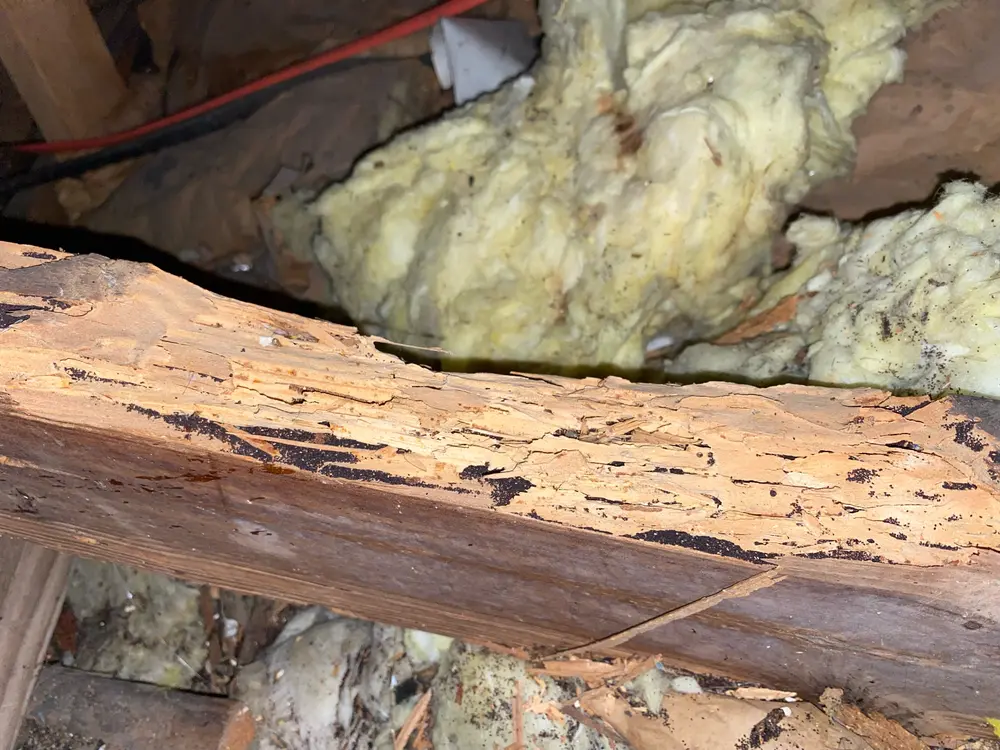
Structural damage is a different situation. If termites have been active for years — which is common since colonies can go undetected for a long time — the damage may affect:
- Floor joists and subflooring (sagging or spongy floors)
- Wall studs (walls that sound hollow when tapped)
- Roof trusses and rafters
- Support beams and headers above doors and windows
A professional inspection is essential at this stage. Learning to recognize the early signs of termites in Florida homes can help you catch damage before it reaches this level. However, if structural elements are compromised, you’ll need a licensed contractor — and possibly a structural engineer — to evaluate and plan the repair.
Step One: Eliminate the Termite Colony Before Repairs
This is a rule you cannot skip. If you repair wood while an active colony is still present, the termites will simply eat through the new material. Every dollar you spend on repairs will be wasted.
The treatment method depends on the species:
Treatment Options for Drywood Termites
Drywood termites live inside the wood, so treatments must reach them where they hide. Options include localized spot treatments for small infestations and whole-structure fumigation (tenting) for widespread colonies. If you’re unsure which approach fits your situation, understanding how to treat drywood termites in Florida will help you make an informed decision.
Treatment Options for Subterranean Termites
Subterranean termites require a different approach. Liquid barrier treatments applied to the soil around your foundation create a chemical zone that kills termites as they travel between their nest and your home. Bait station systems are another effective method. If you’ve noticed mud tubes on your foundation walls, that’s a clear sign of subterranean activity — and you should learn what termite mud tubes mean and how urgently you need to act.
How to Fix Termite Damage: Repair Methods Explained
Once the colony has been eliminated and a professional has confirmed no active termites remain, you can begin repairs. The right method depends on the severity and location of the damage.
Wood Fillers and Hardeners for Surface Damage
For minor cosmetic damage, wood hardeners and epoxy-based fillers are the most common fix. Wood hardener is applied first to strengthen the remaining wood fibers. Then, a two-part wood filler is used to rebuild the missing material. Once it cures, you can sand, prime, and paint it to match the surrounding surface.
This method works best on:
- Window sills and frames
- Door trim and casings
- Baseboards and crown molding
- Decorative wood elements
Replacing Damaged Wood Entirely
When the damage goes beyond what filler can handle, the damaged section must be cut out and replaced with new lumber. For non-structural elements like trim or siding, this is a straightforward carpentry job. For structural members, the replacement process is more complex.
Replacing a damaged floor joist, for example, requires temporarily supporting the structure above it, removing the compromised wood, and installing a new joist. This work must meet Florida building codes and should always be handled by a licensed contractor.
Sistering Joists and Reinforcing Structural Members
“Sistering” is a technique where a new piece of lumber is attached directly alongside a damaged joist or beam to restore its load-bearing capacity. This is often used when the damage is partial — the original member hasn’t failed completely, but it’s weakened enough to need reinforcement.
Sistering is common in crawl spaces and attics where subterranean and drywood termites, respectively, cause gradual weakening over time.
Drywall and Interior Finish Repairs
Termites don’t eat drywall itself, but they tunnel through it to access the wood framing behind it. After replacing damaged studs or framing, you’ll often need to patch or replace sections of drywall, then repaint. In bathrooms and kitchens, damaged areas may also involve tile or moisture barriers that need attention.
How Much Does It Cost to Fix Termite Damage?
Repair costs vary widely based on the extent of damage, accessibility of the affected areas, and local labor rates in South Florida. Here’s a general breakdown:
| Damage Level | Typical Repairs | Estimated Cost |
|---|---|---|
| Minor / Cosmetic | Wood filler, trim replacement, repainting | $200 – $1,500 |
| Moderate | Partial wood replacement, drywall patching, joist sistering | $1,500 – $5,000 |
| Severe / Structural | Full joist or beam replacement, structural engineering review, extensive rebuild | $5,000 – $15,000+ |
These costs are separate from the termite treatment itself. If you’re curious about what treatment costs look like, check out how much a termite treatment costs in South Florida.
Keep in mind that most Florida homeowners insurance policies do not cover termite damage. Insurance companies classify it as a maintenance issue — something preventable through regular inspections and treatments.
Can You Sell a South Florida Home With Termite Damage?
Yes, but it complicates the process. Florida law requires sellers to disclose known material defects, including termite damage. Buyers will likely request a termite inspection, and if damage is found, they may negotiate a lower price or require repairs before closing.
If you’re in this situation, understanding how to sell your home with termite damage can help you navigate the process with fewer surprises. Proactively treating the infestation and completing repairs before listing typically results in a smoother sale and a better price.
How to Prevent Future Termite Damage in South Florida
Fixing the damage is only half the job. Without ongoing prevention, you’re likely to face the same problem again — especially in South Florida’s high-risk environment.
Schedule Annual Termite Inspections
A professional termite inspection once a year is the single best way to catch new activity before it causes significant damage. Inspectors know where to look and what to look for, including signs homeowners commonly miss.
Maintain an Active Treatment Plan
Whether you use a liquid soil barrier, bait stations, or a combination, ongoing treatment keeps your home protected between inspections. Many pest control companies offer annual termite protection plans. If you’re wondering whether long-term protection is worth the investment, learning about what a termite bond covers can help you decide.
Reduce Moisture and Wood-to-Soil Contact
Subterranean termites are drawn to moisture. Fix leaky pipes, ensure proper drainage around your foundation, and keep mulch at least 12 inches away from exterior walls. Avoid storing firewood, lumber, or cardboard boxes directly against your home. These simple steps reduce the conditions that attract termites in the first place.
Use Treated or Termite-Resistant Wood in Repairs
When replacing damaged wood, opt for pressure-treated lumber or naturally resistant species like cedar and redwood for exterior applications. While no wood is truly termite-proof, treated lumber provides a meaningful layer of defense that untreated pine or fir cannot match.
When to Call a Professional for Termite Damage Repair
While small cosmetic repairs are within reach for a handy homeowner, most termite damage situations in South Florida benefit from professional help. Here’s a simple guide:
- DIY-appropriate: Filling small holes in trim, replacing a damaged baseboard, repainting patched areas.
- Call a contractor: Replacing structural wood, sistering joists, removing and reinstalling drywall, or repairing roof framing.
- Call a structural engineer: If floors are visibly sagging, walls are shifting, or you suspect widespread damage to load-bearing members.
Before any repair work starts, have a licensed pest control company confirm the infestation is fully resolved. Rushing into repairs without confirming eradication is a costly mistake many homeowners make. If you haven’t had an inspection yet, a local pest control professional can assess the situation and recommend the right treatment and repair sequence for your specific home.
Frequently Asked Questions
-
Can termite damage be fixed without replacing the wood?
Yes, minor surface damage can often be repaired using wood hardeners and epoxy fillers without removing the wood. However, if the wood has lost significant structural integrity — meaning it crumbles when probed or feels spongy — replacement is the safer and more durable option.
-
Does homeowners insurance cover termite damage repairs in Florida?
In most cases, no. Florida homeowners insurance policies typically exclude termite damage because it's classified as a preventable maintenance issue. Some policies may cover sudden, accidental damage caused by a termite-weakened structure collapsing, but this is rare and varies by insurer.
-
How long does it take to repair termite damage?
Minor cosmetic repairs can be completed in a day or two. Moderate repairs involving wood replacement and drywall work may take one to two weeks. Extensive structural repairs — especially those requiring engineering assessments and permits — can take several weeks to a few months.
-
How do I know if termite damage is structural or just cosmetic?
Cosmetic damage is limited to surface-level wood like trim, baseboards, and siding. Structural damage affects load-bearing elements such as joists, studs, beams, and trusses. A professional inspection with probing and sometimes moisture meters or infrared imaging can determine the depth and extent of the damage.
-
Should I fix termite damage before selling my home?
Repairing termite damage before listing your home typically helps you sell faster and at a better price. Buyers in South Florida expect termite inspections, and visible or documented damage creates negotiation leverage for the buyer. Completing both treatment and repairs upfront gives buyers confidence in the home's condition.
-
Can termites come back after repairs are done?
Yes, termites can reinfest a home after repairs if no ongoing prevention is in place. Repairs fix the damage but don't prevent future colonies from targeting your home. An active treatment plan and annual inspections are essential to protect your investment long-term.