
Table of Contents
ToggleKey Takeaways
- Baby termites (nymphs) are tiny, translucent white insects about 1/8 inch long that resemble smaller versions of adult worker termites.
- Finding baby termites inside your home signals an active, reproducing colony that requires immediate treatment.
- Baby termites are often confused with baby ants, but their straight antennae, thick waists, and pale color set them apart.
- Termite nymphs develop into workers, soldiers, or reproductive swarmers depending on the colony’s needs.
- Professional pest control is the most reliable way to eliminate a colony producing baby termites in your home.
- Regular inspections and moisture control are the best defenses against termite colonies establishing inside your walls.
Baby termites are one of the clearest warning signs that a mature, reproducing colony has already set up shop inside — or dangerously close to — your home. Unlike a stray swarmer on your windowsill, finding these tiny nymphs means the queen is actively laying eggs and the colony is growing. Most homeowners never see baby termites because they stay hidden deep inside wood or underground. However, knowing what they look like and how they differ from other small insects can help you catch an infestation before it causes thousands of dollars in structural damage. In this guide, you’ll learn exactly how to identify baby termites, understand their role in the colony lifecycle, and discover effective methods to eliminate them. For a broader look at this pest, visit our termite facts and info page.
What Do Baby Termites Look Like Up Close?
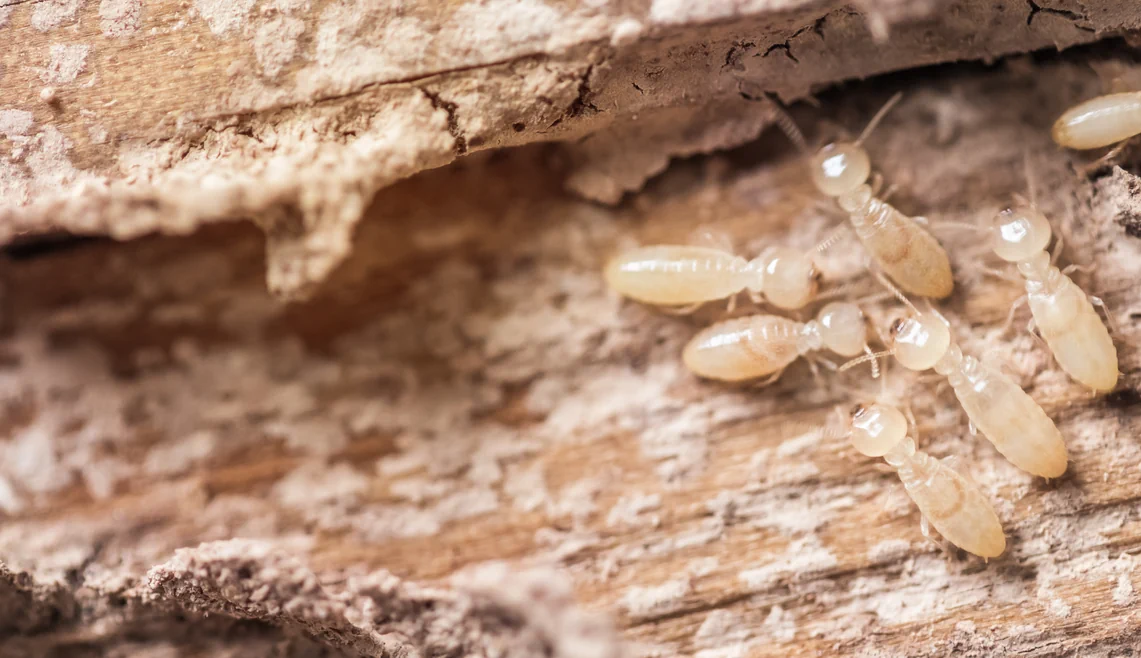
Baby termites — technically called nymphs or larvae — are extremely small, measuring roughly 1/16 to 1/8 of an inch in length. They have soft, translucent white or cream-colored bodies. Unlike adult termites that may darken with age, nymphs are almost see-through, making them easy to miss against light-colored wood.
Their body shape is similar to an adult worker termite: a straight, cylindrical torso with no pinched waist. They have six tiny legs and straight, beaded antennae. Their heads are slightly rounded, and they lack the hardened mandibles you’d see on a soldier termite.
Here’s a quick visual breakdown of baby termite features:
- Color: Translucent white to pale cream
- Size: 1/16″ to 1/8″ long (about the size of a grain of rice)
- Body shape: Soft, elongated, no waist constriction
- Antennae: Straight and beaded
- Wings: None (wing buds may develop later)
Because of their pale, almost ghostly appearance, baby termites are sometimes called “white ants.” However, they are not ants at all. If you’ve noticed early signs of termites in your Florida home, spotting these tiny white insects in damaged wood is a strong confirmation of an active colony.
Baby Termites vs. Baby Ants: How to Tell the Difference
One of the most common mistakes homeowners make is confusing baby termites with baby ants. Both are small and pale, but several key differences make identification straightforward once you know what to look for.
Key Physical Differences
| Feature | Baby Termite (Nymph) | Baby Ant (Larva) |
|---|---|---|
| Body shape | Straight, no waist | Pinched waist (even in larvae) |
| Antennae | Straight, beaded | Elbowed or bent |
| Color | Translucent white | White, sometimes yellowish |
| Legs | Six short legs, visible | Larvae often legless (grub-like) |
| Found in | Inside wood, mud tubes, soil | Ant nest chambers |
The easiest way to tell them apart is the waist. Baby termites have a thick, uniform body from head to abdomen. Baby ants — even at the larval stage — show some segmentation or constriction between the thorax and abdomen.
Additionally, ant larvae are often grub-shaped and immobile, while baby termite nymphs look like miniature adults and can move on their own. If you’re finding pale insects in or near damaged wood, they’re far more likely to be termite nymphs. For help identifying termite species specifically, our guide on termites in Florida: identification and control covers every species found in the state.
The Baby Termite Lifecycle: From Egg to Colony Role
Understanding how baby termites develop helps explain why finding them is so alarming. Termites undergo an incomplete metamorphosis, meaning they skip the pupal stage that insects like beetles go through. Instead, they hatch from eggs as nymphs and gradually molt into their adult form.
Egg Stage
The queen termite lays eggs continuously — sometimes thousands per day in mature colonies. These eggs are tiny, oval, and translucent white. They’re typically deposited in a central nursery chamber. After about two to four weeks, the eggs hatch into first-instar nymphs. To learn more about what these eggs look like, check out our article on termite egg identification.
Nymph Stage
Once hatched, the nymphs are fed by worker termites or, in some species, consume wood directly. As they grow, they undergo several molts — shedding their exoskeleton each time to accommodate a larger body.
During these molts, the colony’s needs determine the nymph’s future role. Chemical signals from the queen and other colony members guide development into one of three castes:
- Workers: The most common caste, responsible for feeding, tunneling, and building
- Soldiers: Develop enlarged heads and mandibles to defend the colony
- Reproductives (alates): Develop wings and darker bodies, eventually swarming to start new colonies
How Long Baby Termites Take to Mature
The nymph stage typically lasts several weeks to a few months, depending on the species and environmental conditions. Warmer temperatures and higher humidity — common throughout Florida — accelerate development. In subterranean termite colonies, nymphs can mature into workers in as little as one to two months. Drywood termite nymphs may take slightly longer because they develop inside smaller, slower-growing colonies.
Where Are Baby Termites Found Inside a Home?
Baby termites rarely venture into open air. They are extremely vulnerable to dehydration and predators, so they stay hidden inside protected environments. Knowing where to look is critical for catching an infestation early.
- Inside damaged wood: If you break open a piece of infested wood, you may see nymphs alongside workers. Drywood termite nymphs live entirely inside the wood they consume.
- Mud tubes: Subterranean termite nymphs travel through termite mud tubes that connect the soil colony to food sources above ground.
- Behind walls and under floors: Colonies that have established themselves inside wall voids keep their nymphs in protected gallery systems.
- Soil near the foundation: Subterranean termite nymphs live underground in the main nest, which can be several feet below your home’s foundation.
If you see tiny white insects falling from a damaged beam or crawling near frass piles, you’re likely looking at baby termites. The presence of termite droppings alongside these nymphs is a strong indicator of a drywood termite infestation specifically.
What Does Finding Baby Termites Mean for Your Home?
Spotting baby termites is far more concerning than finding a single swarmer or even a few discarded wings. Here’s why: baby termites cannot exist without a mature, egg-laying queen nearby. Their presence confirms that a fully established colony is actively reproducing inside or underneath your property.
A mature subterranean termite colony can contain hundreds of thousands — even millions — of individuals. Drywood colonies are smaller, typically a few thousand members, but they live directly inside your home’s structural wood. Either way, finding nymphs means the colony has moved past its early stages and is expanding.
Left untreated, the damage accelerates as more nymphs mature into workers. Workers are the caste responsible for eating wood 24 hours a day, seven days a week. The longer you wait, the more structural damage accumulates. To understand the full scope of the termite threat in your area, read our comprehensive guide on termites in Florida.
How to Get Rid of Baby Termites Effectively
Getting rid of baby termites means eliminating the entire colony — queen, workers, soldiers, and all. Simply killing visible nymphs won’t solve the problem because the queen will continue producing replacements. The right treatment depends on the termite species infesting your home.
Treating Subterranean Termite Nymphs
Subterranean termites nest in the soil and travel to your home through mud tubes. Effective treatments target both the colony underground and the pathways they use to reach your structure:
- Liquid barrier treatments: A professional applies termiticide around and under your foundation, creating a chemical barrier that kills termites on contact and through colony transfer.
- Bait stations: Monitoring stations placed around your property contain slow-acting bait. Workers carry the bait back to the colony, eventually killing the queen and nymphs.
- Direct soil treatment: For active infestations, termiticide is injected directly into the soil where the colony is nesting.
For more details on subterranean species, our guide on subterranean termites in Florida explains their behavior and preferred habitats.
Treating Drywood Termite Nymphs
Drywood termites live entirely inside wood, making them trickier to reach. Treatment options include:
- Localized treatment: If the infestation is contained to a small area, a pest professional can drill into the wood and inject termiticide directly into the galleries.
- Fumigation (tenting): For widespread drywood infestations, whole-structure fumigation is the most effective option. The home is sealed with a tent, and gas penetrates every piece of wood to kill all life stages.
- Heat treatment: An alternative to chemical fumigation, heat treatment raises the temperature inside walls to levels lethal to termites.
Our in-depth article on how to get rid of drywood termites walks through each of these methods in detail.
Can You Get Rid of Baby Termites with DIY Methods?
Some homeowners attempt DIY approaches like boric acid, orange oil, or diatomaceous earth. These products can kill individual termites on contact. However, they rarely penetrate deep enough to reach the queen and nursery where baby termites are produced.
For a small, surface-level drywood colony, a localized DIY treatment might provide temporary relief. For anything beyond that — especially subterranean colonies or multi-location drywood infestations — professional treatment is strongly recommended. The risk of missing hidden galleries and allowing the colony to rebound is simply too high. If you’re weighing your options, our comparison of DIY termite treatment vs. professional service breaks down the pros and cons.
How to Prevent Baby Termites from Appearing in Your Home
Prevention is always cheaper than treatment. Stopping a termite colony before it matures enough to produce nymphs saves you significant time, money, and stress. Here are the most effective prevention strategies:
- Eliminate wood-to-soil contact: Keep mulch, firewood, and lumber at least 20 inches away from your foundation.
- Fix moisture issues: Repair leaky pipes, clogged gutters, and poor drainage. Termites — especially subterranean species — need moisture to survive.
- Seal entry points: Caulk cracks in your foundation, around windows, and where utility lines enter the home.
- Schedule regular inspections: Annual or semi-annual termite inspections catch colonies before they produce nymphs and cause damage.
- Consider a termite bond: Ongoing protection plans provide regular monitoring and guaranteed retreatment if termites return.
Understanding where termites come from helps you target your prevention efforts to the areas most vulnerable to invasion.
When to Call a Professional About Baby Termites
If you’ve spotted tiny, white, soft-bodied insects inside damaged wood, near frass piles, or around your foundation, don’t wait. Finding baby termites means the colony has been active long enough to mature and reproduce — potentially for months or even years.
A licensed pest control professional can confirm the species, assess the extent of the infestation, and recommend the most effective treatment plan. In Florida, where subterranean, drywood, and Formosan termites all thrive year-round, early professional intervention prevents costly structural repairs down the line.
Getting a thorough inspection for early termite warning signs is the smartest first step. A trained inspector knows exactly where to look — inside wall voids, crawl spaces, attics, and foundation joints — to determine how far the colony has spread.
Frequently Asked Questions
-
Are baby termites dangerous to my home?
Baby termites themselves don't eat much wood. However, their presence confirms a mature, reproducing colony is active nearby. That colony's worker caste is causing ongoing structural damage every day, making the situation urgent.
-
How big are baby termites compared to adults?
Baby termites are roughly 1/16 to 1/8 of an inch long, while adult workers range from 1/8 to 1/4 inch. Nymphs are noticeably smaller and more translucent than their adult counterparts.
-
Can I see baby termites with the naked eye?
Yes, baby termites are visible without magnification, though just barely. They appear as tiny, pale white specks moving slowly inside damaged wood or gallery systems. A magnifying glass helps confirm the beaded antennae and body shape.
-
Do baby termites turn into flying termites?
Some do. A small percentage of nymphs develop into reproductive alates — the winged termites that swarm to start new colonies. Most nymphs become workers or soldiers instead. The colony's chemical signals determine each nymph's final caste.
-
What should I do if I find baby termites in my furniture?
Finding baby termites in furniture strongly suggests a drywood termite infestation. Isolate the piece if possible, and contact a pest control professional immediately. The furniture — and potentially surrounding structures — will need targeted treatment or fumigation.
-
How fast do baby termites multiply?
Baby termites don't reproduce — only the queen does. However, a mature queen can lay thousands of eggs per day. Under Florida's warm, humid conditions, those eggs hatch into nymphs within two to four weeks, so the colony's growth rate can be rapid.