
Table of Contents
ToggleKey Takeaways
- Only reproductive termites called alates or swarmers can fly — workers and soldiers never develop wings.
- Flying termites swarm to start new colonies, and their presence near your home signals a mature infestation nearby.
- In Florida, termite swarms happen year-round but peak during spring and early summer, especially after rain.
- You can tell flying termites apart from flying ants by their straight antennae, equal-length wings, and thick waists.
- Seeing discarded wings or swarmers indoors means you should schedule a professional termite inspection immediately.
Do termites fly? If you’ve ever seen a cloud of small, winged insects near a porch light or window, you may have already witnessed the answer firsthand. Not all termites can fly, but a specific caste — reproductive swarmers — absolutely can. These winged termites leave established colonies to mate and start new ones, and spotting them near your home is one of the clearest warning signs of a termite problem. In this guide, you’ll learn exactly which termites fly, why they swarm, when Florida homeowners are most at risk, how to distinguish flying termites from flying ants, and what steps to take the moment you spot them. Understanding termite flight habits gives you a critical advantage in protecting your home from costly structural damage.
Which Termites Can Fly?
Termite colonies operate with a strict caste system. Each caste serves a different function, and only one group develops wings. Understanding this hierarchy helps you know what you’re dealing with when you see flying insects around your property.
The Caste System Explained
Every termite colony has three main castes: workers, soldiers, and reproductives. Workers are the pale, soft-bodied insects that eat wood and cause structural damage. Soldiers defend the colony with their large mandibles or specialized heads. Neither workers nor soldiers ever grow wings or leave the colony voluntarily.
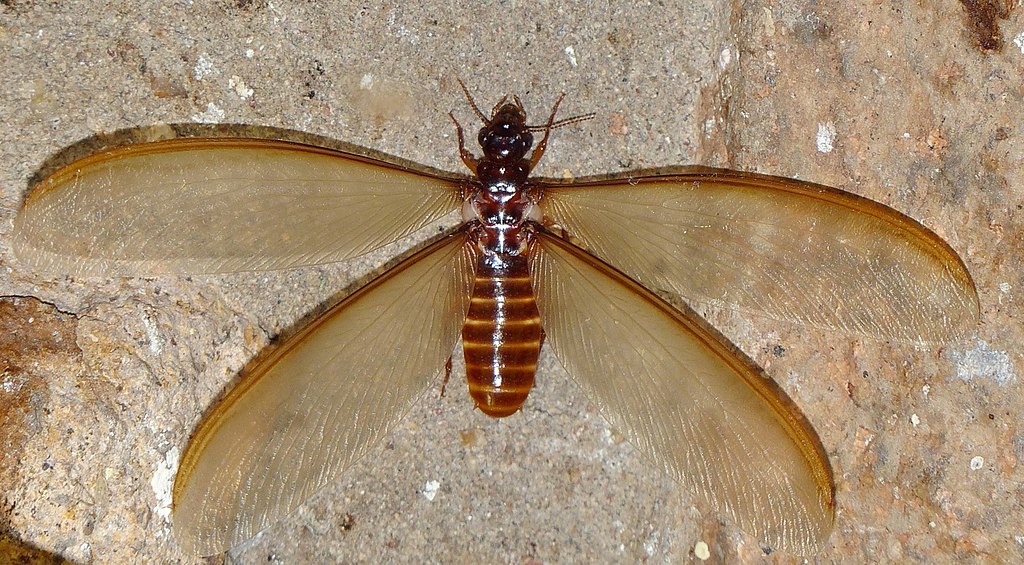
Reproductives — also called alates or swarmers — are the only termites that fly. They develop two pairs of long, translucent wings and functional eyes. Their sole purpose is to leave the parent colony, find a mate, and establish a brand-new colony somewhere else. If you want to learn more about the different forms termites take throughout their life cycle, check out this guide on what baby termites look like and how to identify them.
King and Queen Reproductives
Once alates land, they shed their wings and pair up. The male becomes the king, and the female becomes the queen of the new colony. After landing and mating, these termites never fly again. The queen’s primary role shifts to egg production, sometimes laying thousands of eggs per day in mature colonies. You can learn more about what termite eggs look like and how quickly new colonies grow.
Why Do Termites Fly? The Purpose Behind Swarming
Termite flight isn’t random. It serves one critical biological purpose: colony reproduction. When a termite colony reaches maturity — typically after three to five years — it produces hundreds or even thousands of winged reproductives. These alates wait for ideal environmental conditions and then leave the colony in a synchronized swarm.
The swarm event is brief, usually lasting only 30 to 40 minutes. During that time, alates fly short distances, land, shed their wings, and search for a mate. Paired termites then look for a suitable nesting site — often a crack in wood, a gap in your home’s foundation, or moist soil near a structure.
Swarming is essentially how termites spread. A single mature colony can launch multiple swarms over its lifetime, seeding new infestations across a neighborhood. That’s why understanding where termites come from is so important for long-term prevention.
When Do Flying Termites Swarm in Florida?
Florida’s warm, humid climate makes it one of the most termite-active states in the country. While swarming seasons vary by species, Florida homeowners can encounter flying termites almost any month of the year. However, certain times are far more active than others.
Swarming Seasons by Species
| Termite Species | Primary Swarming Season | Time of Day |
|---|---|---|
| Eastern Subterranean | February – May | Daytime, often after rain |
| Drywood Termites | April – July | Evening, attracted to lights |
| Formosan Subterranean | May – June | Dusk to night, near lights |
| Dampwood Termites | Summer months | Evening |
For a deeper dive into drywood termite activity in Florida, read this detailed guide on when drywood termites swarm in Florida.
Weather Triggers for Swarming
Termites typically swarm after a warm rain when humidity is high. A sudden rise in temperature following a storm creates perfect swarming conditions. In South Florida, afternoon thunderstorms during spring are a common trigger. If you notice a swarm right after a rainstorm, it’s not a coincidence — the colony timed it deliberately.
How to Tell Flying Termites Apart from Flying Ants
One of the most common mistakes homeowners make is confusing flying termites with flying ants. Both insects swarm at similar times of year, and from a distance, they look alike. However, several key differences help you identify which pest you’re dealing with.
| Feature | Flying Termite | Flying Ant |
|---|---|---|
| Antennae | Straight, bead-like | Elbowed |
| Waist | Thick, no pinch | Narrow, pinched waist |
| Wings | Two pairs, equal length | Two pairs, unequal length |
| Wing Shedding | Shed quickly after landing | Wings stay attached longer |
| Body Color | Dark brown to black | Dark brown, black, or reddish |
If you’re still unsure what you’re looking at, this resource on what termites with wings look like includes detailed images and descriptions to help you confirm identification. Getting the ID right matters because the treatment approach for termites differs dramatically from ant control.
Do Termites Fly Inside Your Home?
Yes — and finding flying termites inside your home is a serious warning sign. When swarmers appear indoors, it usually means one of two things:
- A mature termite colony already exists inside your walls, attic, or foundation.
- Swarmers from an outdoor colony entered through gaps around windows, doors, or vents.
Indoor swarms are especially common with drywood termites because they nest directly inside wood structures. You may notice swarmers congregating near windows or light fixtures, as they’re strongly attracted to light. After the swarm, you’ll often find piles of discarded wings on windowsills, countertops, or floors.
Finding discarded wings is one of the early signs of termites in Florida homes and should prompt immediate action. Even if the swarmers themselves die quickly — most do within hours without establishing a colony — their presence tells you a thriving colony is already nearby.
What Does a Termite Swarm Look Like?
A termite swarm looks like a dense cloud of small, winged insects emerging from a single point. They may pour out of a crack in the wall, a gap in the foundation, a hole in a tree stump, or directly from the soil. The event is dramatic but short-lived, usually lasting less than an hour.
During a swarm, you’ll notice:
- Dozens to hundreds of winged insects flying erratically
- Swarmers clustering around outdoor lights or bright windows
- Piles of translucent, shed wings accumulating on surfaces
- Paired termites crawling together after landing
If you witness this happening inside or near your property, it’s critical to know how to respond. This guide on what to do about termite swarmers in your home walks you through the exact steps to take.
Which Termite Species in Florida Fly?
Florida is home to multiple termite species, and every species produces flying reproductives. However, the most common flying termites you’ll encounter vary by region and property type.
Subterranean Termite Swarmers
Eastern subterranean termites are the most widespread species in Florida. Their swarmers are dark brown to black and about 3/8 inch long, including wings. They typically swarm during daylight hours in spring. These termites nest underground and access homes through termite mud tubes built along foundations and walls.
Formosan subterranean termites are an aggressive invasive species. Their swarmers are yellowish-brown and slightly larger than Eastern subterranean swarmers. Formosan termites swarm at dusk and are drawn to lights in massive numbers. Learn more about this species in the guide on Formosan termites in Florida.
Drywood Termite Swarmers
Drywood termites don’t need soil contact. Their swarmers are reddish-brown to dark brown and about 1/2 inch long. They swarm in late spring through summer, often in the evening hours. After landing, they burrow directly into exposed wood — door frames, window trim, fascia boards, and furniture. Understanding how to identify drywood termites can help you catch an infestation early before serious damage occurs.
How Far Do Flying Termites Travel?
Despite having wings, termites are not strong fliers. Most swarmers travel only a few hundred yards from their parent colony. Wind can carry them farther, sometimes up to a mile, but this is uncommon. Their flight is weak and fluttery — they’re far more vulnerable to predators, wind, and dehydration than most flying insects.
This limited flight range is actually important for homeowners. If you see a swarm near your home, the parent colony is likely very close. It could be in your yard, under your foundation, inside your walls, or in a neighbor’s property. The short travel distance makes local inspections especially critical.
For a complete overview of termite behavior and control in the state, the complete guide to termite identification and control in Florida covers everything from species identification to treatment options.
What to Do When You See Flying Termites
Seeing flying termites near your home doesn’t mean you should panic, but it does mean you should act quickly. Here’s a step-by-step response plan:
- Don’t spray insecticide on the swarmers. Killing the visible swarmers does nothing to address the colony. It also makes it harder for an inspector to identify the species.
- Collect a sample. Capture a few swarmers or gather some shed wings in a zip-lock bag. This helps pest professionals identify the exact species.
- Note the location. Mark where the swarm emerged — a wall crack, window frame, foundation gap, or soil opening.
- Schedule a professional inspection. A trained inspector will identify the species, locate the colony, and recommend the right treatment approach.
Different species require different treatments. Subterranean termites often need soil treatments or baiting systems, while drywood termites may require localized treatments or fumigation. Learn more about the various approaches in this breakdown of how to get rid of drywood termites.
If the swarm happened inside your home, the urgency increases. Indoor swarms almost always indicate an active infestation within the structure. Don’t wait — contact a licensed pest control professional to assess the situation and protect your home from further damage.
Frequently Asked Questions
-
Do all termites have wings and fly?
No. Only the reproductive caste, called alates or swarmers, develops wings and can fly. Workers and soldiers — which make up the vast majority of a colony — are wingless and remain hidden inside wood or underground for their entire lives.
-
How long do flying termites live after swarming?
Most swarmers die within a few hours to a couple of days if they don't find a mate and suitable nesting site. Their survival rate is extremely low — less than 1% typically succeed in starting a new colony. However, the ones that do survive can live for decades as king and queen.
-
Can flying termites damage my home?
Flying termites themselves don't eat wood or cause damage during the swarming flight. However, their presence signals that a mature, wood-destroying colony exists nearby. The real threat comes from the established colony and any new colonies that swarmers successfully start in or near your home.
-
Why am I seeing flying termites at night near my lights?
Drywood termites and Formosan subterranean termites swarm in the evening and are strongly attracted to artificial light. Porch lights, interior lights visible through windows, and street lights all draw swarmers. Turning off exterior lights during peak swarming season can reduce the number attracted to your home.
-
Are flying termites more common in Florida than other states?
Yes. Florida's warm temperatures, high humidity, and year-round mild weather create ideal swarming conditions for multiple termite species. Florida ranks among the highest-risk states for termite activity in the United States, with swarms possible during nearly every month of the year.
-
Should I worry if I find termite wings but no live termites?
Absolutely. Discarded wings are a strong indicator of a recent swarm. After landing, termites shed their wings almost immediately. Piles of wings near windowsills, doors, or foundation edges mean swarmers were present and may have already begun establishing a new colony nearby.