
Table of Contents
ToggleKey Takeaways
- Termite droppings (frass) are tiny, six-sided pellets that resemble grains of sand or black pepper and are a hallmark sign of drywood termites.
- Frass color varies from light tan to dark brown depending on the type of wood termites are consuming.
- Subterranean termites do not leave visible droppings because they use their feces to build mud tubes.
- Finding small piles of pellets near windowsills, baseboards, or furniture often means an active drywood termite colony is nearby.
- A professional inspection is the most reliable way to confirm termite activity and determine the extent of an infestation.
Termite droppings are one of the earliest and most recognizable clues that your home has unwanted wood-destroying guests. If you’ve spotted tiny pellets along a windowsill, on the floor beneath a door frame, or piled near a piece of furniture, you’re probably wondering whether they came from termites or something else entirely. Knowing exactly what termite droppings look like—and how they differ from sawdust, ant debris, or everyday dirt—can save you thousands of dollars in structural damage. In this guide, you’ll learn how to identify termite frass by size, shape, and color, understand which termite species produce visible droppings, discover where frass typically accumulates, and find out what steps to take the moment you spot it.
What Are Termite Droppings (Frass)?
Termite droppings go by the technical name frass. Frass is the term entomologists use for the excrement that drywood termites push out of their galleries after digesting wood. Because drywood termites live entirely inside the wood they eat, they need a way to keep their tunnels clean. Worker termites carve tiny “kick-out holes” in the wood’s surface, then sweep their droppings through those openings.
The result is a small, cone-shaped pile of pellets that collects below the hole. These piles are often the first sign of a termite infestation homeowners notice—sometimes before any visible wood damage is apparent. Frass itself is not dangerous to humans, but its presence signals that a colony is actively feeding on your home’s structure.
What Do Termite Droppings Look Like Up Close?
Identifying termite droppings correctly is critical because many homeowners mistake them for ordinary dust or debris. Here are the key characteristics to look for.
Size and Shape
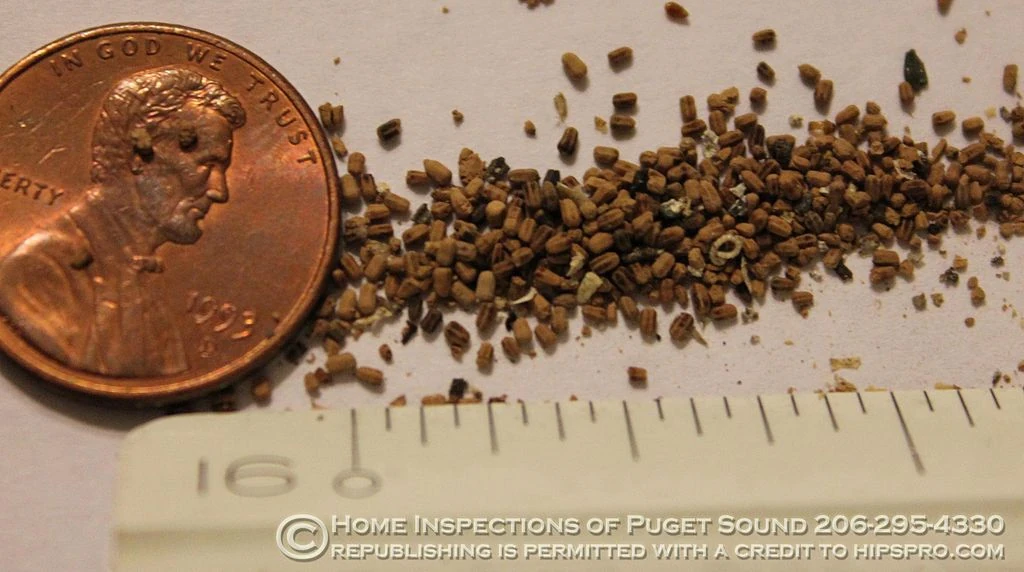
Each frass pellet is roughly 1 millimeter long—about the size of a grain of sand. Under magnification, pellets have a distinctive elongated, oval shape with six concave sides and rounded ends. This hexagonal cross-section is unique to termite frass and is one of the most reliable ways to distinguish it from other debris.
Color Variations
Frass color depends on the type of wood the colony is eating. Pellets can range from:
- Light beige or tan — from light-colored softwoods like pine
- Reddish-brown — from hardwoods like oak or mahogany
- Dark brown to nearly black — from stained, treated, or very dark wood
A single pile may contain pellets of slightly different shades if the termites are feeding on wood with varying layers of grain or finish.
Texture and Feel
When you rub termite droppings between your fingers, they feel gritty—similar to coarse sand. The pellets are hard and dry because drywood termites extract almost all moisture from their food during digestion. Unlike soft, powdery sawdust, frass won’t smear or clump together.
Termite Droppings vs. Sawdust: How to Tell the Difference
One of the most common mix-ups is confusing termite frass with sawdust left behind by carpenter ants, wood-boring beetles, or recent construction work. Here’s a quick comparison.
| Feature | Termite Frass | Sawdust / Carpenter Ant Debris |
|---|---|---|
| Shape | Six-sided, uniform pellets | Irregular shavings and fibers |
| Texture | Gritty, hard, sand-like | Soft, fluffy, fibrous |
| Color consistency | Relatively uniform within a pile | Mixed light and dark wood fibers |
| Contains insect parts | No | Carpenter ant debris often includes legs or body fragments |
| Moisture | Completely dry | May be slightly damp |
If the material you found looks like a neat little pile of pepper or sand and the pellets are uniform, you’re almost certainly looking at termite frass. If the debris is stringy, fluffy, or contains insect body parts, the culprit may be carpenter ants or beetles instead.
Which Termite Species Leave Visible Droppings?
Not every termite species produces droppings you can see. Understanding which type you’re dealing with helps you choose the right treatment strategy.
Drywood Termites
Drywood termites are the primary producers of visible frass. They nest inside dry, sound wood—door frames, attic rafters, window trim, and furniture are all fair game. Because they don’t need contact with soil, they push their pellets out of kick-out holes to keep galleries clean. Florida homeowners encounter drywood termite frass regularly, especially in coastal areas. If you’re unsure whether your home is at risk, learn more about how common drywood termites are in Florida.
Subterranean Termites
Subterranean termites do not leave frass piles. Instead, they use their fecal matter as a building material, mixing it with soil and saliva to construct termite mud tubes. These pencil-width tunnels allow them to travel from the soil to your home’s wood without being exposed to air. So if you see mud tubes on your foundation walls but no frass, subterranean termites are the likely culprit.
Formosan Termites
Formosan termites are an aggressive subterranean species. Like other subterranean termites, they incorporate their waste into carton nests and mud structures rather than expelling dry pellets. Their signs include moisture-damaged wood, large mud formations, and massive swarms rather than frass piles.
Where Do Termite Droppings Usually Appear?
Knowing where to look for frass is just as important as knowing what it looks like. Drywood termite colonies can live inside wood for years before you notice damage, but their droppings often give them away first. Common locations include:
- Windowsills and door frames — These are among the most frequently infested areas in Florida homes.
- Baseboards and crown molding — Frass may collect along the wall where molding meets the floor or ceiling.
- Attic spaces — Check exposed rafters and trusses, especially in older homes.
- Inside closets — Shelving and closet framing made of untreated wood are attractive to drywood termites.
- Under and behind furniture — Antique wooden furniture and bookshelves can harbor hidden colonies.
- Garage and carport framing — Any exposed, unpainted wood is vulnerable.
If you spot pellets in any of these areas, look directly above the pile for a tiny hole roughly 1–2 mm in diameter. That’s the kick-out hole, and it confirms the frass came from termites rather than being tracked in on shoes or blown by the wind. These small openings are closely related to termite exit holes, which swarmers use to leave the colony.
What Should You Do When You Find Termite Droppings?
Discovering frass in your home can be alarming, but a calm, systematic response protects your property and your wallet. Follow these steps:
- Don’t disturb the area. Leave the frass pile and any visible holes intact. A pest professional needs to see the evidence to accurately assess the situation.
- Photograph everything. Take close-up photos of the pellets and any holes in the wood. Note the exact location—room, wall, and height from the floor.
- Check nearby areas. Walk through adjacent rooms and inspect similar wood structures. Multiple piles can indicate more than one colony.
- Schedule a professional inspection. A licensed termite inspector will determine the species, estimate the colony’s size, and recommend a treatment plan. For a detailed overview of the inspection process, read our guide on termites in Florida: identification and control.
- Avoid DIY chemical sprays. Spraying a kick-out hole with household insecticide may kill a few workers but won’t reach the colony. It can also cause termites to relocate deeper into the wood, making professional treatment harder.
How Are Drywood Termite Infestations Treated?
Once an inspection confirms drywood termites, several treatment options are available. The right choice depends on the size and number of colonies, the construction of your home, and your budget.
- Localized (spot) treatment — A technician drills small holes into infested wood and injects termiticide or foam directly into the galleries. Best for isolated, accessible colonies.
- Whole-structure fumigation (tenting) — The entire home is sealed under a tent and filled with a lethal gas (vikane). This reaches every colony regardless of location and is the most thorough option for widespread infestations.
- Heat treatment — Sections of the home are heated to temperatures lethal to termites. This chemical-free method works well for localized areas.
For a deeper comparison of these methods, explore our resource on how to get rid of drywood termites. Choosing the wrong approach—or delaying treatment—can allow colonies to spread and cause structural damage that costs far more to repair than the treatment itself.
Can You Prevent Termite Droppings from Appearing Again?
Prevention focuses on making your home less inviting to drywood termites in the first place. While no method is 100% foolproof in Florida’s subtropical climate, these strategies significantly reduce risk:
- Seal cracks and gaps around windows, doors, and roof eaves to block swarmers from entering.
- Apply a borate-based wood treatment to exposed lumber in attics, crawl spaces, and garages.
- Paint or varnish all exposed wood—termites prefer unfinished surfaces.
- Schedule annual inspections—catching a colony early means smaller treatment and less damage.
- Reduce outdoor lighting near entry points during drywood termite swarming season, since winged swarmers are attracted to light.
Ongoing prevention is an investment that pays for itself. Many pest control companies offer annual termite protection plans that include inspections and re-treatments if termites return. If you want to understand the long-term value of these plans, learn about what a termite bond covers and whether it makes sense for your home.
Frequently Asked Questions
-
Are termite droppings dangerous to humans?
Termite frass is not toxic and does not carry diseases. However, in rare cases, the fine dust around frass piles can irritate the skin or respiratory system in sensitive individuals. The real danger is what frass signals—an active colony consuming your home's wood.
-
Can I have termite droppings without an active infestation?
It's possible but unlikely. Old frass from a previously treated colony can remain in wall voids or attic spaces for years. However, if you find a fresh, cone-shaped pile with a visible kick-out hole above it, the colony is almost certainly still active. A professional inspection is the only way to confirm.
-
Do subterranean termites leave droppings?
Subterranean termites do not produce visible frass piles. They use their fecal matter mixed with soil to construct mud tubes and line their tunnels. If you see mud tubes on your foundation but no pellets, subterranean termites are the likely species.
-
How do I clean up termite droppings safely?
Wait until after a pest professional has inspected the area. Once cleared, vacuum or sweep up the frass and wipe the surface with a damp cloth. Some homeowners mark the cleaned area with tape so they can quickly tell whether new frass appears, indicating ongoing activity.
-
What is the difference between termite frass and coffee grounds?
At a glance, termite frass can resemble finely ground coffee. The key difference is shape. Under a magnifying glass, frass pellets are elongated with six distinct sides, whereas coffee grounds are irregular and crumbly. Frass also feels gritty like sand, while coffee grounds are softer and slightly oily.
-
How quickly should I act after finding termite droppings?
Schedule a professional inspection within one to two weeks. Drywood termite colonies grow slowly, so a short delay won't cause a catastrophe. That said, the longer you wait, the more wood the colony consumes, which increases both repair costs and treatment complexity.