Table of Contents
ToggleKey Takeaways
- South Florida’s warm, humid climate creates year-round termite pressure from multiple species, including drywood, subterranean, and Formosan termites.
- The best termite control strategy depends on which species is infesting your home — drywood and subterranean termites require very different treatments.
- Liquid soil treatments, bait systems, tent fumigation, and localized spot treatments each serve different purposes for South Florida homeowners.
- Prevention is just as critical as treatment — moisture control, regular inspections, and wood-to-soil separation can save thousands in repair costs.
- Professional termite control paired with a termite bond offers the most reliable long-term protection for South Florida properties.
Termite control in South Florida is not a luxury — it’s a necessity. Our region’s tropical climate, with average temperatures above 70°F and humidity levels that rarely dip below 60%, creates ideal conditions for termites to thrive year-round. Unlike homeowners in northern states who get seasonal relief, South Florida residents in Broward, Miami-Dade, Collier, and Lee counties face constant termite pressure from multiple aggressive species. The result? Billions of dollars in property damage across the state every year, with South Florida bearing the heaviest losses. Whether you’ve spotted swarmers near your windows or discovered suspicious damage in your walls, understanding which control methods actually work in our unique environment is the first step toward protecting your home. This guide breaks down the most effective strategies — from prevention to professional treatment — so you can make the right choice.
Why Termite Control Is a Year-Round Priority in South Florida
Most of the continental United States experiences a defined termite season. South Florida doesn’t have that luxury. Our subtropical and tropical climate means the ground never freezes, wood stays perpetually moist, and termite colonies remain active 365 days a year.
South Florida sits in what entomologists call the highest termite pressure zone in the country. Cities from Fort Lauderdale and Hollywood to Naples and Cape Coral all rank among the most termite-prone areas in Florida. The combination of high moisture, warm soil temperatures, and dense residential construction gives termites everything they need to establish massive colonies.
In addition, South Florida is home to more termite species than almost any other region in the U.S. That means a single property can face simultaneous threats from different termite types, each requiring a different control approach. Understanding where termites come from and why they target your property is the foundation of effective control.
Which Termite Species Threaten South Florida Homes?
Before choosing a control strategy, you need to know what you’re fighting. South Florida hosts three primary termite species, and each behaves differently. For a deeper dive into identification, check out this complete guide to termite identification and control in Florida.
Drywood Termites
Drywood termites are extremely common across South Florida, particularly in older homes in Broward and Miami-Dade counties. They live entirely inside the wood they consume — no soil contact needed. They enter through small cracks and crevices, colonizing attic framing, window frames, door headers, and furniture. Learn more about how common drywood termites are in Florida and why South Florida homeowners should stay vigilant.
Eastern Subterranean Termites
Subterranean termites are the most destructive termite species in the United States. They build underground colonies and access your home through mud tubes — pencil-sized tunnels made of soil, saliva, and waste. South Florida’s moist, sandy soil is ideal for subterranean activity. A single colony can contain hundreds of thousands of workers, devouring structural lumber from the inside out.
Formosan Termites
Formosan termites are an invasive subterranean species that has established a growing presence across South Florida. They form colonies that can exceed one million individuals, and their aggressive feeding behavior allows them to cause severe damage in a matter of months. Formosan termites are an increasing threat to Florida homeowners, especially in coastal areas where older construction and high moisture converge.
Best Termite Control Methods for South Florida Properties
No single termite treatment works for every situation. The best approach depends on the species, the severity of the infestation, your home’s construction type, and your budget. Here’s how the most effective methods compare in South Florida conditions.
| Treatment Method | Best For | How It Works | Duration of Protection |
|---|---|---|---|
| Liquid Soil Treatment | Subterranean termites | Chemical barrier in soil around foundation | 5-10 years |
| Bait Stations | Subterranean & Formosan termites | Colony elimination through ingested toxicant | Ongoing (requires monitoring) |
| Tent Fumigation | Severe drywood infestations | Whole-structure gas treatment | No residual — prevents reinfestation only at time of treatment |
| Localized/Spot Treatment | Small, accessible drywood colonies | Targeted injection or foam application | Varies by product |
| Heat Treatment | Drywood termites (localized areas) | Raising wood temperature to lethal levels | No residual protection |
For a comprehensive overview of each option, explore the different types of termite treatments available to Florida homeowners.
Liquid Barrier Treatments
Liquid termiticides like fipronil (Termidor) are applied to the soil around and beneath a home’s foundation. This creates a continuous chemical barrier that subterranean termites cannot detect. As workers pass through the treated soil, they carry the chemical back to their colony, eventually killing the queen and collapsing the entire nest.
In South Florida’s sandy, well-drained soil, liquid treatments tend to perform well because the termiticide binds to soil particles and remains effective for years. This method is particularly popular in newer construction and during pre-construction soil treatments.
Termite Bait Systems
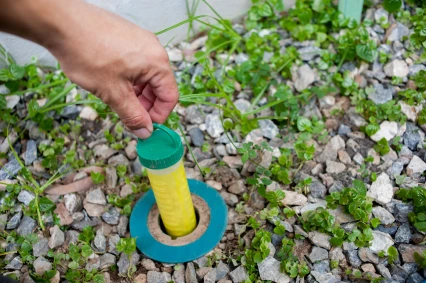
Bait stations are installed in the ground around the perimeter of your home. They contain cellulose material laced with a slow-acting insect growth regulator. Foraging termites find the bait, feed on it, and share it with the colony. Over weeks, the colony declines and dies.
Bait systems are especially useful for properties where liquid treatments are impractical — such as homes with wells, adjacent water features, or heavy landscaping. They also provide a monitoring component, alerting your pest control provider to new activity before damage occurs.
Tent Fumigation for Drywood Termites
When drywood termites have spread to multiple areas of a home — attic trusses, wall framing, eaves, and interior woodwork — localized treatments may not be enough. Tent fumigation is the gold standard for eliminating widespread drywood infestations. The entire structure is sealed under a tent, and a lethal gas (sulfuryl fluoride) penetrates every piece of wood in the home.
While fumigation is highly effective, it provides no residual protection. That means new drywood termites can re-infest the home after treatment. This is why combining fumigation with ongoing prevention and monitoring is essential in South Florida. Learn more about how to get rid of drywood termites and when fumigation is the right call.
Localized Spot Treatments
If a drywood termite colony is confined to a single area — say, one window frame or a piece of attic trim — spot treatment may be sufficient. Technicians drill small holes into the infested wood and inject termiticide foam or dust directly into the colony. This approach is less disruptive and more affordable than fumigation.
However, the challenge is confirming the infestation is truly isolated. Drywood termites often hide in areas that are difficult to inspect. In South Florida’s older homes, especially those built before the 1980s, multiple hidden colonies are common. A thorough inspection is critical before relying on spot treatment alone.
How to Spot Termite Activity Early in South Florida
Early detection can mean the difference between a minor treatment and a costly full-structure fumigation. South Florida homeowners should know the warning signs:
- Swarmers: Winged termites emerging indoors, especially near windows and light fixtures during warm, humid evenings. Drywood termites swarm in Florida primarily from late spring through fall.
- Frass (drywood droppings): Tiny, pellet-shaped droppings that look like sawdust collecting beneath infested wood.
- Mud tubes: Thin tubes along foundations, walls, or plumbing — a sure sign of subterranean activity.
- Hollow-sounding wood: Tap on door frames, baseboards, and window sills. If the wood sounds hollow, termites may have consumed the interior.
- Bubbling or peeling paint: Moisture from termite activity can cause paint to blister, especially on exterior trim.
For a complete checklist, review the five early signs of termites in Florida homes. Catching these signals early gives you more treatment options at a lower cost.
Preventing Termites in South Florida's Climate
Treatment handles existing infestations, but prevention stops new ones from starting. In South Florida’s high-pressure termite environment, prevention is non-negotiable. Here are the most effective steps:
- Reduce moisture: Fix leaking faucets, air conditioning drip lines, and gutter downspouts. Subterranean termites are attracted to moist soil and wood.
- Eliminate wood-to-soil contact: Ensure siding, deck posts, and door frames are at least six inches above grade.
- Store firewood and lumber away from your home: Keep woodpiles at least 20 feet from your foundation.
- Seal entry points: Caulk cracks around windows, doors, and utility pipes to reduce drywood termite access.
- Maintain your landscaping: Trim shrubs and trees so they don’t touch your home’s exterior. Dense vegetation traps moisture against walls.
In addition to these steps, scheduling regular professional inspections is one of the smartest investments you can make. Many South Florida pest control companies recommend annual inspections, though homes with a history of termite activity may need them more frequently. Curious about how long your treatment protection lasts? Read about how long termite treatment lasts so you know when it’s time to re-treat.
Why Professional Termite Control Is Essential in South Florida
While DIY products exist, the reality is that South Florida’s termite problems are too aggressive and too complex for store-bought solutions. Over-the-counter sprays and baits may kill a few visible termites, but they rarely reach the colony. Meanwhile, the infestation continues behind your walls.
Professional pest control companies use commercial-grade products, specialized equipment, and trained technicians who understand the behavior of local species. They can distinguish between a minor drywood colony and a widespread subterranean invasion — a distinction that changes the entire treatment plan.
Moreover, many South Florida homeowners benefit from termite bonds, which provide ongoing protection, annual inspections, and coverage for re-treatment if termites return. A termite bond is especially valuable when buying or selling a home in our region.
If you’re dealing with termite activity — or simply want to prevent it — On Demand Pest Control offers comprehensive termite treatment services throughout South Florida, including Broward County, Miami-Dade County, Collier County, and Lee County. Our technicians develop customized treatment plans based on your home’s construction, the species involved, and the severity of the problem. Contact us today for a free inspection and protect your biggest investment before termites take their toll.
Frequently Asked Questions
-
What is the most effective termite treatment in South Florida?
The most effective treatment depends on the species. Liquid soil treatments and bait systems work best for subterranean termites. Tent fumigation is the most reliable option for widespread drywood infestations. A professional inspection determines which approach is right for your specific situation.
-
How often should South Florida homes be inspected for termites?
Most pest control professionals recommend annual termite inspections for South Florida homes. However, properties with prior termite history, older construction, or heavy surrounding vegetation may benefit from inspections every six months. Year-round termite activity in our climate makes regular monitoring essential.
-
Can I treat termites myself in South Florida?
DIY products can address minor surface-level issues, but they rarely eliminate the colony or reach hidden infestations. South Florida homes often have multiple termite species active at once, making professional diagnosis and treatment far more reliable. The cost of missed damage almost always exceeds the cost of professional service.
-
How much does termite control cost in South Florida?
Costs vary based on the treatment type, the size of your home, and the severity of the infestation. Spot treatments may start around $200-$500, while tent fumigation for a full-size home can range from $1,200 to $3,500 or more. Liquid barrier treatments and bait systems fall somewhere in between, often with annual renewal fees.
-
Do termites come back after treatment in South Florida?
Yes, reinfestation is always possible in South Florida due to the constant termite pressure in our climate. Fumigation kills all termites present but leaves no residual barrier. Liquid treatments and bait systems offer longer protection but require maintenance. A termite bond provides the best ongoing safeguard against re-infestation.
-
When do termites swarm in South Florida?
Subterranean termites typically swarm in South Florida between February and May, often after warm rain. Drywood termites swarm later, usually from late spring through November. Formosan termites tend to swarm in the evening hours during late spring and early summer. Because our climate is warm year-round, isolated swarms can occur outside these windows.